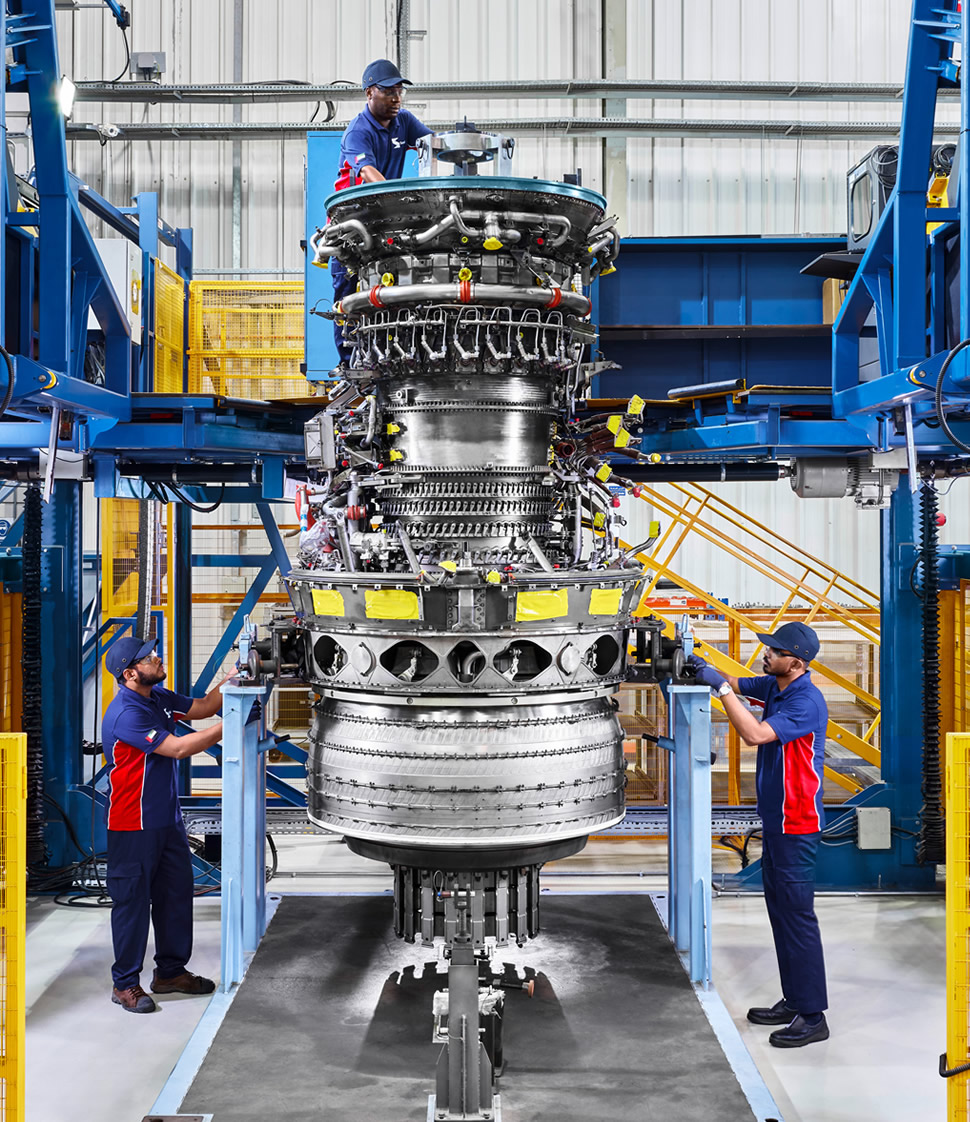
Abu Dhabi-based aerospace engineering firm Sanad Aerotech has reported a substantial increase in its order backlog and rapid expansion into new engine platforms as airlines face global supply-chain constraints in engine manufacturing. The company disclosed that its backlog rose by 5 billion UAE dirhams to more than 38 billion dirhams as of end-June, driven by heightened demand from carriers struggling to secure engine availability.
Sanad, backed by the Abu Dhabi sovereign investment firm Mubadala, said it added 16 new airline customers in the year to date, as operators increasingly turn to third-party Maintenance, Repair and Overhaul providers to fill the capacity gaps left by major engine original-equipment manufacturers.
The supply-chain issues stem from engine makers such as Pratt & Whitney and CFM International, which have been hit by parts shortages and manufacturing delays since the pandemic, leaving airlines with grounded aircraft and limited access to spare engines.
Sanad services a broad range of engine models, including the Rolls-Royce Trent 700, IAE V2500, GE Aviation’s GEnx and CFM’s LEAP-1A and LEAP-1B series used on Airbus A320neo and Boeing 737 MAX families.
Mansoor Janahi, chief executive of Sanad, said: “The shortage issue has been more of an opportunity for us,” highlighting how the firm is leveraging the disruption to gain market share.
Industry analysts point to broader structural trends supporting the uptick in MRO demand. A market-forecast report estimates the global aircraft-engine MRO market will grow by US $11.32 billion during 2024-2029, at a compound annual growth rate of 5.6 per cent.
Another study by Oliver Wyman projects the overall maintenance-repair-and-overhaul sector to hit US $119 billion in 2025, citing fleet growth and increased usage of older aircraft due to delayed production.
For Sanad, the engine-shortage context has accelerated platform diversification. The firm is building a tailor-made facility in Al Ain designed to handle Pratt & Whitney’s GTF-series engines, expanding beyond its existing engine brands.
The business environment remains favourable in the Middle East and Africa region, where the aircraft-engine MRO market is estimated at US $7.67 billion in 2025 and predicted to rise to US $10.74 billion by 2030.
Despite this growth, the MRO sector faces headwinds including labour shortages, escalating raw-material costs and intense competition for skilled technicians. One industry article noted that supply-chain disruptions coupled with ageing fleets are pushing MRO providers to embrace collaboration, digital-tools adoption and diversification of supplier channels.
For airlines, the scarcity of available engines is translating into higher operational costs. A separate industry alert from International Air Transport Association estimates that global carriers will incur over US $11 billion in additional costs in 2025 related to supply-chain disruptions, including engine-leasing fees and increased maintenance expense.
Sanad’s backing by Mubadala gives it strategic advantages. The company states it has over 35 years’ experience, services more than 500 professionals from 30 nationalities, and generates more than 90 per cent of revenues from outside the UAE.
The firm’s focus on technology is evident. It has implemented AI-driven inspection tools, RFID-based parts-tracking, and is exploring blockchain solutions to reduce data-exchange times between customers and suppliers. 3D-printing of parts is also in the pipeline.
With airlines pressed to keep older aircraft flying longer due to delivery delays of new jets, demand for MRO remains high. That trend benefits independent MRO providers such as Sanad who offer flexibility outside OEM networks.
However, dependency on the engine-manufacturer ecosystem poses risks. MRO providers face pricing pressure from OEMs, and supply-chain bottlenecks still constrain turnaround times. The long-term viability of the MRO growth spurt may hinge on whether engine production and parts supply catch up. The leadership at Sanad appears confident it is positioned to capitalise.
Follow Arabian Post
Select Arabian Post as your preferred source on Google and MSN News for trusted business news and Arab politics and updates.