

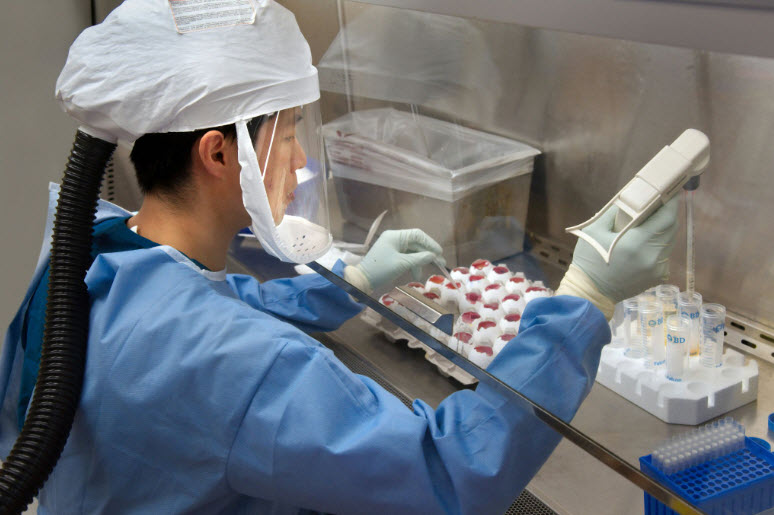
Photo by CDC on Unsplash
The global race to develop new medicines is entering a new phase, and the UAE is positioning itself as one of the regions investing heavily in that transformation.
Biotechnology companies, artificial intelligence researchers, healthcare providers, and government institutions are increasingly working together to accelerate drug discovery, improve clinical research, and reduce the time it takes for promising treatments to reach patients.
For decades, medicine development has been a slow and expensive process. Discovering a viable drug candidate, testing it through multiple stages of research, and securing regulatory approval often takes more than a decade.
AI is changing that equation by helping researchers analyze vast biological datasets, predict how molecules may behave, and identify promising drug targets far more efficiently than traditional methods.
The shift is particularly significant for countries seeking to build knowledge-based economies.
In the UAE, investments in life sciences, genomic research, digital health, and advanced technology are creating an ecosystem where biotechnology and AI can develop side by side.
AI is Changing How Medicines are Discovered
One of the biggest challenges in drug development is identifying compounds that are likely to succeed before expensive laboratory and clinical testing begins.
AI models can screen millions of molecular structures, compare biological interactions, and generate predictions that help researchers prioritize the most promising candidates.
Instead of relying solely on years of laboratory experimentation, scientists can use AI to narrow down potential treatments much earlier in the process. This approach has already shown promise in areas such as cancer research, infectious diseases, neurological disorders, and rare genetic conditions.
Biotechnology companies are also using machine learning to have a more comprehensive understanding of protein structures, genetic mutations, and disease mechanisms.
These insights can lead to more targeted therapies that are designed for specific patient populations rather than broad treatment categories.
The UAE’s Growing Biotechnology Ambitions
The UAE has made healthcare innovation a strategic priority, with increased attention on research partnerships, biotechnology infrastructure, and advanced medical technologies.
For instance, Abu Dhabi and Dubai have expanded initiatives that encourage pharmaceutical research, health technology startups, and collaborations with international research institutions.
Several factors make the UAE an attractive location for biotechnology development. First, the country has modern healthcare infrastructure, strong digital connectivity, and government support for emerging technologies.
Second, it is also investing in genomic medicine, precision healthcare, and data-driven medical research.
Added to that, the experience gained during the COVID-19 pandemic reinforced the importance of local research capabilities, vaccine development partnerships, and digital health systems.
Since then, regional interest in biotechnology manufacturing and medical innovation has continued to grow.
Faster Research, But with Greater Responsibility
Despite the enthusiasm surrounding AI, researchers emphasize that artificial intelligence does not replace laboratory science or clinical trials. Yes, AI can generate hypotheses and identify patterns, but medicines still require rigorous testing to ensure safety and effectiveness.
Regulators in the UAE and internationally are increasingly examining how AI-generated research should be evaluated. Transparency, data quality, algorithmic bias, and patient privacy have become central issues in the development of AI-assisted medical technologies.
Experts argue that the most effective model is likely to be one where AI supports human researchers rather than taking over them. Physicians, biologists, chemists, and regulatory specialists remain essential in interpreting results and making clinical decisions.
Personalized Medicine Becomes More Realistic
One of the most promising applications of biotechnology and AI is personalized medicine. By combining genomic information, medical history, lifestyle data, and treatment outcomes, researchers can develop therapies that are tailored to individual patients.
For conditions such as certain cancers, genetic disorders, and autoimmune diseases, personalized treatments may improve effectiveness while reducing unwanted side effects.
The UAE’s interest in genomic research could play a significant role in this area. Population-specific genetic studies may help identify disease risks, improve early diagnosis, and support the development of treatments that are more relevant to regional populations.
Global Competition is Accelerating
The integration of AI into biotechnology has intensified competition among pharmaceutical companies, technology firms, and research institutions worldwide. Countries are investing billions of dollars in research infrastructure, computational biology, and biotechnology manufacturing capacity.
Large language models, advanced protein prediction systems, and generative AI tools are increasingly being used to assist researchers in designing molecules, analyzing scientific literature, and optimizing clinical trial strategies.
This global momentum creates opportunities for collaboration and competition. UAE-based institutions are increasingly participating in international research networks that connect scientists across the Middle East, Europe, Asia, and North America.
What Patients May Notice First
For most patients, the impact of AI and biotechnology will not appear overnight. The earliest visible changes are likely to include faster diagnostic tools, more targeted cancer therapies, improved management of chronic diseases, and more efficient clinical trials.
Drug development timelines may gradually shorten, and researchers may be able to identify failed drug candidates earlier, reducing costs and improving the chances of successful treatments reaching the market.
Public understanding of AI in healthcare is also becoming more important. People increasingly encounter AI-driven health applications, digital diagnostics, and personalized treatment recommendations. The challenge will be ensuring that these technologies remain accurate, ethical, and clinically validated.
In many ways, AI-assisted biotechnology resembles other data-intensive industries where sophisticated algorithms help experts make better decisions.
Even entertainment platforms and digital ecosystems, including products such as GameZone Jili games, rely on predictive analytics and user behavior modeling.
That said, the stakes in medical research are infinitely higher than entertainment because the goal is to improve human health and save lives.
For the UAE, the convergence of biotechnology and artificial intelligence represents more than a technological trend. It is becoming part of a broader strategy to build advanced industries, attract scientific talent, and strengthen healthcare resilience.
As research accelerates and international partnerships expand, the country is positioning itself not only as a consumer of medical innovation but increasingly as a contributor to the next generation of medicine development.
References
- UAE Government. National Genome Strategy. The Official Portal of the UAE Government. https://u.ae/en/about-the-uae/strategies-initiatives-and-awards/strategies-plans-and-visions/health/national-genome-strategy
- Emirates Genome Council. National Genome Strategy. https://genome.gov.ae/about/national-genome-strategy
genome.gov.ae - Emirates Genome Council. Initiatives. https://genome.gov.ae/initiatives
- Emirates Genome Council. Partners and Initiatives. https://genome.gov.ae/
- Abu Dhabi Media Office. National Genome Strategy Updates. https://www.mediaoffice.abudhabi/en/topic/national-genome-strategy/
- UAE Media Office. UAE President and Mohammed bin Rashid Attend Launch of National Genome Strategy. https://mediaoffice.ae/en/news/2023/march/28-03/mohamed-bin-zayed-and-mohammed-bin-rashid
Government of Dubai Media Office - M42. Emirati Genome Program. https://m42.ae/what-we-do/integrated-health-solutions/emirati-genome-program/
- Emirati Genome Program. About the Program. https://emiratigenomeprogram.ae/en/page/about.html
- Ateia, H., et al. Population Genome Programs Across the Middle East and North Africa: Progress and Prospects. PubMed Central (2023). https://pmc.ncbi.nlm.nih.gov/articles/PMC10601860/
- UAE Strategy for Artificial Intelligence 2031. Government of the United Arab Emirates. https://u.ae/en/about-the-uae/strategies-initiatives-and-awards/strategies-plans-and-visions/artificial-intelligence-strategy-2031
Also published on Medium.
Follow Arabian Post
Select Arabian Post as your preferred source on Google and MSN News for trusted business news and Arab politics and updates.




