

There is little to be excited about the recent inauguration of predominantly mountainous Arunachal Pradesh’s first commercial coal mine at Namchik-Namphuk in the Changlang district jointly by Union Coal & Mines Minister G Kishan Reddy and Arunachal Chief Minister Pema Khandu, marking the state’s first coal mine project. With an officially estimated reserve of only 15 million tonnes existing in Arunachal Pradesh as against India’s total of 389.42 billion tonnes as of April 1, last year, it makes little sense to mine the ‘dirty’ mineral in an ecologically fragile Himalayan region, featuring diverse topography, including snow-capped peaks in the north, hilly terrains, and wide valleys along its rivers, with elevations ranging from snow-covered mountains to the Brahmaputra plains in the south. The so-called statutory and environmental clearances don’t make the project a worthwhile venture. Coal mining in Arunachal may ultimately prospect more losses than gains.
There is no dearth of coal in India. Yet, the fact is that coal is not India’s desirable long-term energy choice although it remains a practical necessity in the near-to-medium term. Projects like the Namchik-Namphuk coal mine give a wrong signal to the nation and the world at a time when India is pursuing ambitious and successful renewable energy initiatives in keeping with the global trend. Arunachal Pradesh does not need coal for power generation. The state is set to become home to India’s first fully indigenous 50-kilowatt geothermal power plant, located in Tawang district. This project is being funded by the Ministry of New and Renewable Energy and is expected to be completed in three years. The state also uses other sources, including small hydro power stations, solar photovoltaic, and biomass power plants. It can ignore the small coal deposit at Changlang for power generation.
The state has a host of other more substantial and lucrative proven mineral deposits such as petroleum and natural gas (also in the Changlang district), limestone, dolomite, graphite, marble, iron ore, quartz, placer gold (in its rivers), lead and zinc, marble, copper, vanadium, and rare earth elements. It is not clear why the central and the state government are so excited about the tiny coal mine project. Chief Minister Prema khandu, who has led the Bharatiya Janata Party to victory in the Arunachal Pradesh Assembly elections multiple times, including a massive win in the 2024 elections where the BJP secured 46 out of 60 seats, would have probably done better by concentrating more on the state’s infrastructure development, creation of food parks, and employment-oriented micro, small and medium enterprises such as horticulture, kiwi, ‘Wakro’ oranges, leveraging indigenous strengths in cane, bamboo, and handloom production and connectivity improvements.
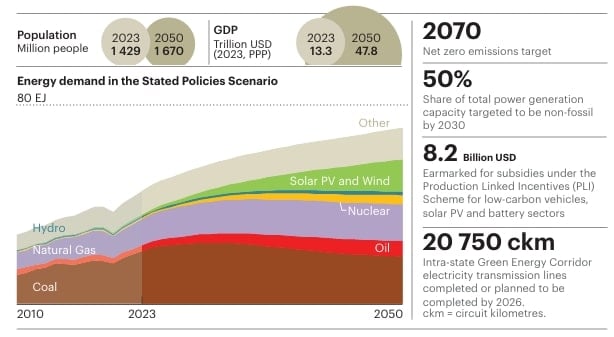
Despite the country’s growing energy demand, coal is not being considered as the most viable energy option in the long run. It may be wrong to ignore the fact that Indian coal is of notoriously low-quality, carrying high ash content and leading to severe air pollution that causes premature deaths and health problems. Burning this “dirty coal” results in high emissions of pollutants like particulate matter, sulphur dioxide, nitrogen oxides, contributing to climate change and environmental degradation. It would be wrong on the part of the country to rely heavily on fossil fuels making India vulnerable to volatile international prices and geopolitical risks. On the contrary, higher domestic renewable energy production will enhance the country’s long-term energy security. It may be noted that India has made remarkable progress in the area of clean energy deployment, ranking among the world’s top 10 countries for installed renewable energy capacity. Key targets include achieving 500 GW of non-fossil fuel capacity by 2030 and net-zero emissions by 2070.
India currently ranks fourth among major countries in terms of installed renewable energy capacity. The world’s top 10 countries by installed renewable energy capacity as of mid-2025 are China, the United States, Brazil, India, Germany, Japan, Canada, Spain, France, and Italy. Notably, China leads them all significantly with 1,827.3 gigawatts, followed by the US with 428.4 gigawatts, Brazil with 213.9 gigawatts, and then India 204.3 gigawatts, according to Statista data from July 2025. Other major achievers in this regard are: Germany 178.7 gigawatts, Japan 132.3 gigawatts, Canada 110.5 gigawatts, Spain 88.5 gigawatts, France 74.3 gigawatts and Italy 72.1 gigawatts. The cost of power generation from solar and wind sources has dropped significantly, making new renewable energy projects increasingly competitive with or even cheaper than new coal-fired power plants.
The country is promoting new technologies, such as green hydrogen, battery energy storage systems, and coal gasification, to support the energy transition and reduce dependence on conventional coal combustion. India is consistently placed as the world’s fourth largest energy consumer after the US, China, and Russia. Recent reports from both the International Energy Agency and Statista recognise India’s position as a leading global energy consumer. However, there is no denying the fact that India’s energy needs are rising sharply and, as of now, coal provides the consistent, reliable “baseload” power that variable renewable sources like solar and wind are yet to provide on a large scale. Also, coal-fired power plants are essential for balancing the grid and compensating for the intermittent nature of renewable energy, ensuring a stable and uninterrupted power supply. The country will require massive investment in new technologies, grid modernization, and transmission infrastructure to move away from coal-fired power. Financial challenges, an unstable regulatory environment, and India’s reliance on imported critical minerals can slow the pace of transition.
Therefore, the country is pursuing a balanced and pragmatic energy strategy. They include scaling-up of solar, wind, and other clean sources; focusing on battery storage and pumped hydro to address the intermittency of renewables; improving coal efficiency by retiring older, inefficient coal plants while using high-efficiency, low-emission technology for necessary new capacity; and enhancing environmental controls through the use of technologies like Flue Gas Desulfurization (FGD) and Carbon Capture, Utilization, and Storage (CCUS) on existing plants to reduce pollution.
Currently, the biggest challenge before the country is the extraction of the mineral from the new-found Deocha-Pachmi-Harinsingha-Dewanganj coal block in West Bengal’s Birbhum district containing approximately 2,170 million tonnes of coal. This is India’s biggest and the world’s second-largest coal block. The mining has been delayed by significant quantities of basalt rock that must be extracted first. Union Coal Minister G Kishan Reddy will do well to work with West Bengal Chief Minister Mamata Banerjee to tap the country’s massive coal reserve in a single block instead of encouraging the mining of very small quantities of coal in the highly eco-sensitive mountainous Himalayan state of Arunachal Pradesh. (IPA Service)
The article India Must Cut Down Coal Consumption appeared first on Latest India news, analysis and reports on Newspack by India Press Agency).