

Arabian Post Staff -Dubai

Iran has denied responsibility for reports linking Tehran to drone strikes targeting Saudi Aramco’s Ras Tanura complex, as tensions in the Gulf deepen amid an expanding conflict involving Israel and the United States.
Officials in Tehran said the Iranian government had not attacked the oil giant’s facility, dismissing claims circulating in regional media and online that Iranian forces had deliberately targeted the refinery. Iranian sources stated that while military operations had focused on American and Israeli interests during the ongoing war, Aramco infrastructure had not been among Tehran’s intended targets.
The denial followed reports that a drone struck near the Ras Tanura oil refinery on Wednesday. Saudi authorities said the incident caused no significant damage, though security forces intercepted drones and fragments triggered a limited fire that was quickly brought under control. No casualties were reported.
Earlier in the week, another drone strike prompted Saudi Aramco to temporarily halt operations at the same facility as a precaution while assessments were carried out. The shutdown heightened concerns about potential disruption to the global energy supply chain because Ras Tanura is among the kingdom’s most important refining and export hubs.
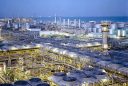
Located on Saudi Arabia’s eastern Gulf coast, Ras Tanura houses one of the largest refineries in the Middle East and forms a critical node in the country’s oil export infrastructure. The facility processes roughly 550,000 barrels of crude oil a day and is connected to extensive storage terminals and offshore loading platforms used to ship crude and refined products to international markets.
Saudi authorities indicated that the initial drone attack occurred during a period of heightened military activity across the region. Explosions and drone interceptions were reported across several Gulf states as the conflict widened following military strikes by Israel and the United States against Iranian targets.
Saudi defence officials said air defence systems intercepted drones aimed at energy infrastructure, though falling debris ignited a small blaze inside the Ras Tanura complex. Fire crews contained the incident rapidly, limiting damage to equipment. Aramco engineers subsequently carried out inspections before deciding to pause operations at the refinery.
Energy analysts say even limited disruptions at Ras Tanura can reverberate across global oil markets because the facility functions both as a refinery and as one of the world’s largest crude export terminals. The port’s loading platforms handle shipments for very large crude carriers transporting oil from the Gulf to Asia, Europe and North America.
Traders reacted swiftly to the news of the shutdown earlier in the week, pushing benchmark crude prices higher as markets priced in the possibility of supply interruptions. Brent crude rose towards the $80-per-barrel level during early trading, reflecting anxiety over escalating hostilities around the Strait of Hormuz, the narrow maritime corridor that carries roughly a fifth of the world’s daily oil flows.
Shipping companies and insurers have already begun reassessing voyages through the strategic waterway as security risks increase. Several tanker operators have delayed or rerouted shipments after attacks on vessels and commercial infrastructure across the Gulf.
Military developments since late February have intensified pressure on regional energy systems. Iranian missile and drone strikes have targeted locations linked to US and allied interests, while Israel and the United States have carried out air operations against Iranian military and strategic facilities.
Saudi Arabia has condemned attacks on its territory, describing them as threats to international energy security. The kingdom’s leadership has pledged to defend its infrastructure and maintain stability in global oil supplies despite the escalation.
Aramco has faced similar challenges before. The company’s Abqaiq and Khurais facilities were struck by drones and missiles in 2019, an assault that temporarily cut more than half of Saudi crude production and sent oil prices soaring worldwide. Security at major energy sites has since been reinforced with additional air-defence systems and surveillance capabilities.
Specialists monitoring Gulf security say the Ras Tanura episode underscores how energy infrastructure remains a central vulnerability in any regional confrontation. Oil installations are highly visible targets whose disruption can produce immediate geopolitical and economic consequences.
Tehran’s rejection of responsibility reflects the complex narrative battle accompanying the military conflict. Iranian officials argue that operations are directed only at strategic military or political targets connected to their adversaries, while Gulf governments accuse Iran of endangering civilian infrastructure.
Uncertainty over attribution also complicates efforts to stabilise markets and reassure investors. Energy companies and traders continue to watch developments closely, aware that further strikes on refining or export facilities could tighten supply conditions rapidly.
Also published on Medium.
Follow Arabian Post
Select Arabian Post as your preferred source on Google and MSN News for trusted business news and Arab politics and updates.



