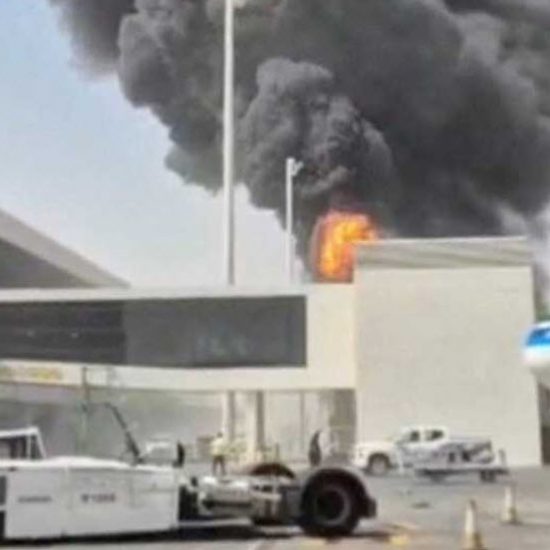
A projectile struck King Khalid International Airport on Sunday, killing a Pakistani resident and injuring 11 people, according to the General Authority of Civil Aviation. The attack followed Saturday’s devastating strike, which killed 12 people and wounded 309, several critically.
The Saudi-led coalition fighting in Yemen pledged a decisive response, accusing the Iran-aligned Houthis of targeting civilians and vital infrastructure. The Houthis claimed attacks on Saudi aviation facilities and warned airlines against using the kingdom’s airports, signalling that further strikes could follow.
US President Donald Trump condemned the violence and said Washington was considering whether to join Saudi military operations against the Houthis. No decision to intervene directly had been announced, leaving the extent of potential American involvement uncertain.
Saturday’s attack was the deadliest on Saudi territory in more than a decade. It exposed the vulnerability of a major international transport hub serving the capital, despite the kingdom’s extensive air defence network, and forced authorities to suspend airport operations while emergency teams assessed damage and passenger safety.
The civil aviation authority identified Saturday’s dead as four Saudi citizens, two Bangladeshis and one national each from the United States, Egypt, Jordan, Syria, Palestine and Sudan. Hospitals treated hundreds of casualties, while aviation officials examined damage to airport buildings and equipment.
Sunday’s projectile struck the airport’s domestic terminal complex, adding to disruption for travellers already affected by flight cancellations and delays. The renewed attack demonstrated that the airport remained exposed even after heightened security measures following the earlier strike.
The Houthis said their campaign was retaliation for Saudi military action in Yemen. Their threats have extended beyond Riyadh to other airports and energy installations, broadening the potential economic consequences of a confrontation that has already interrupted commercial aviation.
Saudi forces said they intercepted additional threats, including a cruise missile near Riyadh, a drone in the Eastern Province and a ballistic missile directed towards Khamis Mushait. The coalition’s accounts of interceptions could not independently establish the full scale of attempted attacks or the effectiveness of every defensive response.
The escalation follows renewed fighting between the Houthis and forces aligned with Yemen’s internationally recognised government after a ceasefire collapsed in July. Saudi Arabia has backed the government and intensified military operations, while the Houthis have expanded attacks against targets across the border.
The confrontation carries particular risks because Saudi Arabia is a major energy exporter and Riyadh hosts international business gatherings. Attacks on airports and oil facilities threaten travel, investment activity and energy logistics, even when individual strikes cause limited physical damage.
Several senior energy executives withdrew from attending an international petroleum congress in Riyadh after Saturday’s attack, although organisers proceeded with the event. The disruption illustrated how security concerns can affect business activity without forcing the cancellation of major conferences.
Foreign governments issued travel and security warnings as the violence intensified. The United States and other countries condemned attacks affecting civilians, while international appeals urged restraint and protection of civilian infrastructure.
The Houthis, who control Yemen’s capital Sanaa and substantial territory in the country’s north, have previously used missiles and drones against Saudi targets. Their ability to launch repeated attacks on the capital has renewed questions about the capacity of defensive systems to prevent casualties at crowded civilian facilities.
The possibility of US participation adds another dimension to the crisis. Washington maintains security ties with Riyadh, but any direct action against Houthi positions could widen a conflict connected to tensions involving Iran. Trump’s comments stopped short of specifying a timetable, military objective or operational commitment. Saudi officials, meanwhile, have framed their planned response around protecting civilians and infrastructure. Neither side has indicated that negotiations are imminent, and the Houthis have continued to describe Saudi transport facilities as potential targets.
Saudi authorities have not published a comprehensive assessment of the weapons used in both weekend strikes. Investigations and damage assessments continued as emergency services worked to restore safe operations and airlines adjusted schedules.
The airport attacks also complicated the movement of passengers through the kingdom. Carriers diverted or cancelled services, while travellers faced uncertainty over departures and arrivals pending safety checks and operational announcements from airport authorities.
Follow Arabian Post
Select Arabian Post as your preferred source on Google and MSN News for trusted business news and Arab politics and updates.