


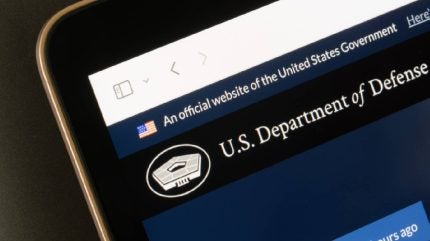
Salesforce has secured a 10-year contract worth up to $5.6 billion with the United States Army to overhaul the service’s digital infrastructure, embedding cloud computing, advanced data analytics and artificial intelligence across a wide range of defence operations. The Indefinite Delivery Indefinite Quantity agreement, executed through Salesforce’s specialised subsidiary Computable Insights, is intended to unify fragmented data systems, streamline workflows and accelerate decision-making from recruitment and training to logistics and field operations.
Under the terms of the contract, the Army and the Department of War will gain access to Salesforce’s Missionforce National Security platform, which offers a suite of AI-enabled tools, customer-relationship management capabilities, and cloud-based services designed to replace legacy systems that Defence officials have long described as siloed and inefficient. The first five years represent a base ordering period with a further five-year optional period, and although the $5.6 billion figure is a maximum ceiling rather than a guaranteed expenditure, the award reflects a strategic pivot toward commercial technology in US military modernisation.
Salesforce’s platform will seek to bring disparate data streams together on a unified interface, enabling personnel to access real-time analytics and AI support agents that reduce the time spent on administrative tasks and improve situational awareness across complex operations. The software will extend to human resources and talent management functions, giving recruiters and command staff collaborative tools such as secure messaging and workflow automation that are already widely used in private-sector settings and adapted for government security requirements.
Kendall Collins, the chief executive officer of Missionforce and Government Cloud at Salesforce, described the award as building on more than a decade of collaboration with the US armed forces, emphasising that the deal will “operationalise Missionforce across the Army and DOW”. Officials view this as a foundation for future AI deployments capable of acting as force multipliers, augmenting decision-making rather than simply automating processes.
The contract aligns with a broader push within the Department of Defence to embrace commercial software and cloud solutions. Defence leaders have increasingly courted partnerships with technology firms to bring scalable, modern digital tools into national security environments, moving away from bespoke, legacy systems that can be costly and slow to update. The Army’s adoption of Salesforce’s tools is part of this wider trend and mirrors parallel agreements with other tech providers aimed at strengthening data integration and AI capabilities across services.
Analysts watching the defence and cloud computing sectors say the deal marks a significant expansion of Salesforce’s footprint in government and defence markets. The company only formally launched its national security unit, Missionforce, in September 2025, and the Army contract represents its largest award to date, vastly outstripping previous engagements. For Salesforce, the agreement promises a sustained and visible role in one of the most technologically complex landscapes in the world, anchoring the firm’s products deep into defence operations.
Investors have responded with cautious optimism; Salesforce’s share price has experienced modest movements as stakeholders weigh the long-term revenue potential against execution risks inherent in large, highly customised government deployments. Some market participants highlight the strategic value of gaining a foothold in the defence sector, where multi-year, high-value contracts can diversify the company’s revenue beyond traditional commercial enterprise software sales.
Critics caution that integrating commercial technologies into military systems carries potential challenges, including stringent security requirements, interoperability with existing defence architectures, and the need for ongoing support and updates without disrupting critical operations. These concerns underscore the complexity of transitioning from legacy platforms to unified cloud-based systems in a defence context where reliability and resilience are paramount.
Department of War officials have stressed that the contract is part of a wider strategy to improve efficiency, reduce procurement timelines and cut costs through predictable pricing and streamlined acquisitions. The expectation is that by moving away from bespoke development and fragmented systems toward scalable platforms, the Army will be better positioned to integrate emerging technologies, including future AI innovations that could significantly enhance operational capabilities across the force.
Follow Arabian Post
Select Arabian Post as your preferred source on Google and MSN News for trusted business news and Arab politics and updates.






