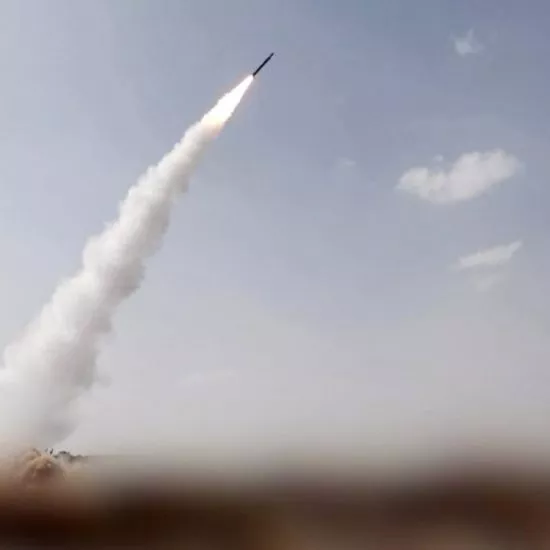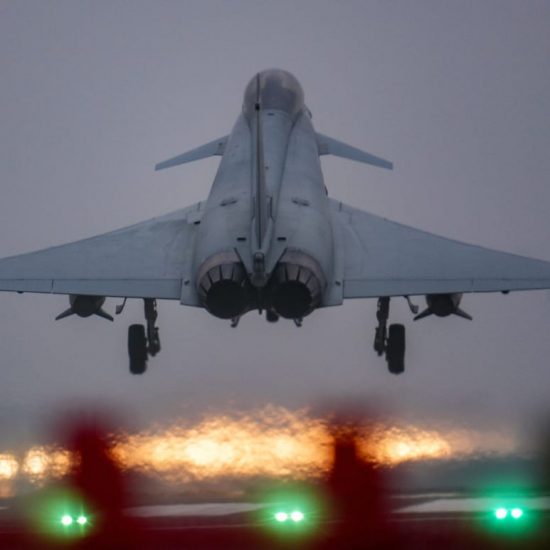
The Saudi-led military coalition said on Monday it had destroyed two ballistic missile launchers in Yemen’s Houthi-controlled capital, Sanaa, following an attempted missile strike against Riyadh.
Major General Turki Al-Maliki, spokesman for the Coalition to Restore Legitimacy in Yemen, said one of the destroyed launchers had been used to fire the ballistic missile towards the Saudi capital earlier in the morning. Saudi air defences intercepted and destroyed the incoming projectile, he said.
The coalition did not immediately disclose the precise locations of the two launchers, the weapons employed in the strikes or whether the operation caused casualties. Its account of the destruction could not be independently verified.
Al-Maliki said operations would continue to dismantle the Houthis’ ballistic missile network, signalling that the coalition was targeting launch capabilities as well as intercepting missiles already in flight.
The interception followed an overnight security alert in Riyadh. Residents received a Civil Defence warning on their mobile phones at approximately 3.42am local time about a possible aerial threat. Another notification issued minutes later indicated that the immediate danger had passed.
The Houthi movement separately claimed it had targeted King Khalid International Airport in Riyadh with a ballistic missile. Its military spokesman, Yahya Saree, also claimed drone attacks against Saudi oil pumping stations. Saudi authorities had not immediately confirmed that either facility had been struck or damaged.
The distinction between an attempted attack and a successful strike remains important. While the coalition acknowledged intercepting a missile directed towards Riyadh, the Houthis’ assertions about the intended airport target and attacks on oil infrastructure were not independently substantiated.
The exchange came as Saudi Arabia faced repeated launches of missiles and drones from Houthi-held territory. The coalition said on Sunday that it had intercepted ten ballistic missiles heading towards the kingdom’s southern region, following other interceptions involving Riyadh and Khamis Mushayt.
Saudi Civil Defence authorities also reported injuries to a Saudi citizen and an Asian expatriate after debris from intercepted missiles fell in Khamis Mushayt and Ahad Rafidah on Sunday. Three residential buildings and seven vehicles sustained damage, according to the authorities.
Those incidents illustrated the danger posed by falling fragments even when incoming weapons are intercepted before reaching their intended targets. The authorities did not announce casualties resulting from Monday morning’s interception over Riyadh.
The coalition has described its operations against Houthi missile installations as measures of self-defence intended to protect Saudi territory, residents and civilian infrastructure. Al-Maliki said the broader military campaign was directed at the movement’s weapons systems, supply routes and military positions.
He maintained that coalition operations were conducted in accordance with international humanitarian law. That assertion does not independently establish whether individual strikes met the legal requirements governing targeting, proportionality and precautions to protect civilians.
Monday’s strikes also followed a wider coalition operation against Houthi military infrastructure. The coalition said its forces had destroyed missile storage tunnels, launch pads and a weapons depot, although independent confirmation of the reported damage was unavailable.
The renewed exchanges have complicated efforts to restore normal transport operations in the Saudi capital. King Khalid International Airport began a partial reopening on Sunday after earlier attacks disrupted flights, with limited services resuming at two terminals.
Airport authorities advised passengers to confirm their flight arrangements before travelling, reflecting the continuing possibility of operational changes during security alerts. The Houthis’ claim to have targeted the airport on Monday had not been accompanied by independently verified evidence of a fresh impact there.
The coalition’s announcement also came amid intensified fighting inside Yemen between Houthi forces and troops aligned with the internationally recognised government. Military statements from both sides have described substantial operations, but battlefield casualty figures and damage assessments remain difficult to verify independently.
Sanaa has been under Houthi control since 2014. The Saudi-led coalition intervened the following year in support of Yemen’s internationally recognised government, and the capital remains a principal centre of the movement’s military and political operations.
On Monday, Al-Maliki announced the destruction of the launchers through statements carried by Saudi official channels and posts on X. The coalition identified one launcher as connected to the morning’s attempted strike but provided no corresponding identification for the second platform. No photographs or detailed technical assessment accompanied the initial announcement of the operation.
Also published on Medium.
Follow Arabian Post
Select Arabian Post as your preferred source on Google and MSN News for trusted business news and Arab politics and updates.