News related to
sale

MACAU SAR – Media OutReach Newswire – 9 October 2025 – Galaxy Macau™ Integrated Resort is delighted to present an evening of operatic splendour with “Galaxy Macau™ Presents – Galaxy Music Gala: Sumi Jo – Mad for Love” as internationally acclaimed South Korean soprano Sumi Jo makes her long-awaited Macau debut at 17:00 on December 28 at Auditorium of the Galaxy International Convention Center (GICC). Tickets will […]

Griffin Gaming Partners has acquired the mobile-publishing arm of Playdigious from Fragbite Group for €10.5 million, with Fragbite retaining rights to 90 per cent of net revenue from Playdigious’s PC titles. The transaction is structured on a cash-and-debt-free basis, according to company statements. The acquisition hands Griffin control over Playdigious’s mobile licensing and porting operations, while Fragbite maintains a financial stake in its PC-focused publishing arm, Playdigious […]

Phuket’s great weather, safe tropical environment and world-class infrastructure offers Europeans an unrivalled escape from cold winters and political tensions PHUKET, THAILAND – Media OutReach Newswire – 9 October 2025 – Phuket, Thailand’s largest island is now a top destination for European families, retirees and investors seeking property abroad. Known for its pristine beaches, vibrant culture, warm year-round climate and the equally warm Thai hospitality, Phuket is […]

Since its arrival in September 2025, the XPL token has drawn attention as the fulcrum of Plasma’s stablecoin-first blockchain vision. The network, engineered to process high-volume stablecoin transfers with minimal friction, stakes much on XPL’s design, distribution, and incentive architecture. A close look at how the token functions, how it has been received in markets, and what early ecosystem moves suggest reveals both promise and pitfalls.

XPL is conceived as the backbone of network security, transaction operations, and ecosystem growth. Under Plasma’s model, validators will stake XPL to secure the network under the PlasmaBFT consensus protocol, earning rewards in return. Meanwhile, the token also acts as the medium for executing non-basic transactions and participating in governance-like decisions tied to ecosystem programs. In that sense, XPL parallels Bitcoin’s role on the Bitcoin network and Ether’s role on Ethereum, though with nuances shaped by Plasma’s stablecoin orientation. The team states that its architecture deliberately ties token mechanics to campaign-driven incentives designed to migrate traditional financial flows onto its rails.

From a distribution perspective, Plasma launched with a fixed supply of 10 billion XPL. Ten percent was allocated to a public sale, while 40 percent was reserved for ecosystem and growth initiatives. At mainnet beta, 8 percent of the total supply was unlocked to support initial liquidity, partner incentives, and launch integrations. The remainder—particularly allocations for team, investors, and long-term contributors—follows graded vesting schedules to temper sudden sell pressure. In the public sale design, non-U. S. participants’ tokens were fully unlocked at launch, while U. S. participants face a 12-month lockup. This dual-track unlocking scheme aims to balance inclusion and capital discipline.

The tokenomics also include a built-in inflation schedule and fee mechanics intended to contain supply pressure. Initial validator rewards are targeted around 5 percent per annum, with planned reductions over time toward 3 percent baseline. Meanwhile, the protocol supports a form of fee burn inspired by EIP-1559; as transaction usage scales, some portion of fees will be removed from supply, offsetting inflation. The combined effect is intended to sustain staking incentives without runaway dilution. Another technical feature is Plasma’s “paymaster” system, which allows standard USDT transfers to carry zero fees, subsidized by the protocol itself. That mechanism reduces the necessity for every user to hold XPL merely to pay gas, lowering adoption friction.

Market reception to XPL turned dramatic almost immediately. At launch, the network held more than USD 2 billion in stablecoin liquidity across over 100 DeFi protocols. Within 24 hours of trading, XPL surged by over 50 percent in some reports—a mark of speculative demand meeting limited immediate circulating supply. Some early buyers from the public sale reportedly reaped significant multiples, even as Plasma distributed bonus tokens to pre-deposit participants regardless of purchase. At peak, XPL reportedly hit above USD 1.50 before retracing to levels around USD 0.90 to USD 1.10. Observers estimated its fully diluted value approaching USD 8–10 billion, reflecting soaring expectations baked into launch pricing.

Yet that market euphoria also exposes structural tensions. The disparity between circulating supply and total supply creates a potential “float risk”—many tokens locked under vesting may exert downward pressure as unlocks commence. The timing and pacing of those unlocks will test whether early demand can be sustained under growing supply. Furthermore, while the paymaster model reduces friction, it also transfers the burden of fee subsidies to the protocol’s reserves. If usage scales unpredictably, that subsidy cost could challenge sustainability unless fee revenue or ecosystem yield compensates.

Another variable is how decentralized and secure the validator structure becomes. The strength of PlasmaBFT relies on meaningful decentralization and active participation. If validator concentration remains high or slashing risks are unevenly applied, token holders may question whether XPL truly underpins a secure, trust-minimized system. The use of reward slashing somewhat mitigates direct capital loss risk, but critics argue it may weaken incentives for strict validator discipline.

Beyond core mechanics, XPL’s ecosystem deployment matters. Early integrations offer a glimpse: Plasma granted XPL funding to Clearpool to support PayFi, a stablecoin‐settled credit infrastructure. That move reflects a play to establish secondary use cases—credit rails, yield protocols, merchant flows—that could entrench XPL usage beyond staking and fees. Meanwhile, Binance’s announcement of a 75 million XPL airdrop tied to its HODLer program signals aggressive token distribution into retail investor hands. That distribution may expand user base but also risks speculative churn.

On the regulatory front, XPL must navigate emerging scrutiny. Since stablecoins straddle monetary and securities domain, a blockchain built entirely around them invites questions about oversight and compliance. To date, Plasma has employed jurisdictional filtering, KYC onboarding, and cautious distribution to U. S. investors, but scaling into global payments heightens exposure. If major jurisdictions impose stricter rules on stablecoin issuance or transfer, XPL’s value proposition may face constraints or require adaptation.


The subscription window for Abdulaziz Ahmad Al-Twijri Trading Company’s initial public offering on the Nomu–Parallel Market will run from 2 to 9 November 2025, focusing exclusively on qualified investors. The offering involves 1 million shares — equivalent to 20 % of the company’s post-IPO capital. The Capital Market Authority approved the registration in June 2025.

Al-Twijri had earlier attempted an IPO in June 2023, when it proposed to list 600,000 shares; the attempt was cancelled after failing to attract full subscription. The current issue is built on a base capital prior to offering of SAR 40 million, paid up via 4 million shares at a nominal value of SAR 10 each. Post-offering, the company will issue 5 million shares, with the floated portion representing 20 %.

Al-Twijri’s core operations span wholesale of food, hygiene and personal care products, medical supplies, plus real-estate leasing and management. In its prospectus, the firm indicates plans to channel proceeds toward expansion of storage capacity and related working capital needs.

The company has appointed Yaqeen Capital as financial advisor and bookrunner, and a spectrum of Saudi capital firms — including Derayah, Al Rajhi Capital, SNB Capital, Riyad Capital, Albilad Capital, AlJazira Capital, Alistithmar Capital, Alinma Capital, ANB, Alkhabeer, SAB Capital, Sahm Capital, GIB Capital and Musharaka Capital — as receiving agents.

Under Saudi capital markets rules, the offering is limited to qualified investors as defined by CMA guidelines. The CMA has emphasised that its approval is procedural; it does not constitute an investment endorsement.

Analysts note that the timing taps into broader momentum in Saudi Arabia’s IPO market. During the second quarter of 2025, Saudi listings captured about 76 % of all GCC IPO proceeds, with strong interest in offerings on both the main market and Nomu. Participation by institutional or high-net-worth investors will be critical to achieving full allocation.

Al-Twijri’s promoters — chiefly members of the Al-Twijri family — will retain controlling interest. In past filings, Mohamed and Khalid Al-Twijri held 30.5 % each, with minority holders covering the remainder. Post-IPO, their combined share will remain significant.

Branded residential developments in the Middle East and North Africa are now capturing a larger share of global signings, with standalone projects set to make up 45 per cent of the regional portfolio—well above the global average of 36 per cent.

Data from Global Branded Residences shows that the MENA region now accounts for 36 per cent of new global branded residence signings, outstripping traditional hubs such as North America, Europe and Asia. The region currently has 99 completed branded residences and 241 under development, representing 13 per cent of existing global supply and 25 per cent of the pipeline. The UAE leads with 201 projects, followed by Saudi Arabia and Egypt.

Dubai remains the most active city globally, with nearly 160 branded developments either completed or in the pipeline—surpassing markets like Miami, London, and New York. The breakdown in MENA shows that 31 per cent of completed branded residences are standalone, while 51 per cent of the pipeline comprises standalone projects. This shift indicates broader confidence among developers in models unlinked to hotel operations.

Fashion and lifestyle brands are playing an increasingly prominent role in driving the shift away from purely hospitality-anchored residences. In MENA, fashion labels account for 51 per cent of non-hotel branded projects—nearly double the global average of 26 per cent. Non-hotel brands now represent 30 per cent of the regional pipeline, up from 24 per cent among completed schemes. In effect, branded residences in the region are diversifying beyond hotels into lifestyle, design and luxury branding.

Fairmont is poised to be the largest operator in the region, with 19 schemes across completed and pipeline stages. New entrants include jewellery brand De Grisogono and hospitality/lifestyle brand Nobu.

Globally, the branded residences sector has expanded rapidly over the past decade. The total number of schemes globally stands at 1,746—779 completed and 967 under development. Across this global portfolio, hotel brands still dominate, accounting for 79 per cent of projects. However, standalone branded residences—those without hotel attachments—are projected to rise from about 8 per cent of the world’s projects to 12 per cent over time.

Broadly, the market is seeing several converging trends. Buyers are increasingly willing to pay a premium—often 20 to 35 per cent or more—for branded units over comparable non-branded luxury real estate, citing consistency of design, service, and long-term resale value. Developers, in turn, see branding as a differentiator that supports stronger pricing, absorption rates and margins. In fast-growing wealth markets, branding provides credibility and global marketing reach.

Asia Pacific has also moved into the spotlight. GBR has formally launched operations in APAC, targeting markets such as Thailand, Vietnam, India, Malaysia and emerging resort destinations. The firm forecasts that branded development projects in APAC may more than double, with the region evolving into one of luxury real estate’s fastest growing markets.

Nevertheless, challenges remain. Aligning brand partnerships with regional regulatory, legal and operational frameworks is complex. Delivering consistent service quality over time, especially in newer locations with less mature hospitality infrastructure, is no small task. In denser branded markets, developers must differentiate amenities, design and buyer experience to avoid commoditisation.

Portuguese quantum computing firm Quantica Tech has revealed a new digital currency, Quantic Bitcoin, engineered to resist attacks from future quantum computers. The project rests on a proprietary “Quantum Interoperability” protocol designed to allow conventional blockchains and quantum‐era architectures to communicate and co-operate.

BTCQ is intended to preserve Bitcoin’s proof-of-work consensus but replace vulnerable cryptographic signatures with algorithms that conform to NIST-approved post-quantum standards. In transitional phases, the system runs quantum algorithm emulation on classical hardware—enabling development without immediate dependence on quantum hardware. Quantica has also introduced tiered fractional units, named Photons, Quarks and Bosons, to mirror Bitcoin’s Satoshi model at microtransaction scale.

The announcement reflects intensifying concern within cryptographic and blockchain communities about quantum threats to existing systems. Shor’s algorithm, for instance, is capable of undermining widely used public-key schemes, such as ECDSA, that secure most cryptocurrencies today. A literature review of quantum impacts on blockchain estimates that, although scalable quantum machines remain a work in progress, the threat horizon is accelerating, pushing many in the industry to preemptively explore quantum-safe alternatives.

Quantica says its interoperability protocol enables smart contracts in languages such as Solidity, Rust, Plutus and Vyper to invoke quantum layer functions through external script calls. The firm claims it has already shared the initial design of that protocol with the scientific community, though specific cryptographic details remain withheld. Plans are in place to issue Simple Agreements for Future Tokens in late 2025 and conduct a pre-sale of the token units ahead of public launch. The company is also working in parallel on related projects—Quanticacoin, USDT-Q and Q-Solana—to extend its quantum-capable ecosystem.

BTCQ joins a growing number of blockchain initiatives adopting quantum-resistant techniques. The Quantum Resistant Ledger, for example, has long leveraged XMSS to offer protection against quantum attacks, and many networks have begun integrating lattice-based or hash-based post-quantum cryptography.

Still, implementation and security challenges loom. Recent academic analysis warns that purely algorithmic guarantees do not suffice; side-channel attacks and hardware vulnerabilities may undermine post-quantum schemes if not carefully addressed. Analysts caution that the “harvest now, decrypt later” risk remains active: encrypted data captured today may be decrypted when quantum capabilities mature.

Market reception has been cautious. Many observers view Quantica’s claims as ambitious, given the dearth of open cryptographic proofs or independent audits so far. Some see the project as an early bet on quantum transition rather than an immediate substitute for existing value chains. Others argue the broader utility of quantum-resistant assets will depend heavily on regulatory frameworks, interoperability standards, and community adoption.

Quantica’s announcement arrives against the backdrop of intensifying activity in quantum and cryptographic infrastructure. Hardware vendors and research institutions are racing to scale error correction, qubit coherence and interconnects. Meanwhile, financial and security firms are preparing migration strategies for sensitive systems. Among commercial players, SEALSQ has unveiled hybrid cryptographic hardware intended to safeguard blockchain systems and IoT devices against quantum attacks.

Quantica has positioned BTCQ’s development as a shift from theoretical readiness to pragmatic construction. The firm contends it can build bridges between classical chains and quantum systems without heavy disruption to existing protocols. Early access via SAFTs and token presales aim to bootstrap an ecosystem of developers and enthusiasts.

Advertisements

SINGAPORE – Media OutReach Newswire – 8 October 2025 – Food Japan 2025, ASEAN’s premier exhibition for Japanese food and beverage (F&B) products, technology, and services, opened today for its 13th edition. The event continues to serve as a vital platform for celebrating Japan’s culinary heritage, spotlighting cutting-edge innovations, and fostering business partnerships across the region. This year, 153 exhibitors from 35 prefectures and Singapore are participating, […]

Fight Fight Fight LLC, the company behind the TRUMP memecoin, has launched a capital-raising campaign of at least $200 million with ambitions that could scale up to $1 billion to establish a dedicated digital asset treasury that would accumulate holdings of the token, according to people with knowledge of the matter.

The undertaking is led by Bill Zanker, a long-time promoter and Trump ally, and signifies one of the most aggressive attempts yet to stabilise a creator-driven token through internal backing. The funds would be deployed primarily to purchase TRUMP tokens from the open market, an effort to shore up price and signal confidence in what has become a volatile asset.

TRUMP, launched just before Donald Trump’s second inauguration, operates on the Solana blockchain under two joint issuers—Fight Fight Fight LLC and CIC Digital—together controlling 80 percent of its total supply. The public tranche was released in January 2025, and the token rapidly gained speculative traction before encountering steep declines.

Insiders caution that the fundraising process is ongoing and not guaranteed to succeed in full. They also note that structuring such a treasury around a politically branded memecoin carries substantial market, regulatory and reputational risks.

Cryptocurrency analysts observe that the move is consistent with broader trends in 2025: increasingly, token issuers are creating “treasury models” to backstop flagging price action. Yet few of those are tethered so explicitly to a political figure or narrative, making the TRUMP case unique.

The token’s price trajectory has been volatile. After peaking earlier in the year, it has fallen sharply—losing more than 80 percent of its value from highs—attracting scrutiny about its speculative nature and sustainability. Meanwhile, TRUMP maintains strong social media backing and occasional high-visibility events, such as a dinner hosted by Trump in May for top token holders, which had triggered a notable price bump.

In June, plans were floated by the issuer to launch an “Official Trump Wallet” to facilitate trading and custody, but disputes emerged with World Liberty Financial. Those tensions underscored internal complexity and fragmented control within the broader Trump crypto ecosystem.

Analysts underline that for the treasury plan to have long-term impact, it must go beyond buybacks. Critics argue that stockpiling tokens may serve only short-term price support, lacking sustainable utility or integration into broader infrastructure. There is a risk that concentrated control over token issuance and vesting schedules could invite regulatory scrutiny or undermine confidence among external investors.

Institutional curiosity is emerging: Canary Capital Group has reportedly filed paperwork with U. S. regulators to launch a spot ETF tied to TRUMP. Yet the Securities and Exchange Commission’s cautious posture toward meme coins, and obstacles in listing a futures-based derivative market, could impede progress.

The broader Trump-adjacent crypto strategy has already stretched into multiple verticals. Trump Media & Technology Group announced a $2.5 billion initiative to build a bitcoin treasury, and World Liberty Financial has launched a $1.5 billion self-buy programme in its own token, WLFI. In that case, about half the funding is to be in WLFI itself, with the rest directed to debt settlement and resale.

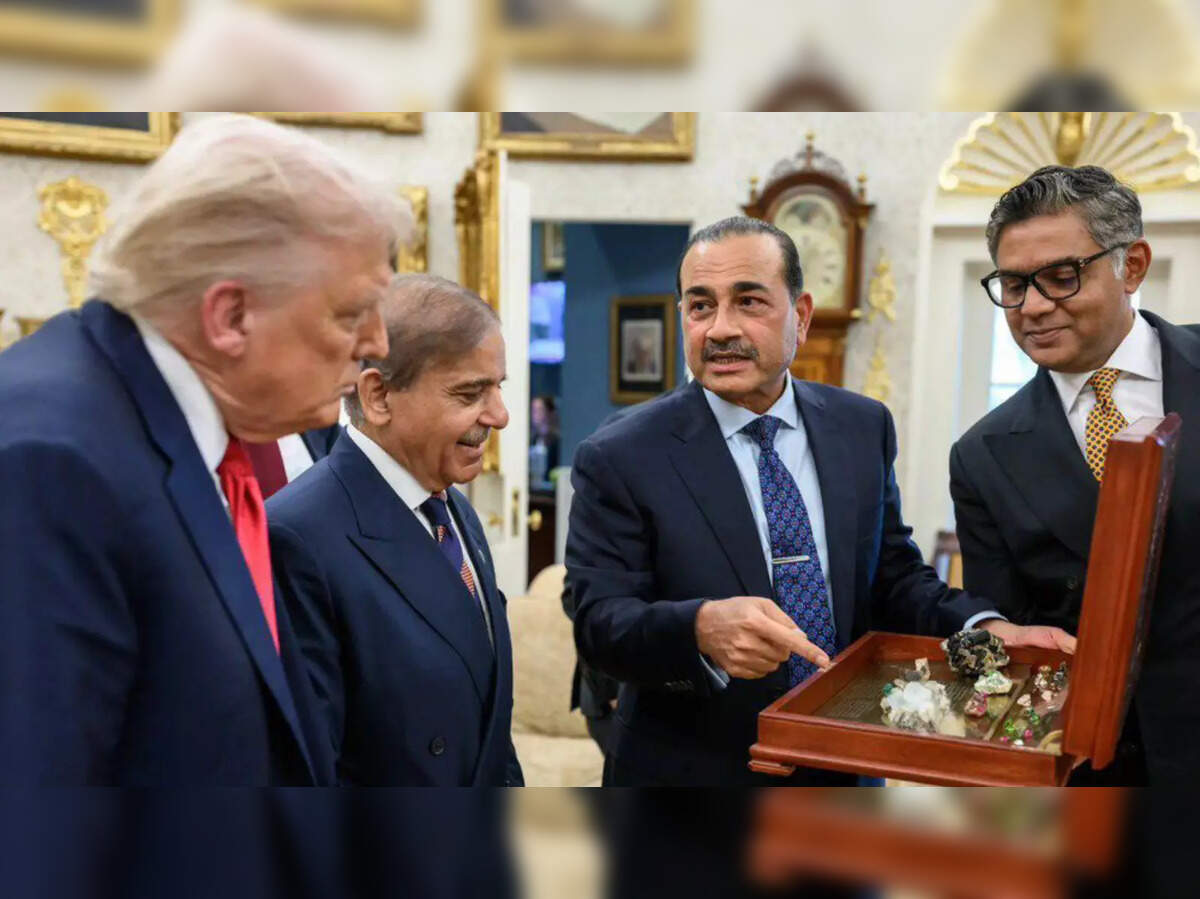
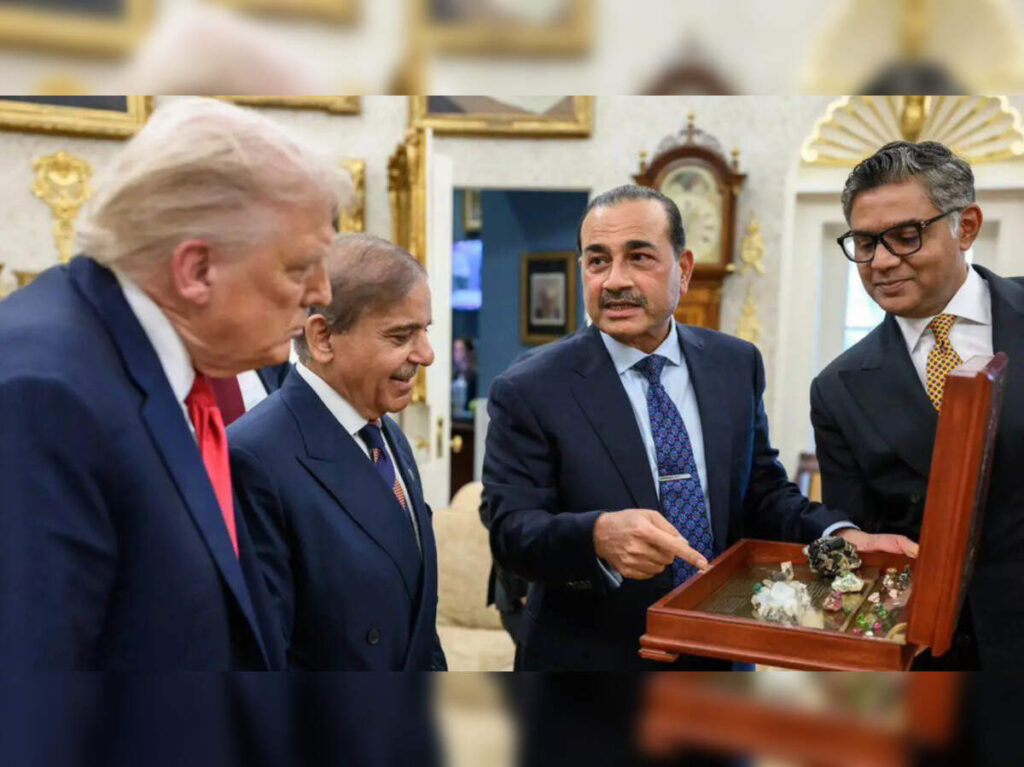
By Sushil Kutty Rare minerals included lots of ores, this was something we were taught in school and we learned about stone age, copper age and iron age, the last of which remains to this day the most basic of minerals, out of which was born steel and the term steely strength, like in ‘Superman […]

The article Pakistan Is The Dearest To Trump In Asia As Islamabad Exports Rare Earth Minerals appeared first on Latest India news, analysis and reports on Newspack by India Press Agency).

AMD signed a long-term agreement with OpenAI to supply six gigawatts of AI chips over multiple years, with the first delivery of its Instinct MI450 GPUs slated for the second half of 2026. In tandem, OpenAI will have the right to acquire up to 160 million AMD shares—roughly 10 percent of the company—subject to performance and stock-price milestones. Under the pact, AMD will act as a core […]

Amazon has slashed prices on a wide range of Nvidia GeForce RTX graphics cards as its Prime Big Deal Days shopping event goes live from 7 to 8 October. Among the standout bargains are flagship and mid-tier models hitting their lowest-ever prices, while concerns about shipping scams have also drawn scrutiny. The most aggressive discount applies to the Asus TUF GeForce RTX 5070 Ti, currently offered at […]

Omnix International will unveil its HOT Systems suite—built in collaboration with PNY—at GITEX Global Dubai from 13 to 17 October, spotlighting AI workstations, liquid-cooled laptops and a new system-monitoring tool dubbed HOT Guard.

Visitors to the Hall 5, Booth 30 installation will see across-industry demonstrations—architecture, engineering, media, research—illustrating how tailored hardware accelerates digital transformation, reduces thermal throttling, and boosts reliability under sustained loads. HOT Guard introduces a continuous monitoring layer that oversees thermal behaviour, utilisation and system health, integrated with Omnix’s Hardware Optimization Technology stack.

The partnership with PNY ensures integration of high-performance memory and NVIDIA RTX graphics. PNY’s regional manager for MEA, Talus A Arukalil, emphasised that this collaboration positions the company to deliver “technology that doesn’t just keep pace with the future but defines it in the region.” On the HOT Systems side, Joseph John, Regional Sales Manager, asserted that the hardware is engineered “for today’s demands and tomorrow’s innovation,” targeting sectors where sustained compute power and system stability matter most.

According to Omnix’s own announcements, the new laptop models under the HOT Systems brand will be equipped with cutting-edge silicon—Intel Core Ultra 9 200HX or AMD Ryzen 9000 HX—matched with NVIDIA RTX 5080/5090 GPUs, DDR5 memory up to 128 GB, PCIe Gen 5 SSDs, Wi-Fi 7 and optional liquid cooling. These designs aim to balance high thermal headroom with energy efficiency and sustained performance even under intense workloads such as CAD, simulation and AI/ML inference.

Liquid cooling in a laptop format is still relatively rare. During previews, the company has framed this design choice as essential for holding consistent clock speeds over long renders or training sessions, reducing throttling under heat stress. As TBreak put it, the “pitch is stable clocks over flash specs,” targeting firms that can’t afford dips in performance mid-job.

With the industry steadily shifting from experimental AI use cases to full deployment, enterprises are increasingly looking for turnkey, dependable solutions—not just proof-of-concepts. In this environment, Omnix seeks to differentiate itself by offering not just hardware, but optimised stacks, monitoring, service support and aligned component integration.

GITEX Global 2025 is expected to host over 6,800 exhibitors from around 180 countries, showing advances across semiconductors, data centres, quantum computing, biotech and AI infrastructure. With global AI infrastructure investments accelerating sharply, regional companies and integrators are keen to showcase solutions tailored to local conditions—particularly in arid climates and metropolises with high operating temperatures.

Michael Brown Political instability in France, and a surprise in Japan’s LDP leadership election made for a spicy start to the week yesterday, though stocks rallied regardless. Today, a barren docket awaits, as participants continue to headline-watch. A penny for the thoughts of G4 central bankers right now, as none of them appear to have particularly easy jobs. First, Fed Chair Powell, who recently resumed the journey […]

Telecom operator du and technology vendor Nokia have completed a trial of an artificial intelligence–driven automation system aimed at simplifying and expediting the expansion and management of optical networks in the UAE.

The deployment tested Nokia’s WaveSuite AI, which combines traditional AI methods with generative models to assist du engineers with tasks such as planning, troubleshooting and documentation retrieval. The trial reportedly halved the time needed for optical network planning and produced designs 30 percent more efficient, while reducing errors during deployment.

During the trial, du’s engineering team used a single natural language interface to query live network status, access accurate documentation instantly, and simulate potential network evolutions. The system flagged possible inconsistencies or conflicting configurations early, allowing corrective adjustment before full-scale rollout. According to du, the result was faster troubleshooting, fewer manual errors and improved resource utilisation.

Saleem AlBlooshi, chief technology officer at du, said the trial “shows how innovation can transform network operations to face challenges brought on by increasingly sophisticated networks and ever-higher traffic volumes.” He emphasised that the automation of routine tasks and provision of intelligent tools would lead to more reliable, SLA-backed connectivity for customers.

From Nokia’s standpoint, Ron Johnson, senior vice president and general manager of Optical Networks, called WaveSuite AI “a demonstration of the real value of automation solutions with both classical and generative AI for optical networking.” He noted that the system reduces friction in planning, documentation search, and operational processes, and helps service providers accelerate provisioning of higher-speed, more reliable services.

The trial builds on du’s broader effort to embed AI and automation more deeply across its systems. Earlier this year, du partnered with Microsoft, Nokia, Khalifa University’s 6G Research Center and the ITU to launch an “Arabic Telecom LLM,” a large language model tailored for internal telecom operations. That model is designed to handle internal workflows, resolve device issues, process complaints and provide operational insights in Arabic and English. The initiative is part of du’s strategy to blend regional research leadership and global AI tools while retaining language and cultural fidelity in its operations.

This AI-driven automation trial comes amid growing pressures on telecom operators worldwide to scale quickly to meet surging demand for bandwidth, driven by AI workloads, data centers and new real-time applications. As networks grow in complexity, manual processes no longer scale efficiently, pushing operators into an era of closed-loop or autonomous operations. Nokia, in its public literature, frames network automation as essential to reducing manual intervention, improving performance and enabling faster service delivery across domains such as core, mobile, IP and optical networks.

In the UAE context, this trial signals du’s ambition to advance its optical infrastructure ahead of demand peaks, while benchmarking its operations for future 6G readiness. The success of automation in planning and deployment could reduce operational costs, increase agility, and support more complex services such as network slicing, ultra-low latency applications and differentiated service tiers.

HANOI, VIETNAM – Media OutReach Newswire – 7 October 2025 – The mega concert G-DRAGON 2025 WORLD TOUR [Übermensch] will take place on November 8 at 8Wonder Ocean City, with tickets officially opening for sale on October 7, 8, and 9. Prices range from VND 2 million to VND 8 million, offering a variety of exclusive benefits. With such anticipation, ticket sales are expected to spark an […]

From left, Kamran Muhammad (6th in frame), CEO of Mashriq Elite, and from right, Aamil Tabani (4th in frame), CEO of Golden Bridge. Launched in September 2023, the project has progressed to delivery as committed, a milestone that underscores investors’ confidence in Dubai’s real estate market  Mashriq Elite Developments and Golden Bridge (exclusive sales and marketing partner) have marked the successful on-time handover of Floarea Residence in […]

Annual leadership business series by Canon Singapore equips business leaders with strategies and a resilience-ready toolkit to navigate global and economic shifts impacting Singapore SINGAPORE – Media OutReach Newswire – 6 October 2025 – Canon today announced the return of the highly-anticipated annual Think Big Leadership Business Series in Singapore, designed to help businesses tackle challenges in an era of global uncertainty and technological disruption. This year’s […]

 by Mahboob Subuhani, Regional Director, IT Solutions – MEA & APAC at Sigma Software Group Dubai stands as a global benchmark for government digitalisation. In 2025, 99.5% of its services are digitised (120+ gov apps), with over 173 million digital transactions processed across 1400+ services, serving 57 million beneficiaries.    Today, Dubai ranks 4th globally in the IMD Smart City Index 2025, and 1st in the GCC, […]

South African equities climbed to unprecedented levels on Thursday, driven by buoyant momentum in mining and financial sectors. The benchmark FTSE/JSE All-Share Index rose past its prior peak, cementing the capital market’s status as one of the continent’s top performers this year. The rally has been underpinned by a strong commodity backdrop: iron ore, platinum, and gold all posted gains, boosting mining stocks across the board. The […]

Eric S. Raymond, one of the foundational figures behind the Open Source Initiative, has called for a wholesale rejection of codes of conduct in open-source communities, characterising them as counterproductive. His outspoken position has revived a heated debate over governance, community norms and enforcement in open software ecosystems. Raymond argues that codes of conduct, designed to promote civil discourse and inclusion, have become tools for disruption and […]

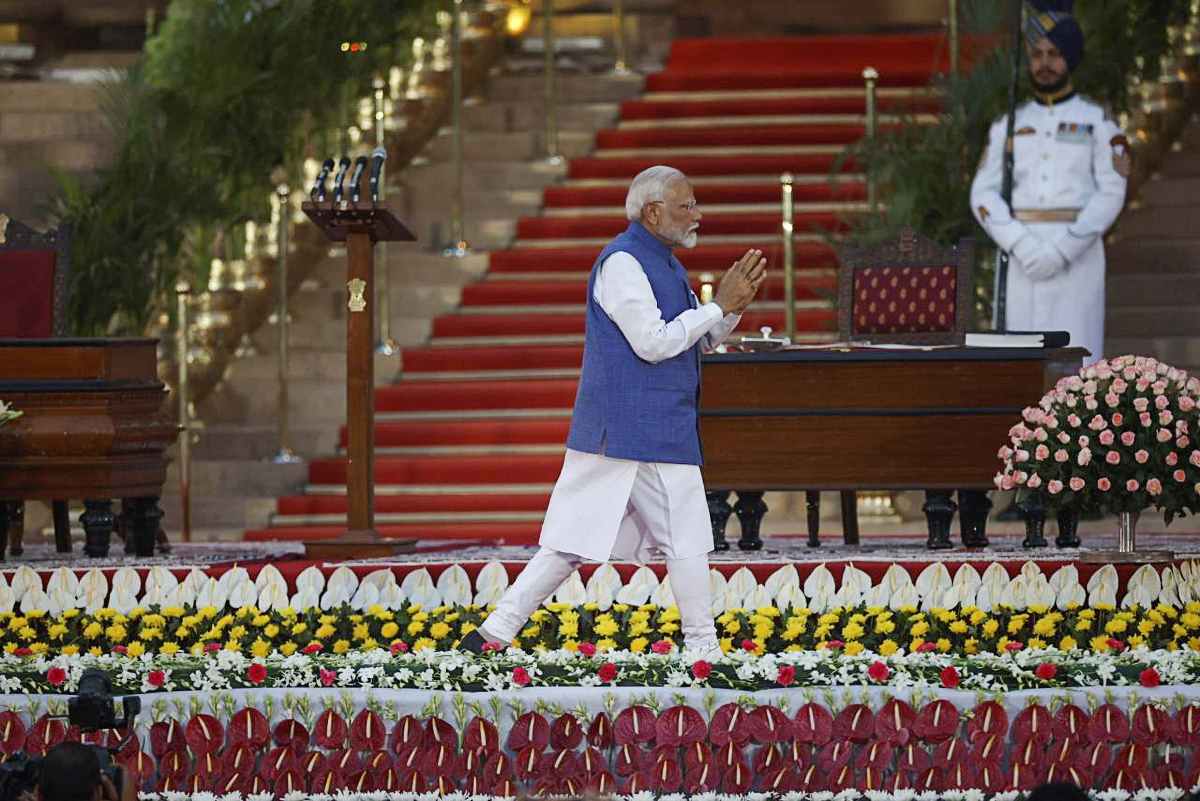
By K Raveendran It was a week of contradictions for India’s image on the world stage, marked by a curious interplay of critique, affirmation, and manoeuvring. Rahul Gandhi, in his address at Columbia University, painted a picture of India that was dark and distressing, describing the country’s democratic decline in sweeping terms. At the same […]


The article A Week Marking The Worst And Best For India On Global Stage appeared first on Latest India news, analysis and reports on Newspack by India Press Agency).

Abu Dhabi’s economy expanded 3.8 percent in the second quarter of 2025, with non-oil activity growing by 6.6 percent and, for the first time in a second quarter, making up 56.8 percent of total GDP, according to figures released by the Statistics Centre – Abu Dhabi. The emirate’s real gross domestic product reached AED 306.3 billion in Q2, rising from the corresponding period in 2024. The non-oil […]

Tesla has launched sales of its Cybertruck in Qatar, bolstering its Middle East expansion as the electric carmaker seeks growth beyond saturated U. S. and Chinese markets. The announcement was made via its social media channel on 3 October, following its earlier push into Saudi Arabia this year.

Underlining its Gulf ambitions, Tesla has already made the Cybertruck available in Saudi Arabia and the United Arab Emirates, and now Qatar joins as one of the first markets outside North America to offer the pickup. The company plans to support local sales with online ordering, pop-up showrooms, Supercharger stations, and service centres.

Tesla does not provide regional breakdowns for Cybertruck deliveries, but a U. S. recall filing notes that 46,096 units had been built between November 2023 and early 2025. Analysts say the Qatar move is timely, given Tesla faces weakening demand and intensifying rivalry in its core markets.

Qatar, meanwhile, has signalled ambition in building an EV framework. The country is working toward installing 1,000 public charging stations by 2025 and targeting 4,000 by 2035. A partnership between Tesla, the utility Kahramaa, and real estate projects like Doha Festival City aims to deploy Superchargers capable of delivering 250 kW charging, enabling about 200 miles of range in 15 minutes.

Tesla’s introduction in Qatar is part of a broader Gulf strategy that seeks to replicate its Saudi model—offering multiple variants of the Cybertruck tailored to regional conditions. For example, orders in Saudi Arabia include both All-Wheel Drive and Cyberbeast trims, with the Saudi AWD variant priced starting at around 434,990 Saudi Riyal.

However, Tesla is also reshaping its product line due to weak uptake. It has dropped the standalone rear-wheel-drive Cybertruck variant from its U. S. configurator, leaving only two higher-end models in the lineup. This shift signals that Tesla is consolidating its offerings to better match market demand.

Competition in the Gulf is mounting. Chinese manufacturers BYD and Zeekr are pushing aggressively into the region, and the U. S. EV maker Lucid—backed by Saudi Arabia’s sovereign wealth fund—poses a formidable local rival.

Tesla’s Q3 performance provided a temporary boost: the company reported record global deliveries, partly driven by a rush before the U. S. EV tax credit expired on 30 September. Yet analysts anticipate a steep drop in Q4 sales given the expiration of that incentive.

Tesla’s entry into Qatar underscores its strategic pivot toward markets where expansion potential remains, even as challenges loom in technology adaptation, climate conditions, and consumer uptake.

VISHNU RAJA
RYO YAMADA
HITORI GOTOH
IKUYO KITA