

Had Pierre Yves Elliott Trudeau, father of Canadian Prime Minister Justin Trudeau, been alive today, he would have probably been a little embarrassed, if not distressed, to see his beloved country has become a home of small migrant Sikh terrorist groups hopelessly engineering to separate the Indian state of Punjab, almost 11,500 kms away, to make it an independent state of Khalistan. Pierre Trudeau himself spearheaded the role in decisively defeating the Quebec separatist movement of the 1970s and 1980s. A charismatic and controversial figure, Pierre Trudeau was arguably Canada’s best-known politician, both at home and abroad.
Unfortunately, Pierre Trudeau did little to restrain illegal entry of Khalistani Sikh terrorists into his county even after they bomb-raked a fully loaded Air-India passenger flight in the mid-1980s. He also failed to take an exemplary action to nab and punish those Canada-based Sikh terrorists and their organisations involved in bombing the international passenger aircraft. He followed one principle to get the Quebec separatist movement demolished and another one to support the anti-India Khalistani movement by a small group of terrorists operating out of his beloved homeland, Canada.
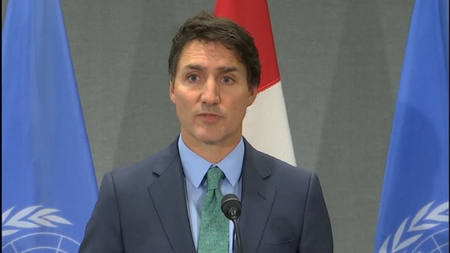
Justine Trudeau appears to be ‘like father, like son.’ The Khalistani Sikh terrorist groups continue to prosper in Canada, despite violent inter-group rivalries, killings and attacks on non-sikh Indian settlers and students in the country. Without exception, all killings deserve strong condemnation and speedy investigation. While Trudeau’s deep concern for the June 18 killing of Canada-based Hardeep Singh Nijjar, known to be a top leader of Khalistan Tiger Force, is understandable, it is not clear why he wants India’s official “cooperation” in his government probe. As of now, there is nothing to establish that there was an Indian government hand in the Nijjar killing. It is possible that Trudeau may have little faith in the investigation capability of his own government agencies, which took nearly two decades to close the case of the mid-air bombing of a Air India’s Boeing 747 flight from Toronto to Bombay by Khalistani terror groups on June 23, 1985, killing 329 passengers, including 22 crew members, on board. This was despite the fact that of those killed, 280 were Canadian citizens. Why is Trudeau so desperate to solve the Nijjar killing case, involving only a single Canadian citizen, so quickly?
For reasons unknown to India’s 22-million strong Sikh community, known for both their gallantry and strong business acumen, Canada has been the most important operating ground for groups of Sikh terror outfits wildly dreaming to convert Punjab into Khalistan. Sikhs combine as one of India’s top nationalist communities. It is believed that Guru Nanak, the teacher of the faith, promoted the religion to protect Hindus against Moslem insurgencies in the 15th century. The Indian Army’s Sikh regiment is the country’s highest decorated infantry regiment boasting over 80 gallantry awards since 1947. Over 95 percent of India’s Sikh population consider themselves as proud Indians. Punjab, sharing borders with Pakistan along with other Indian states such as Jammu and Kashmir, Rajasthan and Gujarat, is also one of India’s wealthiest state economies. Punjab is a major producer of wheat, rice, and other crops, and its agricultural prowess has played a significant role in the state’s economic growth. Overall, the community has nothing to do with the Canada-based Khalistan movement.
Thus, Canada’s support for and protection of the Sikh separatist groups is inexplicable. The country’s lethargic investigation into the Air-India bombing case in the 1980s and 1990s and the current fast forward probe into the Khalistani terrorist murder incident are contradictory and inexplicable if not with a mischievous intent. Although a handful of people were arrested and tried in the Air India bombing case, the only person convicted was Inderjit Singh Reyat, a dual British-Canadian national, who pleaded guilty in 2003 to manslaughter. The Air India bombing is considered the worst mass murder in Canadian history. The subsequent investigation and prosecution lasted nearly 20 years, making it the most expensive in Canadian history at nearly $130 million. Under the circumstances, Trudeau’s personal initiative in the Nijjar killing investigation seeking India’s “cooperation” may look somewhat unnatural if not purely politically motivated and dubious.
It is true that Canada’s 770,000-plus Sikh citizens form a strong political force in the country. Canada is home to nearly 1.4 million people of Indian ethnic or cultural origin, making up about 3.7 percent of the nation’s total population. Furthermore, a large number of individuals identify their religion as Sikhism, accounting for roughly two percent of Canada’s inhabitants. The centre-left to left wing New Democratic Party, led by Jagmeet Singh, is Canada’s fourth largest political party having 25 MPs in the 338-member Canadian Parliament. The party is running almost neck and neck with Yves-François Blanchet-led third placed Bloc Québécois (32 MPs), championing the cause of Quebec’s sovereignty, social democracy and regionalism.
Trudeau’s Liberal Party (158 MPs) is the largest, followed by the right wing Conservative Party (117 MPs). Two ministers in Justin Trudeau’s cabinet are turbinated Sikhs — Science and Economic Development Minister Navdeep Bains and Emergency Preparedness Minister Harjit Sajjan (formerly Defence Minister). The strong presence of a generally wealthy Indian Diaspora could be a reason behind Trudeau’s somewhat disjointed political reaction to the Nijjar killing investigation. It is rather surprising that Trudeau ignored the diplomatic and economic consequences of trying to implicate India in the Nijjar murder case without a prima facie evidence. The flaring India-Canada tension now threatens to impact the multi-billion dollar trade between the two countries. (IPA Service)
The post Trudeau’s Bid To Involve India In Nijjar Killing Probe Is More Political Than Diplomatic first appeared on Latest India news, analysis and reports on IPA Newspack.
Follow Arabian Post
Select Arabian Post as your preferred source on Google and MSN News for trusted business news and Arab politics and updates.



