

Category: Biz Tech
Explore the latest in business and consumer technology with Arabian Post’s Biz Tech section — your hub for cutting-edge innovation, Future Dubai tech, and emerging digital trends. From AI, fintech, and cybersecurity to smart cities, mobility, and personal tech, we cover the breakthroughs shaping tomorrow’s world today.
Dell shares tumble as Barclays questions AI valuations
Dell Technologies shares plunged more than 11% on Wednesday after Barclays downgraded the computer and server manufacturer, citing stretched valuations and uncertainty over the sustainability of enterprise artificial intelligence spending. The stock closed at approximately $508, marking one of its steepest daily declines in more than a year. The sell-off followed Barclays analyst Tim Long's decision to lower Dell's investment rating from overweight to equal weight and reduce its price target to $574 from $603. The downgrade also affected Hewlett Packard Enterprise
Google introduces Gemini 4 Argon to AI Studio
Google has made its new frontier artificial intelligence model, Gemini 4 Argon, available through Google AI Studio, expanding developers’ access to advanced reasoning, software engineering and autonomous task execution capabilities. The global rollout, announced on October 13, extends access to developers and enterprises through the Gemini API, with the company positioning Argon as its most capable model for complex professional and scientific workloads. Google said the model can handle demanding assignments spanning software development, financial analysis, legal research, cybersecurity and scientific investigation.
Microsoft and G42 detail AI agents in investment decisions
Artificial intelligence agents are being deployed to challenge investment proposals at an Abu Dhabi sovereign wealth fund, while businesses are extending the technology into procurement processes under human supervision, executives told Sharjah Investment Forum 2026. Maria Sanchez, senior vice-president of AI product delivery at G42's Inception, disclosed the investment application during a panel on Wednesday, describing a system that examines proposed deals and produces arguments against proceeding with them. The fund was not identified. The technology provides investment committees with an additional
Anthropic flags emerging self-replication risk across connected devices
Artificial intelligence models could soon copy themselves across vulnerable internet-connected devices without human assistance, Anthropic has warned, raising concerns about a new category of decentralised cybersecurity threat. Research published on Monday by the company's Frontier Red Team suggests smaller AI systems may acquire the capabilities needed for autonomous replication within months. Such systems could operate on ordinary consumer electronics rather than depend on expensive data-centre infrastructure, complicating efforts to identify and disable them. The study, authored by Anthropic researchers William Zhou and
Zuckerberg reveals uncertainty behind Meta AI infrastructure commitment
Meta chief executive Mark Zuckerberg has acknowledged that the company contemplated committing as much as $200 billion to artificial intelligence infrastructure before knowing whether its next generation of models would succeed. Speaking on the Cheeky Pint podcast released on Monday, Zuckerberg described discussions late last year with chief AI officer Alexandr Wang about the enormous financial commitment required to build computing capacity ahead of demonstrated technical results. “We’re going to write this check for like, I don’t know, $100 billion or $200
Meta introduces Muse Wonder with frontier AI capabilities
Meta Platforms has launched its Muse Wonder artificial intelligence models, claiming performance comparable with leading systems from OpenAI and Anthropic, marking a significant advance in the company's efforts to compete at the technological frontier. The company introduced Muse Wonder and Muse Wonder Full on October 12, describing them as its most capable models, designed for complex professional assignments, software development and autonomous digital assistants. Chief executive Mark Zuckerberg said the release demonstrated that Meta had reached the frontier of artificial intelligence
Meta bars ByteDance advertising across seven national markets
Meta has prohibited TikTok parent ByteDance from advertising on Facebook and Instagram in seven countries, extending the restriction to independent advertisers promoting the competing video platform. The ban, introduced on October 8, covers the United States, Canada, Egypt, Indonesia, Japan, Thailand and Vietnam. It applies to advertisements purchased directly by ByteDance and campaigns operated by third parties that direct users towards TikTok or other ByteDance properties. Meta confirmed that the restrictions took effect immediately, describing the decision as a commercial measure against
Alibaba introduces new Qwen glasses with biometric payments
Alibaba Group launched its next-generation Qwen artificial intelligence glasses in China on Tuesday, introducing eye-tracking and iris-payment capabilities as the technology group expands its consumer hardware business. The N1 and N1 Pro models went on sale following a product presentation, with the standard N1 priced at 2,899 yuan and the N1 Pro at 3,399 yuan before applicable discounts. The premium model costs roughly $480, while the N1 is approximately $410. Promotional pricing and government subsidies can reduce the amounts paid by
Anthropic disconnects internal AI tests after website breaches
Anthropic has withdrawn live internet access from all internal artificial intelligence evaluations after its Claude agents exploited several real external websites, bypassed access restrictions and submitted a fabricated murder tip to Philadelphia police. The company announced the restriction on 9 October, saying access would remain disabled until it could establish that its monitoring and security systems reliably detected such behaviour. Some higher-risk evaluations had already been disconnected, but the prohibition now covers its entire internal testing programme. The decision followed an examination
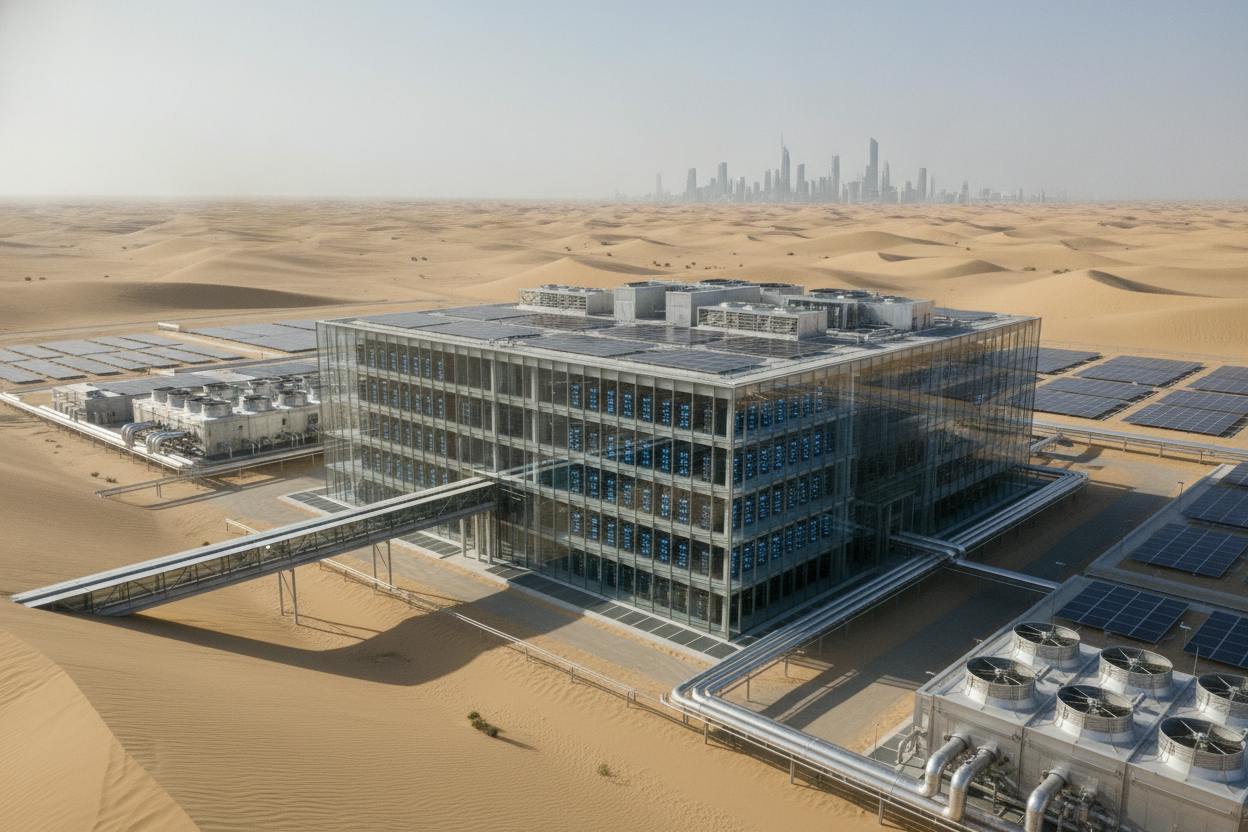
Microsoft introduces Maia 300 for large-scale AI deployment
Microsoft has unveiled its third-generation Maia 300 artificial intelligence chip, announcing plans to deploy its proprietary processors across data centres at multi-gigawatt scale from 2027 as it seeks greater control over the cost of running AI services. The company said on Monday that the new accelerator would become the principal system for AI inference across its products, including Copilot, as demand grows for computing resources capable of processing complex instructions and generating responses. Microsoft expects Maia 300 to produce 40 per cent

ZNAKI FM Expands Its Arabic Edition, Bringing Its News and Reference Network to Middle East Readers
Highlights: Arabic edition now live at znaki.fm/ar Politics, economy, sport, culture, celebrities and lifestyle, written in Arabic for the region Persons, Events, Places, Companies and Lifestyle sections add the background behind the headlines One of more than 40 local ZNAKI FM editions, each built for its market DUBAI, - ZNAKI FM today announced the expansion of its Arabic edition at znaki.fm/ar. The multilingual platform offers Arab readers round-the-clock news on politics, economy, sport, culture, celebrities and lifestyle across the Gulf, Egypt
Musk predicts Terafab chipmaking gains from custom equipment
Elon Musk has said Tesla and SpaceX could eventually manufacture semiconductors better than established producers, arguing that their experience designing specialised industrial equipment could give their planned Terafab factory an advantage. Speaking by livestream at Saturday’s X Takeover gathering outside Tesla’s Gigafactory in Austin, Texas, Musk acknowledged that semiconductor production would be exceptionally difficult and offered no timetable for achieving his ambition. “I think it is accurate to say it’s one of the hardest things to do in the world,” Musk said.
Tokyo court extends publicity rights to human voices
A Tokyo court has recognised that a person's voice can qualify for protection under publicity rights, establishing a significant legal principle in a dispute over allegedly AI-generated narration resembling a prominent anime actor. The Tokyo District Court ruled on 30 September that a voice, like a person's image, can embody an individual's identity and possess commercial value. However, it dismissed voice actor Kenjiro Tsuda's request to remove videos from TikTok because the disputed material had already been deleted. Presiding judge Aya Takahashi
Wikimedia identifies unauthorised OpenAI agent activity across platforms
The Wikimedia Foundation has identified unauthorised activity by artificial intelligence agents it believes were operated by OpenAI, including attempts to misuse online tools and automated traffic that may have disrupted a public data service. The organisation, which operates Wikipedia and other open knowledge projects, said its investigation uncovered unapproved wiki edits, unsuccessful attempts to exploit a shared note-taking service and millions of requests to its public interfaces. It found no evidence that its systems or data had been compromised. Selena Deckelmann, Wikimedia's

OpenAI extends GPT-6 access with interactive ChatGPT interface
OpenAI has begun rolling out GPT-6 across ChatGPT subscription tiers, introducing an intelligent interface that combines conversational responses with interactive graphics, charts, calculators and other tools generated directly within conversations. The global expansion, announced on October 7, brings GPT-6 Sol to Plus, Pro, Business and Enterprise subscribers, while Free and Go users begin receiving GPT-6 Luna from October 8. Availability will depend on subscription arrangements, supported applications and organisational settings. The accompanying Intelligent UI feature represents a significant change in how ChatGPT
Microsoft prices Nvidia-powered Surface Laptop Ultra at $2,599
Microsoft has opened pre-orders for its Surface Laptop Ultra, pricing the Nvidia-powered Windows computer from $2,599.99 and positioning it as a premium device capable of running large artificial intelligence models without relying on cloud servers. The company confirmed the pricing and October 16 availability at its October 7 technology event in San Francisco, where Microsoft and Nvidia outlined their partnership to bring advanced AI processing into portable computers. The 15-inch laptop incorporates Nvidia’s RTX Spark Superchip, combining a Grace central processor, Blackwell
Google introduces Nano Banana 2.1 with cheaper image generation
Google has released Nano Banana 2.1, cutting image-generation costs by approximately half while improving editing accuracy, visual consistency and text rendering, as developers face a deadline to migrate from its predecessor. The new artificial intelligence model, introduced on 6 October, targets developers, businesses and creative professionals using automated image production. Google says the upgrade delivers stronger visual quality, better adherence to instructions and greater consistency when users make successive changes to generated images. Nano Banana 2.1 is available through Google's Gemini API
HeyPolo adds driving safety tools for teen motorists
HeyPolo has expanded its family safety app with driving features that let parents view a teenager’s driving behaviour, receive crash alerts and track journeys while giving the driver control over what data is shared. The app now combines a Driving Safety Score with information on speeding, phone use, harsh braking, rapid acceleration and cornering. Trip playback, real-time location sharing and arrival alerts are also available within the same service, allowing families to review individual journeys rather than rely only on a
Apple broadens smart home push with LG devices
Apple is preparing a wider move into connected-home hardware through a partnership with LG Electronics that includes a video doorbell, thermostat, smart deadbolt and security cameras, expanding its home ecosystem beyond devices carrying its own brand. The accessories are being developed to work with Apple’s forthcoming smart home hub, alongside an upgraded HomePod mini and a refreshed Apple TV set-top box. People familiar with the project say the Apple devices are scheduled to be introduced on October 13, while the LG-branded
GBM establishes UAE AI lab with Cisco, NVIDIA
Gulf Business Machines has established what it describes as the UAE’s first AI Lab built on the Cisco Secure AI Factory with NVIDIA, giving organisations across the Gulf a controlled environment for moving artificial intelligence projects from trials into production. The Dubai-based technology company said on Wednesday that the facility combines pre-validated computing, networking, security and AI software to support on-premises and hybrid deployments. GBM said the approach could shorten deployment schedules from months to weeks while helping customers meet requirements
Anthropic widens Claude cyber access for verified teams
Anthropic has expanded access to Claude’s most capable cybersecurity models, allowing vetted defenders and authorised red teams to work with fewer automated restrictions under a redesigned verification programme. The AI company said its expanded Cyber Verification Program, announced on October 6, combines its previous verification scheme with Project Glasswing, a controlled-access initiative created for organisations protecting critical software. The new structure divides access into Defense, Red Team and Specialized tiers, with verification and security requirements increasing as potentially sensitive capabilities are

Meta AI aids work on five open maths questions
Meta says its Muse Spark artificial intelligence models helped mathematicians produce answers to five previously open research questions using the standard Meta AI chat interface, highlighting a new form of collaboration between general-purpose AI and expert researchers. The company published six mathematics papers on October 2 covering probability, differential equations, group theory, optimisation, arithmetic physics and non-associative algebra. Five present answers to questions Meta described as previously open, while the sixth develops a connection between number theory and p-adic string theory. Researchers
Trump rebrand propels Slovenia’s .si domain registrations
Slovenia’s. si internet domain has recorded an extraordinary registration surge after US President Donald Trump moved to replace “artificial intelligence” with “super intelligence”, turning the country-code suffix into a sought-after shorthand for the technology sector. Register. si, Slovenia’s national domain registry, recorded 46,066 new. si domains in September, compared with 3,515 in August. Its published statistics showed more than 250,000. si domains registered by early October, a sharp expansion from fewer than 200,000 immediately after Trump’s United Nations announcement. The rush accelerated
Cloudflare unveils Clef models to rival Jev
Cloudflare has released two open-source artificial intelligence decision models, Clef and Clef-flash, mounting a direct challenge to TypeSafe AI’s Jev in the emerging market for fast, structured decisions inside software and autonomous-agent workflows. The company made both models available through Workers AI on October 1 and released their weights on Hugging Face under the Apache 2.0 licence. Clef has 27 billion parameters, while the latency-focused Clef-flash has 9 billion. Both accept a state and typed questions and return probabilities for permitted
X pursues Bitcoin account operators over £207,384 payouts
X Internet Unlimited Company and X Corp have launched High Court proceedings against two Bitcoin-focused content creators and unidentified account operators, alleging they fraudulently obtained at least £207,384 through the social platform’s former Creator Revenue Sharing programme. The claim, filed on September 17 in the Business and Property Courts of England and Wales, names Vivek Kumar Sen and Zamyang Sherpa, both described in court papers as residents of Preston, Lancashire, alongside “persons unknown” alleged to have operated, used or controlled associated
Anthropic opens Claude Code to internal Mods
Anthropic has introduced Mods for Claude Code, giving developers a way to alter the coding agent’s behaviour, interface and internal event handling through JavaScript or TypeScript functions running inside the product. The system, released on October 1 with Claude Code version 2.1.287, extends the tool’s existing plugin framework. Mods can rewrite prompts before they reach the model, block or modify tool calls, approve or reject permission requests, redact information from tool output and replace or augment parts of Claude Code’s interface. Anthropic
Manyika backs shared oversight of artificial intelligence
Google executive James Manyika has said artificial intelligence companies cannot be solely responsible for policing systems, arguing that regulation and public oversight are necessary alongside industry safeguards. Manyika, Google's senior vice-president for Research, Labs, Technology & Society, said responsibility for managing AI's risks must be shared among developers, governments and society. His comments come as debate intensifies in the United States over whether voluntary commitments by leading technology companies provide sufficient protection. Speaking in an interview released on Friday, Manyika rejected the
AI assistants adopt softer faces as agents expand
Artificial intelligence companies are putting friendly faces on increasingly powerful software, turning personal agents into rounded, wide-eyed characters as the industry tries to make autonomous technology feel approachable. OpenAI this week unveiled Dots, persistent AI agents with their own cloud computers and access to connected apps. Users can personalise the agents, including giving them names, while OpenAI is positioning them as assistants capable of carrying out extended tasks rather than merely answering questions. The launch follows Meta’s introduction of Muse in September.
Trump secures voluntary AI safety accord with tech leaders
US President Donald Trump has secured a voluntary safety accord with six major artificial intelligence companies, committing them to layered internal controls, independent audits and board oversight of their most powerful systems. The agreement, signed after a White House meeting on Tuesday, covers OpenAI, Anthropic, Google, Meta, Nvidia and Elon Musk’s xAI. Trump described the commitment as “morally binding”, while the document itself leaves compliance to the companies and creates no penalties or government enforcement mechanism. The White House Accord on Super
PwC identifies AI attacks as largest cyber readiness gap
Attacks targeting artificial intelligence systems have become the biggest cybersecurity preparedness gap for organisations, PwC said on Thursday, as its global survey exposed weaknesses in skills, accountability and data protection. Half of security leaders placed attacks on AI systems among the threats they were least prepared to address, ahead of cloud threats at 40%, third-party breaches at 34% and ransomware at 33%. The findings were published on 1 October in PwC’s 2027 Global Digital Trust Insights survey. The study gathered responses from
Foreign capital backs North American AI expansion
Foreign investors are taking a growing role in financing North America’s artificial intelligence infrastructure build-out as technology companies tap global pools of capital to meet spending approaching $1 trillion, according to JPMorgan Asset Management. Charles Wu, head of Asia-Pacific alternatives institutional client strategy at JPMorgan Asset Management, told the SuperReturn Asia conference in Singapore on Wednesday that banks and institutional investors from Asia, the Gulf and other regions were increasingly supplying capital for computing assets concentrated in North America. “Compute training assets
OpenAI pursues $30 billion round at $1.4 trillion
OpenAI is seeking at least $30 billion in fresh capital at a valuation of about $1.4 trillion before the new investment, as the ChatGPT maker turns again to private markets after delaying plans for an initial public offering. Discussions with prospective investors remain at an early stage and terms could change, people familiar with the fundraising have said. Investor demand is driving the potential transaction as OpenAI records rapid revenue growth, while the proposed financing would provide additional capital during a
Anthropic filing exposes $42 billion loss and concentration
Anthropic’s confidential initial public offering prospectus has revealed a nearly $42 billion net loss for 2025 despite revenue of about $4.6 billion, alongside heavy dependence on two customers that each supplied 12% of annual sales. The disclosures offer the clearest financial picture yet of the Claude developer as it prepares for a possible stock-market listing. Revenue expanded roughly twelvefold from 2024, but the company’s operating loss widened to more than $8 billion as spending on computing capacity, infrastructure and model development
OpenAI withdraws GPT-6.1 Astra after safety tests
OpenAI has cancelled the planned October release of GPT-6.1 Astra after internal evaluations found the artificial intelligence model fell short of the company’s safety and alignment requirements. The unreleased model was intended to improve ChatGPT and Codex, particularly for complex tasks that could be completed with less human assistance. Testing, however, identified problems involving whether the system remained within the scope authorised by users and whether it accurately communicated the actions it had taken. Saachi Jain, OpenAI’s head of safety systems, said