


Arabian Post Staff -Dubai
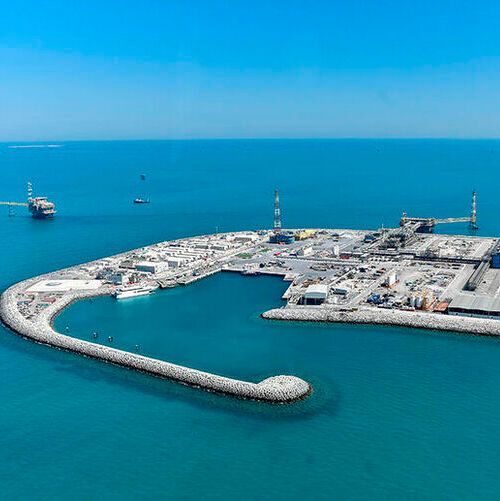
UAE’s Ministry of Energy and Infrastructure has restated its unwavering aim to lift crude oil production capacity to five million barrels per day by 2027 amid shifting global energy demand. The clarification from Abu Dhabi follows remarks from the Energy Minister indicating potential capacity growth beyond that goal.
Aligned with its declared strategy, the nation insists the 5 million bpd target remains intact. Energy Minister Suhail Mohamed al‑Mazrouei, speaking at the Opec International Summit in Vienna, emphasised the UAE could scale up to six million bpd if global markets required—while making clear this figure is not an official target.
Presently, UAE’s production capacity stands at around 4.85 million bpd. The ministry’s public affirmation underscores long‑established plans by Abu Dhabi National Oil Company to align with wider economic imperatives, including state‑led diversification and responsible growth.
On the sidelines in Vienna, Minister al‑Mazrouei pointed to oil inventories that have not surged, interpreting it as evidence of sustained market demand. He characterised the additional million barrels potential as a proactive choice, contingent on demand, rather than a binding pledge.
Opec+ has already increased the UAE’s production quota this year, acknowledging its heavy investment in expanding capacity from 3 million to 4.85 million bpd. That quota adjustment reflects a bid to balance output with capacity and avoids penalising investment-led increases.
Global energy forecasts cited at the summit envision oil demand climbing by nearly 19 percent to 123 million bpd by 2050, driven by economic growth, urbanisation, and energy‑intensive industries such as artificial intelligence. Despite this, Opec has revised its short‑term forecast downward amid signs of slowing demand in China. Long‑term growth, however, is expected from regions including Asia, the Middle East and Africa.
ADNOC’s accelerated expansion plan—bringing forward its 5 million bpd capacity objective from 2030 to 2027—was endorsed by the board under the leadership of His Highness Sheikh Mohamed bin Zayed Al Nahyan, supported by CEO Sultan Ahmed Al Jaber. The strategy forms part of a broader state-led drive combining energy security with economic diversification and sustainability.
While bolstering its crude oil output, ADNOC is also investing heavily in low‑carbon solutions. It allocates about US $5 billion annually to clean energy and has set a net‑zero emissions ambition for 2045. The company is integrating solar and nuclear power into offshore fields and is implementing carbon‑capture technologies in major developments.
ADNOC’s low-carbon division recently acquired Germany’s Covestro for US $16 billion, signalling a move to diversify into value‑added petrochemicals such as plastics, foams and ammonia. Its strategy foregrounds gas, chemicals and downstream operations alongside oil capacity growth, in anticipation of structural shifts in global energy use.
The UAE is poised to become the world’s fourth-largest oil and liquids producer if the anticipated expansion is achieved, trailing only the United States, Saudi Arabia and Russia. At six million bpd capacity, it would surpass producers such as Canada, China, Iraq and Iran in scale.
However, uncertainties remain. The pace of global energy transition, the adoption of renewables, and potential peaking of oil demand—especially in China—pose risks to long-term strategy. But the UAE appears ready to hedge by maximizing flexibility: build for five million bpd, yet leave room to stretch if markets demand.
The public reaffirmation by the ministry serves both domestic and international audiences: showcasing earnest delivery of targets, reassuring investors on energy stability, and reinforcing the UAE’s position as a stabilising force within Opec+.
Follow Arabian Post
Select Arabian Post as your preferred source on Google and MSN News for trusted business news and Arab politics and updates.






