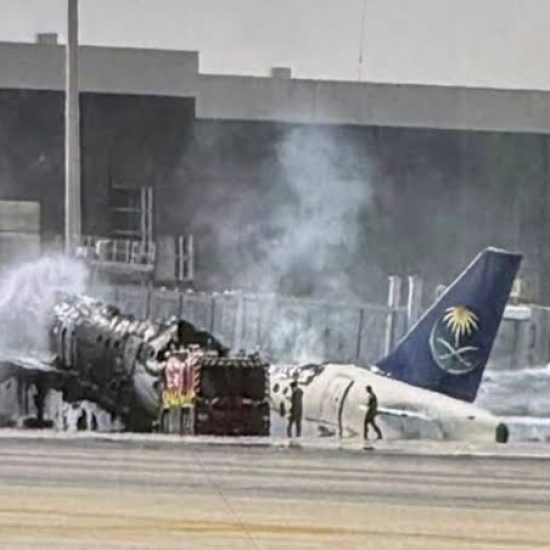
An early-model BOAC Comet jet disintegrated in mid‑air after encountering severe turbulence shortly after departure from Dum Dum Airport near Calcutta on 2 May 1953. All 43 passengers and crew perished as the aircraft burst apart at approximately 7,500 ft and plummeted into a paddy field about 25 miles north‑west of the city.
The de Havilland DH.106 Comet 1, operated by British Overseas Airways Corporation, had originated from Singapore and was en route to London, with stops scheduled in Calcutta and Delhi. Witnesses reported the plane climbing before suddenly breaking up and falling in flames—described as “a huge boulder of fire”—as it plunged amid dense thunderstorm conditions.
Investigation reports later determined that structural failure triggered the disaster. The aircraft was overstressed by severe gusts within the thunderstorm, or possibly by pilot over-control while attempting to stabilise the plane amid violent turbulence.
Debris was scattered over a five‑mile radius, with wings and tail sections strewn across villages surrounding the crash zone. Recovery teams reported finding charred fuselage fragments and wing parts up to eight square miles away. Communications were severely disrupted by the storm, delaying rescue operations until the following morning.
The loss prompted an immediate grounding of all Comet aircraft worldwide. Subsequent analysis traced design vulnerabilities—specifically fuselage fatigue exacerbated by pressurisation cycles—as contributing to the structural failure. Long‑term remedies included reinforcing cabin frames and modifying hatch and window designs. These measures led to the Comet 2 variant, re‑entering service later in the decade.
That afternoon’s monsoon squall had been forecasted. Weather advisories issued by Dum Dum airport warned of a powerful north‑wester moving across Bengal, Bihar, Uttar Pradesh and Orissa. The alert reached Calcutta and nearby airfields before departure, but the flight was allowed to proceed, possibly underestimating the severity of the impending storm.
The magnitude of the crash and its implications for aviation safety were profound. As the world’s first jet airliner disaster, it exposed critical design flaws in high-altitude metal fatigue and pressurisation. Aviation experts have since credited the accident with catalysing a new era of aviation engineering standards and rigorous fatigue testing.
BOAC officials, alongside Indian Civil Aviation authorities, conducted detailed on-site investigations. Initial body recovery revealed only 21 victims near the main wreckage; many others were presumed destroyed in the fiery crash. Wreckage and mail bags were recovered over the following days with painstaking efforts hampered by torrential rain and impassable access roads.
The tragedy sparked changes beyond engineering: it prompted aviation authorities worldwide to reassess flight clearance protocols in severe weather. Airlines adopted stricter turbulence-avoidance routes, and training for storm penetration tactics was enhanced. Structural testing regimes became more comprehensive, particularly for early-generation jetliners.
More than seven decades later, the Comet’s collapse north‑west of Calcutta remains a defining moment in civil aviation history. It was a stark reminder that the jet age—so marvelled for its speed—brought with it complex challenges. Engineers and regulators responded with reforms that continue to shape aircraft design and safety standards today.
While the Comet’s legacy lives on, modern aircraft benefit from lessons learned. Advanced composites, real‑time structural monitoring, reinforced fuselage frames and weather‑avoidance flight planning are now standard features in commercial aviation worldwide—fundamental safeguards born from the tragedy in the skies near Calcutta.
Follow Arabian Post
Select Arabian Post as your preferred source on Google and MSN News for trusted business news and Arab politics and updates.