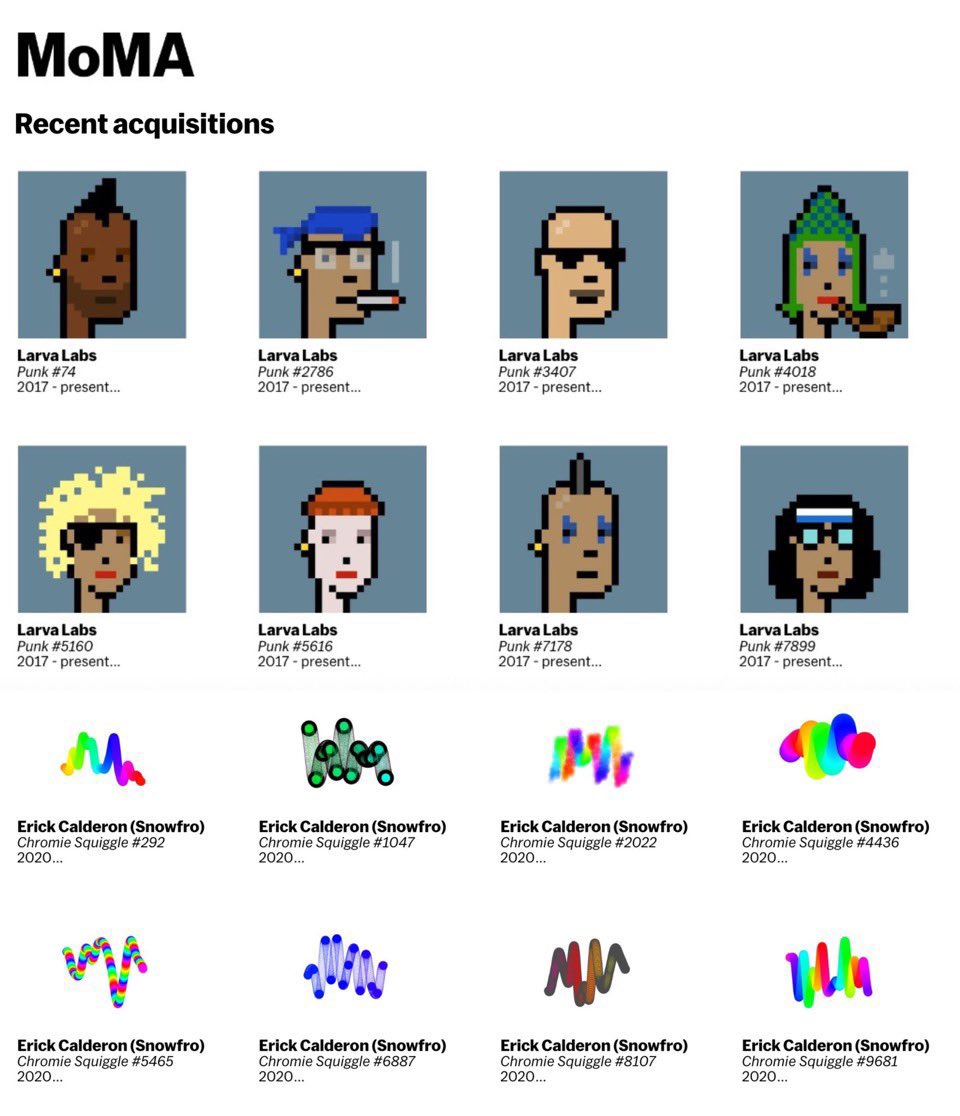
Eight CryptoPunks non-fungible tokens have been accepted into the permanent collection of New York’s Museum of Modern Art, a move that places one of the most influential crypto-native projects alongside canonical works of modern and contemporary art. The acquisition underscores the growing institutional recognition of blockchain-based art forms, even as debate continues over their cultural and market value.
The works were added through a donation organised by Art on Blockchain, a curatorial initiative focused on preserving historically significant digital artworks. The effort was backed by a group of long-standing crypto art collectors, with contributions also coming from Larva Labs, the studio that created CryptoPunks in 2017. MoMA confirmed that the pieces will form part of its design and digital art holdings rather than being treated as a standalone novelty.
CryptoPunks are widely regarded as a foundational project in the NFT ecosystem. Created as a set of 10,000 algorithmically generated pixel characters, they predate the ERC-721 token standard that later became the backbone of most NFT marketplaces. Their early experimentation with on-chain ownership and scarcity helped define how digital assets could be collected, traded and authenticated without central intermediaries. For MoMA, curators said the project represents a critical moment in the evolution of digital culture, comparable to earlier shifts brought about by photography, video art and net art.
The selected works span different character types and attributes, reflecting the diversity embedded in the original series. Rather than focusing on headline auction prices, the museum’s curatorial rationale emphasises design systems, generative processes and the social dynamics that emerged around online ownership communities. MoMA has indicated that the NFTs will be preserved with their associated blockchain metadata, ensuring that provenance and transaction histories remain accessible as part of the artwork’s context.
Institutional engagement with NFTs has accelerated over the past two years, though not without controversy. Major museums have experimented with digital acquisitions and exhibitions, often facing criticism over environmental concerns linked to blockchain networks and the volatility of crypto markets. MoMA’s move is being framed internally as a scholarly decision rather than an endorsement of speculative trading, with staff pointing to the historical importance of CryptoPunks as a design experiment that influenced subsequent digital practices.
The donation model also reflects a broader trend in how museums are approaching crypto-native works. Instead of purchasing assets at market prices, institutions are relying on collectors and creators to seed collections, reducing financial exposure while allowing curators to shape narratives around technological change. Art on Blockchain has described its role as bridging gaps between decentralised communities and traditional cultural institutions, translating technical concepts into curatorial language that fits established museum frameworks.
Market dynamics around CryptoPunks have fluctuated sharply since the peak of NFT trading volumes in 2021. Prices have cooled from earlier highs, and trading activity has become more concentrated among long-term holders. Despite this, the project continues to exert outsized influence on digital art discourse, frequently cited in academic research on blockchain aesthetics, online identity and the economics of scarcity. Its inclusion in MoMA’s collection is likely to reinforce its status as a reference point rather than a passing trend.
MoMA has been gradually expanding its engagement with digital and technology-driven art over the past decade, adding works that explore software, user interaction and internet culture. The museum’s design collection already includes video games, typefaces and interface elements, signalling an openness to non-traditional formats. CryptoPunks, with their deliberately low-resolution aesthetic and rule-based generation, fit within this lineage of examining how design choices reflect broader social and technological shifts.
Arabian Post – Crypto News Network
Follow Arabian Post
Select Arabian Post as your preferred source on Google and MSN News for trusted business news and Arab politics and updates.