

Arabian Post Staff -Dubai
That matters because the IMD index is not simply a technology league table. It is built largely on residents’ perceptions of how well cities use technology, governance and infrastructure to improve daily life. IMD said the strongest performers tend to be places where transparency, trust in institutions and effective digital services work together, rather than cities relying on technology alone. Zurich, Oslo and Geneva occupied the top three positions in 2026, with the broader findings pointing to public confidence and governance as critical ingredients of urban success.
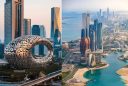
For Dubai, the 2025 ranking represented a sharp upward move. Digital Dubai said the city climbed eight places to fourth in that edition, supported by stronger scores across health, mobility, recycling, green space access, cultural activity and online government services. Officials linked the gain to a long-running push to digitise services and weave artificial intelligence, transport technology and data systems into everyday administration. That performance helped cement Dubai’s standing as the highest-ranked city in the GCC, the Arab world and Asia in the 2025 release.
Abu Dhabi’s 2025 showing was similarly strong. The Abu Dhabi Media Office said the capital rose five places to fifth, with survey responses highlighting green spaces, free public Wi-Fi, public transport and traffic management among its advantages. The city’s authorities also tied the result to large investments in mobility projects and community amenities, arguing that smart-city credentials depend as much on usability and liveability as on hardware and apps.
The latest 2026 results suggest that the UAE’s two biggest cities remain highly competitive even after both slipped from their 2025 peaks. Gulf News, reporting the new index, said Dubai continued to score strongly on the technology pillar and led the region, while Abu Dhabi also remained among the global top 10. The same report said public confidence in digital services stayed notably high in both cities, an outcome that aligns with IMD’s wider argument that trust is becoming a more important measure of whether urban technology is genuinely improving life rather than simply adding sophistication.
Behind those rankings lies a broader policy story. Dubai has spent years pushing a model built around digital identity, online service delivery, smart mobility and automation targets in transport. Among the flagship measures cited by officials are the Roads and Transport Authority’s digital strategy, large-scale AI and data use in traffic management, and the ambition to convert a quarter of mobility journeys to autonomous trips by 2030. Abu Dhabi, for its part, has combined transport upgrades with a wider emphasis on parks, beaches, civic amenities and connected services.
The trend also reflects a wider Gulf shift. IMD’s commentary on the 2026 index and other regional reporting indicate that cities in the region are gaining ground by pairing state-led investment with visible service delivery. That formula differs from some Western urban centres where digital capacity may be strong but public dissatisfaction with housing, congestion, corruption or service quality drags down perceptions. IMD said lower-ranked cities often perform better on technology than on structures, meaning physical systems and institutional trust are lagging behind.
Also published on Medium.
Follow Arabian Post
Select Arabian Post as your preferred source on Google and MSN News for trusted business news and Arab politics and updates.



