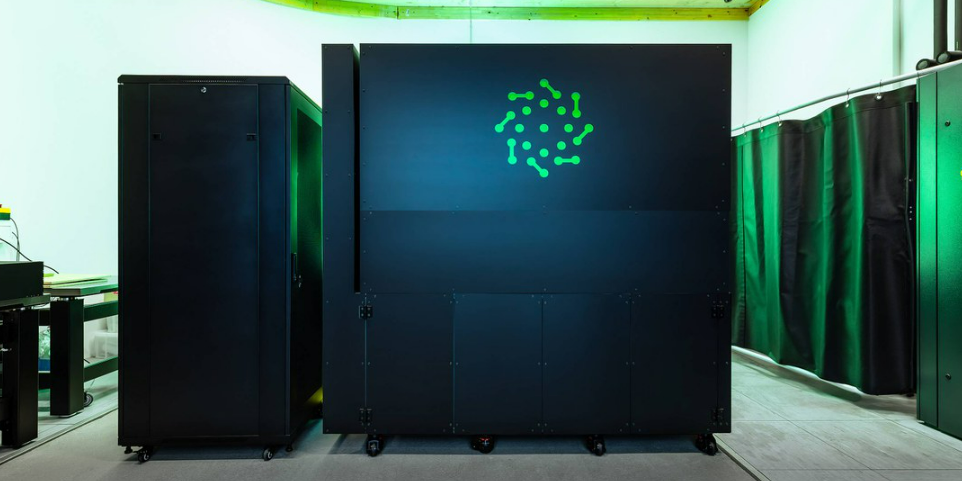
Pasqal, a prominent player in the quantum computing industry, has delivered a 100-qubit quantum computer to the Jülich Supercomputing Centre (JSC) at Forschungszentrum Jülich, marking a significant advancement in European quantum research. The delivery is a major step toward harnessing the power of quantum computing to address complex scientific and industrial challenges.
The new quantum system, built on Pasqal’s pioneering neutral-atom quantum technology, is expected to enable breakthroughs in fields ranging from material science to machine learning and cryptography. The system will be integrated into the JSC’s high-performance computing infrastructure, where it will complement classical supercomputers, offering a hybrid computing environment capable of tackling tasks that are infeasible with conventional machines.
Pasqal’s quantum computer is based on an innovative platform that uses neutral atoms trapped in electromagnetic fields to perform quantum computations. Unlike traditional quantum computing technologies that use superconducting qubits or trapped ions, neutral atoms offer several advantages, including scalability, lower error rates, and long coherence times. This new system is poised to overcome some of the key limitations of earlier quantum computers, such as qubit decoherence and limited connectivity, which have hindered their practical applications.
The collaboration between Pasqal and the Forschungszentrum Jülich is seen as a pivotal moment in Europe’s race to lead in quantum technologies. The JSC, renowned for its role in high-performance computing, is one of the continent’s most significant research institutions, and the integration of Pasqal’s quantum technology promises to enhance the centre’s ability to perform cutting-edge simulations and computational experiments.
The deployment of the 100-qubit system is particularly significant as it represents one of the largest neutral-atom quantum computers in the world. Pasqal has consistently been at the forefront of developing scalable quantum systems, and this milestone reflects its commitment to pushing the boundaries of what is possible in quantum computing. The new machine’s 100-qubit capacity is seen as a stepping stone toward even more powerful quantum systems in the near future.
The delivery of this quantum system is not just a technological achievement but also a testament to the growing importance of international collaboration in advancing quantum research. As governments, research institutions, and companies worldwide race to develop practical quantum computers, partnerships like this one between Pasqal and Jülich highlight the collective effort required to unlock the full potential of quantum technology.
Pasqal’s quantum system will be used in a variety of scientific and industrial applications, including simulating complex chemical reactions, optimizing supply chains, and improving machine learning algorithms. These tasks are currently beyond the reach of classical supercomputers but could become feasible with the advent of more powerful quantum systems. Experts believe that such systems will be able to solve problems that were once considered intractable, opening up new possibilities for industries ranging from pharmaceuticals to aerospace.
In addition to its potential for scientific discovery, the new quantum computer is expected to bolster Europe’s competitive edge in the global quantum race. While the United States and China have made significant strides in quantum technology, Europe has made strategic investments in quantum research and development, aiming to establish itself as a leader in the field. The partnership between Pasqal and Jülich is a key example of Europe’s ambitions to become a global hub for quantum computing.
Pasqal’s technology is also noteworthy for its potential to create a more accessible and flexible quantum computing environment. Traditional quantum systems often require extreme conditions, such as near-zero temperatures or high vacuum environments, to maintain qubit stability. In contrast, Pasqal’s neutral-atom-based quantum computers operate at room temperature and are more robust in real-world conditions, making them easier to integrate into existing computing infrastructures.
The 100-qubit system at Jülich will be used by researchers across Europe to conduct high-level quantum simulations and experiments. This collaborative environment is expected to accelerate the development of quantum algorithms and applications, which could eventually lead to the widespread commercialization of quantum technologies. Researchers at Jülich are already planning a range of projects that will take advantage of the new quantum computer’s capabilities, including work in materials science, artificial intelligence, and cryptography.
Despite the promise of quantum computing, significant challenges remain before the technology can be widely adopted. One of the most pressing issues is the error rate of quantum computations, which currently limits the reliability of quantum algorithms. Pasqal’s neutral-atom technology is seen as a potential solution to this problem, as it offers more stable qubits and longer coherence times than many other quantum platforms. However, researchers will need to continue refining these systems and developing error-correction methods before quantum computing can fully realize its potential.
Scaling up quantum systems to the level required for practical applications remains a formidable hurdle. As quantum computers increase in size and complexity, managing the interactions between qubits and maintaining the integrity of the calculations becomes increasingly difficult. Pasqal’s neutral-atom approach, however, offers promising solutions to these challenges, as it allows for more efficient qubit connectivity and better scalability.
Follow Arabian Post
Select Arabian Post as your preferred source on Google and MSN News for trusted business news and Arab politics and updates.