

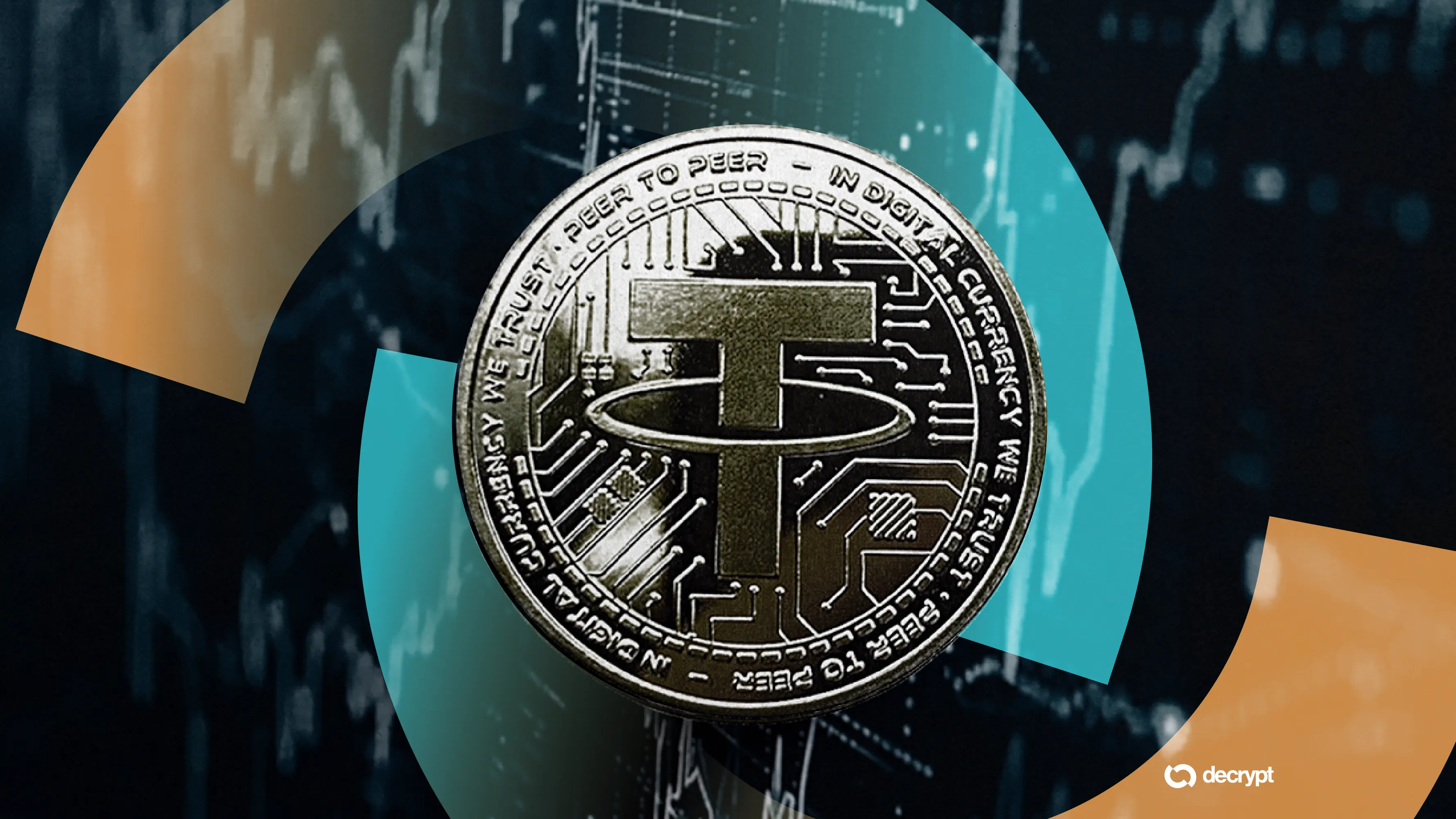
Tether is sharpening its claim that USDT has become core financial plumbing for the Bitcoin economy, as chief executive Paolo Ardoino frames the world’s largest stablecoin as a long-duration infrastructure project rather than a trading token built for crypto cycles.
Ardoino has compared Tether’s approach to Isaac Asimov’s Foundation universe, using the analogy to stress resilience, preparation and systems designed to outlast political and financial disruption. The message lands at a pivotal moment for the company: USDT’s circulation is near $190 billion, daily turnover regularly exceeds that of most digital assets, and Tether’s reserve base now gives it financial weight comparable with a large sovereign cash manager.
USDT’s role in the Bitcoin market is practical as much as symbolic. Traders use it as a dollar proxy across exchanges, market makers rely on it for liquidity, and users in countries with weak banking access treat it as a portable dollar balance. For Bitcoin holders, USDT often functions as the bridge between volatile crypto exposure and dollar-denominated settlement, enabling rapid entry and exit without relying on conventional bank rails.
Tether’s latest reserve disclosures show how far the company has moved from its early image as a narrowly crypto-focused issuer. Its reserve portfolio is dominated by US Treasury bills, with holdings above $117 billion at the end of March 2026. Gold accounted for about 132 tonnes backing USDT reserves, worth nearly $20 billion, while Bitcoin holdings were valued around $7 billion. The company reported first-quarter profit of just over $1 billion and an excess reserve buffer above $8 billion.
That balance sheet has allowed Tether to expand beyond stablecoin issuance into Bitcoin mining, energy, artificial intelligence, communications software and commodity-linked investments. The strategy reflects Ardoino’s argument that durable monetary infrastructure requires control over more than software. Tether has invested in mining capacity, peer-to-peer tools and decentralised AI initiatives intended to operate with Bitcoin and USDT payments embedded at the protocol level.
The company’s Tether AI project is part of that wider architecture. Ardoino has said the platform is intended to support open-source, device-level artificial intelligence capable of operating without dependence on centralised cloud providers. Its wallet development tools are designed to allow Bitcoin and USDT payments across mobile, desktop and web applications, strengthening the link between autonomous software agents, self-custody and digital dollar settlement.
Tether’s scale has also intensified scrutiny. Critics continue to point to the absence of a full audit, the use of attestations rather than comprehensive financial statements, and the growing presence of gold, Bitcoin, secured loans and other non-cash assets in its reserve mix. Rating analysts have warned that riskier reserve assets and limited disclosure around custodians and account providers could become pressure points during market stress.
Regulatory attention has moved in parallel with Tether’s growth. The United States’ GENIUS Act created a formal framework for stablecoins in 2025, raising the compliance bar for issuers that want access to the American market. Tether responded by announcing USAT, a separate US-focused stablecoin expected to operate under domestic regulatory standards, while USDT remains the company’s global offshore flagship.
The company has also tried to answer concerns about illicit finance by expanding wallet-freezing and law-enforcement cooperation. It has frozen billions of dollars in tokens linked to scams, sanctions violations, human trafficking and other criminal activity. That capability is a double-edged feature: it helps Tether present itself as a partner to authorities, but it also underscores that USDT is not censorship-resistant in the same way Bitcoin is.
Competition is becoming more defined. Circle’s USDC remains the leading regulated rival, particularly among institutions seeking clearer compliance structures. New bank-backed and fintech-led stablecoin projects are expected to compete for payment and settlement flows as regulation matures. Tether’s advantage lies in liquidity, distribution and network effects, especially across emerging markets and offshore exchanges where USDT remains the dominant quote currency.
Arabian Post – Crypto News Network
Follow Arabian Post
Select Arabian Post as your preferred source on Google and MSN News for trusted business news and Arab politics and updates.



