

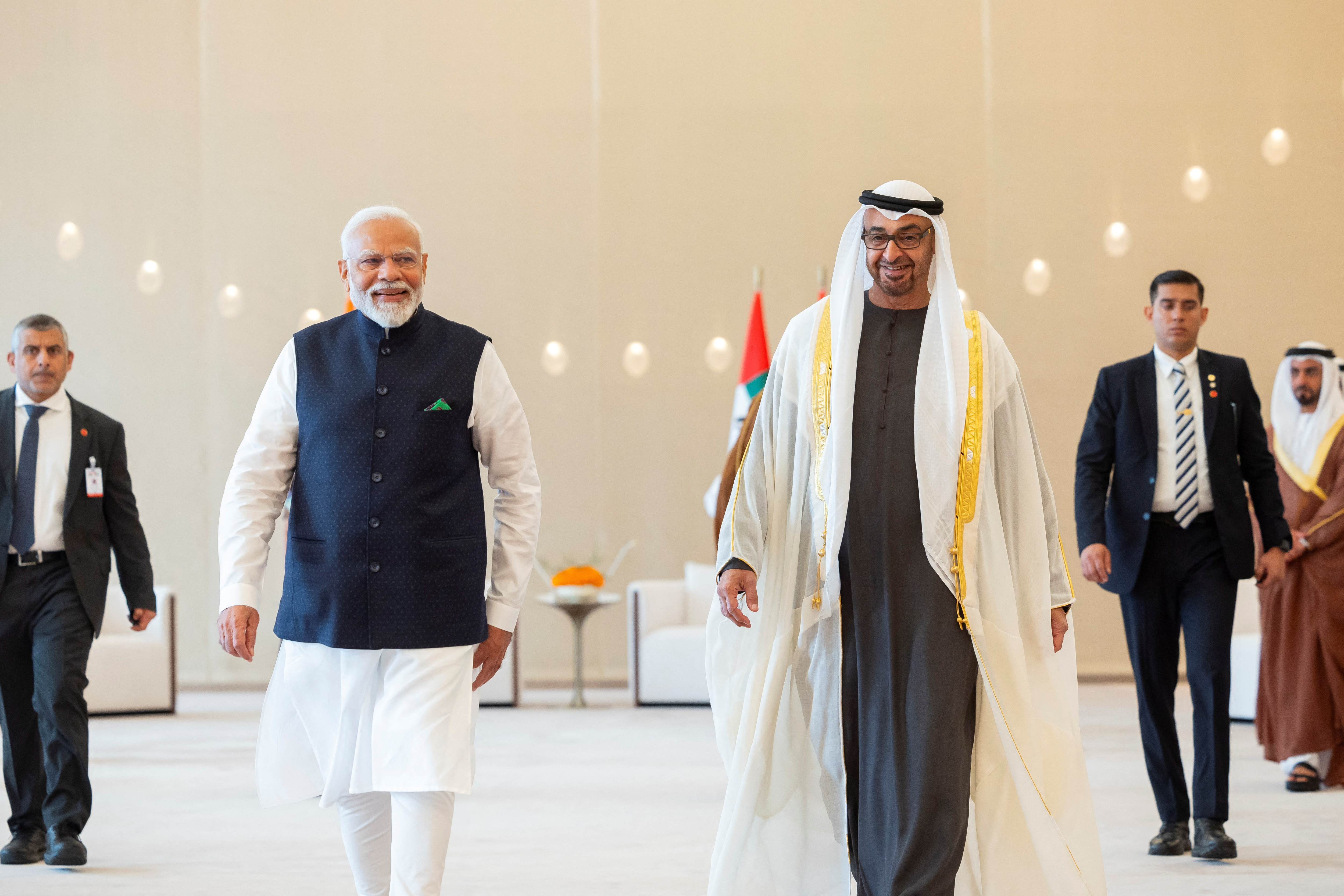
India and the United Arab Emirates (UAE) signed a significant nuclear cooperation agreement in New Delhi on Monday, marking a crucial step in their growing strategic partnership. The memorandum of understanding (MoU) was signed during a high-profile meeting between Indian Prime Minister Narendra Modi and UAE Crown Prince Sheikh Khaled bin Mohamed bin Zayed Al Nahyan, who was on his first official visit to India as Crown Prince.
The agreement, facilitated by India’s Nuclear Power Corporation of India Limited (NPCIL) and the Emirates Nuclear Energy Corporation (ENEC), is aimed at deepening collaboration in the nuclear energy sector. Specifically, the MoU is expected to foster joint initiatives in the operation and maintenance of nuclear power plants, the sourcing of nuclear goods and services, and exploring mutual investment opportunities. Both nations expressed satisfaction over the progress in their strategic partnership, with this nuclear agreement marking a milestone in their shared vision for energy security and technological cooperation.
The nuclear cooperation deal builds on a series of agreements signed in recent years, including trade and defense pacts, as the UAE continues to invest in India’s burgeoning energy market. Sheikh Khaled’s visit also comes at a time when both nations are increasingly looking to expand their energy portfolios, with nuclear energy seen as a vital component of sustainable development and energy diversification efforts. The MoU is expected to support these long-term objectives while also fostering regional stability through energy collaboration.
This strategic partnership, particularly in the nuclear sector, is viewed as mutually beneficial, with India’s growing demand for energy and the UAE’s focus on diversifying its energy sources forming the backbone of the agreement. Nuclear energy, with its potential to reduce carbon emissions and enhance energy security, is increasingly being seen as critical to both nations’ future energy strategies. This partnership could also pave the way for further cooperation in advanced nuclear technologies, including reactor development and waste management solutions.
The agreement comes amidst the UAE’s ongoing development of its nuclear power sector, notably the Barakah Nuclear Power Plant, the first nuclear power facility in the Arab world. India’s extensive experience in operating nuclear power plants and its robust nuclear technology sector make it an ideal partner for the UAE as it looks to enhance its operational capabilities and ensure the safe and efficient functioning of its nuclear infrastructure.
This MoU also opens doors for future collaborations in areas such as nuclear safety, personnel training, and the exchange of technical knowledge. By leveraging India’s expertise, the UAE aims to strengthen the safety protocols and operational efficiency of its nuclear facilities. As the global community emphasizes the need for clean energy transitions, the UAE and India are positioning themselves at the forefront of nuclear energy cooperation, with this deal symbolizing their commitment to sustainable energy development.
Sheikh Khaled’s visit to India not only marked the strengthening of bilateral ties but also underscored the broader geopolitical importance of India-UAE relations. The two countries have been steadily deepening their strategic partnership, with nuclear energy cooperation being the latest in a series of initiatives aimed at bolstering economic and political ties. This visit also highlights the growing importance of energy diplomacy, as both India and the UAE seek to secure their energy futures through international partnerships.
India’s NPCIL has been instrumental in driving the country’s domestic nuclear program, operating several nuclear reactors and contributing to the country’s energy grid. Through this agreement, India hopes to expand its nuclear export capabilities, offering its services and technology to a broader international audience. For the UAE, the partnership provides an opportunity to tap into India’s vast experience and technical know-how, ensuring the successful implementation of its own nuclear energy ambitions.
This agreement also reflects the broader regional dynamics, as the UAE continues to assert its role as a key player in the Middle East’s energy landscape. With growing economic ties to both Asia and the West, the UAE’s partnership with India further solidifies its position as a global energy hub, capable of leveraging its resources and strategic location to foster international collaboration.
Follow Arabian Post
Select Arabian Post as your preferred source on Google and MSN News for trusted business news and Arab politics and updates.




