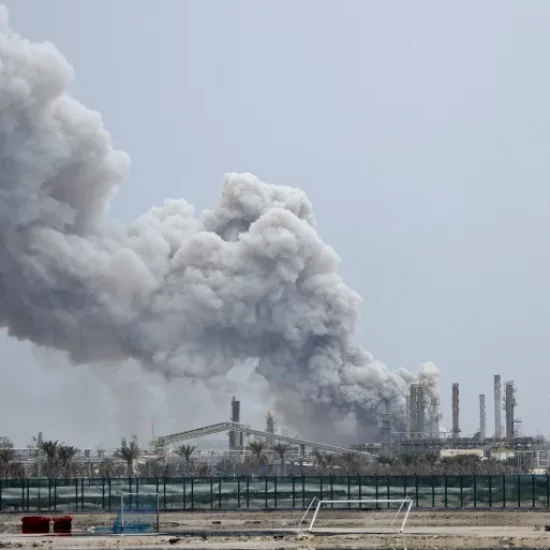
Satellite imagery and assessments of battlefield damage establish that more than 115 strikes claimed by Iran or Iranian-backed militias damaged or destroyed structures at 26 military bases and other facilities housing American equipment through August.
The attacks, launched during the conflict that began in late February, caused equipment losses running into billions of dollars. Their progression indicates that disabling detection and defensive capabilities was an early priority, alongside attacks on aircraft hangars, before strikes spread across operational and logistical facilities.
Kuwait sustained the heaviest concentration of attacks, although American installations in Bahrain, Iraq, Jordan, Oman, Qatar, Saudi Arabia and the United Arab Emirates were also targeted.
The scale of destruction has prompted changes in American military deployments. Regional officials familiar with the damage indicated that substantial quantities of equipment had been moved out of the Persian Gulf, including aircraft, air-defence systems, communications infrastructure and other assets supporting military operations.
The Pentagon has maintained that American forces remain adequately protected. Pentagon spokesman Sean Parnell said US forces and bases were well protected and that the military retained the capabilities required to accomplish its objectives.
Among the earliest targets were radar installations at Camp Arifjan in Kuwait and Naval Support Activity Bahrain, where protective enclosures housing detection systems were destroyed within the conflict’s first two days.
Portable radar systems at Prince Sultan Air Base in Saudi Arabia and Muwaffaq Salti Air Base in Jordan were also struck, affecting equipment central to identifying incoming missiles and coordinating defensive responses.
N. R. Jenzen-Jones, director of Armament Research Services, identified the attacks on early-warning equipment as particularly significant because advanced radar systems are difficult and expensive to replace.
A radar system destroyed in Jordan belonged to a category of equipment held in limited numbers by the US Army. Manufacturer Raytheon has indicated that the Army possessed only 13 such systems worldwide, while American budget documents place their individual cost at approximately $500 million.
Another sophisticated radar installation in Qatar sustained substantial damage, although its complete destruction has not been established. The equipment was acquired under a 2013 agreement valued at $1.1 billion.
Damage extended beyond surveillance systems. A Congressional Research Service assessment updated in October identified 15 American aircraft damaged at regional installations.
Ali Al Salem Air Base in Kuwait was struck at least 30 times. The attacks damaged or destroyed at least 15 aircraft hangars, numerous warehouses and 10 buildings near a residential section of the installation.
Camp Buehring, another major American facility in Kuwait, experienced extensive destruction. Aircraft hangars became largely unusable, while buildings serving military personnel sustained repeated attacks.
The base’s gymnasium was destroyed in March, and a retail facility used by troops was struck in July. Its garage and dining facilities also suffered severe damage.
The deadliest identified attack against American personnel occurred at Kuwait’s Port Shuaiba on March 1, when a drone strike killed six US soldiers.
Bahrain’s naval installation, which supports the US Fifth Fleet, suffered damage to satellite communications equipment and warehouses. Such facilities are important for maintaining communications between deployed forces and regional command structures.
Al Dhafra Air Base near Abu Dhabi also experienced repeated attacks early in the conflict. Damage there included aircraft hangars, surveillance drones and early-warning radar equipment.
Raphael Cohen, director of the National Security Programme at the RAND School of Public Policy, warned that inexpensive drones had demonstrated the vulnerability of military infrastructure traditionally protected by sophisticated defensive systems.
The findings carry implications for the cost of restoring damaged installations and maintaining American deployments while Washington and Tehran continue to signal the possibility of further confrontation.
The complete extent of the destruction remains difficult to establish because commercial satellite imagery was sometimes withheld or delayed following requests from American authorities citing national security concerns.
High-resolution images of Camp Buehring were unavailable for several months. When clearer imagery became accessible in August, it showed more than 30 structures damaged or destroyed since early March.
The installation sustained confirmed attacks across March, April, May and July, illustrating the prolonged exposure of fixed military facilities to repeated missile and drone strikes.
Follow Arabian Post
Select Arabian Post as your preferred source on Google and MSN News for trusted business news and Arab politics and updates.