

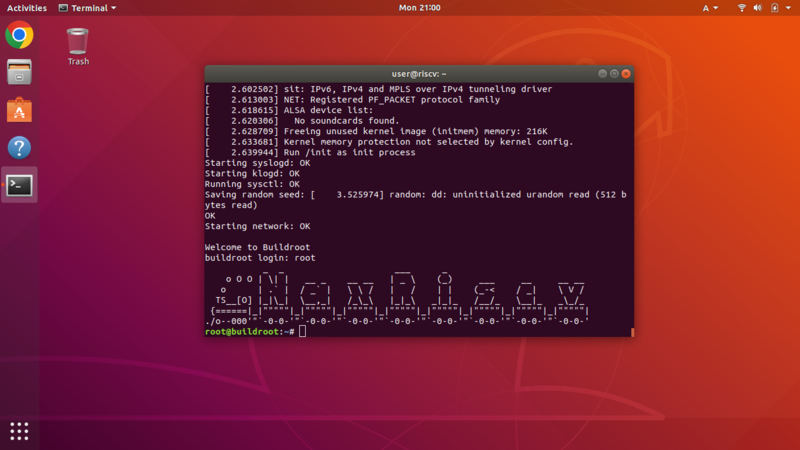
Red Hat Enterprise Linux and Rocky Linux are accelerating efforts to support the RISC-V architecture, signalling a significant shift in the enterprise Linux landscape. This development reflects the growing momentum behind RISC-V, an open-source instruction set architecture that is reshaping hardware innovation amid challenges in traditional chip supply chains and rising demand for customisable, energy-efficient computing.
Red Hat, a subsidiary of IBM and a dominant force in the enterprise Linux market, has publicly confirmed its roadmap for incorporating RISC-V support into future releases of Red Hat Enterprise Linux . Similarly, the community-driven Rocky Linux project, a popular downstream fork of RHEL designed to provide enterprise-grade stability, has also announced ongoing work to integrate RISC-V compatibility. These parallel initiatives demonstrate broad industry recognition of RISC-V’s potential to disrupt conventional processor markets dominated by x86 and ARM architectures.
RISC-V’s open standard removes licensing costs and restrictions typically associated with proprietary CPU designs, encouraging a diverse ecosystem of chip manufacturers, academic researchers, and software developers. This flexibility allows companies to tailor processor designs for specific workloads, which is particularly appealing for embedded systems, Internet of Things devices, and edge computing applications. Both Red Hat and Rocky Linux see this as a critical advantage for future-proofing their operating systems and meeting evolving customer needs.
The move to support RISC-V involves extensive technical adaptation, as much of the existing software stack has been optimised for x86-64 and ARM64 platforms. Red Hat’s engineering teams have been collaborating with hardware vendors and the wider open-source community to ensure that core components of RHEL, including the kernel, system libraries, and security modules, perform efficiently on RISC-V hardware. The company’s investment in this area underscores its commitment to maintaining leadership across diverse infrastructure environments, including cloud, on-premises, and hybrid deployments.
Rocky Linux, founded in the wake of CentOS’s shift away from its traditional model, has quickly gained traction among enterprises seeking stable, free alternatives to RHEL. Its embrace of RISC-V support aligns with its mission to offer a robust platform compatible with the latest computing technologies. Developers contributing to Rocky Linux have been porting essential packages and testing workloads on early RISC-V development boards, working to iron out architecture-specific bugs and ensure seamless user experience.
Industry analysts observe that this dual commitment to RISC-V by both a commercial giant and a grassroots community project indicates growing confidence in the architecture’s viability for production environments. Although RISC-V chips currently lag behind in raw performance compared to established x86 and ARM processors, ongoing improvements in silicon design and fabrication suggest this gap will narrow. Support from major Linux distributions is pivotal to accelerating software ecosystem maturity, which has been a critical barrier to wider RISC-V adoption.
Hardware manufacturers such as SiFive, Microchip, and Alibaba’s semiconductor division are developing increasingly powerful RISC-V processors targeting servers and high-performance computing. Red Hat’s engagement with these vendors is expected to facilitate optimisation efforts and certification programmes, ensuring that RHEL runs reliably on certified RISC-V platforms. This cooperation is vital as enterprises require not only compatibility but also assurances around security, stability, and long-term support when deploying new architectures.
The initiative also ties into broader trends within the open-source community and the tech industry. Governments and large organisations are seeking to reduce dependency on single-source suppliers, especially in light of geopolitical tensions and supply chain vulnerabilities exposed in recent years. Open hardware initiatives like RISC-V are viewed as strategic assets that can drive innovation while enhancing security and sovereignty over critical technology infrastructure.
Despite enthusiasm, challenges remain. Software ecosystem maturity is uneven; many applications and development tools require adaptation to fully leverage RISC-V capabilities. Furthermore, mainstream cloud providers have yet to offer widespread RISC-V hosting options, limiting deployment scenarios primarily to on-premises and experimental settings for now. However, companies such as Amazon Web Services have begun exploratory work with RISC-V instances, signalling potential expansion in the near term.
Red Hat and Rocky Linux’s pursuit of RISC-V support follows a pattern of early adoption seen in other Linux distributions such as Fedora, where RISC-V packages have been under development for some time. Their progress benefits from this groundwork, yet enterprise-grade readiness demands rigorous validation and comprehensive documentation to meet customer expectations.
The growing adoption of RISC-V by major Linux providers may also stimulate innovation in adjacent fields. For example, edge computing deployments prioritising low power consumption and customised instruction sets stand to gain from enhanced RISC-V Linux support. Academic and research institutions involved in processor architecture development also benefit from improved access to stable operating systems, enabling faster prototyping and experimentation.
Follow Arabian Post
Select Arabian Post as your preferred source on Google and MSN News for trusted business news and Arab politics and updates.



