Just in:
Jaiedco and Golden Bridge Announce Strategic Collaboration for a New Dubai Islands Development // Thailand’s Most Iconic New Year’s Celebration Returns: ICONSIAM Unveils “Amazing Thailand Countdown 2027” // LittleLives, Little Lab and SEGi College Sign MOU to Explore Early Childhood Education Collaboration Across ASEAN // Padmini follows Padmaja for ‘ghar vapsi’ // Dar Global unveils $700m Trump development in Qatar // Toward a Shared Future for Humanity: Rethinking Civilizational Exchange // Alibaba shares slip despite 53% cloud revenue growth // Russia permits retail cryptocurrency purchases under regulated framework // Crypto market loses $150 billion amid broad sell-off // Phancy Announces Business Performance for the Nine Months Ended September 30, 2026 // Workday targets Honeydew purchase to unify AI metrics // Yeebo Announces Interim Results for FY26/27 Revenue Increases by 45.5% to HK$806.7 Million Profit Attributable to Owners Surges 87.6% to HK$2,284.7 Million // Coinbase targets 2027 launch amid state gambling lawsuits // International Business Leaders Say Xi’s Speech Boosts Confidence in Asia-Pacific Cooperation // Sui activates Hashi Bitcoin lending across partner network // Travel Insurance Was Built for the Few Who Claim. Ancileo’s Felt Coverage™ is for Everyone Else // Hackers exploit public notes to distribute NodeLinkRAT malware // Dalilk Academy reaches 27 million, targets 100 million by 2030 // Balagopal challenges CM over tax revenue // Sharjah clears Kalba free zone plan for 400MW complex //

News related to
Democrats

A prediction market investor banked more than $400,000 by wagering on the ousting of Venezuelan President Nicolás Maduro shortly before U. S. forces captured him, thrusting opaque online betting platforms into the spotlight and renewing debate over insider trading and regulatory oversight. The anonymous trader placed significant bets on Polymarket, a crypto-based prediction market, in the days leading up to the dramatic U. S. intervention in Venezuela’s […]

Senate Republicans are accelerating plans to bring a sweeping cryptocurrency bill to a vote, betting that momentum and industry pressure can overcome lingering Democratic reservations even as bipartisan talks remain unsettled. The move was confirmed late on Friday by the chair of the Senate Banking Committee, who said the panel would press ahead with scheduling despite parallel efforts by the Senate Agriculture Committee to refine a cross-party […]

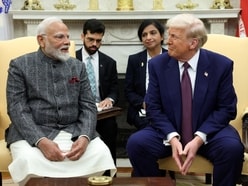
By Nitya Chakraborty U.S. commerce secretary Howard Lutnick’s stunning podcast on Thursday claiming that the bilateral India-US trade deal was almost ready but was not signed as Prime Minister did not call the U.S. President Donald Trump as was expected by the Americans. This lack of proper gesture on the part of the Indian PM […]

The article Modi Mustn’t Rush To Appease Trump On Trade Deal, Explore Options appeared first on Latest India news, analysis and reports on Newspack by India Press Agency).

By Nitya Chakraborty The invasion of Venezuela by the United States on the early hours of January 3 along with the kidnapping of President Nicholas Maduro and his wife marks a new phase in Donald Trump’s foreign policy which has been termed by The Guardian columnist as “naked imperialism”. The announcement by Trump that the […]

The article U.S. Invasion Of Venezuela May Set The Process Of Trump’s Down Turn In November Mid Term appeared first on Latest India news, analysis and reports on Newspack by India Press Agency).

The US Supreme Court indicated during oral arguments that it is prepared to permit the president to remove leaders of independent federal agencies at will — a move that could weaken decades-old protections shielding regulatory bodies from political control. The case centers on the dismissal of Rebecca Kelly Slaughter from the Federal Trade Commission, and touches on the fate of more than two dozen agencies governed by […]

By Satyaki Chakraborty After a gap of 80 years since the fall of fascism in 1945, Germany is once again agog with the militarization of the society in the name of fighting against the possible aggression by Russia. The ground has been laid by the continuing war in Ukraine. German Chancellor Merz along with other […]

The article German Coalition Led By Friedrich Merz Arouses War Mentality Once Again appeared first on Latest India news, analysis and reports on Newspack by India Press Agency).

Previously unseen photographs from Jeffrey Epstein’s private island residence have been made public by lawmakers in Washington, offering a closer look at the property at the centre of one of the most scrutinised criminal networks in the United States. The images were disclosed by Democratic members of a congressional committee examining Epstein’s activities and the conduct of officials who interacted with him over several decades. The release […]

Advertisements

By Nitya Chakraborty The meeting on Friday November 21 between the U.S. President Donald Trump and the New York Mayoral-elect Zohran Mamdani produced a win-win situation for both leaders. The maverick Republican President who earlier called Mamdani a lunatic communist and the 34 year old firebrand democratic socialist who calls even now Trump a fascist, […]

The article Trump-Mamdani Meet: It Was A Win-Win Situation For Both Leaders appeared first on Latest India news, analysis and reports on Newspack by India Press Agency).

The U. S. Senate is making significant strides towards bringing an end to the longest government shutdown in the nation’s history, following a pivotal agreement by a bloc of moderate Democrats to advance a bill without securing an extension for crucial healthcare subsidies. This decision has sparked backlash within the party, particularly among progressive members, who view the move as a concession to Republican demands that could […]

By Nitya Chakraborty The historic victory of the Democratic socialist candidate Zohran Mamdani in New York mayoral elections on November 4 night is acting as a big booster, not only to the left wingers in the Democratic Party belonging to the Bernie Sanders group, but also to the left parties in Europe and Latin America. […]

The article Zohran Mamdani’s Victory As New York Mayor Has Given A Big Boost To Global Left appeared first on Latest India news, analysis and reports on Newspack by India Press Agency).

By TN Ashok NEW  YORK:When the polls closed at 9 p.m. on Tuesday, November 4, 2025, it took less than 40 minutes for the Associated Press to call the race. Zohran Mamdani, a 34-year-old democratic socialist and state assemblyman from Queens, had accomplished what many considered impossible just a year earlier: he defeated Andrew Cuomo—twice—to […]

The article The Mamdani Moment: A Political Earthquake In America’s Largest City appeared first on Latest India news, analysis and reports on Newspack by India Press Agency).

A U. S. government shutdown commenced at 00:01 EDT after Congress failed to enact the necessary funding bills, placing an estimated 750,000 federal employees at risk of furlough or unpaid work, according to Congressional Budget Office projections. The Transportation Department has announced that more than 11,000 employees of the Federal Aviation Administration will be furloughed, even as over 13,000 air traffic controllers remain mandated to continue working […]

By T N Ashok The Trump administration’s latest immigration directive has stunned employers, foreign workers, and higher-education leaders alike: a $100,000 surcharge on each H-1B visa application, announced by executive order on 19 September 2025. What might appear on the surface as a routine adjustment to visa fees is, in reality, a dramatic escalation in […]

The article Trump’s $100,000 H-1B Visa Fee Redefines U.S. Liberal Immigration Policy appeared first on Latest India news, analysis and reports on IPA Newspack.

A group of U. S. Senators have filed a resolution pressing the government to formally recognise a Palestinian state alongside a secure Israel. Led by Senator Jeff Merkley of Oregon, the measure calls for a demilitarised Palestinian state under Palestinian Authority governance based on the pre-1967 boundaries, adhering to the principles of a two-state solution. Senators Chris Van Hollen, Tim Kaine, Bernie Sanders, Peter Welch, Tina Smith, […]

By Nitya Chakraborty Europe which was the main centre of two world wars in the last century is showing signals of many of the features of the politics of the continent in the pre- second world period spanning 1925 to 1939 in political and military terms. Though in term of economy, the threat of great […]

Conor McGregor has announced his intention to run for President of Ireland in the upcoming election, marking a dramatic shift from mixed martial arts to the political arena. The election is scheduled for 24 October 2025. The victory is deeply improbable, given Ireland’s strict constitutional requirements for candidacy and growing scepticism from political observers. McGregor’s campaign relies heavily on public support rather than political endorsements. On 4 […]

By Nitya Chakraborty The India-US trade war over Donald Trump’s 50 per cent tariff on Indian exports to the USA with effect from August 27 this year has assumed a major political dimension linking the political future of both Indian Prime Minister Narendra Modi and the United States President Donald Trump. For Narendra Modi, the […]
By Nitya Chakraborty It is not a cliché to say that our powerful Prime Minister Narendra Modi’s moment truth has arrived after 11 years of ruling the country as the unchallenged leader. The 25 per cent tariff hike on Indian exports announced by the United States President Donald Trump on Wednesday and taking effect from […]
By Nitya Chakraborty The Left wing section in the Democratic Party in the United States of America led by Senator Bernie Sanders is on upswing even though the party establishment seems clueless to deal effectively with the challenge thrown by the second term President Donald Trump to the very existence of its rival party. After […]

The U. S. House of Representatives has approved the GENIUS Act, the inaugural federal regulatory framework targeting fiat‑backed stablecoins, with a decisive 308–122 bipartisan vote on 17 July 2025. With Senate approval secured in June by a 68–30 margin, the legislation now advances to President Trump’s desk for signature, anticipated as early as tomorrow.

The GENIUS Act mandates that issuers—including banks, credit unions, fintech firms, and select non‑bank entities—maintain one‑to‑one reserves in cash or low‑risk assets such as U. S. Treasury bills, with mandatory monthly public disclosures of reserve composition. It also institutes anti‑money laundering controls, requires issuance organisations to obtain licences from federal or state financial regulators, and prohibits paying interest directly to stablecoin holders.

The legislation forms part of a broader “Crypto Week” effort in the House, which also included passage of the CLARITY Act—allocating oversight of digital asset classification between the SEC and CFTC—and the Anti‑CBDC Surveillance State Act, barring the Federal Reserve from issuing a central bank digital currency. Both now await Senate consideration.

Advocates argue that the GENIUS Act addresses long-standing regulatory uncertainty, providing market stability and consumer safeguards within a $260 billion-plus stablecoin ecosystem. Senior figures from institutions such as JPMorgan Chase, Bank of America, Citi, Walmart, and Amazon have reportedly expressed interest in issuing stablecoins under the new regime. Market sentiment reflects optimism: crypto‑linked equities and assets rose when the House vote was finalised, with Bitcoin nearing record highs above $119,000.

Nonetheless, critics highlight significant concerns. Consumer advocates emphasise that stablecoins remain outside FDIC protection and could pose redemption risks or obscure hidden fees. Others express unease over potential weak guardrails: the SEC’s Paul Atkins cautioned that regulatory innovation must still ensure sufficient market safeguards.

Ethics debates spotlight former President Trump’s extensive ties to the crypto industry, including investments in World Liberty Financial and a meme coin touted as generating over $300 million in related revenues. Opponents claim this raises conflict‑of‑interest questions and risks favouring Trump‑linked enterprises, though the White House has asserted asset segregation via a family trust.

In Congress, both Democratic and Republican proponents defended the legislation for delivering much‑needed structure. Democratic Rep. Josh Gottheimer remarked that introducing “some rules of the road” was preferable to having none. Opposing voices like Rep. Maxine Waters cautioned that the law might “signal tolerance for corruption” without closing presidential exemptions from conflict‑of‑interest prohibitions. Meanwhile, Senate Democrats, including Richard Blumenthal, criticised the bill’s failure to eliminate loopholes or demand stronger consumer protection standards.

Beyond federal oversight, the GENIUS Act introduces a layered supervisory model: federal agencies will regulate larger issuers and interstate entities, while state regulators handle smaller players—those issuing under $10 billion annually. The legislation sets out implementation timelines, including one‑year deadlines for rule‑making and an 18‑month effective date, with a three‑year transition period before enforcement on custody and transaction restrictions.

Industry stakeholders anticipate dramatic market growth. Scott Bessent, Treasury secretary, projected the stablecoin market could swell from around $195 billion to over $2 trillion following the GENIUS Act’s implementation. Christian Catalini of the MIT Cryptoeconomics Lab predicted fierce competition as banks and fintechs join traditional issuers with consumer trust bolstered by regulation.

The crypto sector, stung by past regulatory setbacks under the prior administration’s enforcement actions, now views the GENIUS Act as a turning point. Major players like Circle and Coinbase backed the measure after directing substantial lobbying resources toward lawmakers. Jennifer Nolan, head of the Blockchain Association, described it as a “defining moment in the evolution of U. S. digital asset policy”.

With presidential signature expected imminently, the GENIUS Act is poised to redefine the U. S. approach to stablecoins—ushering in regulated issuance, enhanced transparency, and heightened institutional involvement. Its progress also spotlights ongoing debates about market oversight, political influence, and financial stability in an increasingly digital economy.


The U. S. House of Representatives will convene “Crypto Week” from 14–18 July to vote on three pivotal digital asset bills: the CLARITY Act, the Anti‑CBDC Surveillance State Act, and the GENIUS Act. This coordinated effort signals a major shift in federal crypto policy as lawmakers aim to clarify regulation, protect financial privacy, and foster blockchain innovation.

The CLARITY Act seeks to establish a definitive regulatory framework by delineating the roles of the SEC and CFTC, mandating the segregation of customer funds, and requiring enhanced retail disclosures. It has already passed through both the Financial Services and Agriculture Committees by decisive margins, reflecting bipartisan support and responding directly to industry demands for legal certainty.

The GENIUS Act, recently approved by the Senate in a strong 68–30 bipartisan vote, focuses on stablecoin regulation. It mandates that stablecoin reserves be held in high‑quality, liquid assets such as U. S. Treasuries, requires annual audits for issuers with over $50 billion in market cap, and clarifies regulatory oversight while allowing banks to issue their own tokens. The bill now awaits a House vote, with hopes of reaching the president’s desk by late July.

The Anti‑CBDC Surveillance State Act takes a definitive stance against a federally issued central bank digital currency, effectively prohibiting the Federal Reserve from developing or distributing a CBDC. Proponents frame it as a necessary measure to safeguard financial privacy and prevent potential government surveillance through digital currency systems.

Deputy Speaker Mike Johnson and committee chairs, including Financial Services Chair French Hill and Agriculture Chair GT Thompson, have emphasised that this legislative package aligns with former President Trump’s digital assets agenda — aiming to position the U. S. as a leader in crypto innovation. Johnson stated that the bills would deliver the full scope of that agenda, while Hill highlighted that the initiative would finally provide clarity for innovators, protecting both consumers and the broader digital economy.

Majority Leader Steve Scalise echoed the sentiment, saying the legislation would solidify the U. S.’s global leadership in digital assets. Minority voices have also weighed in: Majority Whip Tom Emmer described the moment as a “historic opportunity” to uphold “privacy, individual sovereignty, and free‑market competitiveness.” Senator Bill Hagerty voiced Senate support, noting the urgency of enacting these measures swiftly.

While the GENIUS Act has Senate backing, the CLARITY Act has faced scrutiny from Democrats and former regulators. Experts such as ex‑CFTC Chair Timothy Massad have warned that its provisions could be overly broad or convoluted, advocating instead for a collaborative regulatory approach between the SEC and CFTC. Concerns also persist among left‑leaning lawmakers that pairing the CLARITY Act with stablecoin regulation could stall progress, despite strong crypto industry support calling for their passage in tandem.

Lawmakers like Rep. Warren Davidson have promoted consolidating stablecoin, market‑structure, and CBDC ban measures into a single legislative package to ensure comprehensive reform. However, this strategy may encounter resistance in the Senate, potentially delaying the bills past the intended timeline.

The Senate’s passage of the GENIUS Act earlier this month reflected growing bipartisan agreement on stablecoin oversight but also revealed tensions over inclusion of Trump‑era cryptocurrency interests. Indeed, some critics have raised ethical questions about exempting the president’s family from the bill’s prohibitions on member profits, and the influence of Trump‑linked ventures that reportedly earned tens of millions from crypto operations.

Despite these controversies, House Republicans are pushing ahead with “Crypto Week” as a gateway to shaping U. S. cryptocurrency policy. The CLARITY Act furthers efforts made under the FIT21 digital asset law passed in May 2024, which established initial delineation of regulatory authority.

As 14 July approaches, industry stakeholders, advocacy groups, and congressional offices are bracing for intense debates. Passing these bills could redefine market structures, unlock stablecoin innovation, and reinforce constitutional privacy rights—or it may start a protracted legislative battle over oversight, accountability, and the future role of federal oversight in digital currencies.

U.S. lawmakers have advanced the GENIUS Act, a federal bill setting strict requirements for stablecoin issuers that could significantly challenge Tether’s dominance. The legislation mandates full backing with cash or U.S. Treasuries, monthly audits by registered firms, transparency of reserves, anti-money laundering safeguards and U.S. registration for issuers with over $10 billion in circulation. Circle’s USDC stands to gain, while Tether’s model faces serious scrutiny if it intends to access U.S. markets.

Tether currently holds approximately $155 billion in USDT tokens, backed in part by volatile assets such as Bitcoin and gold—as well as commercial paper and loans. It discloses reserves via quarterly attestations, though it has never undergone a full independent audit, despite promises since 2017. In contrast, the GENIUS Act requires liquidity in U.S.-based financial institutions and audited transparency certified by company executives, holding them personally liable.

Experts warn that Tether now faces a strategic choice: overhaul its reserve holdings, comply with audits and potentially register under U.S. regulations—or abandon ambitions in the U.S. and pivot towards offshore markets. After relocating its corporate headquarters to El Salvador, Tether appears poised to leverage regulatory gaps via reciprocal agreements—though critics argue this is unlikely to satisfy U.S. authorities.

Steve Gannon, a lawyer specialising in digital assets, suggested that Tether is unlikely to enter U.S. markets until regulations are finalised, as adaptation would require extensive investment in compliance infrastructure. CoinDesk analysis emphasises that foreign issuers could qualify only if regulated by approved jurisdictions and maintain U.S.-based reserves, with oversight from the Office of the Comptroller of the Currency.

By contrast, Circle is well-positioned. USDC is fully backed by cash and Treasury bills, audited monthly and issued by a U.S.-based firm. Following the Senate’s approval of the GENIUS Act, Circle’s share price surged, reflecting investor confidence in its compliance-readiness.

The GENIUS Act also seeks to tighten anti-money laundering and counter-terror financing protocols by integrating stablecoins under the Bank Secrecy Act, with monthly certifications and criminal penalties for lapses. It includes explicit restrictions on stablecoin issuance by lawmakers and their families.

Critics have flagged potential loopholes, warning that offshore entities like Tether could continue servicing U.S. customers through decentralised exchanges—sidestepping rigorous Elm Salvador or other offshore jurisdictions. The Senate bill also bans stablecoins from offering interest, limiting yield-bearing models favoured by some existing issuers.

On financial markets, increased demand from compliant issuers is expected to boost U.S. Treasury purchases. Currently, around $200 billion of assets backing stablecoins are held in Treasuries and repos. Even a modest uptick in USDC issuance could drive multibillion-dollar incremental purchases. A recent study found Tether holds nearly 1.6% of all U.S. Treasury bills, contributing to yield compression equivalent to tens of billions in annual government savings.

Yet uncertainty remains. The GENIUS Act must clear the House and be signed into law, with possible amendments—especially regarding foreign issuance pressures and scope of AML provisions. Senate Banking Committee Democrats have warned of national security risks if the bill doesn’t close offshore loopholes, fearing illicit finance actors could exploit weakly regulated channels.

Tether’s CEO Paolo Ardoino has signalled exploration of a U.S.-compliant stablecoin variant, which would align reserves and governance with federal standards. However, no official timeline has been provided.

Stablecoin proponents say the GENIUS Act brings much‑needed clarity, potentially paving the way for mainstream adoption and institutional participation. Yet critics fear regulatory shortcuts may invite private stablecoins into a system without equal access for central bank digital currencies.

The stakes are high. Tether’s strategic response will shape the competitive landscape. Will it meet U.S. standards or cede space to compliant rivals like Circle? The passage of the GENIUS Act may mark a turning point in crypto policy and redefine stablecoin leadership.

U.S. President Donald Trump has appealed directly to the House of Representatives to pass the GENIUS Act—a bipartisan stablecoin regulation bill cleared by the Senate—without any amendments or delays, stressing that it will position the country as the “undisputed leader” in digital assets.

The Senate passed the bill on 17 June with a decisive 68‑30 vote, supported by senators from both parties. It introduces stringent rules for stablecoin issuance, including full backing of coins with liquid reserves and monthly disclosures of reserve compositions, alongside audit and Treasury oversight provisions. Trump openly praised the legislation, calling it “pure genius” and urging House Republicans to advance a “clean” version so it reaches his desk before Congress breaks for its August recess.

Major market players reacted positively. The approval spurred significant gains in related equities: shares of Circle Internet, issuer of the USDC stablecoin, surged between 16% and 27%, reflecting investor optimism for regulatory clarity and mainstream token adoption.

The GENIUS Act’s framework mandates that only permitted issuers—such as banks or federally approved payment companies—may issue stablecoins for U.S. users. It requires a one‑to‑one reserve ratio in U.S. dollars or Treasuries and monthly public disclosures about reserve composition. Additionally, it introduces safeguards for consumer protection and bankruptcy protocols prioritising stablecoin holders. Large issuers will have to undergo annual audits, and the bill prohibits stabilecoin ownership by Congress members, though it excludes the President and Vice President.

While Trump’s endorsement reflects his broader pro-crypto pivot—underscored by investments like Bitcoin, policy appointments, and support from his digital-assets advisory council—critics have flagged potential conflicts of interest. Trump and his family hold substantial stakes in crypto ventures including World Liberty Financial and its USD1 stablecoin, having earned tens of millions in 2024. Critics stress that exemption of the President from the bill’s conflict-of-interest ban leaves a loophole that some fear could be exploited.

Senators on both sides celebrated the bill. Republican sponsor Bill Hagerty described it as a “paradigm-shifting development” that moves the U.S. toward global leadership in crypto. Senate Banking Chair Tim Scott described it as “the most significant digital assets legislation ever to pass the U.S. Senate”. Treasury Secretary Scott Bessent projected that the bill could expand the stablecoin market to $3 trillion‑plus by decade’s end.

Nonetheless, the path ahead is not without hurdles. Some Democrats, including Elizabeth Warren, Jeff Merkley and others, raised objections during Senate negotiations, warning the bill could grant a “super‑highway for corruption” and fails to curtail potential for big tech firms entering the stablecoin market. Senate negotiators incorporated numerous amendments to secure support, but key concerns remain unresolved.

The U.S. Senate has enacted the GENIUS Act, the first-ever federal framework for regulating dollar‑pegged stablecoins, with a decisive 68–30 bipartisan vote on 17 June 2025. Eighteen Democrats joined Republicans in supporting the legislation, which now advances to the House and is expected to reshape Washington’s digital asset rules.

The bill mandates that stablecoin issuers back tokens with liquid assets such as U.S. Treasuries, require regular financial disclosures and adhere to anti‑money‑laundering measures. It grants banks the authority to issue stablecoins, while explicitly restricting executive branch officials and legislators from sharing in their profits—a direct response to concerns over conflicts of interest.

A surge in crypto-sector investment in political campaigns appears to have shifted momentum. Industry spending topped $119 million in support of pro‑crypto congressional candidates during the 2024 cycle. Lobbyists then intensified efforts to engage Democratic lawmakers, viewed as essential for reaching the 60-vote threshold in the evenly divided Senate.

Internal communications among Democratic operatives reveal strategic alignment with crypto backers. In a private group chat described in reporting by the Lever, coalition members acknowledged that, despite ethical concerns, opposing the industry would be “political suicide.” One member reportedly observed that any amendment targeting Trump‑family conflicts would be “DOA,” suggesting token amendments offered for optics rather than impact.

Legislators including Senator Elizabeth Warren have voiced misgivings, arguing that the bill inadequately shields consumers or addresses risks associated with big‑tech or foreign‑issued stablecoins. She contends it grants too much leeway to the likes of former President Donald Trump’s crypto ventures, such as the Trump memecoin and World Liberty Financial.

The crypto lobby’s efforts have extended beyond campaign funding to retention of influential political operatives. Coinbase, for instance, recently appointed veteran Democratic strategist David Plouffe to its advisory board, joining a roster of insiders from both parties. Observers note this reflects crypto’s emerging status as a “politically competitive” constituency.

The political dynamic has shifted decisively. As AP reports, Democrats are balancing distrust of Trump-linked crypto enterprises with newfound recognition of the sector’s electoral influence. Backing the GENIUS Act became for many a strategic necessity, notwithstanding deep ideological resistance to deregulation.

The Senate vote occurred amid broader legislative discussions. The CLARITY Act—aimed at clarifying agency jurisdiction across the SEC and CFTC—is under consideration in the House Financial Services Committee. Some lawmakers propose merging the stablecoin and authority-defining bills, though others caution it could delay the GENIUS Act’s passage.

Crypto industry leaders view the GENIUS Act as a critical precursor to more comprehensive legislation. Ledger’s Head of Global Policy, Seth Hertline, described the Senate’s action as “a political bellwether” for the sector’s broader legislative agenda.

The bill’s passage also intersects with Trump’s personal crypto interests. His family’s stablecoin projects have sparked accusations of profiteering and lobbying for relaxed oversight. Critics warn that current legislative safeguards fall short of preventing conflicts of interest.

The next phase lies in the House, where Republican leadership must reconcile the Senate’s GENIUS Act with its own STABLE Act or integrate it into broader regulatory plans. Some Republicans advocate adding provisions to limit central bank digital currency initiatives, though such measures may complicate Senate approval.

Major stablecoin issuers such as Tether and Circle —together controlling over $200 billion in supply—stand to gain regulatory clarity and legitimacy if the GENIUS Act becomes law. Recent moves by major corporates, including JPMorgan’s planned stablecoin on Coinbase’s Base chain and indications that Amazon and Walmart are exploring token issuance, signal growing private‑sector enthusiasm.

As the House deliberates, questions remain whether the Senate’s bipartisan vote marks the start of a fully fleshed-out U.S. crypto regulatory regime—or the culmination of a high-stakes battle between policy integrity and political pragmatism.

VISHNU RAJA
RYO YAMADA
HITORI GOTOH
IKUYO KITA
Just in:
Thailand’s Most Iconic New Year’s Celebration Returns: ICONSIAM Unveils “Amazing Thailand Countdown 2027” // PicCollage extends photo editing platform to web browsers // Sabarimala booking discrepancies prompt sabotage angle probe // Alibaba shares slip despite 53% cloud revenue growth // Dar Global unveils $700m Trump development in Qatar // Crypto market loses $150 billion amid broad sell-off // Sui activates Hashi Bitcoin lending across partner network // Promoting Common Human Development Through Exchanges and Mutual Learning Among Civilizations // Toward a Shared Future for Humanity: Rethinking Civilizational Exchange // Travel Insurance Was Built for the Few Who Claim. Ancileo’s Felt Coverage™ is for Everyone Else // Yeebo Announces Interim Results for FY26/27 Revenue Increases by 45.5% to HK$806.7 Million Profit Attributable to Owners Surges 87.6% to HK$2,284.7 Million // Anthropic shares finish above offer price after Nasdaq debut // LittleLives, Little Lab and SEGi College Sign MOU to Explore Early Childhood Education Collaboration Across ASEAN // Dubai Introduces SHARH, an AI-Powered Platform Helping Entrepreneurs Buy, Sell and Manage Businesses in the UAE // Coinbase targets 2027 launch amid state gambling lawsuits // International Business Leaders Say Xi’s Speech Boosts Confidence in Asia-Pacific Cooperation // Phancy Announces Business Performance for the Nine Months Ended September 30, 2026 // Russia permits retail cryptocurrency purchases under regulated framework // Hackers exploit public notes to distribute NodeLinkRAT malware // PayerMax and ShopeePay Strengthen Strategic Partnership to Advance Digital Payment Collaboration in Southeast Asia //