

By Subrata Majumder
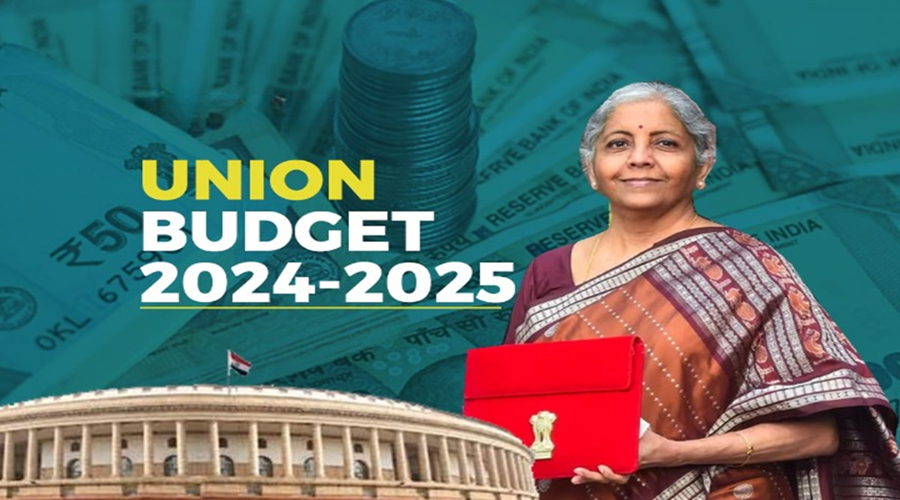
For the first time, the Indian annual budget for 024-5 focused on the aim of manufacturing from the perspective of job creation, rather than boosting GDP. Manufacturing has been a failure in the earlier years to drive the GDP growth. The , BJP led NDA government, vowed to give a new shape to manufacture with larger share in GDP composition – from 17 percent in 2014 to 22 percent by 2022. A new focus was made with Make in India to resort to growth in manufacturing, with simultaneous emphasis on employment generation. But, Make in India lost sheen, losing catalysis for job creation.
Unemployment became the crucial issue in 2024 general election. It emerged as one of the major issues for the Modi government losing sheen. Make in India lost steam due to faulty mapping of the policy and incurred a collateral damage to employment generation.
Realizing the hidden factor for debacle in the election, the budget made an overturn in reshaping the dynamism of manufacturing in Make in India, shifting from growth factor to job creation. It relied more on invoking fiscal incentives to increase employment opportunities in manufacturing rather than focusing on Ease of Doing business and increasing shares in GDP.
There are three main fiscal incentives in Budget to the employers for job creations. First, government will pay the first salary of the newly employed person, subject to Rs 15,000/month. This will be paid in 3 instalments. Second, incentives will be provided both to the Employers and Employees directly at specific scale with respect to their contributions to EPFO for 4 years. Third, special subsidy will be given to employers with regard to their contribution upto Rs 3,000/month for 2 years to EPFO for each additional employee.
Nevertheless, success of fiscal incentives to boost employment through manufacturing depends upon the industrial structure in the country, specifically, their scales in manufacturing.
MSMEs and SMEs are the hub for job creation in India. About 96 percent of industrial units belong to small companies, according to government data. They account for 40 percent of country’s industrial production and 42 percent of exports.
But the restrictive policy of MSMEs/ SMEs hinder the job creation. According to industrial policy, restrictions in investment and turn over hamstrung MSMEs and SMEs for job creation. A MSME is subject to investment curb upto Rs 50 crore (Rs 500 million) in plant and machinery, with a turnover restriction upto Rs 250 crore (Rs 2500 million). Similarly, a SME is subject to investment curb upto Rs 10 crore (Rs 100 million) in plant and machinery, with a turnover restriction upto Rs 50 crore ( Rs 500 million). The policy did not change for more than one and half decades, while the inflation quadrupled during the period.
Given the rapid growth in technology and global integration in the manufacturing, curbs on investment and turnover have become detrimental to the growth of MSMEs and SMEs. Eventually, the growth of MSMEs and SMEs slowed from the perspectives of employment generation.
Second, unlike in overseas, MSMEs and SMEs are not in parallel to larger houses in dependence on each other in India. Under the policy on SMEs in India, a long list of items were reserved for SME. This created a hostile relation between SMEs and larger houses. In most cases, they are competitors to each other.
Eventually, larger houses take the benefits of production sizes, linked to cost-benefit ratio and the advantage of brand image over the MSMEs and SMEs. In contrast, in overseas, larger houses hold big financial stakes in MSMEs and SMEs, embracing a collective responsibility for the companies’ success, such as technology, marketing and others.
To this end, a leaf from Japanese experiences for restructuring its industry in the post World War II can be a lesson. Japan also faced similar crucial period in industrial volatility at the time of rebuilding its economy, devastated by atom bomb in 1945.
SMEs in Japan contribute over 99 percent of all businesses and more than 70 percent of all employees till 1999.
Restructuring of industry in Japan in the post World War II relied more on systemization of SMEs through initiatives of larger houses. A pyramid structure of business relation was built up in Japan, especially in automobile, electronics and textiles.
SMEs acted as sub-contracts at the bottom of pyramid and larger houses performing as assemblers at the top. In 1980 and 1990’s more than 60 percent of Japanese SMEs in manufacturing were sub-contractors and secured a good relation with larger houses in assembly operations. In other words, Japanese SMEs acted as catalyst to the growth of Japanese manufacturing. In most cases, the larger houses were big stake holders in Japanese SMEs financial kits.
The close relation between Japanese SMEs and larger houses endowed a shared responsibility, with respect to multiple supports from larger houses like in technology up-gradation, marketing and financial assistance .Thus, comprehensive relation between SMEs and larger houses under the umbrella of pyramid structure played a key role in development of SMEs in Japan. There was a time, when at least 3 jobs were running after a Japanese worker.
The system was dismantled after the Yen shock (Yen appreciation), which shackled the nation with recession. Japanese larger houses shifted their production lines to South East Asia and China after the Yen shock turned uncompetitive to produce in Japan.
To this end, why not to give a second thought on Make in India and overhaul the structural balance between MSMEs and SMEs and larger houses on Japanese line to increase propensity to job creation. (IPA Service)
Follow Arabian Post
Select Arabian Post as your preferred source on Google and MSN News for trusted business news and Arab politics and updates.



