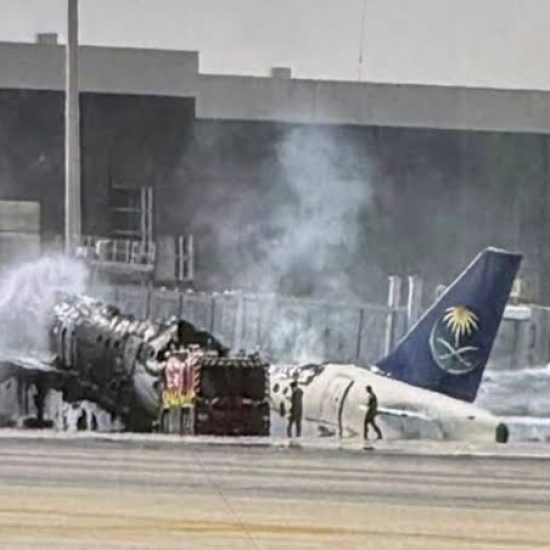
The attacks targeted Abha International Airport and King Khalid International Airport in Riyadh on October 6 and 7, according to Saudi Arabia’s General Authority of Civil Aviation (GACA). The casualties included three foreign residents, while dozens of passengers and airport users sustained injuries of varying severity.
France’s Foreign Ministry condemned the repeated Houthi attacks on Thursday, expressing full solidarity with Saudi Arabia and supporting its efforts to protect its territory and infrastructure. Paris demanded an immediate halt to the strikes, warning that continued hostilities would destabilise the region and aggravate suffering in Yemen.
Britain has similarly condemned Houthi attacks against Saudi civilian and energy infrastructure. Its representatives at the United Nations have called for an immediate cessation of hostilities while reaffirming Saudi Arabia’s right to defend its sovereignty in accordance with international law.
The United Arab Emirates issued a strongly worded condemnation, describing the airport attacks as a flagrant violation of Saudi sovereignty and a threat to regional security. Its Ministry of Foreign Affairs reaffirmed support for measures intended to safeguard the kingdom’s security and stability.
Egypt’s Foreign Ministry also condemned the assaults, warning that attacks on civilian facilities threatened Saudi Arabia’s security and wider regional stability. Cairo urged respect for international law, national sovereignty and territorial integrity.
India’s Ministry of External Affairs described the targeting of civilian infrastructure as completely unacceptable. It expressed solidarity with Saudi Arabia, conveyed condolences to the bereaved families and wished those injured a speedy recovery.
The diplomatic reactions followed confirmation by Saudi aviation authorities of the casualties sustained during the two separate attacks.
At Abha International Airport, two female residents, one Moroccan and the other Algerian, were killed on October 6. Another 28 people sustained injuries ranging from minor to serious, including residents from Bangladesh and the Philippines.
The following day, an attack on King Khalid International Airport killed a Sudanese resident and injured eight others. Those wounded included five Saudi citizens, two Egyptian residents and one Pakistani resident.
GACA said emergency response teams were deployed immediately following both incidents. Injured passengers and other affected individuals were transferred to hospitals for medical treatment, while authorities began assessing damage to airport facilities.
The regulator said it was coordinating with security agencies to establish the extent of the destruction, verify the safety of infrastructure and implement measures necessary to protect passengers and aviation personnel.
Yemen’s Iran-aligned Houthi movement claimed responsibility for attacks against Saudi airports, describing its operations as part of its confrontation with Saudi-backed forces fighting in Yemen.
Saudi Arabia and its allies have rejected attacks against civilian aviation facilities, maintaining that such operations endanger travellers and undermine the security of international air transport.
The escalation has also disrupted commercial aviation. Lufthansa Group announced the suspension of flights to Riyadh until October 16, citing developments affecting security across the Middle East.
Air India, IndiGo and Akasa Air also cancelled services to the Saudi capital, while other carriers reviewed operations amid concerns about further missile strikes.
The Houthis subsequently claimed another attack on King Khalid International Airport on Thursday. Saudi authorities did not immediately confirm the group’s account of that operation, although additional security incidents caused substantial disruption to flights.
The Saudi-led coalition separately announced military operations against Houthi positions in Yemen, saying its forces had destroyed 82 military targets. The coalition presented the operation as a response to escalating attacks, although independent confirmation of the claimed destruction was unavailable.
The renewed confrontation has intensified fighting between Houthi forces and troops aligned with Yemen’s internationally recognised government, particularly around strategically important areas near the Red Sea.
United Nations representatives have repeatedly warned that renewed military operations threaten civilians and complicate humanitarian assistance to communities already affected by prolonged conflict.
Diplomatic appeals have emphasised the protection of civilian infrastructure and the importance of preventing additional casualties on either side of the Saudi-Yemeni border.
Saudi aviation authorities confirmed that both airport attacks caused material damage, although they did not provide a consolidated financial estimate.
GACA said technical assessments and safety inspections were continuing in coordination with the relevant government agencies to determine the condition of affected airport facilities.
Follow Arabian Post
Select Arabian Post as your preferred source on Google and MSN News for trusted business news and Arab politics and updates.