Just in:
Malappuram hartal over Western Ghats // Antony’s wife called to police station with husband over complaint // Coinbase targets 2027 launch amid state gambling lawsuits // Jaiedco and Golden Bridge Announce Strategic Collaboration for a New Dubai Islands Development // Alibaba shares slip despite 53% cloud revenue growth // Dubai Introduces SHARH, an AI-Powered Platform Helping Entrepreneurs Buy, Sell and Manage Businesses in the UAE // Thailand’s Most Iconic New Year’s Celebration Returns: ICONSIAM Unveils “Amazing Thailand Countdown 2027” // Sui activates Hashi Bitcoin lending across partner network // Travel Insurance Was Built for the Few Who Claim. Ancileo’s Felt Coverage™ is for Everyone Else // Oil futures rebound after Riyadh strikes and tanker alerts // Promoting Common Human Development Through Exchanges and Mutual Learning Among Civilizations // LittleLives, Little Lab and SEGi College Sign MOU to Explore Early Childhood Education Collaboration Across ASEAN // Anthropic shares finish above offer price after Nasdaq debut // 2026 Tropical Rainforest Ecosystem Partners Conference Kicks off in Hainan // Dalilk Academy reaches 27 million, targets 100 million by 2030 // Toward a Shared Future for Humanity: Rethinking Civilizational Exchange // Russia permits retail cryptocurrency purchases under regulated framework // Sharjah clears Kalba free zone plan for 400MW complex // Hackers exploit public notes to distribute NodeLinkRAT malware // Women held for plot to rob pilgrims //

News related to
missile

Europe’s leading naval powers have concluded that reopening the Strait of Hormuz to commercial shipping is unlikely while hostilities involving Iran persist, underscoring mounting risks to global energy flows and maritime security in one of the world’s most critical chokepoints. Military planners across allied countries indicate that even a limited conflict scenario would render the narrow waterway effectively inaccessible for sustained civilian navigation, given the high probability […]

United Arab Emirates authorities have condemned what they described as a direct attack on critical energy infrastructure after air defences intercepted missiles targeting the Habshan gas facility and the Bab oil field in Abu Dhabi, with officials confirming no casualties or significant damage. A statement issued by the Ministry of Foreign Affairs characterised the incident as a “dangerous escalation” and a breach of international law, warning that […]

President Emmanuel Macron has named France’s next-generation aircraft carrier “Free France,” invoking the legacy of wartime resistance as Paris accelerates plans to modernise its naval power and reinforce strategic autonomy in an increasingly contested global security environment. The announcement marks a symbolic and operational milestone in France’s long-term defence planning, linking the future flagship vessel to the spirit of the Free French Forces that rallied under Charles […]

Tesla is assessing temporary policy changes for its Supercharger network across Gulf countries following heightened regional security tensions linked to Iran, amid unverified claims circulating online that the company has already made charging free in the region. No official confirmation has been issued by Tesla or its chief executive Elon Musk that all Supercharger services in Gulf Cooperation Council markets have been made free of charge. Industry […]

By Nantoo Banerjee Notwithstanding the assurance given in Parliament last week by Union Petroleum and Natural Gas Minister Hardeep Singh Puri on India’s ‘robust’ energy supplies, fuel and gas prices in the country are expected to shoot up soon in keeping with the global trend. The minister’s statement appears to be substantially political having little […]

The article Petro Products Prices In Import-Dependent India May Surge Further appeared first on Latest India news, analysis and reports on Newspack by India Press Agency).

Arabian Post Special Missile and drone strikes linked to the widening confrontation around Iran have forced Gulf governments to confront a reality long considered unlikely: the region’s economic hubs, energy infrastructure and aviation networks can no longer assume insulation from large-scale conflict. Airports, oil terminals and urban centres across the Gulf have experienced disruptions as Iranian projectiles and drones targeted sites tied to military or logistical support […]

Arabian Post Staff -Dubai National Human Rights Institution has issued a strong condemnation of Iranian military attacks targeting the United Arab Emirates, describing the strikes as a grave violation of sovereignty and a direct threat to civilian safety and fundamental human rights. The institution said the attacks, which have involved missiles and drones striking or attempting to strike locations across the country since late February, amount to […]

Advertisements

Britain’s counter-drone and air-defence units have shot down multiple Iranian drones across the Gulf theatre as London expands what it describes as a strictly defensive military posture, with ministers arguing the operations are aimed at protecting British personnel, allied states and vital regional infrastructure rather than joining any offensive campaign against Tehran. The latest intercepts come as tensions around the Gulf and the wider Middle East continue […]

Arabian Post Staff -Dubai Flight operations at Dubai International Airport were temporarily suspended after a fire broke out near the airfield, prompting authorities to divert several aircraft to Al Maktoum International Airport while emergency crews brought the blaze under control. Authorities in Dubai halted departures and arrivals at the region’s busiest aviation hub as a precaution after flames were reported in the vicinity of the airport’s fuel […]

Stalled software development for the F-35 Lightning II has drawn scrutiny from Pentagon auditors, even as the stealth fighters continue to fly operational missions linked to tensions with Iran, underscoring a widening gap between battlefield deployment and technological modernisation. An annual assessment by the Pentagon’s weapons testing office found that efforts to introduce new software capabilities for the aircraft failed to produce additional combat functionality during the […]

Pressure from Washington for allies to help secure shipping lanes in West Asia has placed Tokyo in a delicate strategic position, with senior figures signalling that dispatching Japanese military vessels to the Middle East would face formidable political and legal barriers. Takayuki Kobayashi, policy chief of the ruling Liberal Democratic Party, stated that any move to send Japanese naval assets to escort commercial vessels through the Strait […]

Arabian Post Staff -Dubai Firefighters and emergency teams contained a blaze in the emirate of Fujairah after debris from an intercepted drone fell in the area on Saturday, authorities said, with no injuries reported. Officials confirmed that air-defence systems intercepted the unmanned aerial vehicle before it reached its intended target, but fragments from the interception landed on the ground and ignited a fire. Civil defence crews responded […]

New Delhi has pressed Tehran to allow more India-bound vessels to cross the Strait of Hormuz after two liquefied petroleum gas carriers carrying critical fuel supplies cleared the strategic waterway, highlighting the vulnerability of energy flows through one of the world’s most important maritime chokepoints.

Officials confirmed that two Indian-flagged LPG carriers, Shivalik and Nanda Devi, passed through the strait with cargo bound for ports in Gujarat, transporting roughly 92,700 tonnes of cooking gas. The shipments represent more than a day’s requirement for household LPG consumption, providing partial relief amid tightening supplies.

Government representatives indicated that discussions with Iranian authorities are continuing to secure safe transit for additional tankers waiting in the Persian Gulf. More than twenty vessels carrying crude oil and gas destined for India have been held up near the waterway during the standoff, raising concerns over prolonged disruptions to fuel deliveries.

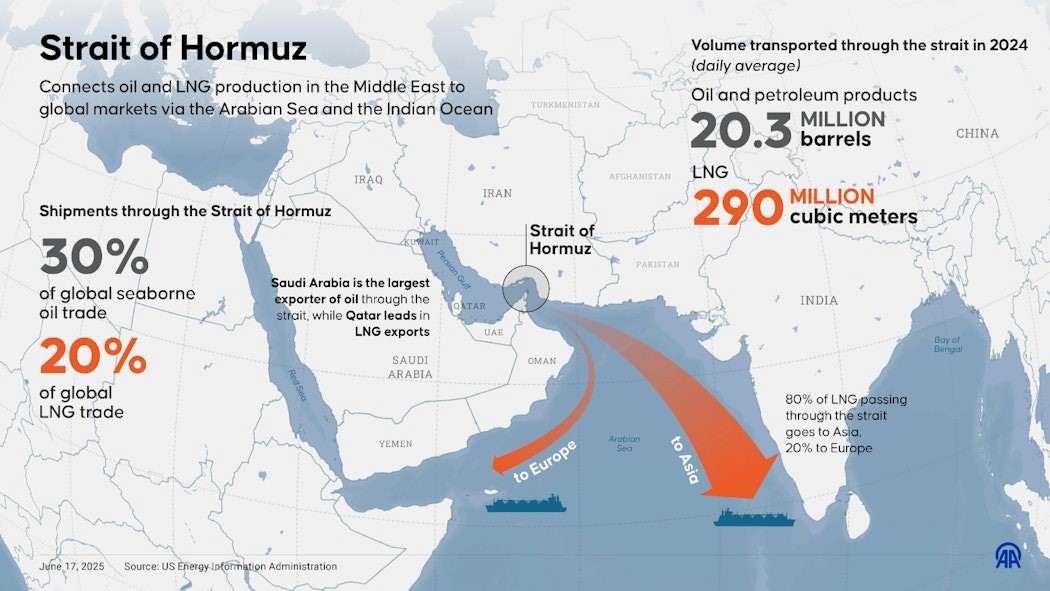
The Strait of Hormuz, situated between Iran and Oman, handles about a fifth of global oil and liquefied natural gas shipments. Any disturbance along this narrow corridor has the potential to reverberate across global energy markets and shipping routes. Escalating tensions across West Asia have already led to attacks on several vessels and heightened security risks for commercial shipping in the region.

Iran’s decision to permit the two LPG carriers to sail through the strait marked an exception to restrictions imposed after military action targeting Iranian infrastructure triggered a broader confrontation. Tehran has maintained that vessels from most countries can navigate the passage but warned that ships from states viewed as hostile could face restrictions or heightened scrutiny.

Diplomatic engagement between New Delhi and Tehran played a role in securing the initial transit. Conversations between Prime Minister Narendra Modi and Iran’s president Masoud Pezeshkian, along with discussions between foreign ministers, focused on safeguarding energy shipments and the safety of nationals in the conflict-affected region.

India depends heavily on Middle Eastern suppliers for its energy needs. About 90 per cent of the country’s imported LPG originates from the region, while a substantial share of crude oil imports also passes through the Strait of Hormuz. That reliance has made the stability of the shipping lane central to the country’s energy security strategy.

Officials from the shipping ministry confirmed that Indian authorities are coordinating with regional partners and monitoring maritime traffic closely. Naval vessels deployed in the Gulf under Operation Sankalp have been keeping watch over merchant ships heading towards the subcontinent, providing situational awareness and escort support where necessary.

Energy analysts say the partial reopening of the route for Indian cargo illustrates the delicate balance between geopolitical confrontation and commercial necessity. Countries reliant on Gulf hydrocarbons have sought diplomatic channels to keep trade flowing even as military tensions complicate navigation in the region.

Oil markets reacted sharply to the conflict surrounding the strait, with benchmark crude prices surging amid fears of prolonged disruption to supply. Traders remain wary that even isolated incidents could affect tanker movements through the corridor, where narrow shipping lanes and heavy traffic leave little room for error.

The two LPG carriers now sailing toward the western coast highlight the importance of maintaining uninterrupted access to the strait. With domestic demand for cooking gas remaining high, authorities have prioritised household supply chains while assessing contingency measures for industrial users if shipments continue to face delays.

Shipping industry figures note that vessels have increasingly adopted precautionary routes or delayed departures until security conditions improve. Insurance costs for tankers operating in the Gulf have also climbed, reflecting the heightened risk environment created by missile strikes, drone attacks and naval deployments in surrounding waters.

Strategic calculations extend beyond immediate fuel deliveries. India has been strengthening diplomatic engagement with Gulf producers and maritime partners to ensure continued energy access during periods of instability. The country has also expanded storage capacity and diversified crude sources over the past decade to mitigate supply shocks.

Even with those measures, the Strait of Hormuz remains a critical artery for trade between the Gulf and Asia. Any sustained restriction would affect not only India but also large importers such as China, Japan and South Korea, which depend on the same route for oil and gas shipments.

Arabian Post Staff -Dubai Saudi Arabia has cut crude oil production by about two million barrels per day after shutting down major offshore fields as conflict around Iran disrupts shipping through the Strait of Hormuz, forcing the world’s largest exporter to scale back output and reroute supplies. Production has fallen to around eight million barrels per day, down from more than 10 million barrels per day earlier […]

United States military authorities have dispatched thousands of interceptor drones originally refined on the battlefields of Ukraine to the Middle East, aiming to counter Iranian aerial attacks while reducing reliance on expensive missile defences. Officials say about 10,000 drones were moved to the region within days of a joint US–Israeli military campaign against Iranian targets that began in late February. The deployment reflects a broader shift in […]

Matein Khalid The moment Qatar Energy declared force majeure and cut output at Ras Laffan, the largest LNG complex on the planet, once Iranian missiles and drones began raining down on America’s Gulf allies, I knew that the time had come to hedge Strait of Hormuz chokepoint risk with by buying the shares of US LNG colossus Cheniere Energy (LNG) at $220. Yet I was stunned to […]

Arabian Post Staff -Dubai   Saudi oil producer Aramco has rejected claims that it is negotiating with Ukrainian companies to acquire interceptor drones to defend its oilfields, pushing back against reports that the energy giant was seeking aerial defence systems amid escalating regional security threats. The company issued a statement saying reports of discussions with Ukrainian manufacturers were inaccurate, after media coverage suggested Aramco was exploring purchases […]

By T.N. Ashok NEW YORK: Let’s be blunt about what’s actually happening in the current no holds barred war between Iran and US-Israel combine. The United States and Israel have been bombing Iran for thirteen straight days. Cruise missiles, precision strikes, relentless sorties. The kind of firepower that flattened cities in Iraq within weeks and […]

The article After 13 Days Of Iran War, Trump And Netanyahu Are Learning Bitter Lesson appeared first on Latest India news, analysis and reports on Newspack by India Press Agency).

Growing scrutiny surrounds a deadly missile strike that destroyed a girls’ school in southern Iran, after a Republican senator said the United States must acknowledge responsibility if investigations confirm that American forces carried out the attack. The remarks followed mounting evidence that a Tomahawk missile used during joint military operations against Iranian targets may have struck the school in the town of Minab, killing scores of civilians, […]

Japan will release crude from its strategic petroleum reserves in a unilateral move aimed at cushioning energy markets as the Middle East conflict disrupts global oil supplies, Prime Minister Sanae Takaichi said, signalling one of the earliest national responses to the escalating crisis.

Tokyo plans to release about 80 million barrels from its emergency stockpiles, equivalent to roughly 45 days of domestic consumption, according to government officials. The decision is designed to stabilise fuel supplies and dampen price pressures as shipping through the Strait of Hormuz — a key artery for global energy trade — has been severely disrupted by the conflict involving Iran, the United States and Israel.

Takaichi said Japan would move ahead with the release rather than wait for coordinated international action, reflecting concerns that prolonged disruption could tighten supplies for import-dependent Asian economies. Officials indicated that private-sector reserves would be drawn down first, followed by state stockpiles, allowing domestic refiners to maintain operations and ensure sufficient petroleum product supply to the market.

Energy security has become an urgent priority for Tokyo as nearly all of its crude imports originate from Middle Eastern producers such as Saudi Arabia, the United Arab Emirates, Kuwait and Qatar. Around 70 per cent of that oil typically travels through the Strait of Hormuz, a narrow waterway between Iran and Oman that normally handles roughly one-fifth of the world’s seaborne oil trade.

The ongoing conflict has sharply reduced tanker traffic through the strait after missile and drone attacks targeted vessels and infrastructure across the region. Shipping companies have diverted or halted voyages, leaving more than a hundred tankers anchored outside the corridor while insurers raised war-risk premiums. Oil prices have surged above $100 a barrel amid fears of prolonged supply disruption and escalating geopolitical tensions.

Japan’s move also comes as the International Energy Agency considers one of the largest coordinated releases of emergency oil reserves in history. Member countries of the agency have discussed releasing hundreds of millions of barrels to counter supply losses triggered by the conflict and calm volatile energy markets.

Officials in Tokyo signalled that the unilateral step could be followed by participation in a broader international release if the crisis deepens. Policymakers argue that acting quickly could prevent domestic fuel shortages and limit the economic damage of rising energy costs.

Economic pressure is mounting across Japan as oil and liquefied natural gas prices climb. The country imports the vast majority of its energy resources, leaving it highly vulnerable to geopolitical shocks. Higher fuel costs have already begun to affect industrial production, with petrochemical producers scaling back output and transport costs rising across supply chains.

The surge in energy prices poses a challenge for Takaichi’s government, which has pledged to strengthen economic growth while managing inflation and stabilising household costs. Economists warn that sustained oil prices above $140 per barrel could slow economic expansion and revive fears of stagflation in a country already grappling with a fragile recovery.

Energy analysts say the planned release from strategic reserves may provide short-term relief but will not fully offset the scale of disruption if shipping through the Strait of Hormuz remains constrained. The waterway normally carries about 20 million barrels of oil each day, linking Gulf producers to major Asian consumers including Japan, China and South Korea.

Japan maintains one of the world’s largest emergency oil stockpiles. Combined government and private reserves are estimated to cover more than 200 days of consumption, giving authorities significant flexibility during supply shocks. Such reserves are designed precisely for crises triggered by geopolitical events or natural disasters that threaten global energy flows.

Government officials say the release will be phased to ensure a stable supply chain and avoid sudden market distortions. Domestic refiners are expected to receive the first shipments from storage facilities, allowing them to continue processing crude into petrol, diesel and other fuels.

The last major release of strategic reserves by Japan occurred during the global energy turmoil following Russia’s invasion of Ukraine, when coordinated action among advanced economies sought to stabilise crude markets and ease inflationary pressure worldwide.

Current circumstances, however, present a more complex challenge because of the geographic concentration of supply risks. The Middle East remains the dominant source of Japan’s oil imports, and prolonged instability in the region could reshape energy strategies for Asia’s largest economies.

Policymakers in Tokyo have begun exploring longer-term measures to reduce exposure to supply shocks. Discussions include expanding renewable energy capacity, diversifying import sources and accelerating the restart of nuclear reactors that were shut down after the Fukushima disaster.

Supporters of nuclear power argue that restoring more reactors could lower dependence on imported fossil fuels and help shield the economy from geopolitical turbulence in global energy markets. Opponents remain cautious, citing safety concerns and public resistance in several regions.


Arabian Post Staff -Dubai Commercial shipping across the Gulf and the Strait of Hormuz has come under direct attack after a series of coordinated strikes hit at least five vessels, leaving one crew member dead and several ships damaged or ablaze amid escalating regional conflict. Explosive-laden boats believed to be linked to Iran struck two fuel tankers in Iraqi waters near the port of Al-Faw, igniting fires […]

A drone strike triggered a fire at a facility inside the Ruwais Industrial Complex in Abu Dhabi on Tuesday, prompting emergency responders to contain the blaze while authorities assessed the impact on one of the Gulf’s most significant energy and petrochemical hubs. Officials said no injuries were reported and the fire was brought under control after civil defence teams were dispatched to the industrial zone. Abu Dhabi’s […]

Israeli forces struck an apartment in central Beirut on Wednesday, Lebanese state media reported, marking another escalation in a widening conflict that has drawn Lebanon deeper into regional hostilities and heightened fears of further urban strikes in the capital. Lebanon’s official National News Agency said the attack targeted a residential unit in the city centre, sending smoke rising above one of Beirut’s densely populated districts. Initial reports […]

Arabian Post Staff -Dubai Dubai’s skyline continues to glitter with life even as missile alerts and air-defence interceptions echo across parts of the Gulf, highlighting the unusual resilience of a city built largely by foreign workers and entrepreneurs. While tourists and some diplomatic staff rush to depart amid escalating confrontation between Iran and the United States–Israel alliance, many expatriates who call Dubai home have chosen to remain, […]

VISHNU RAJA
RYO YAMADA
HITORI GOTOH
IKUYO KITA