A critical security weakness in Amazon Web Services’ CodeBuild service left GitHub repositories vulnerable to hijacking, raising fresh concerns about the resilience of cloud-based development pipelines used by some of the world’s largest technology teams. The flaw, dubbed CodeBreach by security researchers, stemmed from a misconfigured webhook validation process that could be exploited to inject malicious code into trusted repositories. The issue centred on Amazon Web Services […]
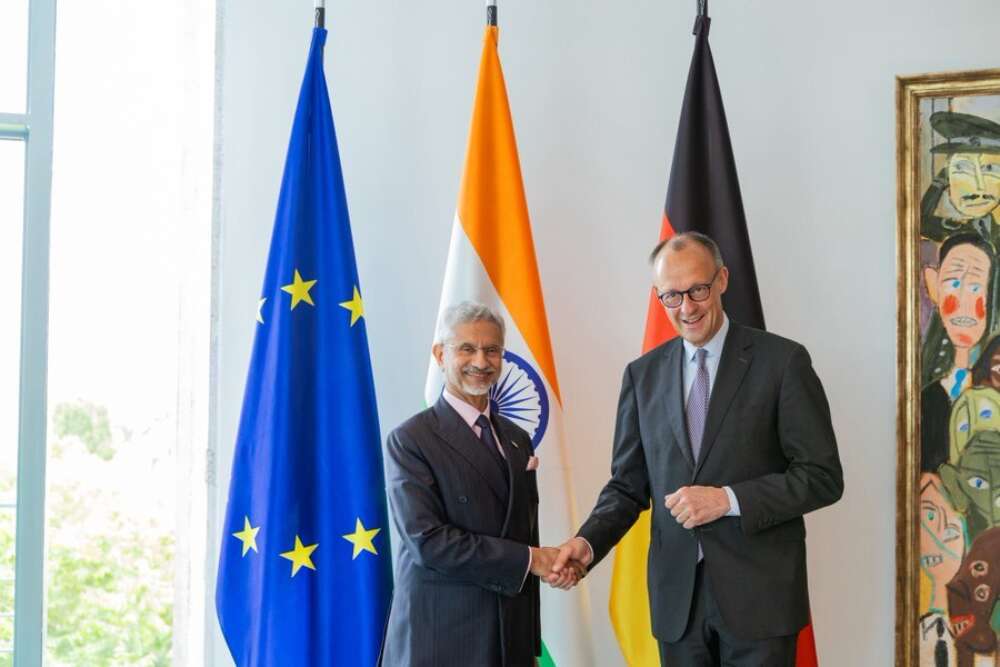
Germany’s opposition leader Friedrich Merz has suggested that a long-stalled trade agreement between the European Union and India could be clinched by the end of January, injecting momentum into negotiations that Brussels and New Delhi have struggled to close for more than a decade as global supply chains remain under strain from geopolitical frictions.
Speaking at a policy forum, Friedrich Merz said the bloc and India were “closer than many assume” to resolving key differences, adding that the economic case for a deal had sharpened after prolonged disruptions linked to strategic competition between major powers. His comments come as European manufacturers continue to grapple with uneven access to critical inputs following China’s tightening of export controls on minerals vital for electric vehicles, electronics and defence applications.
Negotiations for an EU–India free trade agreement were relaunched in 2022 after an eight-year hiatus, with both sides aiming to expand trade that exceeded €120 billion in goods and services last year. Officials involved in the talks say progress has been made on tariff reductions and rules governing digital trade, though sensitive areas such as agriculture, labour standards and intellectual property remain contentious. Merz’s remarks underscore a growing sense in Berlin and other capitals that the agreement has moved from a strategic aspiration to an economic necessity.
Germany, Europe’s largest economy, has been among the strongest advocates of diversifying trade ties beyond China, particularly after export controls imposed by Beijing on gallium, germanium and graphite created months of bottlenecks for automotive and renewable energy firms. Those controls, introduced amid the broader U. S.–China trade dispute, highlighted vulnerabilities in Europe’s dependence on a narrow set of suppliers for critical raw materials.
Executives in the auto sector say shortages of battery-grade materials last year forced production adjustments and delayed investment decisions. While some supply has since stabilised, industry groups argue that long-term resilience requires deeper partnerships with alternative producers and manufacturing hubs. India, with its expanding industrial base and policy push to attract foreign investment, has emerged as a central pillar of that strategy.
European officials note that the proposed agreement would not only cut tariffs—currently as high as 60 per cent on some vehicles entering India—but also establish clearer rules for public procurement and data flows. For India, the deal promises greater access to the European market for pharmaceuticals, textiles and IT services, while also encouraging technology transfer and skills development.
Trade analysts caution that closing the pact by late January would require political compromises on both sides. European negotiators have pressed for stronger environmental and labour commitments, while Indian counterparts have sought flexibility to protect small farmers and domestic manufacturers. Still, the geopolitical context is shifting calculations. The European Union has accelerated its “open strategic autonomy” agenda, seeking to balance openness with security of supply, and India has signalled willingness to align more closely with Western economies without abandoning its strategic independence.
Merz’s intervention also reflects domestic pressures within Germany, where exporters are seeking new growth markets as demand in China cools. German industry groups have repeatedly urged policymakers to prioritise agreements with fast-growing economies, arguing that delays risk ceding ground to competitors from East Asia and North America.
The broader backdrop includes intensifying scrutiny of China’s role in global supply chains. Beijing has defended its export controls as legitimate measures to safeguard national security and manage resources, but the ripple effects have reinforced calls in Europe for diversification. The European Commission has already launched initiatives to secure access to lithium, cobalt and rare earths through partnerships in Africa, Latin America and Asia, with India seen as both a market and a manufacturing partner.
Diplomats familiar with the EU–India talks say technical chapters are largely drafted, leaving political decisions to bridge remaining gaps. Any agreement would still need approval from member states and the European Parliament, a process that could extend beyond the negotiating deadline even if a political deal is struck.
President Donald Trump pressed executives from major oil companies on Friday to commit at least $100 billion of private capital to rebuild Venezuela’s depleted oil industry, but several leaders voiced deep reservations about the risks and structural barriers to doing business in the South American country. The meeting, held in the East Room of the White House and attended by representatives from ExxonMobil, Chevron, ConocoPhillips and other […]
Google is developing a “try before you buy” option for paid games on the Play Store, a shift that would allow users to sample full versions before committing to a purchase. The feature, surfaced through analysis of unreleased Play Store code, points to time-limited trials that preserve progress, giving players a realistic sense of gameplay, performance and value before payment. Details embedded in the code indicate that […]
SINGAPORE – Media OutReach Newswire – 8 January 2026 – MOONTON Games, the international video game company behind Mobile Legends: Bang Bang (MLBB), has announced a multi-year strategic partnership with 1Play, a rising brand in youth-focused cultural collectibles. As the Official Trading Card Partner of the M7 World Championship (M7), 1Play will roll out a multi-year lineup of M Series collectible cards that pays homage to the tournament’s qualified teams. Featuring M Series teams, players, key competitive moments and more, the launch aims to enrich the MLBB Esports experience by allowing fans to relive the tournament’s legacy through physical collectibles.
1Play and MOONTON Games Introduce First Official M Series Trading Card Collection in Multi-Year Strategic Partnership
Designed to bring fans closer to the competitive action, the partnership extends MLBB Esports engagement beyond viewership. Through the collectible cards, the title’s passionate fanbase will be able to connect with the M Series, its teams, and its players both during and outside of tournament periods.
According to Esports Charts, MLBB emerged as 2024’s most popular mobile esports title with over 475 million Hours Watched (HW). At the heart of the MLBB Esports circuit stands the M Series, the title’s flagship international tournament. Uniting players and fans from across the world, the M Series has become the main competitive stage for the world’s best MLBB teams and a driver of the game’s global esports ecosystem. In previous editions, the M6 and M5 reached 4.13 million and 5.06 million Peak Concurrent Viewers (PCV) respectively. The tournaments ranked ninth and sixth amongst the most-watched esports events of all time, according to Esports Charts. Backed by millions of viewers and a seven-year legacy of competitive excellence, the M Series has established itself amongst the biggest names in global sports and entertainment.
Just as trading cards have been a cornerstone of fan culture in traditional sports such as the National Basketball Association (NBA), English Premier League (EPL), and the FIFA World Cup—the MLBB Official Trading Card collection brings this longstanding tradition to MLBB Esports. It celebrates the game’s competitive excellence while giving fans a tangible way to connect with the M Series, commemorate iconic moments, and honour the players who define its legacy. Its launch also extends a global, time-honoured collectibles tradition into MLBB Esports, creating a new avenue for the community to engage with the tournament beyond the screen.
Through this partnership, MOONTON Games and 1Play will introduce the M Series’ first official trading card system, which includes:
All 22 participating teams and all players competing at the M7
A premium lineup of Player Signature Cards, Jersey & Materials Cards, and Match Moments Cards
Two flagship product lines for the M7: the Super Series and the Elite Series
Fans will be able to purchase the collections through 1Play’s official platforms and participate in offline retail experiences, pop-up events, card-trading sessions, exclusive onsite drops, and other interactive activities at future M Series editions. By integrating digital touchpoints with offline engagement, the partnership aims to strengthen the presence of MLBB Esports in global mainstream culture through an immersive collectibles experience for fans.
At the same time, as 1Play’s key strategic retail and offline experience partner across Southeast Asia and other core markets, OH!SOME will establish a long-term and stable collaboration framework with 1Play, playing a deep role in the overall planning and ongoing development of offline showcasing, retail infrastructure, and fan engagement experiences for the official M Series esports trading card collection. 1Play and OH!SOME will work closely across product presentation, spatial design, and user experience, jointly defining new standards for esports collectibles within offline consumer and cultural spaces.
With over 180 stores across Asia—including Indonesia, Singapore, Thailand, Hong Kong of China, Malaysia, Vietnam, Cambodia, and the Philippines—OH!SOME has developed into a beloved and widely recognized regional retail brand. Leveraging OH!SOME’s established regional retail network and its strategic presence in major urban consumer hubs, 1Play will collaborate with OH!SOME to advance the rollout of offline experiences. Fans will be able to purchase, showcase, and engage with official 1Play card packs and trading cards at selected OH!SOME locations, achieving an explosive market presence for M Series collectibles across core cities.
Adrian Cher, Global Head of Partnerships, MLBB Esports at MOONTON Games, said: This partnership with 1Play marks a strategic step in how we extend MLBB Esports beyond the screen and into the everyday lives of our fans. As trading cards gain renewed traction among younger audiences, this partnership allows us to connect with the next generation through an avenue that reflects their interests and self-expression. By bringing the M Series into physical collectibles, we’re not only enriching the M7 experience, but also reinforcing MLBB’s place alongside traditional sports ecosystems where memorabilia plays a central role in fan culture. The upcoming collectibles launch reflects our long-term commitment to building MLBB Esports as a global sports and entertainment IP.”
AnJie, Founder & CEO of 1Play, said: “1Play is dedicated to creating collectible items that resonate with young audiences and express cultural identity. Our partnership with MOONTON Games represents a milestone in the development of esports collectibles. We aim to build a defining collectible ecosystem for this era—one that allows every fan to record their passion, celebrate their heroes, and collect the moments that matter.”
The 1Play × M Series Official Trading Card Collection is scheduled to launch during the M7, with its first edition dedicated to the tournament. Additional experiences—including team collaborations, onsite exclusives, signing sessions, and community-driven fan events—will be rolled out to further expand the cultural reach of MLBB esports.
TDK has unveiled STRIDE, a low-power, real-time positioning software platform aimed at wearables and connected IoT devices, marking a push to strengthen its presence in software-defined sensing alongside its established sensor hardware business. The launch positions the Tokyo-based electronics group to compete more directly in applications where accurate location tracking must operate continuously on constrained batteries, such as smartwatches, fitness bands, asset tags and industrial monitoring devices. […]
Arabian Post Staff -Dubai Motorola used the Lenovo Tech World Showcase alongside CES 2026 to outline a sharpened strategy for premium smartphones, unveiling a new Razr foldable and a broader flagship portfolio designed to embed artificial intelligence deeper into everyday mobile use. The announcements signal a renewed attempt by the Lenovo-owned brand to regain momentum in the high-end segment, where competition from Samsung, Apple and fast-rising Chinese […]
Caracas has slipped into an uneasy calm as Venezuelans await signals about the direction their country will take, with political negotiations stalled, economic pressures unresolved and social tensions simmering beneath the surface. “There is a strange lull,” said Benigno Alarcón Deza, a long-time resident of the capital, describing a sense of collective anticipation that has settled over daily life. “People are waiting, watching, unsure of what comes […]
Arabian Post Staff -Dubai Belkin has unveiled a wireless HDMI adapter that removes the need for Wi-Fi networks, aiming to simplify screen sharing in offices, classrooms and homes where reliability and security often trump convenience. Introduced at CES 2026, the ConnectAir Wireless HDMI Adapter promises stable, low-latency transmission over distances of up to 130 feet, positioning it as a practical alternative to software-based casting systems that depend […]
Matein Khalid 2026 has started with a bullish bang for my Dr. Copper trade, even though a single trading session when half of Asia is still getting over its New Year’s Day hangover is hardly an optimal sample size. Yet as I see LME spot copper trade at $12500 a metric ton, I feel exhilarated as this is precisely the breakout I flagged for my friends and […]
Competition between Tesla and Waymo is reshaping the trajectory of autonomous transport, with contrasting technical philosophies, regulatory strategies and deployment timelines sharpening the pace of innovation across the robotaxi market. Waymo holds a tangible lead in fully driverless commercial operations. Its vehicles, packed with lidar, radar and high-resolution cameras, have logged millions of autonomous miles without a human safety driver across multiple US cities. In places such […]
By Prabhat Patnaik The BJP-led government has just got parliament to pass a legislation permitting up to 100 percent foreign equity-ownership in India’s insurance sector. This, the Prime Minister has announced, marks the beginning of a major “reform” in India’s financial sector, towards presumably much greater private, including foreign, ownership of financial institutions. This would […]
Abu Dhabi has enacted two federal decree laws reshaping the legal architecture of the country’s capital markets, signalling a renewed push to strengthen regulatory independence, align oversight with global standards and reinforce investor confidence in one of the region’s most active financial hubs. The twin decree laws, covering the Capital Market Authority and the broader regulation of capital markets, form part of a wider programme aimed at […]
Arabian Post Staff -Dubai High-refresh 1440p gaming has settled into a clear sweet spot for PC players, balancing visual fidelity with frame rates that comfortably exceed 100 frames per second in demanding titles. Entering 2026, the market for graphics cards capable of driving 1440p monitors at 144Hz and beyond has become more stratified, shaped by architectural advances, shifting pricing strategies and a growing focus on memory capacity […]
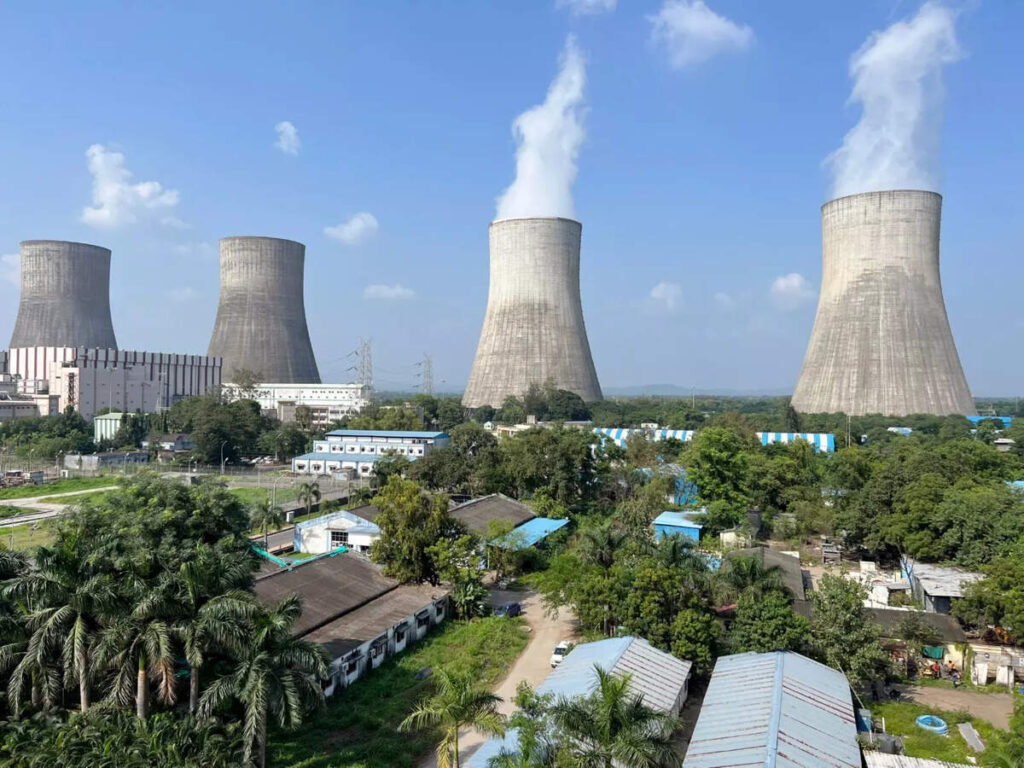
By Dr Arun Mitra The new nuclear bill, titled Sustainable Harnessing and Advancement of Nuclear Energy for Transforming India (SHANTI), passed by Parliament, has received the assent of the President of India, Droupadi Murmu. With this, it has become an Act governing various aspects of nuclear energy in the country. There is a strong push […]
Rivian has begun deploying a major software update that introduces Universal Hands-Free Driving across supported highways, alongside expanded digital key functionality on both iOS and Android devices, marking a significant step in the electric vehicle maker’s push to narrow the software gap with more established rivals. The update, delivered over the air to owners of the R1T pickup and R1S SUV, enables drivers to operate their vehicles […]
Hackers have siphoned about $2.7 million worth of digital assets from old wallets linked to Aevo, a decentralised options and perpetuals exchange, underscoring persistent security risks tied to legacy infrastructure in the crypto market. The breach did not affect Aevo’s core trading systems or user funds held in active contracts, but it has revived scrutiny of how exchanges manage dormant or transitional wallets long after platform upgrades. […]
By Nantoo Banerjee It is difficult to explain why the government took nearly 17 years to decide on launching a bill in Parliament to allow private participation in India’s nuclear power generation programme. The proposed Sustainable Harnessing and Advancement of Nuclear Energy for Transforming India (SHANTI) Bill to amend the civil liability law to shield […]
Linux developers have introduced NTFSPlus, a new in-kernel driver designed to address long-standing problems with NTFS support on Linux systems, an issue that has affected desktop users, system administrators and enterprise environments that rely on Windows-formatted storage. The project represents a ground-up reworking of the ageing NTFS driver that has been part of the Linux kernel for many years but has struggled to keep pace with modern […]
A wave of ambition is reshaping the technology landscape as leading entrepreneurs turn their attention to building artificial intelligence data centres in space. What began as scattered experiments in off-planet computing has matured into a competition among industry powerhouses seeking an edge in processing capacity, energy efficiency, and control over the infrastructure that will anchor next-generation AI systems. The pursuit is driven by the belief that Earth-based facilities are reaching fundamental limits, from land availability to cooling constraints, and that low-Earth orbit may provide the only environment capable of sustaining the exponential escalation in computational demand. Advocates frame this as an extension of a long-standing principle in engineering and exploration: to put human ingenuity to its fullest possible use, wherever the boundaries of science allow.
Several major technology leaders have stepped into this arena over the past two years. Their investments reflect a profound shift in strategy as companies realise that AI models cannot continue to scale using terrestrial infrastructure alone. The voracious energy requirements of large-scale training workloads challenge even the most advanced data-centre designs, pushing firms to explore solutions that draw on off-planet solar power and exploit the vacuum of space for passive cooling. Executives argue that orbiting facilities promise a cleaner energy profile, reduced environmental impact, and unprecedented independence from Earth’s physical constraints. As one aerospace investor remarked during a private industry event, the next digital revolution may be fuelled not by new algorithms but by new geography.
Engineering teams working on these orbital concepts often describe them as a convergence of satellite technology, chip innovation, and AI architecture. The logic is straightforward: satellites already operate reliably in extreme conditions with limited maintenance; AI systems increasingly require specialised compute hardware that benefits from consistent temperature conditions; and the economics of launch have changed dramatically due to reusable rockets. Once the cost of placing hardware into orbit falls to thresholds comparable to building premium facilities on Earth, the case for space-based computing strengthens considerably. What was once a speculative thought experiment has become a viable commercial target because access to space is no longer a privilege of governments alone.
However, the motivations driving this race are not solely technical. Strategic considerations weigh heavily. Ownership of orbital AI capacity promises unparalleled control over data sovereignty and computational independence. For executives wary of regulatory intervention or geopolitical risk, space offers a jurisdictional buffer that has become increasingly attractive. The ability to operate hardware outside traditional national borders gives corporations leverage at a moment when governments are tightening rules on data transfer, algorithmic transparency, and cloud-computing dependencies. Critics warn that this dynamic could set the stage for tension between public oversight and private ambition, particularly as orbital networks start to support commercial, defence, and financial applications simultaneously.
Security analysts have begun to examine the implications of off-planet AI infrastructure for global stability. On one hand, distributing critical systems across multiple orbital layers may reduce the vulnerability of communication and computing networks to terrestrial attacks or natural disasters. On the other, it introduces fresh risks, as high-value satellites could become targets in future disputes. Industry leaders tend to emphasise resilience and cooperation, arguing that shared standards and open coordination mechanisms can prevent escalation. Yet even in the early stages of development, commercial confidentiality and competitive pressure limit transparency, raising questions about how cooperative such a system can truly be.
Environmental considerations further complicate the picture. Proponents argue that orbital facilities will dramatically reduce the carbon footprint of data centres by tapping continuous solar energy and eliminating the need for extensive water-based cooling. They claim that redirecting computation to space will relieve pressure on overloaded terrestrial grids and free up land used for sprawling data-centre campuses. Environmental organisations counter that launching hundreds of tonnes of hardware into orbit will generate emissions during the construction phase and intensify concerns about space debris. Engineers involved in the projects acknowledge these issues but maintain that the long-term carbon savings outweigh the initial costs. Some firms have begun exploring closed-loop manufacturing cycles using recycled orbital material, a concept still in its infancy but increasingly part of corporate presentations.
The economic dimension of the space computing race has also attracted significant attention. Venture capital firms see orbital AI networks as a foundational platform similar in scale to the early internet, creating opportunities for startups focused on maintenance robotics, radiation-hardened chips, inter-satellite laser communication, and autonomous control systems. Government space agencies have shown interest too, recognising that private data-centre initiatives could stimulate broader commercial activity in orbit. Financial analysts caution that the capital intensity of these projects is immense and that many entrants may struggle to secure the funds required to move from prototype to full-scale deployment. But they also acknowledge that the firms leading the charge have histories of turning audacious concepts into viable industries.
One of the most compelling arguments for orbital AI centres revolves around scientific potential. Researchers emphasise that such facilities could support breakthroughs in materials engineering, climate modelling, pharmaceutical development, and astrophysics. Training models in microgravity environments may enable experiments that are impractical on Earth, and the isolation of orbital systems creates opportunities for secure high-performance computing dedicated to sensitive research. A prominent AI scientist recently noted at a conference that new frontiers in intelligence will be unlocked only when researchers have access to computational substrates as novel as the algorithms themselves, and that space may provide exactly that.
Despite enthusiasm, several fundamental questions remain unresolved. Energy transmission is one of them. While orbiting platforms can harness abundant solar power, efficiently transferring that energy to onboard compute clusters and ensuring stable operation during orbital night remains a challenge. Another issue concerns maintenance. Although robotic servicing is improving, most concepts still require periodic human intervention, raising questions about safety, reliability, and cost. Legal scholars are also wrestling with the future regulatory landscape, debating whether orbital AI nodes should be governed by space law, telecommunications frameworks, or entirely new agreements. These uncertainties highlight the complexity of forging infrastructure that defies conventional definitions.
Public perception is another area shaping the debate. The idea of billionaire-led initiatives expanding beyond Earth has drawn criticism from those who view it as a diversion of resources from urgent terrestrial needs. Advocates counter that technology has always advanced through bold exploration and that the benefits of space-based AI will eventually extend across society, from medical research to disaster forecasting. Several industry leaders have used narratives emphasising human progress and responsibility, suggesting that building orbital computing platforms represents a contribution to global knowledge rather than a retreat from Earth’s challenges.
The Central Bank of the UAE confirmed that the Digital Dirham — its central-bank-issued digital currency — is poised for phased rollout, following the nation’s first government-level payment settled in Digital Dirham. The transaction, processed in under two minutes via the mBridge multi-CBDC platform, involved the Ministry of Finance and the Dubai Department of Finance, underscoring readiness of infrastructure and institutional coordination. This marks a transition from […]
Shareholders of Tesla, Inc. have backed what may become the largest pay-out ever awarded to a corporate chief executive. On 6 November 2025, more than 75 per cent of voters approved a compensation package for Elon Musk — structured around 12 tranches of restricted stock — that could yield up to $1 trillion over the next decade, contingent on an array of steep performance and valuation targets. […]
By Nantoo Banerjee India’s domestic civil aviation market, the world’s third largest after the United States and China, nearly collapsed last week as its major private airline, IndiGo, boasting nearly 70 percent of traffic share, suddenly cancelled hundreds of flights on the ground of pilot shortages after it failed to adapt to new flight crew […]
Step into Galaxy Macau to enjoy magical precinct-wide experiences this Winter, unwrapping dazzling seasonal shopping rewards and lucky draws, tasty dining and glittering entertainment as the season of self-reward and gifting comes to life at Asia’s award-winning luxury resort. MACAU SAR – Media OutReach Newswire – 5 December 2025 – Galaxy Macau Integrated Resort proudly unveils its spectacular “Gift Yourself Extraordinary” Winter extravaganza, ushering in a season […]





 By Prabhat Patnaik The BJP-led government has just got parliament to pass a legislation permitting up to 100 percent foreign equity-ownership in India’s insurance sector. This, the Prime Minister has announced, marks the beginning of a major “reform” in India’s financial sector, towards presumably much greater private, including foreign, ownership of financial institutions. This would […]


 By Nantoo Banerjee It is difficult to explain why the government took nearly 17 years to decide on launching a bill in Parliament to allow private participation in India’s nuclear power generation programme. The proposed Sustainable Harnessing and Advancement of Nuclear Energy for Transforming India (SHANTI) Bill to amend the civil liability law to shield […]