

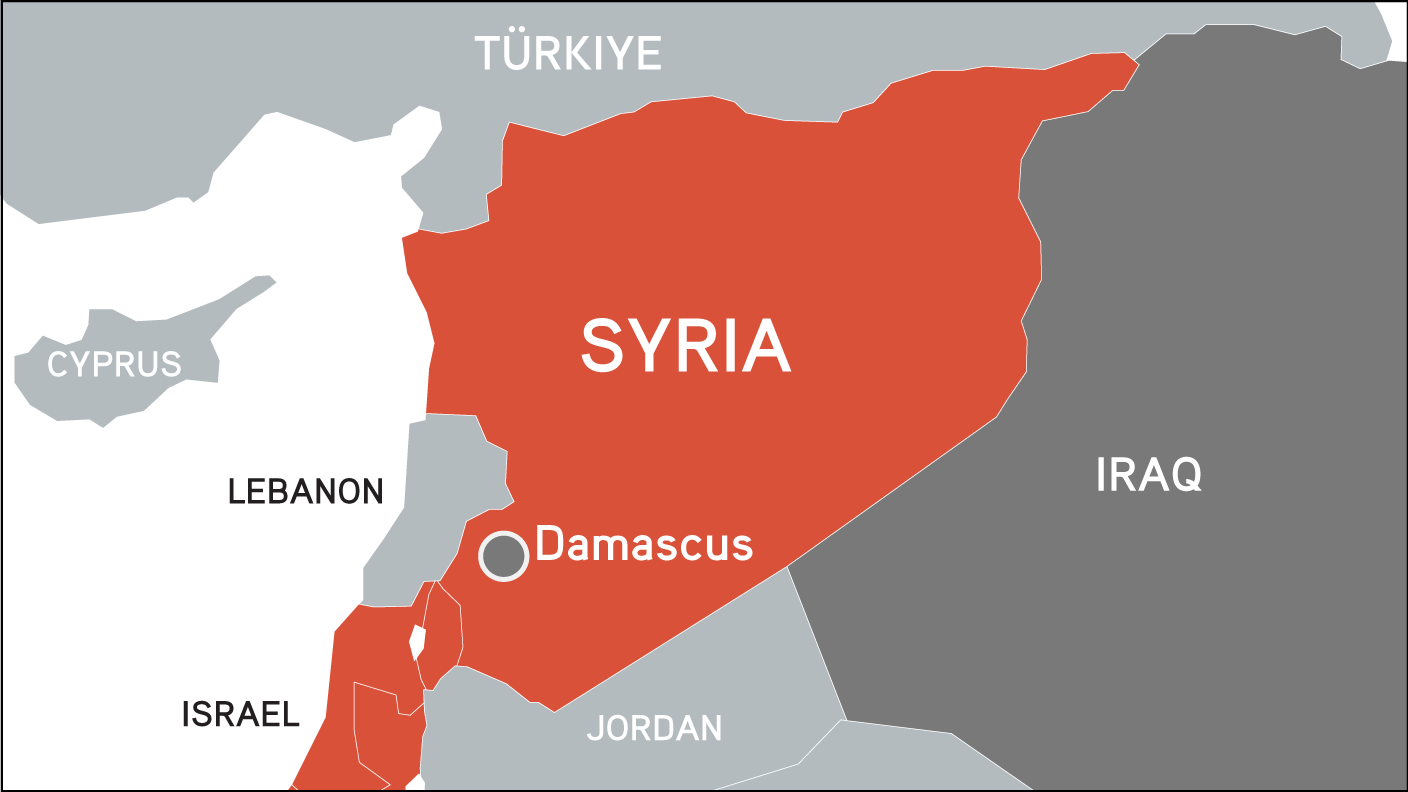
Syria’s transitional government has authorised immediate access for United Nations nuclear inspectors to several long-suspected former nuclear sites, marking a significant shift in the country’s stance on nuclear transparency.
Rafael Mariano Grossi, Director General of the International Atomic Energy Agency , confirmed the development following high-level meetings in Damascus with President Ahmad al-Sharaa. Grossi described the new leadership as “committed to opening up to the world” and expressed optimism that the inspection process could be completed within months.
The IAEA’s renewed access will focus on clarifying Syria’s past nuclear activities, particularly concerning the facility in Deir el-Zour, which was destroyed by Israeli airstrikes in 2007. The agency had previously assessed that the site was “very likely” an undeclared nuclear reactor intended for weapons-grade plutonium production, a conclusion Syria had long contested.
Under the former administration of Bashar al-Assad, Syria had consistently limited cooperation with the IAEA, denying inspectors full access to key sites and offering explanations that the agency found unconvincing. Traces of uranium were detected at multiple locations, including the Miniature Neutron Source Reactor in Damascus and a facility in Homs, raising concerns about undeclared nuclear materials and activities.
Grossi indicated that the IAEA plans to revisit the Deir el-Zour site, as well as three other locations associated with Syria’s historical nuclear efforts. He emphasised the agency’s concern that enriched uranium, if unaccounted for, could be susceptible to smuggling or misuse.
President al-Sharaa, who assumed office following Assad’s departure in December, has signalled a willingness to engage with international institutions and explore peaceful nuclear energy applications. Grossi noted that al-Sharaa expressed interest in developing nuclear energy for civilian purposes, aligning with regional trends where countries like Saudi Arabia, the United Arab Emirates, Egypt, and Jordan are pursuing nuclear energy initiatives.
The IAEA also aims to assist Syria in rebuilding its nuclear medicine and oncology infrastructure, which has been severely impacted by over a decade of civil conflict. Grossi stated that the agency is prepared to transfer equipment and expertise to support the country’s healthcare system.
The European Union has welcomed Syria’s renewed cooperation with the IAEA but has called for further steps, including the conclusion and implementation of an Additional Protocol to the Nuclear Non-Proliferation Treaty . Such a protocol would grant the IAEA expanded rights of access and information, enhancing the agency’s ability to verify the peaceful nature of Syria’s nuclear programme.
Japan has similarly urged Syria to fully cooperate with the IAEA and to conclude an Additional Protocol without delay. Japanese officials have emphasised the importance of resolving outstanding issues related to Syria’s past nuclear activities to restore international confidence.
Follow Arabian Post
Select Arabian Post as your preferred source on Google and MSN News for trusted business news and Arab politics and updates.




