Arabian Post Staff -Dubai
Flight-tracking platform Flightradar24 listed 436 cancellations at Riyadh’s King Khalid International Airport at approximately 5.30am Saudi time, representing 64 per cent of scheduled services. The capital remained the centre of the disruption after authorities suspended operations following a deadly weekend attack.
King Abdulaziz International Airport in Jeddah recorded 115 cancellations, or 15 per cent of scheduled flights, while King Fahd International Airport in Dammam registered 63, equivalent to 27 per cent. Together, the three airports accounted for 614 cancellation listings early on Monday, although some services connecting the airports could appear in more than one tally.
The figures were lower than Sunday’s totals but indicated that significant disruption was continuing. Riyadh recorded 655 cancellations on Sunday, amounting to 98 per cent of its scheduled flights. Jeddah registered 158 cancellations and 393 delays, while Dammam recorded 58 cancellations and 115 delays.
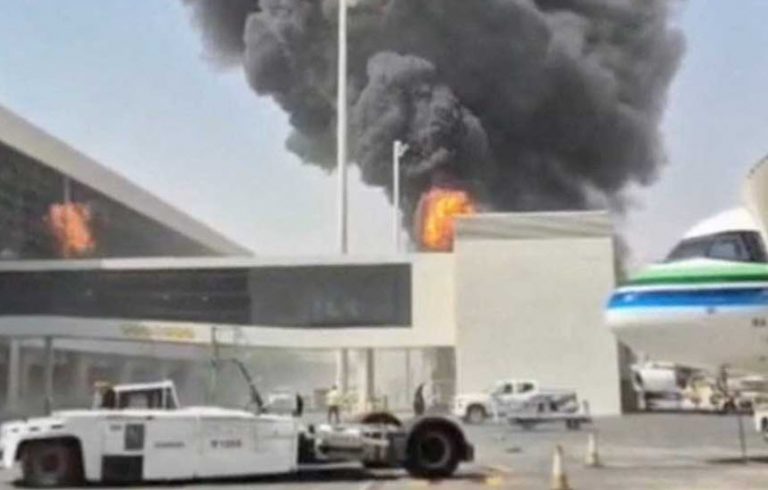
Saudi Arabia’s General Authority of Civil Aviation suspended operations at Riyadh airport after Saturday’s missile attack, which killed 12 people and injured 309, according to the authority’s casualty figures. The airport was struck again on Sunday, when another projectile hit Terminal 4, killing one person and injuring 11 others.
The Saudi-led coalition said a fire broke out following Sunday’s strike and emergency teams responded. It also announced the interception of a cruise missile near the airport. The coalition initially did not identify who launched the projectile that hit the terminal, although Yemen’s Houthi movement has claimed responsibility for other attacks on Saudi aviation facilities.
Dammam airport was also targeted on Sunday evening. The aviation authority confirmed the attack and said inspections and damage assessments were under way in coordination with other agencies. Disruption at Dammam added pressure to an aviation network already affected by the suspension of flights through Riyadh.
Airlines serving Saudi Arabia have altered schedules across several regional routes. Etihad Airways listed cancellations on selected services linking Abu Dhabi with Riyadh, Jeddah and Dammam through Tuesday, October 13. Emirates cancelled selected Dubai services, while flydubai extended cancellations affecting its Riyadh routes until October 14.
The changes have affected travellers beyond Saudi Arabia, particularly passengers connecting through airports in the United Arab Emirates. Saudi Arabia’s consulate in Dubai arranged buses to transport Saudi citizens unable to return home by air because of the cancellations.
Lufthansa Group suspended Riyadh services through October 16. Several airlines operating from India also cancelled flights, leaving passengers facing changes to journeys between the kingdom and major cities abroad. Airlines have advised customers to confirm flight status before travelling to airports and to consult carriers about rebooking arrangements.
The United States Federal Aviation Administration issued a safety advisory urging American operators to exercise caution when flying to or over Saudi Arabia. It cited military activity and possible interference with navigation systems. The advisory is scheduled to remain effective until December 10.
The disruption has also affected passengers travelling for Umrah, with religious pilgrims among those stranded or delayed. Footage broadcast by Saudi state television showed pilgrims preparing to board aircraft at Riyadh on Saturday before an attack caused panic inside the terminal.
Bangladesh’s Ministry of Expatriates’ Welfare said approximately 500 Bangladeshi passengers were stranded in Riyadh following the strike. Saudi authorities identified two Bangladeshis among those killed on Saturday, alongside four Saudi citizens and nationals of six other countries.
The Houthi movement has warned international airlines against using Saudi airports and airspace as hostilities with the Saudi-led coalition intensify. Saudi authorities have condemned attacks on civilian aviation infrastructure, while coalition forces have continued military operations against Houthi positions in Yemen.
The suspension has complicated travel planning for passengers whose journeys involve onward connections rather than Saudi destinations alone. A cancelled inbound aircraft can also affect its next scheduled departure, while diversions require airlines to reposition aircraft and crews. Such knock-on effects mean the number of disrupted journeys may exceed the number of individual flights shown as cancelled at any single airport.
The scale of cancellations has changed sharply from one day to the next, making early flight-tracking snapshots an incomplete measure of the eventual disruption. Figures listed before the start of Monday’s main operating periods could change as airlines revise schedules and airports assess whether services can safely resume.
Also published on Medium.
Follow Arabian Post
Select Arabian Post as your preferred source on Google and MSN News for trusted business news and Arab politics and updates.