South African share prices rose on Thursday as investors balanced optimism over global market trends with caution ahead of President Cyril Ramaphosa’s keynote address to Parliament and the release of critical domestic economic information. The benchmark Johannesburg Stock Exchange Top-40 index climbed around 0.5 per cent during early trade, buoyed by gains in resource and financial stocks, while the rand strengthened modestly against the US dollar, reflecting […]
Arabian Post Staff -Dubai United Arab Bank delivered a sharp improvement in earnings for 2025, reporting a 45 per cent rise in net profit after tax to AED 437.85 million, compared with AED 300.96 million a year earlier, as higher operating income and disciplined cost management lifted performance. Earnings per share increased to AED 0.18, reflecting the stronger bottom line and steady capital position. The board also […]
Arabian Post Staff -Dubai Abu Dhabi’s economy gathered pace in the third quarter of 2025 as real GDP reached 325.7 billion dirhams, equivalent to $88.68 billion, marking a year-on-year expansion of 7.7%, official data showed, underlining the emirate’s continued shift towards a broader growth base even as hydrocarbons remain a central pillar. Figures released by the Abu Dhabi Statistics Centre indicated that the non-oil economy expanded by […]
Consolidated net loss attributable to equity holders of the Company: HK$69 million (HK$230million)
Basic loss per share: 3.38 HK cents (11.29 HK cents)
No final dividend (No final dividend)
Pacific Century Premium Developments Limited (“PCPD”, SEHK: 00432) has announced its annual results for the year ended December 31, 2025.
The consolidated revenue of PCPD and its subsidiaries (together, the “Group”) amounted to HK$ 1,046 million, representing an increase of 51% compared to the revenue of HK$ 695 million in 2024.
The consolidated net loss attributable to equity holders of the Company for the year of 2025 was HK$ 69 million, compared to the net loss of HK$ 230 million in 2024.
Basic loss per share for 2025 was 3.38 Hong Kong cents compared to the loss per share of 11.29 Hong Kong cents for the previous year.
The Board of Directors has not recommended the payment of a final dividend for the year ended December 31, 2025.
In 2025, PCPD achieved robust full-year results, driven by the sustained surge in international travel across our key Asian markets, our operational strengths, and the continued recognition of our high-quality portfolio. This performance was underpinned predominantly by contributions from two segments: Park Hyatt Niseko, Hanazono, our hospitality business in Hokkaido, which delivered a notable rise in occupancy and revenue, and our ski and recreation operations in Niseko, Hokkaido, which also saw a surge in demand and revenue.
Park Hyatt Niseko, Hanazono, our hotel operations in Hokkaido, delivered a robust performance in 2025, as the boom in Japan‘s tourism sector continued throughout the year, again with record-breaking tourist arrivals. The average occupancy rate of Park Hyatt Niseko increased by 4 percentage points.
During the winter season of 2024/2025, total ski-lift and gondola rides increased 9% year-on-year. The travel surge continued to drive robust demand for our recreational business in Niseko well beyond the cold months.
In Phang Nga, Thailand, the Group has sold or reserved 40% of Phase 1A villas. The Group’s revenue from its property development in Thailand totalled HK$14 million for the year ended December 31, 2025, compared to no revenue in 2024.
We formed a strategic alliance with Hotel Properties Limited in Singapore to bring a Four Seasons Resort and Branded Residences to the prestigious integrated resort community of Aquella in Phang Nga. The move represents a significant milestone in PCPD‘s long-term vision of transforming Aquella into a visionary integrated resort destination that effortlessly blends luxury living, recreation and exceptional service.
In Jakarta, Indonesia, the occupancy of our premium commercial building, Pacific Century Place, Jakarta (“PCP Jakarta”), was stable throughout the year, and the project remained a consistent revenue contributor to the Group. As of December 31, 2025, the office space committed occupancy was 87%, compared to 85% in the previous year.
Development of the superstructure of the Group‘s project at 3–6 Glenealy, Central, Hong Kong, has been progressing well. We have reached a key structural milestone, with the superstructural work now completed and installation of the curtain walls progressing at pace. The name of the development has also been unveiled as “Central Residence by the Park”, and its completion is scheduled for the first half of 2026.
In the long run, we remain cautiously optimistic about the long-term outlook for property sectors in Hong Kong, Japan, Thailand and Indonesia. With PCPD‘s disciplined execution and proactive risk management, we have confidence in our ability to drive continued growth and deliver sustained value.
Mr. Benjamin Lam, PCPD’s Deputy Chairman and Group Managing Director, said: “We will maintain our prudent yet proactive approach, allocating resources carefully and pursuing value-enhancing initiatives. Our priority remains to drive sustainable growth, improve profitability, and deliver solid returns to shareholders and stakeholders.”
Hashtag: #PacificCenturyPremiumDevelopments
The issuer is solely responsible for the content of this announcement.
About PCPD
Pacific Century Premium Developments Limited (“PCPD” or the “Group”, SEHK: 00432) is principally engaged in the development and management of premium-grade property and infrastructure projects as well as premium-grade property investments. PCCW Limited (“PCCW”, SEHK: 00008) is the single largest shareholder of the Group.
Arabian Post Staff -Dubai PureHealth Holding delivered a solid set of full-year results for 2025, reporting net profit of AED2 billion and proposing a cash dividend of AED600 million, underscoring the scale and resilience of the Abu Dhabi-based healthcare group as it expands across services, geographies and clinical capabilities. The company said results for the year ended 31 December 2025 reflected steady demand across hospitals, clinics, diagnostics […]
Arabian Post Staff -Dubai ADNOC Gas plc reported a net income of $5.2 billion for the fiscal year ended 2025, marking a 3 per cent rise compared with the previous year and underscoring the company’s capacity to generate resilient returns amid volatile commodity markets. The Abu Dhabi-based integrated gas producer said the result was achieved despite an average Brent crude oil price of $69 per barrel for the […]
Big technology groups have entered earnings season facing a sharper set of questions from investors as capital expenditure tied to artificial intelligence accelerates while core cloud businesses show steadier, more measured growth. Quarterly disclosures from the largest United States-based technology companies point to a widening gap between the scale of investment being committed to AI infrastructure and the pace at which that spending is translating into clearly […]
Arabian Post Staff -Dubai ADNOC Distribution has delivered record financial performance for 2025, underpinned by higher fuel volumes, steady network expansion and improving non-fuel revenues across its regional footprint, according to figures disclosed by the company. Full-year earnings before interest, tax, depreciation and amortisation rose 11.1 per cent year on year to $1.166 billion, while net profit climbed 15.4 per cent to $761 million, marking the […]
Kyocera Corp. has outlined plans to repurchase up to ¥500 billion of its own shares over fiscal 2027 and fiscal 2028, signalling a deeper commitment to capital efficiency as Japanese corporates face mounting pressure to lift returns and sharpen balance sheets. The programme, one of the largest contemplated by the Kyoto-based manufacturer, places the group among a widening cohort of listed companies using buybacks to address investor concerns over cash utilisation and valuation gaps.
The company said the planned repurchase ceiling reflects a multi-year approach rather than a one-off market intervention, with execution paced according to market conditions, cash flows and strategic priorities. Kyocera has historically favoured conservative capital management, retaining substantial cash buffers to support long investment cycles across components, electronics, materials and energy-related businesses. The proposed scale marks a notable recalibration, suggesting management is prepared to return excess capital while maintaining flexibility for growth spending.
Market participants view the move against a backdrop of sustained corporate governance reform in Japan, where stock exchange guidance and investor activism have encouraged companies to justify capital allocation choices more explicitly. Share buybacks have become a visible response, particularly among firms trading below book value or carrying large cash balances. Kyocera’s announcement fits that pattern, though the delayed start in fiscal 2027 underlines a preference for orderly execution tied to medium-term planning.
The group has spent the past year reviewing portfolio efficiency and profitability across segments, including fine ceramics, semiconductor components, electronic devices and document solutions. Management commentary has emphasised stable cash generation and disciplined investment, with returns assessed against cost of capital. By signalling a sizeable buyback window in advance, Kyocera appears to be seeking to anchor investor expectations around capital returns while avoiding short-term distortions to operating strategy.
Analysts note that Japanese companies have increasingly used multi-year buyback frameworks to balance shareholder returns with industrial policy considerations and long-term employment commitments. Unlike ad-hoc repurchases, extended programmes can be scaled up or down without signalling distress, and they reduce the risk of buying shares at cyclical peaks. For Kyocera, whose earnings are exposed to swings in global electronics demand, that flexibility is likely to be central.
The announcement also highlights intensifying competition for capital among Japanese industrial groups. With domestic interest rates edging higher after years of ultra-loose monetary policy, holding large idle cash positions has become more visibly costly. At the same time, foreign investors have pressed boards to articulate clearer return targets, often favouring buybacks over dividends for their tax efficiency and balance-sheet impact. Kyocera’s plan reflects these cross-currents, even as it preserves room for dividends and strategic investments.
Industry specialists point out that Kyocera’s diversified structure complicates capital allocation decisions. The company spans mature businesses with steady cash flows and growth areas requiring sustained investment, including advanced materials and energy-related technologies. A pre-announced repurchase cap allows management to adjust deployment as segment performance evolves, rather than locking in rigid payout ratios.
From a governance perspective, the move reinforces a broader shift in boardroom priorities. Japanese regulators and exchanges have encouraged companies to engage more directly with shareholders, explain valuation discounts and set measurable improvement goals. Buybacks have emerged as a tangible mechanism to demonstrate responsiveness, particularly when accompanied by operational reforms. Kyocera has indicated that capital efficiency measures will run alongside cost controls, portfolio reviews and selective expansion.
Investor reaction has focused on the signal rather than immediate financial impact, given the programme’s future timeframe. Portfolio managers tracking Japan’s equity market say such announcements contribute to a narrative of structural change, even if execution remains years away. For long-term holders, the clarity around potential capital returns can support valuation, especially when paired with stable operating performance.
HCMC, VIETNAM – Media OutReach Newswire – 2 February 2026 – The Ho Chi Minh City Development Joint Stock Commercial Bank (HDBank, ticker: HDB) recorded pre-tax profit of over VND21.3 trillion (US$820.5 million) in 2025, up 27.4% year-on-year and exceeding its target.
HDBank delivers robust 2025 results with profit up 27.4%.
Profitability and core indicators remained among the strongest in the banking sector, reflecting the Bank’s sustainable growth quality.
In the fourth quarter alone, HDBank posted profit of over VND6.5 trillion (US$250.3 million), a 60% increase compared to Q4 2024.
As of the end of 2025, consolidated total assets reached VND931 trillion (US$35.8 billion), up 33.5% year-on-year. Total funding mobilisation stood at VND832 trillion (US$32 billion), with customer deposits rising 28.2%.
Outstanding loans increased 34.3% to VND588 trillion (US$22.6 billion), with credit focused on sectors featuring reasonable risk profiles and long-term growth potential, including SMEs, supply chains, production and business, exports and green projects. This strategy enabled the Bank to maintain high growth while effectively managing risk.
Total operating income rose 25.4% to VND42.7 trillion (US$1.6 billion) driven by strong growth in non-interest income, which rose 2.5 times year-on-year and accounted for 18.6% of the total.
Return on equity reached 25.3%, among the highest in the sector, while return on assets stood at 2.1%. During the year, HDBank paid stock dividends and issued bonus shares with a combined ratio of nearly 30%, reaffirming its commitment to shareholders.
The non-performing loan ratio remained low at 1.66%.The capital adequacy ratio under Basel II reached 16.7%, among the highest in the industry, providing ample room for credit growth and scale expansion without immediate pressure for capital increases.
2025 also marked a strategic milestone in HDBank’s long-term strategy with the completion of the receipt of DongA Bank subsequently rebranded as Vikki Digital Bank, a new-generation digital bank. In its first year of operation, Vikki recorded more than 2.1 million app downloads, highlighting strong growth potential in digital and retail banking.
Meanwhile, HD SAISON, a subsidiary of HDBank, posted profit of over VND1.39 trillion (US$53.5 million) with ROE of 22.5%.
HDBank now serves more than 25 million customers, with 94% of individual transactions conducted via digital channels.
Moody’s upgrade of HDBank’s credit rating to the top tier among Vietnamese banks in 2025 further strengthened investor confidence in the Bank’s financial strength and long-term growth prospects.
Hashtag: #HDBank
The issuer is solely responsible for the content of this announcement.
Emirates NBD, Dubai’s largest bank by assets, posted a four per cent rise in full-year net profit on Monday, underpinned by record lending growth as borrowing demand strengthened across domestic and international markets. The lender said net profit reached 24 billion dirhams for the year, surpassing market expectations of about 22.8 billion dirhams based on analyst estimates tracked by LSEG. The performance was driven by what the […]
Matein Khalid Zohran Mamdani’s election as Mayor of New York City is the worst nightmare for the Big Apple’s commercial landlords, the reason why the shares of SL Green and Vornado have been sandbagged on the NYSE. The last thing a soft Manhattan office market with a plunge in inbound foreign tourism and spike in the 10-year US Treasury yield needed was a 35 year old self […]
Mozambique has secured a fresh boost for its offshore gas ambitions after the Board of Directors of the African Development Bank approved a $150 million senior loan for the Coral North floating liquefied natural gas project. The decision, taken on January 14, signals renewed momentum for the country’s flagship gas developments and underlines lender confidence in large-scale energy infrastructure anchored in the Rovuma Basin. The financing is […]
UAE and India have elevated their strategic partnership with a sweeping set of agreements signed during the visit of Sheikh Mohamed bin Zayed Al Nahyan, signalling a calibrated push to broaden cooperation across defence, energy, space, trade, investment and food safety. The pacts, endorsed alongside Narendra Modi, reflect a shared intent to anchor bilateral ties in long-term economic and security interests while navigating a volatile global environment.
The visit culminated in the exchange of multiple memoranda of understanding that collectively aim to translate political goodwill into operational outcomes. Officials from both sides framed the agreements as an expansion of the Comprehensive Strategic Partnership, emphasising implementation timelines and institutional coordination rather than aspirational language. At the centre of the package is a defence cooperation framework that strengthens military-to-military engagement, joint exercises, training exchanges and defence industrial collaboration, an area that has gathered momentum as both countries diversify security partnerships.
Energy cooperation featured prominently, with accords spanning hydrocarbons, clean energy and grid resilience. State-linked firms and private players outlined pathways to scale joint investments in upstream oil and gas while accelerating collaboration in renewables, green hydrogen and energy storage. The emphasis on clean energy dovetails with the UAE’s net-zero ambitions and India’s drive to expand non-fossil capacity, positioning both as partners in technology transfer and project financing across third markets.
Space cooperation agreements mark another pillar of the evolving relationship. Space agencies from Abu Dhabi and New Delhi committed to deeper collaboration in satellite development, earth observation, data sharing and human spaceflight training. The arrangements are designed to support applications ranging from climate monitoring and disaster management to urban planning and agriculture, underscoring the commercial and societal dividends of space-based assets.
Trade and investment pacts seek to build on the momentum generated by the Comprehensive Economic Partnership Agreement, which has reshaped tariff structures and supply chains between the two economies. New understandings focus on easing customs procedures, aligning standards and expanding market access for small and medium-sized enterprises. Investment promotion agencies agreed to coordinate sectoral roadmaps in manufacturing, logistics, digital services and infrastructure, with sovereign investors and development funds expected to play a catalytic role.
Food safety and agricultural cooperation agreements address a strategic priority for both governments. Protocols on standards, certification and inspection aim to streamline the movement of agri-food products while safeguarding consumer interests. Joint research initiatives are set to target crop resilience, post-harvest technologies and cold-chain logistics, reflecting lessons from climate stress and supply disruptions that have sharpened the focus on food security.
Diplomatic engagements during the visit also underscored people-to-people ties, education and skills. Universities and research institutions announced partnerships in advanced materials, artificial intelligence and health sciences, while vocational training programmes were aligned to labour market needs in construction, healthcare and digital services. These measures are intended to deepen the talent pipeline that underpins commercial ties.
Officials were careful to situate the agreements within a broader regional and global context. With shipping lanes under strain and commodity markets exposed to geopolitical shocks, both sides highlighted coordination on maritime security and supply chain resilience. The defence and logistics components of the package are expected to reinforce cooperation in the Indian Ocean region, where the UAE’s ports and India’s maritime capabilities intersect.
Economists note that the breadth of the accords reduces concentration risk by spreading cooperation across multiple sectors, while governance mechanisms embedded in the agreements could improve execution. Joint working groups, periodic reviews and dispute-resolution channels were outlined to ensure progress is measurable. Business leaders welcomed the clarity on standards and compliance, arguing that predictability lowers the cost of capital and accelerates project timelines.
Critics caution that delivery will depend on regulatory alignment and the pace of domestic approvals, particularly in capital-intensive sectors such as energy and defence manufacturing. Past initiatives have sometimes faced delays linked to procurement processes and technology transfer rules. Both governments acknowledged these constraints and signalled intent to address bottlenecks through empowered committees.
By Nitya Chakraborty 2025 was the year of the maverick U.S. President Donald Trump. The developments during the year beginning January 20 evolved around Trump. He was the key decision-maker, irrespective of what other countries leaders felt. He cared little for the United Nations, WTO, WHO and all other multilateral bodies. He openly said ‘I […]
HAIKOU, CHINA – Media OutReach Newswire – 20 January 2026 – One month into the island-wide special customs operations, the Hainan Free Trade Port (FTP) in south China has maintained smooth and orderly functioning, with initial achievements in logistics efficiency, passenger convenience, and economic aggregation, highlighting the country’s commitment to high-level opening up.
Yangpu Port, the largest cargo port in the Hainan FTP.
Hainan Heren Pearl Co., Ltd., which mainly imports pearls from overseas, has emerged as a direct beneficiary of Hainan FTP policies.
Under the value-added processing policy, the company can sell its high-value products to the mainland duty-free, cutting its overall tax burden from about 52 percent to roughly 26 percent and redirecting the savings into research and development, said Zhang Shizhong, the company’s chairman.
“The FTP holds great promise, with more policy dividends set to be released in the future,” Zhang said.
One notable special customs policy is offering “freer access at the first line,” referring to freer trade between Hainan and areas outside China’s customs borders, and “regulated access at the second line,” which involves applying standard customs controls for goods moving from Hainan to the mainland.
According to Haikou Customs, from Dec. 18, 2025 to the early hours of Jan. 18, 2026, the value of “first line” imported zero-tariff goods was 753 million yuan (about 107 million U.S. dollars); the value of processed and value-added goods sold domestically through the “second line” was about 85.9 million yuan.
In Wanning City, production lines at Chia Tai (Hainan) Xinglong Coffee Industry Development Co., Ltd. are running at full capacity. The company imports green coffee beans from Colombia and processes them in Hainan before shipping the finished products to the mainland, enjoying an 8 percent tariff reduction under the FTP policies.
“After the launch of island-wide special customs operations, Hainan will gradually become a value-added processing center and trade hub with global resource allocation capabilities,” said Ye Jian, the company’s general manager. “Enterprises will not only pass through Hainan, but also be able to put down roots here and create higher value.”
Duty-free shopping booms in Hainan FTP.
Drawn by the policy incentives, a growing number of companies are choosing to do business in Hainan. The General Administration of Customs said a total of 5,132 new foreign trade enterprises completed registration in Hainan over the past month, an increase in a month roughly equivalent to the total registrations in an entire quarter of 2024.
The total number of registered foreign trade market entities in Hainan has surpassed 100,000, according to official data.
As the policy came into force, major ports across Hainan saw a surge in activity.
Days after Hainan began island-wide special customs operations, a flight from Prague carrying 115 European passengers touched down in the tourist city of Sanya, marking a breakthrough in the high-level opening up of the aviation sector at the Hainan FTP.
The arrival marked the launch of China’s first official passenger route operated under the Seventh Freedom of the Air, which allows foreign carriers to operate flights between two foreign countries without having to land in their home country.
The route is operated by Kazakhstan’s Scat Airlines, with one round-trip scheduled each week.
At Yangpu Port, the largest cargo port in the Hainan FTP, mega-ships berthing in quick succession, gantry cranes operating around the clock, and container trucks moving in tightly coordinated flows have become a routine sight.
“Yangpu will shoulder the role of the main logistics gateway of the Hainan FTP,” said Yang Xiaobin, deputy head of the Transportation, Port and Waterway Bureau of Yangpu Economic Development Zone. “The port aims to build a smart and green international shipping hub and logistics center.”
Container throughput at Yangpu reached 3.31 million twenty-foot equivalent units (TEUs) in 2025, up more than 65 percent from a year earlier.
“It is particularly noteworthy that the Hainan FTP launched island-wide special customs operations at a time of intensifying deglobalization and rising global uncertainty,” said Cui Weijie, deputy director of the Chinese Academy of International Trade and Economic Cooperation, a think tank with the Ministry of Commerce.
“It not only demonstrates China’s unwavering commitment to high-standard opening up, but also injects greater certainty and positive momentum into the global economy and international trade cooperation,” Cui said.
Markets has begun offering around-the-clock, on-chain trading of a synthetic version of Tesla stock, a move that sharpens the debate over how far crypto platforms can go in replicating traditional equities without triggering the full weight of securities regulation. The product, described by Markets as a tokenised representation of Tesla, allows traders to take leveraged positions of up to 12 times and to buy or sell at […]
HONG KONG SAR – Media OutReach Newswire – 14 January 2026 – Initiated by Ge Jun, Chairman and CEO of TOJOY Enterprise Services, Shape the Era, Pioneer the Times — Ge Jun 2026 New Year Eve’s Talk was grandly held at the Guangzhou Baiyun International Convention Center. At the crossroads of 2025 and 2026, more than a thousand entrepreneurs, founders, and distinguished guests gathered for this landmark intellectual event—one that blended trend foresight, humanistic reflection, and purposeful recharging. Together, they listened to the narrative of the times, and explored the path to becoming true pioneers of the era.
The “Ge Jun 2026 New Year Eve’s Talk” was grandly held in Guangzhou, bringing together prominent business leaders and more than 1,000 entrepreneurs to share insights on the AI revolution, economic transformation, and the future pathways of high-quality development.
From Hidden Cornerstones to Transformation Pioneers — Painting the Resilient Foundation of China’s Economy
In his keynote address, Ge Jun outlined a vivid panorama of “Era Pioneers.” The picture encompassed technology trailblazers riding the crest of the AI wave, transformation leaders revitalizing traditional industries, and countless unsung yet indispensable cornerstone entrepreneurs. Together, these diverse figures revealed an essential truth: regardless of scale or spotlight, true pioneers are those who continuously create value in their fields.
“If these stories from across the country are not shared more widely, it would be unfair to the entrepreneurial community—and irresponsible to our times.” Ge remarked with conviction. Over the past six years, he has traveled across the country, engaging with countless SME founders. In his view, it is precisely these resilient, often unsung enterprises that underpin the most authentic strength and enduring warmth of China’s economy.
A New Generation Takes the Stage — Writing New Answers with New Tools
Midway through the address, Ge shifted focus to the rising generation of entrepreneurs. He depicted their multifaceted profiles, and emphasized that the new generation is redefining what it means to be an era pioneer. With new perspectives, new tools and new value systems, they inject fresh momentum into the future.
Addressing the critical issue of generational succession in the private economy, Ge highlighted developments ranging from the revival of legacy brands to IP-driven transformation, and revolutionary changes in manufacturing and communications. True succession, as he emphasized, is never a simple replication of experience. It is the continuation of a courageous, innovative spirit, paired with comprehensive renewal of tools, methodologies and connection models.
The Future Is Now — Finding the “Boarding Pass” and “Charging Station” in the AI Era
Standing at the threshold of a new technological revolution, Ge raised a profound question: “As AI redefines the core of productivity, how can enterprises and individuals ensure they are not left behind?”
In response, he laid out three crucial action pillars, forming a clear strategic framework for enterprises to navigate transformation and unlock new growth:
All Things Reborn — Every industry can be renewed with new technologies and new ways of thinking. New value always emerges from the reshaping and integration of traditional business models.
Local-Driven Prosperity — By deeply cultivating local markets, leveraging regional advantages and policy dividends, and building competitiveness within the dual-circulation framework, enterprises can realize “globalization at their doorstep.”
Purposeful Recharging — In an age of accelerating technological changes, emotional connection and the shared pursuit of meaning are becoming the ultimate “charging stations,” something AI can never replace.
According to relevant reports, this New Year Eve’s Talk marks an important milestone in Ge Jun’s ongoing commitment to empowering the entrepreneurial community. In this year’s Grain Rain season, he will continue to provide forward-looking perspectives and long-term growth companionship for entrepreneurs navigating an increasingly complex era.
Hashtag: #TOJOY
The issuer is solely responsible for the content of this announcement.
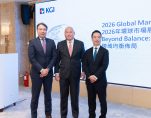
HONG KONG SAR – Media OutReach Newswire – 13 January 2026 – Today, KGI has released its 2026 Global Market Outlook, covering markets in the US, Mainland China, Hong Kong, Taiwan, and Singapore.
(From left) James Chu, Chairman at KGI Securities Investment Advisory; James Wey, Head of International Wealth Management at KGI; Cusson Leung, Chief Investment Officer at KGI
After a turbulent year of trade disruptions and policy uncertainty under President Trump, investors face new questions. China has unveiled its 15th Five-Year Plan, as policymakers aim to support domestic growth amid global challenges. The market outlook for 2026 is shaped by interest rate decisions, economic resilience, and shifting international dynamics.
Under this backdrop, we propose the “LEAD” strategy for 2026:
Liquidity Shift
Earnings Focused
Adding Credit
Diversified Assets
Cusson Leung, Chief Investment Officer at KGI, says: “Looking ahead to 2026, investors can adopt a LEAD strategy: L stands for Liquidity Shift, benefiting from a weakening US dollar and interest rate cuts, with funds expected to flow to non-US dollar and Asian currencies; E stands for Earnings Focused, focusing on earnings growth to support valuations and allocating to US, European, and Japanese stocks; A stands for Adding Credit, locking in the credit of leading companies and increasing holdings of A-rated investment grade bonds; and D stands for Diversified Assets, responding to the upward trend in both stocks and bonds by including alternative assets to optimize asset allocation.”
Macro & US Markets The US economy will experience a more pronounced downturn in 4Q25, which will extend into 1H26, and this will have a negative impact on consumption, slowing investment activity. Nevertheless, AI-driven productivity gains should provide some support, with US GDP growth in 2026 forecast at 2.2%. The eurozone will see moderate growth, with Germany benefiting significantly from fiscal expansion and economic improvement. Japan’s economy will strengthen on domestic demand, aided by additional fiscal stimulus. China has demonstrated resilience under trade protectionism in 2025. With inflation risks easing and labor market risks rising, the US Fed cut the interest rates in September 2025, with a total reduction of 75 bps in 2025, followed by an additional 50-75 bps in 2026.
Regarding US stocks, AI-driven productivity gains and cost reductions should sustain solid profitability, with S&P 500 earnings projected to grow by 13.55% year-on-year (YoY) in 2026. However, higher risk premiums may cap valuation upside, leading us to project a year-end target of 7,650 points. Market performance will reflect risk-driven declines in 1Q26, stabilize and recover in 2Q26, and rally significantly around the midterm elections in 4Q26. By sector, among AI-related themes we favor technology, semiconductors, utilities (on higher power demand), machinery for advanced manufacturing, and industrial REITs. Non-AI beneficiaries include aerospace and defense (on higher military spending), pharmaceuticals (on tariff benefits), and capital market segments (supported by active investment banking). As for fixed income, US economic weakness and Fed rate cuts will drive Treasury yields lower, with 10-year yields expected to fall to 3.5-3.7% by 2Q26. We recommend allocating to US Treasuries or high-rated investment-grade corporate bonds in 1H26, then rotating into high-yield bonds in 2H26 as policy rates and economic conditions reach a bottom.
James Chu, Chairman at KGI Securities Investment Advisory, says:“AI is triggering a new productivity revolution, supporting economic growth and strengthening corporate earnings. While the US economy is expected to slow, a recession remains unlikely, and the short-term impact of tariff policies should gradually fade by the first quarter of 2026. Although the Fed may shift from cutting rates at every meeting to cutting at alternating meetings, the overall environment remains a rate-cutting cycle. In a non-recession backdrop, lower interest rates should continue to support equity market performance.”
Mainland China and Hong Kong Markets In terms of the macroeconomy, with the conclusion of trade agreements among many countries, risks have subsided. However, due to external drag, China’s GDP growth is expected to slow slightly to 4.6% in 2026. In 2026, investors should focus on four key areas for Hong Kong and mainland China markets: (1) In the consumption sector, domestic demand continued to be the core growth driver, contributing more than half of GDP. As the “trade-in” effect diminishes, the central government is expected to implement the “15th Five-Year Plan” and economic conference plans, launching a new round of subsidies covering culture, entertainment, and sports to continuously boost consumer spending. (2) In the financial market, risk appetite has increased. Given the narrowing spread between bond yields and fixed deposit rates, large amounts of savings are flowing into the capital market seeking returns. The fundamentals of the banking and insurance industries have bottomed out, and the credit structure is accelerating its shift from real estate to supporting the real economy. (3) Regarding the issue of “anti-involution,” the PPI remains weak, and capacity reduction has become a focus. Compared to 2015, this round involves more downstream private enterprises and needs to consider employment, presenting greater challenges. While industry consolidation is expected to be lengthy, the impact is controllable and beneficial for long-term healthy development. (4) Regarding new quality productive forces, this will replace real estate and infrastructure as the main investment focus. Digital infrastructure supports AI and embodied intelligence, and humanoid robots are expected to see commercialization in 2026, “iPhone moment.” Leading companies with core technological autonomy in innovative drugs will enjoy higher valuation premiums.
Overall, we are optimistic on Hang Seng Index. We expect the Federal Reserve’s interest rate cuts to drive fund inflows to the Hong Kong and mainland stock markets. Based on an upward revision of the forward PE ratio to 13.5x and 8% earnings growth, we set a target of 30,000 points for the Hang Seng Index by the end of 2026, representing a potential upside of approximately 14%. As confidence recovers, the investment style is expected to shift from defensive to growth stocks. Recommended 12 stocks: XPeng Motors (9868), UBTECH (9880), Tencent Holdings (700), Alibaba (9988), China Hongqiao (1378), AIA Group (1299), Ping An Insurance (2318), China Merchants Bank (3968), Akeso Biopharma (9926), Pop Mart (9992), Tencent Music (1698), and Sino Land (83).
Cusson Leung, Chief Investment Officer at KGI, says: “2026 marks a crucial turning point for the Chinese economy. While the market anticipates GDP growth to slow to 4.6%, “new quality productive forces,” resembling humanoid robots, is taking over as a new growth engine. The most critical signal in the market is the “awakening” of idle cash—massive savings are flowing from low-interest fixed deposits to the capital market seeking returns. With risk appetite returning and policy support intensifying, now is the time to shift investment strategies from “defensive” to “growth.” Driven by both valuation repair and earnings growth, we are optimistic that the Hang Seng Index will reach 30,000 points, and the allocation value of Hong Kong and mainland China stocks has reappeared.”
Taiwan Market Compared to the dot-com era bull run, which lasted almost five years, the current AI frenzy has been around for about three years, suggesting that the uptrend is still in its middle phase and could extend through 2026.
AI plays are trading at high PEs, such valuations are backed by strong fundamentals. In fact, the PEG ratio of Taiwan’s AI supply chain has yet to surpass 1x. We estimate that aggregate earnings of AI plays will grow by 21% YoY in 2026, following impressive upticks of 35% in 2024 and 43% in 2025. AI stocks now account for more than 60% of TAIEX earnings, and with the ongoing AI arms race, overall TAIEX earnings growth is projected to accelerate from 14% in 2025F to 20% in 2026.
Although the AI frenzy should keep the bull market intact, volatility will rise in tandem due to: (1) substantial cumulative gains, and the fact that valuations are approaching historic highs; (2) policy and political uncertainty surrounding the US midterm elections; and (3) potential changes in the US Fed’s rate-cut pace. We expect the TAIEX to repeat a “smile-curve” pattern, featuring continued strength in 1Q26, followed by healthy corrections in 2Q-3Q26 before closing the year with a renewed upswing.
We think investors need to pay attention to two major themes. The first is a broad-based product spec upgrade trend across the AI supply chain, which will drive the industry into a new growth phase, with beneficiaries including foundries, GPU and ASIC designers, advanced packaging (such as CoWoS), and ODMs, as well as testing interfaces, memory, thermal solutions, CCL, ABF substrates, PCBs, switches, and power component suppliers amid strong AI computing demand and ongoing GPU platform upgrades. The second is diversification and defensive asset allocation. Innovations in consumer electronics, such as foldable iPhones and smart wearables, will provide growth opportunities, while companies with resilient domestic demand and stable high dividend yields offer a balanced strategy combining growth and income. Overall, investors should strike a balance between growth and resilience against volatility in their portfolios, in the face of market fluctuations.
James Chu, Chairman at KGI Securities Investment Advisory, says:“The solid earnings growth driven by AI and still reasonable valuations form a strong foundation for the ongoing bull market in Taiwanese equities. With AI adoption accelerating across enterprises and consumers, demand for computing power is rising rapidly. Yet supply remains constrained by chip and power bottlenecks, meaning hardware suppliers are likely to face continued shortages through 2026. Taiwan’s AI supply chain is set to remain a key beneficiary, particularly those tied to next-generation specification upgrades.”
Singapore Market In 9M25, the overall performance of Singapore’s economy was better than expected as the global trade tensions eased after the US pivoted on its reciprocal tariffs and reached deals with its major trading partners. The manufacturing, wholesale trade and finance & insurance sectors remained the growth pillars of the Singapore economy, and each sector delivered decent growth. In particular, manufacturing’s growth has been robust, driven by the electronics, transport engineering and biomedical manufacturing clusters. The full year outlook is upbeat, as the growth momentum shall continue till the end of the year.
Looking ahead, the global economic outlook for 2026 suggests slower GDP growth for most of Singapore’s key trading partners, including China and the Eurozone, largely due to the impact of US tariffs, which will temper demand for Southeast Asian exports, though US growth is expected to remain resilient from AI investment. Consequently, Singapore’s outward-oriented sectors, particularly manufacturing and trade-related services, are projected to expand at a slower pace than in 2025, although the electronics and related sectors will benefit from AI demand, while some precision engineering and biomedical output may moderate domestically, the construction sector is set to grow, but consumer-facing sectors are likely to remain subdued. However, the relatively low interest rates and continuous government support shall buffer the impact of the slowdown, and the capital market will still benefit from the upward re-rating catalysts.
Chen Guangzhi, Head of Research at KGI Singapore, says: “Thanks to trade de-escalation and the AI wave, Singapore experienced significant economic expansion in 2025. Proactive government initiatives turbo-charged the equity bull run, and this strong momentum is expected to deliver an optimistic economic outlook for 2026.” Hashtag: #KGI #MarketOutlook
The issuer is solely responsible for the content of this announcement.
KGI
KGI* has been a leading financial institution in Asia since 1997. Our scope of business encompasses wealth management, brokerage, fixed income, and asset management. We are committed to offering a comprehensive range of financial products and services to corporate, institutional, and individual clients throughout Asia. Backed by KGI Financial Group, we have a robust footprint in Asia, covering Taiwan, Hong Kong, Singapore, Indonesia, and Thailand^.
*KGI refers to KGI Asia Limited and its affiliates. ^an investee enterprise of KGI Securities, not a subsidiary.
DISCLAIMER
All the information contained in this document is not intended for use by persons or entities located in or residing in jurisdictions which restrict the distribution of this document by KGI Asia Limited (“KGI”), or any other affiliates of KGI. Such information shall not constitute investment advice, or an offer to sell, or an invitation, solicitation or recommendation to subscribe for or invest in any securities, insurance or other investment products or services nor a distribution of information for any such purpose in any jurisdiction. In particular, the information herein is not for distribution and does not constitute an offer to sell or the solicitation of any offer to buy any securities in the United States of America, or to or for the benefit of United States persons (being residents of the United States of America or partnerships or corporations organised under the laws of the United States of America or any state, territory or possession thereof). All the information contained in this document is for general information and reference purpose only without taking into account of any particular investor’s objectives, financial situation or needs and may not be redistributed, reproduced or published (in whole or in part) by any means or for any purpose without the prior written consent of KGI. Such information is not intended to provide any legal, financial, tax or other professional advice and should not be relied upon in that regard.
All investments involve risks. The prices of securities fluctuate, sometimes dramatically. The price of a security may move up or down, and may become valueless. It is as likely that losses will be incurred rather than profit made as a result of buying and selling securities.
Bond investment is NOT equivalent to a time deposit. It is NOT protected under the Hong Kong Deposit Protection Scheme. Bondholders are exposed to a variety of risks, including but not limited to: (i) Credit risk – The issuer is responsible for payment of interest and repayment of principal of bonds. If the issuer defaults, the holder of bonds may not be able to receive interest and get back the principal. It should also be noted that credit ratings assigned by credit rating agencies do not guarantee the creditworthiness of the issuer; (ii) Liquidity risk – some bonds may not have active secondary markets and it would be difficult or impossible for investors to sell the bond before its maturity; (iii) Interest rate risk – When the interest rate rises, the price of a fixed rate bond will normally drop, and vice versa. If you want to sell your bond before it matures, you may get less than your purchase price. Do not invest in bond unless you fully understand and are willing to assume the risks associated with it. Please seek independent advice if you are unsure.
You are advised to exercise caution and undertake your own independent review, and you should seek independent professional advice before making any investment decision. You should carefully consider whether investment is suitable in light of your own risk tolerance, financial situation, investment experience, investment objectives, investment horizon and investment knowledge.
No representation or warranty is given, whether express or implied, on the accuracy, adequacy or completeness of information provided herein. In all cases, anyone proposing to rely on or use the information contained herein should independently verify and check the accuracy, completeness, reliability and suitability of the information. Simulations, past and projected performance may not necessarily be indicative of future results.
Information including the figures stated herein may not necessarily have been independently verified, and such information should not be relied upon in making investment decisions. None of KGI, its affiliates or their respective directors, officers, employees and representatives will be liable for any loss or damage of any kind (whether direct, indirect or consequential losses or other economic loss of any kind) suffered or incurred by any person or entity due to any omission, error, inaccuracy, incompleteness or otherwise, or any reliance on such information. Furthermore, none of KGI, its affiliates or their respective directors, officers, employees and representatives shall be liable for the content of information provided by or quoted from third parties.
Members of the KGI group and their affiliates may provide services to any companies and affiliates of such companies mentioned herein. Members of the KGI group, their affiliates and their directors, officers, employees and representatives may from time to time have a position in any securities mentioned herein.
By Nitya Chakraborty West Bengal is going to the state assembly polls in March-April 2026. The election fever has soared high with the visits of the BJP leaders Prime Minister Narendra Modi and the Home Minister Amit Shah to the state which is being ruled by the Trinamool Congress led by the chief minister Mamata […]
Republic of Korea delivered its largest current account surplus ever recorded for a November, underpinned by a sharp rebound in exports led by semiconductors, according to data released by the central bank, reinforcing signs that Asia’s fourth-largest economy is benefiting from a global technology upcycle.
Figures published by Bank of Korea showed the surplus widened markedly from a year earlier, driven primarily by goods exports as overseas demand for memory chips and advanced components strengthened. The milestone November result adds to a sequence of solid monthly balances this year and signals improving external resilience after a period of volatility linked to energy prices and weaker global trade.
Exports rose at a double-digit pace year on year, with semiconductors once again the dominant contributor. Chip shipments, which had slumped during the global downturn in memory prices, rebounded strongly as inventories normalised and orders increased from data-centre operators and manufacturers deploying artificial intelligence workloads. Analysts said demand for high-bandwidth memory and advanced logic chips has been particularly supportive for Korean producers.
The current account surplus, which measures the balance of trade in goods and services alongside income flows, was also supported by a narrower energy import bill. Lower prices for crude oil and liquefied natural gas compared with last year reduced the cost of imports, amplifying the positive effect of export growth. Services remained in deficit, reflecting outbound travel by residents, but the shortfall was smaller than earlier in the year.
Economists link the export recovery to the improving cycle in global technology spending. Korean chipmakers, led by Samsung Electronics and SK Hynix, have benefited from rising prices for dynamic random-access memory and NAND flash products, as well as from long-term contracts tied to AI infrastructure. Both firms have announced higher capital expenditure plans focused on advanced memory and packaging technologies, moves that are already filtering through trade data.
Beyond semiconductors, shipments of automobiles, machinery and petrochemical products also contributed positively. Vehicle exports remained robust despite softer demand in some advanced economies, reflecting competitive pricing and the growing popularity of electric and hybrid models produced by Korean manufacturers. Machinery exports gained from infrastructure and energy projects across the Middle East and parts of Southeast Asia.
Income from overseas investments added another layer of support. Dividend and interest receipts from Korean companies’ foreign assets increased, offsetting profit repatriation by foreign firms operating domestically. This helped keep the overall current account firmly in surplus despite the persistent services deficit.
Policy makers view the November outcome as confirmation that the economy is on a steadier footing. The central bank has previously signalled that a sustained export-led recovery would ease pressure on monetary policy, even as it remains cautious about household debt and property-market risks. A strong external balance also provides a buffer against currency volatility, a concern earlier in the year when the won weakened amid global interest-rate uncertainty.
Still, officials and analysts warn that risks remain. The export outlook is closely tied to the durability of the global technology rebound and to geopolitical developments that could disrupt supply chains or dampen investment sentiment. Slower growth in major trading partners or renewed trade frictions could weigh on momentum in coming months. Services exports, particularly tourism, have yet to return to levels seen before the pandemic, limiting diversification of the external balance.
The latest addition to Kenanga Investors’ flagship series follows the same proven investment objective and philosophy to meet the evolving needs of today’s investors.
KUALA LUMPUR, MALAYSIA – Media OutReach Newswire – 8 January 2026 – Kenanga Investors Berhad (“Kenanga Investors“) has announced the launch of the Kenanga Growth Fund Series 3 (“KGFS3” or “the Fund“), its third fund in its flagship conventional fund series.
Datuk Wira Ismitz Matthew De Alwis, Executive Director and Chief Executive Officer of Kenanga Investors Berhad.
KGFS3 utilises the asset manager’s proven investment objective and philosophy whilst driven by a differentiated strategy to meet the evolving needs of investors. The Fund seeks to provide capital growth over a medium to long term investment horizon. It will be managed with an active investment strategy depending on the market conditions and outlook, combining a top-down asset and sector allocation process with a bottom-up stock selection methodology.
Lee Sook Yee, Chief Investment Officer of Kenanga Investors Berhad.
“Kenanga Growth Fund Series 3 continues our commitment to disciplined growth and investor-focused solutions. Instead of reinventing the wheel, we believe in refining our methods. As a result, the Fund builds on a proven philosophy that has delivered consistent value to our investors, while adapting to today’s market realities. We prefer to stay practical and to apply what works to continue earning the trust of our investors. Simultaneously, the Fund provides investors flexibility and accessibility while benefiting from a professionally managed, mandate-style investment strategy”, said Datuk Wira Ismitz Matthew De Alwis, Executive Director and Chief Executive Officer of Kenanga Investors.
Since the inception of the Kenanga Growth Fund on 17 January 2000, followed by Series 2 in 2018, both funds have displayed consistent performance. As of November 2025, both funds have surpassed RM1 billion in assets under management*, a testament to the fund house’s disciplined investment approach and commitment to long-term value creation.
While equities remain the central focus for KGFS3, the investment team will strategically allocate the remaining net asset value into other permitted asset classes, guided by market conditions and potential growth prospects, ensuring a well-balanced and opportunistic portfolio.
“Our asset allocation decisions are driven by a comprehensive review of macroeconomic trends across global economies. Particularly, we look at key indicators such as GDP growth direction, interest rate movements, inflation patterns and government policies. We believe these factors are critical to determine corporate earnings, allowing us to identify predictable trends that inform our sector selection. This structured approach helps keep us nimble, responsive and grounded in fundamentals”, explained Lee Sook Yee, Chief Investment Officer of Kenanga Investors Berhad.
The minimum initial investment amount is RM10,000 while subsequent investments are at a minimum of RM5,000. The Fund will be measured against a benchmark of 8% growth per annum. It is suitable for Sophisticated Investors who have a high-risk tolerance, have a medium to long term investment horizon; and are looking to achieve high returns through investments in multi-assets.
Kenanga Investors is known for its investment offerings and expertise within the equities space, making this latest launch a strategic addition for its product expansion efforts. The Hong Kong-based Asia Asset Management’s 2025 Best of the Best Awards recognised Kenanga Investors under the following categories, Malaysia Best Retail Asset Management Company and Malaysia Best Equity Manager. The FSMOne Recommended Unit Trusts Awards 2025/2026 awarded the Kenanga Growth Fund Series 2 with the “Sector Equity — Malaysia Focused” award for the fourth consecutive year since 2022.
The issuer is solely responsible for the content of this announcement.
Kenanga Investors Berhad 199501024358 (353563-P)
We provide investment solutions ranging from collective investment schemes, portfolio management services, alternative investments, as well as wills and trusts for retail, corporate, institutional, and high net worth clients via a multi-distribution network.
The Morningstar Awards 2025 has recognised the Kenanga Blue Chip Fund as Best Malaysia Large-Cap Equity Fund. The Bursa Excellence Awards 2024 awarded KIB’s exchange-traded funds’ arm, Eq8 Capital Sdn Bhd with the Special Award – Thought Leadership for launching Eq8WAQF, the world’s first Waqf-featured Exchange Traded Fund. Introduced under a newly established category, the award highlights innovations that are reshaping the investment landscape.
At the LSEG Lipper Fund Awards Malaysia 2025, KIB received awards for the Kenanga DividendEXTRA Fund (“KDEF”) under the Best Equity Malaysia Diversified – Malaysia Funds over 3 years, Kenanga Malaysian Inc Fund (“KMIF”) under the Best Equity Malaysia Diversified – Malaysia Provident Funds over 10 years, Kenanga Balanced Fund (“KBF”) under the Best Mixed Asset MYR Balanced – Malaysia Provident Funds over 10 years, Kenanga Managed Growth Fund (“KMGF”) under Best Mixed Asset MYR Flexible – Malaysia Provident Funds over 10 years, and Kenanga SyariahEXTRA Fund (“KSEF”) under the Best Mixed Asset MYR Balanced – Malaysia Islamic Funds Awards over 10 years.
The Hong Kong-based Asia Asset Management’s 2025 Best of the Best Awards awarded KIG under the following categories, Malaysia Best Impact Investing Manager, Best Impact Investing Manager in ASEAN, Malaysia Best Equity Manager, Malaysia CEO of the Year (Co-Winner), Malaysia CIO of the Year, Malaysia Best House for Alternatives, Malaysia Best ESG Engagement Initiative, Malaysia Fund Launch of the Year, and Malaysia Best Retail Asset Management Company.
The FSMOne Recommended Unit Trusts Awards 2025/2026 has awarded the Kenanga Growth Fund Series 2 with the “Sector Equity – Malaysia Focused” award for the fourth consecutive year since 2022. We were also recognised at The BrandLaureate BestBrands Awards 2024 – Brand of the Year under the category Wealth Management & Investment Solutions. For the ninth consecutive year, KIB was affirmed an investment manager rating of IMR-2 by Malaysian Rating Corporation Berhad, since first rated in 2017.
This Press Release was issued by Kenanga Group’s Marketing, Communications & Sustainability department.
Cameroon booked a place in the quarter-finals with a disciplined victory over South Africa, extending a run that has turned early promise into tangible progress and setting up a meeting with hosts Morocco. The result was settled by composure at key moments rather than spectacle, with Cameroon absorbing pressure and striking when chances appeared, a pattern that has defined their campaign. From the opening exchanges, South Africa […]
Shares of ITC Ltd. have come under sustained pressure after a sharp shift in analyst sentiment, with about a third of brokerage houses cutting their buy recommendations following higher taxes on cigarettes that have altered earnings expectations for the diversified consumer goods group.
The change in outlook has been swift. Until the latest tax measures, ITC had ranked among the most favoured large-cap stocks on domestic brokerage lists, supported by steady cash flows from cigarettes and growing contributions from fast-moving consumer goods, hotels and paperboards. That balance has been questioned after the government raised duties on tobacco products, squeezing margins in the company’s most profitable segment.
ITC hit by analyst downgrades after tax move has become a defining theme in market commentary as earnings models are recalibrated. Analysts who turned cautious point to limited scope for further price hikes in cigarettes without risking volume erosion, at a time when consumption growth has already been uneven.
Cigarettes contribute a majority of ITC’s operating profit despite accounting for a smaller share of revenue, making tax changes particularly sensitive. The latest duty increase, structured through a combination of higher specific excise and cess components, has raised the effective tax burden across key cigarette categories. Brokerages estimate that, unless offset by price increases or cost efficiencies, operating margins in the segment could compress by 150 to 250 basis points over the coming quarters.
Some analysts expect ITC to pass on part of the tax through selective price increases, a strategy the company has used in earlier cycles. However, several broker notes highlight a more competitive environment, with illicit trade and regional players limiting pricing power. Volume growth assumptions for the cigarette business have been trimmed, with some forecasts now factoring in flat to marginally negative growth.
The reassessment has translated into rating cuts from buy to hold or equivalent neutral stances. Target prices have also been lowered, reflecting reduced earnings visibility and a narrower valuation premium for the cigarette franchise. A few brokerages have flagged that ITC’s valuation multiple had already priced in regulatory stability, leaving little cushion for adverse policy surprises.
Not all analysts are bearish. A significant portion of coverage has retained positive recommendations, arguing that the market reaction may be overdone. Supporters note ITC’s strong balance sheet, consistent dividend payouts and diversified portfolio as buffers against near-term volatility. The company remains debt-free and continues to generate robust free cash flow, providing flexibility to absorb tax shocks.
Attention has also turned to ITC’s non-cigarette businesses, which management has been positioning as long-term growth drivers. The FMCG segment, covering packaged foods, personal care and agri-branded products, has delivered double-digit revenue growth in several quarters, albeit with thinner margins. Analysts broadly agree that sustained investment is required before this segment can materially offset any slowdown in cigarettes.
The hotels business, demerged earlier into a separate listed entity, has been another focal point. While the demerger unlocked value and allowed sharper capital allocation, it also removed a stable earnings contributor from ITC’s consolidated results. Some analysts argue that the timing has amplified the perceived impact of the tobacco tax, as investors now view ITC more squarely through the lens of its cigarette exposure and FMCG transition.
Market participants are also weighing the broader regulatory backdrop. Tobacco taxation remains a policy lever tied to public health objectives and revenue needs, creating an element of unpredictability. Analysts caution that while steep tax hikes may not be annual, periodic adjustments are likely, keeping long-term risk premiums elevated for cigarette makers.
ITC’s management has yet to signal any immediate strategic shift in response to the tax increase. Past commentary has emphasised disciplined pricing, supply chain efficiencies and portfolio premiumisation to protect margins. The company has also highlighted investments in agri-sourcing and digital distribution to strengthen competitiveness across categories.
For investors, the debate has narrowed to whether the stock’s recent underperformance adequately reflects these risks. Some analysts see value emerging if earnings downgrades stabilise and FMCG margins continue to improve. Others maintain that sentiment will remain cautious until clearer evidence emerges that cigarette profitability can be sustained without sacrificing volumes.












 https://www.kgi.com.hk/en/
 https://www.linkedin.com/company/kgi-hongkong/
 https://www.facebook.com/KGI.HongKong?mibextid=JRoKGi&rdid=a4NoCGXY72nFghtQ&share_url=https%3A%2F%2Fwww.facebook.com%2Fshare%2F15kKKLreMr%2F%3Fmibextid%3DJRoKGi#

 https://www.instagram.com/kgi.hongkong?igsh=MTI5ems1ZzNlZ3YyMQ==