News related to
Dividend

Emerging Markets Become the “Blue Ocean” for Enterprises Going Global SHANGHAI, CHINA – Media OutReach Newswire – 23 July 2025 – XTransfer, the World’s Leading & China’s No.1 B2B Cross-Border Trade Payment Platform, announces that its global enterprise customer base has exceeded 700,000. This significant milestone highlights the platform’s remarkable achievements in supporting small and medium-sized enterprises (SMEs) to expand globally. As a global leader in the […]

Highlights 39% underlying earnings growth Increased contributions from associates, Health & Beauty and Food Health & Beauty delivered strong like-for-like (LFL) sales growth of 4% Portfolio simplification continues with the announced divestment of Singapore Food business and sale of minority stake in Robinsons Retail Proceeds from Yonghui and Robinsons Retail divestments strengthen balance sheet to a net cash position of US$442 million Raised full-year underlying profit guidance […]

M A Hossain It is easy to overlook the quiet revolutions in geopolitics, especially when the headlines are dominated by wars in Ukraine and Gaza, tensions in the Indo-Pacific, or the perennial drama of U.S.-China rivalry. Yet, beneath the surface of global power struggles, there is a subtler but equally consequential shift unfolding across Central Asia and the South Caucasus. And it is not Moscow, Beijing, or […]

Chinese mainland REIT market joined the top three largest REIT markets in Asia for the first time with an 85% increase in market value in 2024 India’s office REIT market attracted considerable leasing demand from global capability centres Data centre and hospitality REITs gained strong investor interest in Japan and Singapore HONG KONG SAR – Media OutReach Newswire – 17 July 2025 – China and India’s Real […]

Bahrain’s Crown Prince Salman bin Hamad Al Khalifa has unveiled a $17 billion investment plan in the United States following a high-level meeting with President Donald Trump at the White House. The announcement signals deepening economic and strategic ties between Manama and Washington, with deals cutting across aviation, energy, and defence sectors.

A key feature of the plan includes a contract worth approximately $7 billion under which Gulf Air, Bahrain’s flag carrier, will purchase 12 Boeing aircraft. The agreement also includes an option for six additional planes and 40 aircraft engines from General Electric. The deal was presented as a tangible outcome of bilateral discussions, reinforcing Bahrain’s commitment to US industry and technology.

Crown Prince Salman described the deals as “real” and economically sound, addressing scepticism often associated with foreign investment pledges. The statement, made from the Oval Office, was aimed at highlighting the financial credibility of the agreements. “These aren’t fake deals,” he remarked, drawing a sharp contrast with previously publicised but unfulfilled investment promises by other nations.

The Bahraini leader’s Washington visit followed a similar pattern to President Trump’s earlier engagement with Saudi Arabia, during which over $600 billion in US investment commitments were secured. Trump had also finalised a $142 billion arms agreement with Riyadh. Bahrain’s announcement is now being viewed as a strategic move to bolster its position as a reliable economic and security partner of the United States.

The investment plan is expected to deliver significant economic dividends to both countries. For the US, the immediate impact would be in job creation, especially across Boeing’s manufacturing facilities and GE’s industrial operations. For Bahrain, the plan strengthens access to cutting-edge aviation technology and helps modernise its national infrastructure in both civil and defence aviation.

The timing of the announcement also reflects the evolving regional security dynamics in the Gulf. Iran’s influence and the broader geopolitical situation were key discussion points during the White House meeting. Bahrain, which hosts the US Navy’s Fifth Fleet, has remained a close military ally to Washington. The investment commitment not only serves economic purposes but also underscores Bahrain’s alignment with US strategic objectives in the Middle East.

Observers note that the choice of sectors—aviation, defence technology, and energy—signals Bahrain’s intent to link its national growth trajectory with American innovation and industrial capability. Gulf Air’s fleet expansion through Boeing jets and GE engines is viewed as a cornerstone of this agenda. Beyond the aviation component, additional investment is expected in energy-related projects and advanced technology, although specific agreements in these areas are yet to be publicly detailed.

The financial scope of the investment echoes previous patterns of engagement between Gulf monarchies and US administrations. Bahrain’s capital injection arrives amid growing competition among Gulf states seeking to secure American technological partnerships and defence cooperation, while positioning themselves as key regional intermediaries.

For President Trump, who had prioritised foreign investment in US manufacturing and defence during his tenure, the $17 billion figure plays into the broader narrative of restoring domestic industrial capacity through global alliances. It also fits into the administration’s push for balancing trade relationships and encouraging allies to contribute more significantly to US economic interests.

Strategic analysts have pointed out that the Gulf kingdom’s outreach comes at a time when regional alliances are undergoing shifts. Bahrain has been at the forefront of some of the Arab world’s diplomatic realignments, including its role in the Abraham Accords. The alignment with US economic and security goals could further consolidate its position as a trusted partner in American foreign policy planning for the Gulf.

Crown Prince Salman’s visit marked the continuation of a trend where Middle Eastern states use bilateral state visits to announce substantial investment projects. These announcements serve dual purposes: generating domestic political capital for US leaders while allowing foreign partners to project influence and economic modernisation.

Washington policymakers have signalled approval of the deals, suggesting that the partnership with Bahrain could deepen further in sectors such as infrastructure development, cyber-security, and military training. While the specifics of such cooperation are yet to materialise in binding agreements, the tone from both capitals points toward an expanding strategic partnership.

Matein Khalid Morgan Stanley has evolved into one of the world’s preeminent wealth management franchises and dramatically reduced its exposure to volatile securities trading in a major strategy shift under its former CEO James Gorman. His acquisitions of E-Trade, Eaton Vance and the Smith Barney brokerage platform from Citigroup have enabled its client assets to grow to a colossal $6.5 trillion and provide the anchor for secular […]

Uber Technologies and Baidu Inc. have confirmed a multi‑year strategic alliance to bring Baidu’s Apollo Go autonomous robotaxis to markets beyond the U. S. and mainland China, initiating the programme later this year in select cities across Asia and the Middle East. The new service, integrated into the Uber app, will offer riders the option to choose fully driver‑free vehicles powered by Apollo Go’s advanced AI systems.

Apollo Go currently operates the world’s largest driverless ride‑hailing network, with more than 1,000 fully autonomous vehicles deployed across 15 cities—including Dubai and Abu Dhabi—and over 11 million rides completed as of May 2025. The expansion, announced on 15 July 2025, marks a significant move by Uber as it intensifies its foray into autonomous vehicles, supplementing existing partnerships with other AV developers such as Waymo, Pony AI, WeRide, May Mobility, Volkswagen and Avride.

Uber CEO Dara Khosrowshahi described the venture as a decisive milestone: “This partnership brings together two of the world’s most iconic technology companies to help shape the future of mobility. As the world’s largest platform of its kind, spanning mobility, delivery, and freight, Uber is uniquely positioned to help AV leaders like Baidu bring their autonomous technology to the world.” Baidu’s co‑founder and CEO Robin Li added that integrating Baidu’s autonomous driving technology with Uber’s network represents “a major milestone in deploying our technology on a global scale,” aimed at delivering safe, efficient and cost‑effective transport to a wider audience.

Market response to the announcement has been positive: Uber’s shares rose more than 1 % in pre‑market trading in the U. S., while Baidu’s U. S.‑listed stocks surged almost 5 %, reflecting investor confidence in the deal’s potential to accelerate autonomous mobility adoption worldwide.

The initial deployment targets key cities in Asia—potentially including Singapore and Malaysia where Baidu plans to launch Apollo Go this year—and in the Gulf region, where regulatory environments are favourable and infrastructure is supportive. Recent reports highlight that Gulf countries such as the UAE and Saudi Arabia aim to have at least 25 % of transport in major cities autonomous by 2030‑2040, presenting a promising opportunity for robotaxi services.

Analysts view the Uber‑Baidu partnership as a pivotal step in global AV expansion. By entering markets outside its core regions, Baidu leverages an “asset‑light” international strategy driven by collaboration instead of proprietary platforms. Uber gains immediate access to a proven self‑driving fleet without the development time and costs associated with in‑house technology, bolstering its competitiveness in the robotaxi space, particularly against rivals like Lyft and Waymo.

Safety and regulatory scrutiny remain top concerns. Apollo Go’s record of over 11 million rides with a robust safety profile strengthens public and regulatory confidence. Still, each market’s regulatory readiness varies, requiring phased live testing and strong oversight to meet local licensing standards.

Financially, the deal promises dividend benefits. By significantly increasing supply of robotaxis through Uber’s platform, Baidu stands to accelerate revenue from its autonomous segment, potentially addressing investor concerns over its core advertising business. Uber, which has seen its stock climb 56 % this year, reinforces its diversification into autonomous and freight services ahead of its Q2 earnings report scheduled for 6 August.

Competition is heating up. The Gulf region already hosts partnerships between Uber and Chinese AV firms such as Pony AI and WeRide, both of which are conducting trials or planning roll‑outs in Dubai and Abu Dhabi. Baidu’s entry into this competitive space joins a growing group of Chinese robotaxi operators—such as Pony AI, AutoX, DiDi and WeRide—vying for global market share.

While the United States and mainland China remain outside the deal’s scope—due to complex regulatory frameworks and entrenched competition—Uber and Baidu have hinted at future expansions into Europe and Oceania, suggesting a long‑term global vision. Baidu’s ongoing engagement with European regulators, including Switzerland and Turkey, supports predictions for expanded rollout later this year.

Advertisements

European Parliament approved the removal of the United Arab Emirates from its “high-risk third countries” list for money laundering and terrorist financing, a decision aligned with its earlier removal by the Financial Action Task Force in February 2024 and marking a pivotal regulatory victory. This shift reduces the compliance burden on trade and financial flows, enhancing Abu Dhabi’s ambitions to deepen ties with Brussels and attract global investors.

Parliament’s vote endorsed the European Commission’s update to the list, which also saw the UAE’s delisting alongside jurisdictions like Gibraltar, Barbados and Panama, while new entries such as Monaco and Kenya were added. The move followed intense technical dialogue between Emirati authorities and EU institutions, satisfying the bloc’s concerns with enhanced cooperation on financial intelligence sharing and asset recovery.

Mohamed bin Hadi Al Hussaini, the Minister of State for Financial Affairs, described the decision as a “strategic milestone” that underscores global recognition of the UAE’s robust framework. He emphasised that this represents a shift toward positioning the UAE as a transparent, resilient and globally trusted financial centre – a foundation for attracting sustained investment.

These reforms follow a sweeping crackdown on non-compliance, with over AED 339 million in fines levied by the Central Bank on exchange houses, banks and insurers. The fines were part of a wider national strategy enacted under Federal Decree‑Law 20/2018 and its amendments, stretching regulatory oversight to real estate, precious metals, auditing and digital asset sectors.

Hamid Saif Al Zaabi, Secretary‑General of the National Anti‑Money Laundering and Combating the Financing of Terrorism Committee, told WAM that the EU’s removal affirms successful system‑wide integration across public and private sectors. He described the outcome as the result of a sustained national strategy dating back to 2014, supported by Cabinet-approved action plans and ongoing capacity‑building initiatives.

Despite commendations for its progress, Transparency International cautioned that delisting should not be interpreted as full clearance. The organisation noted persistent challenges in real estate safeguards and oversight of politically exposed persons, calling for ongoing vigilance and structured dialogue.

Financial experts note that removal from the EU’s list could yield significant economic dividends. The International Monetary Fund estimates capital inflows may surge by as much as 7.6 per cent of GDP, with foreign direct investment potentially rising by around 3 per cent. Gulf region analysts view delisting as unlocking smoother trade with Europe across sectors such as renewable energy, fintech and digital infrastructure.

Diplomatic messaging framed the delisting as a mutual strategic victory. UAE Minister Ahmed bin Ali Al Sayegh called it “independent recognition” of Abu Dhabi’s dedication to high international standards. EU Ambassador to the UAE Lucie Berger described it as deepening trust and advancing a shared commitment to economic safeguard and global security. Simultaneously, EU trade officials suggested that the move removes political and regulatory barriers ahead of ongoing free trade agreement negotiations with the UAE.

While the FATF had cleared the UAE in early 2024, the EU’s delayed action mirrored its own rigorous oversight cycle. In March 2023, the EU flagged the UAE for strategic deficiencies before launching a renewed process that incorporated enhanced inter-agency cooperation and legal reform.

Next on the UAE’s reform agenda is ensuring resilience in emerging risk domains such as cryptocurrency laundering and cross-border terror financing. Analysts emphasise that maintaining international trust will require sustained enforcement, legislative updates scheduled for later this year and deeper public–private collaboration.

HONG KONG SAR – Media OutReach Newswire – 9 July 2025 – On July 9, DL Holdings Group (HKEX:1709) announced via the Hong Kong Stock Exchange that its Real-World Asset (RWA) tokenization project in collaboration with leading fintech company Asseto Fintech Limited (Asseto) has achieved substantial progress. Following the signing of a Strategic Memorandum of Understanding (MOU) on June 30, DL Holdings is poised to become Hong […]

Kuwait Investment Authority, the sovereign wealth fund managing over US $1 trillion in assets, has divested a US $3.1 billion stake in Bank of America, according to sources familiar with the unregistered block trade. The shares were sold at US $47.95 each—at the bottom of Goldman Sachs’s marketed range—underscoring a strategic move to liquidate a long-held position. The sale marks a notable shift from the fund’s crisis-era backing of Merrill Lynch. In […]

Saudi energy giant Aramco is preparing to divest up to five gas-fired power plants as part of a broader strategic shift aimed at unlocking billions of dollars to bolster state revenues and maintain fiscal discipline amid softening global oil prices. The proposed sale, focused on gas-based plants supporting key refinery operations, is expected to yield approximately $4 billion, according to individuals familiar with the internal deliberations. These […]

Economic indicators confirm that the UAE’s non‑oil private sector maintained growth in June, as the S&P Global Purchasing Managers’ Index rose to 53.5 from 53.3 in May. A reading above 50 denotes expansion, illustrating continued momentum despite mounting headwinds from regional instability. Amid rising output, firms are focused on easing backlogs even as new orders decelerate to their slowest pace in nearly four years. The PMI sub‑index […]

Mubadala Investment Company is set to acquire a 30 per cent stake in Loscam International, a move that significantly strengthens its foothold in Asia‑Pacific’s logistics and packaging sector. The agreement positions Mubadala alongside existing shareholders Trustar Capital, FountainVest and Sinotrans Limited, aligning sovereign wealth capital with a proven regional operator. The deal revolves around a share purchase agreement dated 26 June 2025, under which Mubadala, via its wholly owned Abu Dhabi […]

Saudi Arabia’s Public Investment Fund posted a 60 per cent plunge in net profit for 2024, even as its assets surpassed the US $1 trillion mark, the fund disclosed on 30 June. The drop came amid persistent high interest rates, inflationary pressures, and a wave of impairments tied to escalated costs and shifting operational plans.

Net income dwindled to 25.8 billion riyals, down sharply from 64.4 billion riyals in the prior year. This contrast underscored the divergence between headline growth and bottom‑line volatility within Saudi Arabia’s principal engine for economic diversification.

Assets under management rose by 18 per cent to 4.321 trillion riyals, up from 3.664 trillion riyals in 2023. The surge came largely from fresh capital injections, including transfers from oil‑linked revenues, plus appreciation in existing holdings, particularly in domestic champions such as Saudi Aramco and Saudi National Bank.

Yet, comprehensive income—an accounting measure that factors in unrealised gains and asset revaluations—tipped into negative territory, registering a 140 billion riyals loss following a gain of 138.1 billion riyals the previous year. The swing reflected deep writedowns, tied to project revaluations across the PIF’s footprint.

Monica Malik, chief economist at Abu Dhabi Commercial Bank, attributed the downturn in part to recalibration of investment strategies. She highlighted how “prioritisation of some projects and the extension in the timelines of some giga projects could have been a factor for the impairments,” and pointed to rising costs as another pressure point.

Among these giga‑projects is NEOM, an ambitious urban megacity on Saudi’s Red Sea coast. Backed by hundreds of billions of dollars in PIF funding, NEOM remains central to the fund’s strategy, though its scale and timeline have been under increased scrutiny amid cost inflation and changing economic dynamics.

Cash reserves stood firm at 316 billion riyals, while group loans edged up to 570 billion riyals, signalling ongoing borrowing to propel expansions. This reflects PIF’s dual posture: aggressive investment on one hand, and debt financing on the other.

Historically, PIF has been pivotal to Saudi Arabia’s Vision 2030 programme—Crown Prince Mohammed bin Salman’s blueprint to reduce national dependence on oil by building world‑class tourism, tech and renewable sectors. Since 2015, the fund’s remit expanded from passive equity holdings to sovereign‑directed mega‑investments. By end‑2024, PIF had amassed over US $1 trillion in assets, bolstered by successive Aramco asset transfers.

Its investment portfolio spans global holdings—Uber, Boeing, Disney—and domestic ventures like Qiddiya, the Red Sea luxury resort and NEOM. The fund also pursued high‑profile investments, including planned stakes in Heathrow Airport and European hotel chains. Overseeing this expansion has drawn both political and governance scrutiny, reflecting complex trade‑offs under Saudi rules.

Despite today’s profit contraction, the growth in assets cements the fund’s scale and influence. Dividends from Aramco and SNB now fuel a substantial portion of PIF’s recurring income, augmenting returns from non‑oil investments.

The portfolio writedowns—particularly impairments linked to escalated project outlays—underline broader macroeconomic challenges. High global interest rates have upped the cost of capital for long‑gestating developments, while inflation has pushed construction, labour and materials costs upward. PIF’s balance sheet has borne both pressures.

Operating amid this headwind, the fund has begun recalibrating timelines and reprioritising capital deployment. Malik’s comments suggest PIF faces a complex balancing act: stewarding mega‑projects while preserving fiscal discipline. Illiquidity risk, rising debt and market exposure also feature in ongoing risk assessments.

In parallel, PIF is broadening its footprint via bond issuances and global partnerships. According to finance industry disclosures, it is preparing a seven‑year sukuk targeting US $1.25 billion in proceeds. Such moves signal evolving financing strategies that complement traditional government funding and cash reserves.

Central to this outlook is Vision 2030. Despite the profit slump, PIF retains its mandate to catalyse non‑oil economic sectors, from tourism to tech to renewable energy. Arab regional peers have pursued similar diversification, but few match PIF’s scale. The fund’s willingness to shoulder large‑scale writedowns may reflect long‑term thinking: strategic build‑out today, stabilised returns in future decades.

Global investors and markets will likely watch upcoming quarterly and full‑year data for signs of recovery or further calibrations. Rising global interest rates remain a wildcard. Additionally, cost overruns in mega‑projects may prompt sharper scrutiny and public debate about deliverables.

PIF’s holding company, chaired by the Crown Prince, retains political backing, but governance observers continue to emphasise improved transparency and oversight. The fund’s decisions now carry wider implications: not just for returns, but as a barometer for Saudi Arabia’s Long‑Term economic strategy.


Kraken has launched xStocks, a platform enabling users outside the United States to trade 60 tokenised U.S. stocks and ETFs around the clock, five days a week. Accessible through the Kraken app, these equities are issued on the Solana blockchain and are fully backed one‑for‑one by genuine shares held via Backed and Dinari, offering both price parity and economic rights.

The new service opens over 60 blue‑chip names—including Apple, Tesla, Nvidia and Amazon—to non‑U.S. investors, granting fractional ownership starting at just US$1, with no purchase fee in USD or Kraken’s native USDG. Trading is available 24/5 via the exchange, while withdrawal to self‑custodial wallets allows for 24/7 on‑chain usage, such as collateral in DeFi.

Kraken’s co‑chief executive Arjun Sethi described xStocks as a “foundational” shift in investment accessibility, emphasising seamless, permissionless ownership without intermediaries or geo‑barriers. The tokens are structured as SPL assets on Solana, chosen for its speed and efficiency, and dividends are auto‑reinvested into additional tokens, though users forfeit direct voting rights.

Kraken has imposed geo‑restrictions, excluding U.S. persons as well as residents in Canada, EU, UK and Australia during the initial rollout—but plans to expand to more than 185 countries in the coming weeks and eventually extend to multiple blockchains. The exchange emphasizes adherence to regulatory frameworks, supported by its partnerships with Swiss issuer Backed and U.S. SEC‑registered transfer agent Dinari.

The advent of tokenised stocks follows earlier, less‑successful attempts by Binance in 2021, which encountered regulatory pushback in multiple jurisdictions. Coincidentally, Bybit unveiled access to the same xStocks pool two hours after Kraken, signalling an intensifying push within the crypto sector. Bybit’s version supports both Solana and Ethereum versions, aimed at users seeking a bridge between traditional finance and crypto.

The global tokenisation of equities is attracting attention across the industry. Robinhood has launched tokenised stock trading in the EU in partnership with Arbitrum, enabling EU residents to trade over 200 U.S. equities 24/5. Coinbase is also pursuing approval from the U.S. Securities and Exchange Commission to offer tokenised equities domestically, pending regulatory clearance. Several firms recognise tokenisation’s potential to reduce costs, improve settlement times, and introduce continuous trading, though they acknowledge challenges surrounding liquidity and regulatory harmonisation.

Market watchers suggest tokenised equities could reshape global finance. The linkage to blockchain allows cross‑border access, seamless custody and composability in DeFi ecosystems. Critics note limitations, such as absence of voting rights and uncertain secondary‑market liquidity. The World Economic Forum and legal analysts have underlined the need for clearer disclosure standards and global regulatory coordination.

Kraken’s move appears calibrated to capitalise on a regulatory shift favouring tokenisation. It actively engages with international regulators, avoiding pitfalls that stymied predecessors. Its strategy builds on existing infrastructure—such as its listing of more than 11,000 traditional U.S. securities to U.S. clients—melding established market access with on‑chain innovation.

The launch of xStocks marks a pivotal moment in mainstreaming tokenised finance. By undercutting geographical limitations, slashing fees and uniting traditional equities with crypto rails, Kraken and peers are edging global capital markets closer to seamless, inclusive accessibility. As the ecosystem evolves, attention will turn to how regulatory authorities respond and whether liquidity deepens to support this new asset class.

Al Mal Capital REIT, listed on Dubai Financial Market, is launching a follow‑on public offering to raise up to AED 242 million by issuing as many as 220 million new units at AED 1.10 per unit, subject to Securities and Commodities Authority approval. The subscription period runs from 7 to 25 July, with trading of the newly issued units slated around 8 August, pending the necessary regulatory clearances. Proceeds from the sale will be […]

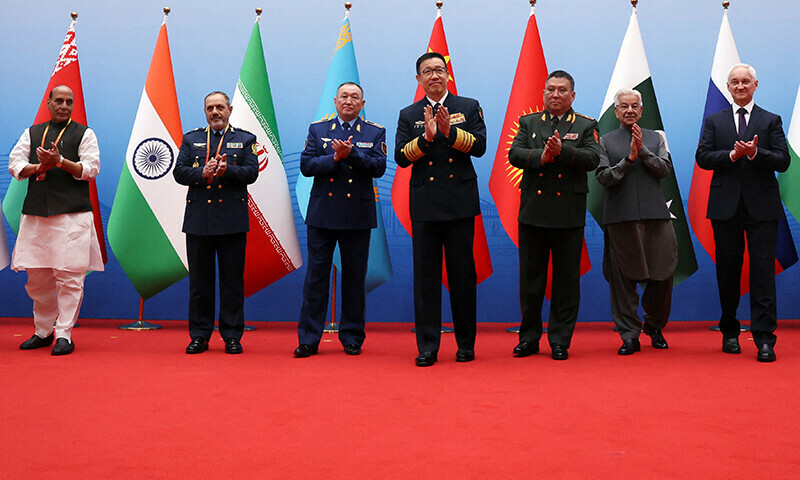
By Nitya Chakraborty India’s total diplomatic isolation was in show in the Shanghai Cooperation Organisation (SCO)’s defence ministers meet in Qingdao city in China on June 25 and 26 when a joint statement was prepared calling upon the members to jointly fight terror but there was no mention of Pahalgam killings on April 22 while […]

Santos has granted a six‑week exclusive due‑diligence period to a consortium led by Abu Dhabi’s National Oil Company, signalling serious progress towards its A$36.5 billion takeover proposal.

The consortium, comprising ADNOC’s investment arm XRG, Abu Dhabi Development Holding Company and private equity investor Carlyle, has placed an all‑cash offer of A$8.89 per share—representing a roughly 28 per cent premium on Santos’s previous closing price. Santos’s board is prepared to endorse the deal, pending satisfactory outcomes from due diligence, no better competing bids and approval by an independent fairness expert.

Should the offer proceed, it would mark Australia’s largest-ever all‑cash corporate takeover and rank among the top three transactions nationally—holding an enterprise value near A$36.4 billion.

The acquisition targets Santos’s LNG assets, including Australia’s Gladstone and Darwin facilities, plus substantial interests in Papua New Guinea’s LNG project and the forthcoming Papua LNG development. XRG aims to build an integrated gas and LNG portfolio capable of delivering 20–25 million tonnes annually by 2035.

Adhering to regulatory requirements, the consortium has signed confidentiality agreements and secured exclusive negotiating rights for this due‑diligence phase.

Santos’s management is forecasting a binding scheme implementation agreement before enabling a shareholder vote needing at least 75 per cent support, as per Australian scheme‑of‑arrangement rules. Shareholder approval will depend on a legal and financial assessment of the offer’s fairness.

While the consortium has pledged to maintain Santos’s Adelaide headquarters, preserve local employment, and continue momentum on major projects like the Barossa LNG development and Moomba carbon‑capture initiative, significant regulatory scrutiny lies ahead.

National oversight will involve multiple bodies: Australia’s Foreign Investment Review Board, ACCC, ASIC, and National Offshore Petroleum Titles Administrator; Papua New Guinea’s Securities and Competition commissions; and the US Committee on Foreign Investment due to Santos’s cross-border interests.

Analysts caution that the central risk is FIRB rejection, given Santos’s control over critical gas infrastructure. Potential remedies, like spinning off assets, may invite legal and decommissioning complexities.

South Australian state officials, including Premier Peter Malinauskas and Energy Minister Tom Koutsantonis, have highlighted the importance of protecting domestic jobs, the company’s base, and energy security—leveraging recent legislative powers to oversee licence transfers.

The political backdrop complicates matters, with Treasurer Jim Chalmers in caretaker mode ahead of a potential election. His decision will pivot on FIRB advice and the national interest implications.

Santos has endured pressures in recent years, including a near‑16 per cent drop in annual profit and a 41 per cent dividend cut in 2024. It also abandoned merger negotiations with Woodside that would have created an A$80 billion energy entity.

The consortium’s revised offer follows an initial A$8.00 bid in March, raised to A$8.60 later that month, and now stands at A$8.89—reflecting sustained negotiations and valuation uplifts. Should the agreement proceed, final receipt of regulatory and shareholder clearances could extend into early 2026.

This transaction underscores ADNOC’s growing appetite for strategic LNG assets in the Asia‑Pacific region and exemplifies broader Middle Eastern investment trends in global energy infrastructure. The outcome will influence the balance of power in Australia’s evolving LNG market and set significant precedents for future foreign investment decisions.

HONG KONG SAR – Media OutReach Newswire – 25 June 2025 – AIA Hong Kong announced the launch of Wealth Generation (“the Plan”), a bespoke life insurance plan designed exclusively for high-net-worth (HNW) individuals. This Plan enables customers to capitalise on wealth creation opportunities in today’s dynamic market while fostering long-term prosperity through strategic legacy planning. The Plan features multiple market-first^ legacy planning options, a rare-in-market* Flexi […]

Donald Trump’s financial disclosure for the 2024 calendar year reveals more than $600 million in gross income and at least $1.6 billion in assets, offering a detailed window into the former president’s expansive business empire and the diversification of his revenue streams. The filing, submitted on 13 June 2025, highlights a sharp rise in earnings derived from cryptocurrency ventures, numerous golf and hospitality properties, global licensing agreements, and an […]

Strategy has bolstered its position as the largest corporate holder of Bitcoin by adding 1,045 BTC to its treasury on 9 June 2025, spending approximately $110.2 million at an average price of $105,426 per coin. That brings its total above 582,000 BTC, acquired at an average cost of roughly $70,086 — boosting its 2025 yield on Bitcoin to 17.1%, according to an announcement by chairman Michael Saylor.

The firm’s treasury now carries an estimated investment value of $40.79 billion. The latest acquisition is part of a relentless buying campaign that has seen the company accumulate tens of thousands of Bitcoins throughout the year. In late May, the group purchased an additional 4,020 BTC for $427 million, reaching 580,250 BTC by 26 May. Earlier that month, after a series of equity and debt raises, it added more than 300,000 BTC during Q1.

The corporate Bitcoin treasury strategy is underpinned by a multi‑layered capital stack designed to finance under market conditions without diluting shareholders or relinquishing control. This includes convertible debt, preferred stock instruments offering fixed yields with optional conversion to equity, and common shares. Analysts describe it as a breakthrough financial “operating system” that converts fiat capital into Bitcoin exposure at scale.

According to Bloomberg‑sourced commentary in May, the firm’s approach involves at‑the‑market offerings in both equity and preferred instruments, supplemented by cash flow and convertible debt—without ever selling Bitcoin. Q1 financial results reported a Bitcoin yield of 13.7% by the end of March and BTC gains of $5.8 billion on holdings of 553,555 BTC, prompting an increase of its annual yield target from 15% to 25%.

As bitcoin markets rally and institutional demand grows, Strategy has signalled that this buying spree will continue. Saylor told CNBC that with just approximately 450 BTC of daily supply entering the market—and that institutional treasuries consuming the majority—long-term projections see Bitcoin appreciating by about 30% annually over the next two decades. He projected a price of $13 million per coin by 2045 under this trajectory.

The firm’s outstanding holdings have prompted renewed attention on its financial structure. Bitcoin magazine highlighted how Strategy’s preferred stock offerings—BRF, BRK, and STRF—are tailored to different investor profiles, from conservative to yield-seeking, all channelled into financing additional Bitcoin accumulation without asset sales.

Meanwhile, market watchers anticipate that Strategy’s aggressive acquisition strategy may amplify the broader institutional bull thesis. One newsletter noted that as stock markets gain momentum during quarter-end, portfolio rebalancing often favours risk assets—potentially reinforcing demand for Bitcoin if equities outperform bonds.

Looking deeper into the timeline reveals that Strategy’s Q1 momentum included over $7.7 billion in net proceeds from equity issuances, along with a further $2.3 billion by late April, fueling Bitcoin purchases. The company also embraced a change in accounting methodology from cost to fair value at the beginning of 2025, which triggered a $12.7 billion adjustment to retained earnings; however, the quarter closed with a $5.9 billion unrealised loss on digital assets.

Despite the volatility, management remains confident. The effective yield on BTC holdings is now over 17% year‑to‑date—an outcome of continued accumulation and price appreciation.

Regulatory and competitive landscapes are evolving. Analysts at Bitcoin magazine have pointed to Strategy’s model as a blueprint for corporations seeking Bitcoin exposure without compromising control or shareholder value. Other public entities are entering the fray: one asset management firm completed a €300 million preferred issuance in Europe to build its own Bitcoin reserves.

Still, critics caution that the firm’s heavy reliance on debt and preferred stock raises questions about leverage and long-term liquidity. Strategy’s instruments are designed with structured priorities—from senior convertible notes deep down to common equity—potentially insulating Bitcoin holdings—but this structure also introduces obligations such as dividends and conversion terms.

Bitcoin’s price is hovering above $105,000, near all-time highs, sustaining Strategy’s value gains since the start of the year. If market momentum continues, on‑chain metrics suggest the company may keep adding to its stash throughout the summer, though any pullbacks or shifts in risk appetite by institutional investors could affect equity valuations and rebalancing flows.

Strategy’s model has sparked imitation. A recent financing round raised $710 million in a corporate Bitcoin treasury fund in the US, marking the next wave of treasury diversification. As public companies vie to distinguish themselves, Strategy remains at the forefront, backed by a unique capital structure designed to sustain Bitcoin acquisitions through market cycles.

As of 9 June 2025, Strategy maintains its stance that it will continue to leverage multiple instruments—including equity, preferred stock, convertible debt and operational cash—to support Bitcoin accumulation. With its current holdings approaching $41 billion at cost and a yield of over 17%, it sits poised to exploit any volatility, while its financial apparatus attracts investor scrutiny and racetrack comparisons to traditional bond markets.

HONG KONG SAR – Media OutReach Newswire – 9 June 2025 – Generali Hong Kong announces the launch of LionAchiever Elite (the “Plan”), a new flagship whole life savings and life insurance plan that offers customers high potential returns¹ with a short 2-year premium payment term, while also providing all-in-one legacy planning. Designed to support both wealth accumulation and legacy planning, the plan empowers customers to achieve […]

The Kenanga Alternative Series: Global Real Assets Fund offers investors exposure primarily to global real estate, precious metals, and commodities by employing proprietary investment models and advanced algorithms. KUALA LUMPUR, MALAYSIA – Media OutReach Newswire – 3 June 2025 – Kenanga Investors Berhad (“Kenanga Investors“) has announced the launch of the Kenanga Alternative Series: Global Real Assets Fund (“KASGRAF“), a new addition to its Kenanga Alternative Series […]

Strategy, the enterprise software firm turned cryptocurrency powerhouse, has announced plans to issue 2.5 million shares of its newly minted 10% Series A Perpetual Stride Preferred Stock , aiming to raise $250 million to expand its Bitcoin reserves. The offering, priced at $100 per share, underscores the company’s unwavering commitment to Bitcoin as a central asset in its corporate treasury.

The proceeds from this offering are earmarked for general corporate purposes, prominently including the acquisition of additional Bitcoin and bolstering working capital. This move aligns with Strategy’s aggressive investment approach under the leadership of Chairman Michael Saylor, who has been a vocal proponent of Bitcoin’s potential as a long-term store of value.

The STRD shares are designed to offer non-cumulative cash dividends at an annual rate of 10%, payable quarterly, contingent upon declaration by the company’s board. Notably, if dividends are not declared in a given period, they will not accumulate, and the company is not obligated to compensate for missed payments in the future. This structure provides Strategy with financial flexibility while offering investors a potentially attractive yield.

Strategy’s latest offering follows a series of similar financial maneuvers aimed at increasing its Bitcoin holdings. The company has previously issued other classes of preferred stock, including ‘Strife’ and ‘Strike’, as part of a broader strategy to leverage financial instruments for cryptocurrency acquisition. These initiatives have collectively contributed to Strategy amassing over 580,000 Bitcoins, valued at approximately $40.61 billion, solidifying its position as the largest corporate holder of Bitcoin.

The company’s stock performance has been closely tied to Bitcoin’s price movements, reflecting the market’s perception of Strategy as a proxy for Bitcoin investment. Over the past year, Strategy’s shares have experienced significant volatility, mirroring the fluctuations in the cryptocurrency market. Despite this, the company’s bold investment strategy has garnered attention from both institutional and retail investors seeking exposure to Bitcoin through traditional financial instruments.

While Strategy’s approach has been lauded by some for its innovation and alignment with emerging financial trends, it has also faced scrutiny and legal challenges. The company is currently contesting a class-action lawsuit alleging misleading statements regarding its Bitcoin investment strategy. Nevertheless, analysts from firms such as BTIG and TD Cowen have maintained positive outlooks on Strategy, citing the company’s strategic positioning and potential for long-term growth.

The introduction of the STRD shares represents Strategy’s continued efforts to integrate cryptocurrency into its corporate structure and financial operations. By offering a preferred stock with a substantial dividend yield, the company aims to attract investors interested in both fixed-income returns and exposure to the cryptocurrency market. This move further blurs the lines between traditional finance and digital assets, highlighting the evolving landscape of corporate investment strategies.

VISHNU RAJA
RYO YAMADA
HITORI GOTOH
IKUYO KITA