Saudi Arabia has moved to reassure global energy markets that it will remain a dependable supplier as geopolitical shocks, shipping risks and divergent demand forecasts intensify pressure on producers and consumers. Minister of Energy Prince Abdulaziz bin Salman told the 29th St. Petersburg International Economic Forum that stability in the energy sector had become an urgent global requirement. “We are a resilient energy supplier; we have been […]
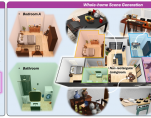
Kairos-HomeWorld is purpose built for embodied intelligence and represents the first unified framework capable of generating a complete, fully interactive home environment from a single text prompt. Extending indoor scene generation beyond individual rooms, it enables whole-home simulation in which every object is fully manipulable within an integrated simulation engine.
Kairos-HomeWorld employs a four-stage hierarchical architecture encompassing floorplan generation, 2D-to-3D lifting, recursive refinement, and manipulable object placement. This approach enables the production of globally coherent, physically accurate, and simulation-ready scenes. Each environment contains more than 15 manipulable objects and achieves a Footprint Object Density of 4.16, the highest among compared methods.
The accompanying open-source dataset is purpose-built for Chinese households, pairing 300,000 real residential floor plans with 5,000 fully furnished, simulation-ready homes and 50,000 physics-enabled interactive object assets. Already deployed in ACE ROBOTICS’ daily robot training, it significantly accelerates the simulation-to-reality transfer cycle.
SHANGHAI, CHINA – Media OutReach Newswire – 5 June 2026 – ACE ROBOTICS, in collaboration with the Multimedia Laboratory at The Chinese University of Hong Kong (CUHK) and Shenzhen Loop Area Institute, today announced the open-source release of Kairos-HomeWorld, the industry’s first unified World Model framework capable of generating full home-scale, object-level interactive 3D environments from a single text prompt. The solution addresses longstanding limitations in indoor scene generation, which has typically been restricted to single-room outputs with weak global consistency and limited interactivity. Kairos-HomeWorld overcomes these constraints by delivering structurally coherent, physically plausible, and functionally complete residential environments. These high-fidelity, large-scale simulations provide a robust foundation for advancing embodied intelligence applications and accelerating real-world robot training.
The long-term vision for embodied intelligence is the home environment. However, residential settings are inherently diverse and highly personalized, requiring robots to be trained across a broad range of realistic and differentiated scenarios before they can reliably operate in even a single household. High-fidelity simulation offers the most practical pathway to achieving this at scale, yet existing approaches typically involve a trade-off: synthetic environments lack realism, while scanned real-world scenes offer limited interactivity. Kairos-HomeWorld, together with its accompanying dataset, is designed to bridge this gap, delivering both realistic and interactive environments within a unified framework.
A four-stage architecture for whole-home, object-level generation Conventional approaches to indoor scene generation remain constrained to single-room outputs, often exhibiting weak global consistency, frequent physical inaccuracies, and limited or no interactivity. Kairos-HomeWorld takes a fundamentally different approach. It decomposes whole-home generation into a structured, four-stage process, redefining the underlying architectural paradigm from the ground up.
Stage 1 — Floor Plan Generation. A K-D tree-based approach translates real-world floor plans into a hierarchical text representation that can be efficiently processed by large language models (LLMs). This method mitigates common issues in conventional layout generation, including room overlaps and fragmented topologies, resulting in more coherent and structurally consistent spatial configurations.
Stage 2 — 2D-to-3D Lifting & Furniture Layout Generation. A “top-down global initialization combined with a first-person detail walkthrough” approach anchors the process to the 3D building shell generated in Stage 1. This methodology mitigates the geometric drift commonly associated with conventional 2D-to-3D lifting techniques, enabling more stable and spatially consistent scene generation.
Stage 3 — Recursive Refinement. A fine-tuned vision-language model performs iterative validation and correction, automatically identifying and resolving physical inconsistencies, such as obstructed doorways or object collisions. This recursive process materially reduces spatial errors, achieving among the lowest reported furniture-collision rates in the industry.
Stage 4 — Manipulable Object Placement. A surface-centric placement algorithm assigns each object detailed physical properties, including material composition, density, friction, and structural support relationships. Each generated scene incorporates an average of more than 15 manipulable objects and achieves a Footprint Object Density (FOD) of 4.16, a metric reflecting the concentration of items across furniture surfaces. All objects are natively compatible with simulation engines, enabling direct interaction for tasks such as grasping, movement, and stacking.
The resulting environments move beyond “viewable but not actionable” outputs. Their coherent spatial structure enables seamless, continuous navigation across multiple rooms, while objects embedded with realistic physical properties allow robots to simulate complex household tasks end-to-end. Taken together, this approach addresses key limitations in existing data pipelines, resolving the scarcity of high-quality 3D simulation data, the lack of realism in synthetic environments, and the limited interactivity of scanned scenes within a single unified framework.
The dataset: 300,000 real floor plans, 5,000 fully interactive homes, built for Chinese households ACE ROBOTICS and CUHK are open-sourcing a dataset of 300,000 structurally annotated residential floor plans, sourced from real-world listings and processed through a multi-stage automated pipeline. The pipeline vectorizes and labels key spatial elements, including door and window positions, room geometry, functional zoning, and connectivity. By comparison, widely used benchmarks such as RPLAN and ResPlan contain approximately 80,000 and 17,000 floor plans, respectively, underscoring the scale and comprehensiveness of the Kairos-HomeWorld dataset.
Building on this foundation, the dataset also includes 5,000 fully furnished residential environments, each featuring a complete furniture layout and an average of more than 15 physics-enabled, manipulable objects, powered by the PhysX-Omni model. All assets are sim-ready and can be directly imported into a simulation engine, enabling immediate use in interactive training scenarios.
Most existing open indoor-scene datasets are centered on North American and European residential formats, typically featuring open-plan kitchens, the absence of service balconies, and layouts and design elements that capture only a narrow segment of global housing. As a result, robots trained on these datasets often exhibit limited transferability when deployed in environments outside their scope. Kairos-HomeWorld ‘s dataset is purpose-built for Chinese households, with deliberate coverage of historically under-represented housing typologies. It spans a wide range of unit sizes, from approximately 30 m² (around 320 sq ft) studio apartments to residences exceeding 200 m² (approximately 2,150 sq ft). The dataset accurately reflects key architectural features common in these settings, including north-south cross-ventilated layouts, enclosed kitchens, dedicated service balconies, wet-and-dry-separated bathrooms, and entryway storage, as well as the irregular room configurations often found in older housing stock.
The dataset is being openly released to both academic and industry communities. Going forward, the team plans to expand its scope to include additional regions, interior styles, and interaction scenarios, further lowering barriers to real-world-ready training for embodied intelligence.
See it in action: one prompt to a fully interactive home Kairos-HomeWorld runs the full end-to-end pipeline, from initial text input to a fully interactive home environment, delivering global spatial consistency, physical realism, and seamless interactivity from a single prompt.
The system begins with a single-line prompt: “Generate a 90 m² (approximately 970 sq ft) two-bedroom apartment in neo-Chinese style.” Leveraging real floor plan data and its K-D tree representation, Kairos-HomeWorld first constructs an empty spatial layout aligned with real-world living patterns, incorporating cross-ventilation and well-defined functional zoning. Building on this foundation, a hierarchical “global layout plus first-person detail” approach furnishes the environment with stylistic coherence, while a PhysX-Omni rendering pass assigns full physical properties to all surfaces and objects, including articulated behavior, ensuring the scene is fully interactive and sim-ready.
A single natural-language instruction, “tidy the whole home”, is decomposed by the robot into a variety of discrete sub-tasks, executed sequentially along a complete navigation path spanning the living room, bedrooms, kitchen, bathroom, and dining area. The robot recognizes objects, plans efficient routes, and performs precise manipulation tasks, including articulated-object interactions for opening refrigerator and cabinet doors, fluid interactions for pouring laundry detergent, soft-body interactions for drawing curtains, irregular-object interactions for grasping apples, and gravity-based physical interactions for placing snacks.
Conventional simulation environments typically support navigation-focused training in isolation. By contrast, Kairos-HomeWorld integrates globally consistent spatial structures with objects that embody realistic physical properties. This enables robots to interact naturally with more than 15 object types, accurately modeling real-world dynamics such as collision, gravity, and friction, and to rehearse the full lifecycle of complex household tasks entirely within a virtual environment.
Across the industry, the same structural bottleneck, the scarcity of home-scale training data, is being addressed through multiple approaches. For example, Figure AI’s collaboration with Brookfield focuses on collecting human activity data across more than 100,000 residential units. Kairos-HomeWorld addresses this challenge through on-demand synthetic generation, delivering scalable training environments enhanced with object-level physical realism, capabilities that real-world data capture alone cannot fully provide.
In contrast, Kairos-HomeWorld delivers significantly lower costs and higher efficiency for household robot training. Powered by its world model, it can programmatically generate diverse Chinese home simulation scenes and physics-enabled interactive objects at scale.
Robots can complete a full range of household tasks training entirely within the virtual environment. New scene generation incurs near-zero marginal cost, eliminating substantial real-world testing expenses such as site operation and maintenance and furniture damage. Meanwhile, unconstrained by the limited stock of physical residential properties, it outperforms real-world data collection approaches in both training efficiency and scalable expansion.
Kairos-HomeWorld is already deployed in ACE ROBOTICS’ embodied intelligence training workflows, enabling full-pipeline simulation of long-horizon household tasks, including cross-room navigation and multi-room tidying. By allowing robots to rehearse complete task sequences in a virtual environment, the platform significantly shortens the simulation-to-reality transfer cycle. This approach lowers barriers to developing embodied intelligence systems and supports the accelerated, large-scale deployment of home robotics, particularly within the Chinese market. Kairos-HomeWorld is now available on GitHub.Hashtag: #ACEROBOTICS
The issuer is solely responsible for the content of this announcement.
About ACE ROBOTICS
Equipping robots with intelligent “brains” and engaging “souls”.
ACE ROBOTICS is a pioneering robotics company dedicated to advancing the field of embodied intelligence. Through breakthrough technological innovations and deep insights into embodied intelligence scenarios, we aim to empower robots with the ability to autonomously understand and explore the physical world, thereby accelerating their commercial implementation.
The company pioneered the ACE R&D paradigm and built a vision-based “environmental data engine, real-world cognition, embodied interaction generalization” technology chain. Using full spatiotemporal and multi-perspective environmental capture as its engine, along with Kairos 3.0 – China’s first open-source and commercially applicable world model – plus the Embodied Foundation Model as its technical backbone, ACE ROBOTICS addresses core industry challenges such as data scarcity, common sense gaps, poor generalization, and limited versatility. Simultaneously, the company unveiled its flagship A1 Embodied Super Brain Module, accelerating the large-scale commercial deployment of embodied intelligence across diverse scenarios.
ACE ROBOTICS is both a technology pioneer and an ecosystem builder. Through strategic cooperation with top hardware manufacturers, cloud service providers, and vertical scenario partners, we have broken through the “model-hardware-scenario” industrial deadlock, providing standardized and customized solutions that are driving the development of China’s embodied intelligence industry.
Capital inflows into the UAE are holding steady as investors adopt tougher due diligence standards rather than retreating from the market, with relative stability, low taxation and business-friendly regulation reinforcing the country’s position as a regional safe haven. Archers Valuation & Advisory said the market was not showing signs of capital withdrawal despite heightened regional uncertainty, but investors and lenders were becoming more selective in the way […]
Thailand’s richest man Sarath Ratanavadi is preparing a 140 billion baht expansion through Gulf Development Pcl over five years, placing data centres, digital infrastructure and power supply at the centre of one of Southeast Asia’s most ambitious corporate bets on artificial intelligence demand.
The plan, worth about $4.3 billion, reflects a sharp turn by Gulf from its traditional base as a power producer into a broader infrastructure group linking electricity generation, telecommunications, cloud services and industrial logistics. The investment push comes as Thailand seeks to position itself as a regional data hub, helped by rising demand for cloud computing, artificial intelligence workloads and data-localisation capacity across Southeast Asia.
Gulf’s strategy is built around a simple commercial premise: AI facilities need vast, reliable and increasingly low-carbon electricity. Data centres are among the most power-intensive assets in the digital economy, and operators are under pressure to secure stable energy supply while meeting sustainability commitments from global technology clients. Gulf’s existing position in gas-fired power, renewable energy and utilities gives it an advantage that pure technology infrastructure firms may struggle to match.
Sarath, Gulf’s chief executive and controlling figure, has spent years reshaping the group from a conventional energy developer into a conglomerate with exposure to telecoms, satellites, digital platforms and cloud infrastructure. The merger of Gulf Energy Development and Intouch Holdings created a larger listed platform linked to Advanced Info Service, Thailand’s biggest mobile operator, and Thaicom, the satellite company. That structure gives Gulf access to telecom traffic, enterprise clients and digital distribution channels that can support its data-centre ambitions.
The investment programme is expected to support new data-centre capacity, related infrastructure and power projects needed to serve hyperscale and enterprise customers. Gulf has already moved into the sector through partnerships involving global technology names and regional operators, while its digital arm has explored cloud and AI services designed for corporate and government clients. The company’s first major data-centre project has become a reference point for its expansion into facilities that can host high-density computing workloads.
Thailand’s broader investment environment has also shifted in Gulf’s favour. Authorities have approved large-scale data infrastructure projects from global technology players, including server and data-processing investments across Bangkok, Samut Prakan and Chachoengsao. Google, Amazon Web Services, Microsoft and ByteDance-linked operations have all announced or pursued major commitments in the country, intensifying competition but also validating Thailand’s role in the regional digital economy.
For Gulf, the opportunity lies not only in renting data-centre capacity but also in selling bundled infrastructure: power, connectivity, cloud access and long-term operational reliability. That model could create recurring income and reduce dependence on regulated returns from power generation. It may also help Gulf deepen its relationship with large technology clients seeking local partners that understand land, energy approvals, grid constraints and domestic regulatory requirements.
The group’s financial position gives it room to move, though the scale of the programme will be closely watched by investors. Gulf reported strong first-quarter earnings for 2026, helped by its energy operations and profit contribution from Advanced Info Service. Revenue growth and core profit gains have strengthened confidence in its ability to finance new projects, but data centres require heavy upfront spending and returns can depend on utilisation rates, long-term contracts and energy costs.
The timing is also sensitive. Across Asia, governments are competing for data-centre investment while confronting pressure on power grids, water use and land availability. Singapore’s cautious approach to new data-centre capacity has encouraged developers to look at Malaysia, Thailand, Indonesia and Vietnam, but each market faces its own constraints. Thailand has industrial land, policy incentives and improving connectivity, yet grid readiness and clean-energy availability remain decisive issues for hyperscale clients.
Gulf’s renewable energy targets are likely to form part of its sales pitch. The company has set out plans to raise the share of renewables in its generation portfolio and reduce carbon intensity, while continuing to rely on gas as a stable baseload fuel. Its long-term LNG supply arrangements also point to a strategy that balances energy security with transition commitments, even as customers demand cleaner electricity for digital operations.
Sarath’s expansion plan underscores how AI is redrawing corporate strategy beyond Silicon Valley. Energy groups, telecom operators and infrastructure funds are increasingly competing for the physical assets behind the digital boom. Gulf’s bet is that Thailand’s AI economy will be shaped as much by power plants, fibre networks and industrial sites as by software models and cloud applications.
Greenlogue/AP Dubai Electricity and Water Authority has raised clean energy’s share of its total production capacity to 21.5%, strengthening the emirate’s shift towards a lower-carbon electricity system as demand for power continues to rise across residential, commercial and industrial sectors. Saeed Mohammed Al Tayer, Managing Director and Chief Executive Officer of DEWA, said the increase reflects Dubai’s long-term strategy to align infrastructure growth with environmental sustainability, […]
Arabian Post Staff -Dubai Computex 2026 has turned the personal computer market into a three-way contest over AI laptops, handheld gaming and mid-range graphics, with Nvidia, Intel and AMD using Taipei to push new silicon into segments long shaped by Apple’s Mac ecosystem and AMD-powered portable consoles. Nvidia’s RTX Spark platform drew the sharpest attention after the company positioned it as a Windows-based alternative for developers, creators […]
By Dr. Gyan Pathak The preliminary version of the OECD Outlook released on June 3, 2026 has projected the real GDP of India to grow by 6.3% during the FY 2026-27, which is a sharp decline from the robust growth rate of 7.8 per cent year-on-year in the quarter ending in December 2025 (Q3 FY2025–26), […]
Elon Musk will probably get the $86 billion he wants from the SpaceX IPO. The harder question is whether investors will still be as enthusiastic about the company a year from now. Seeking a valuation of $1.78 trillion, SpaceX is attempting something unprecedented. If successful, the offering will become the largest IPO in history and instantly rank among the biggest corporate fundraising events ever seen. Many investors […]
Romanian President Nicușor Dan is preparing to nominate Eugen Tomac as prime minister, seeking to break a month-long political deadlock and restore fiscal direction in one of the European Union’s most strained economies. Tomac, a member of the European Parliament and leader of the People’s Movement Party, has emerged as the presidency’s preferred option after talks among mainstream parties failed to produce a stable governing formula. His […]
MMC Port Holdings Sdn Bhd has approached prospective bidders for a minority stake in the business, shifting attention from a delayed public listing to a private transaction that could test investor appetite for one of Southeast Asia’s most significant port platforms. The move follows the postponement of an initial public offering that had been expected to rank among Malaysia’s largest listings in more than a decade. The […]
Amazon MGM Studios and Amazon Games are set to take a larger role in future James Bond video games, shifting the franchise away from the self-publishing model used by IO Interactive for 007 First Light and placing the next stage of Bond’s gaming strategy more firmly under Amazon’s expanding entertainment empire. The move follows Amazon MGM Studios’ acquisition of creative control over the James Bond franchise in […]
Arabian Post Staff -Dubai UiPath has secured certification from the Dubai Electronic Security Center for its Automation Cloud Commercial UAE region, clearing a key compliance hurdle for wider deployment of its automation and artificial intelligence services across Dubai’s government, semi-government and regulated enterprise sectors. The certification places UiPath’s UAE cloud operations under the DESC Cloud Service Provider Security Standard, a framework required for cloud providers serving Dubai […]
Arabian Post Staff -Dubai Microsoft has tested a wearable AI badge for office workers as part of a wider effort to move artificial intelligence agents beyond laptops, phones and traditional software applications. The device was shown at Microsoft Build 2026 in San Francisco under Project Solara, a new chip-to-cloud platform designed for hardware that runs AI agents instead of conventional apps. The badge concept resembles a workplace […]
Collaboration will support efforts to identify and remediate software vulnerabilities using advanced AI capabilities
HONG KONG SAR – Media OutReach Newswire – 4 June 2026 – TrendAI™, the enterprise AI security leader from Trend Micro Incorporated (TYO: 4704; TSE: 4704), today announced its participation in Project Glasswing, an initiative focused on helping organizations identify and address vulnerabilities in critical software systems.
As part of the program, TrendAI™ will use Anthropic’s Claude Mythos Preview to support the review and analysis of software code, helping threat intelligence researchers turn accelerated vulnerability discovery into coordinated disclosure, prioritized remediation, and measurable risk reduction through vulnerability shielding and virtual patching.
AI is dramatically accelerating vulnerability discovery. TrendAI™ views this as a positive signal for the industry – it is part of the broader, collaborative ecosystem TrendAI™ has been actively contributing to for decades alongside organizations like Anthropic.
Rachel Jin, Chief Platform and Business Officer, Head of TrendAI™: “We’re aligned with Anthropic’s goals of using AI to make all software more secure. Organizations increasingly depend on software that operates at tremendous scale and supports critical business functions. Project Glasswing represents an important opportunity to explore how advanced AI can help software providers identify vulnerabilities earlier and improve the security and resilience of the systems customers depend on every day.”
TrendAI™ joins a growing community of organizations participating in Project Glasswing to better understand how frontier and advanced AI models can support defensive security efforts and improve the security of critical software infrastructure.
Insights gained through the program will contribute to informing the broader industry efforts to strengthen the security of the digital ecosystem.
The issuer is solely responsible for the content of this announcement.
About Anthropic
Anthropic is an AI safety and research company dedicated to building reliable, interpretable, and steerable AI systems. Its Claude family of models enables advanced capabilities across a wide range of applications, including code understanding and security analysis.
About TrendAI™
TrendAI™, the global AI security leader and enterprise business unit of Trend Micro, empowers organizations with full AI visibility and consolidated security that inspires confidence, drives innovation, and eliminates risk. Trusted by the largest enterprises and governments across 185 countries, TrendAI™ secures the entire organization, from identities to infrastructure to data. Global Fortune 500 companies rely on TrendAI™ to cut risk and stop threats up to three months earlier, powered by world-leading threat and attack intelligence. Through deep ecosystem partnerships with market leaders like NVIDIA, Anthropic, AWS, Google, and Microsoft, TrendAI™ empowers your organization to securely drive forward at the speed of AI. AI Fearlessly. Learn more at trendaisecurity.com.
Gas engine manufacturer Innio has raised $2.43 billion in a US initial public offering, pricing an upsized share sale at the top of its marketed range as investors continue to chase companies tied to the electricity demands of artificial intelligence. The Munich-based distributed energy group priced 90 million shares at $27 each, above the 75 million shares originally planned and at the upper end of the $24 […]
Arabian Post Staff -Dubai A divided US House of Representatives has approved a war powers resolution directing President Donald Trump to end American military involvement in Iran, handing the White House a symbolic but politically pointed rebuke as unease grows on Capitol Hill over the scope and duration of the conflict. The measure passed 215-208 on Wednesday, with four Republicans breaking ranks to join Democrats in support. […]
HONG KONG SAR – Media OutReach Newswire – 4 June 2026 – AECOM, the trusted global infrastructure leader, and the Urban Land Institute (ULI), today announced the launch of the Asia Pacific Infrastructure Innovation Index 2026, a new thought leadership report examining how the infrastructure industry across the region is prioritizing innovation in response to stakeholders’ needs, increasing system complexity, operational pressures and evolving delivery challenges.
AECOM and Urban Land Institute launch inaugural Asia Pacific Infrastructure Innovation Index, highlighting region’s evolving infrastructure innovation priorities.
Developed in collaboration between AECOM and ULI, the report brings together perspectives from stakeholders across infrastructure, government, utilities, investment, planning and development sectors. It draws on a survey of more than 100 senior infrastructure professionals in Asia Pacific, alongside in-depth interviews with industry leaders. As the first edition of the Index, it establishes a baseline for understanding how infrastructure innovation is currently being prioritized and delivered across the region.
“This report highlights how organizations are moving beyond ideas and applying innovation in practical ways to improve delivery, resilience and system performance,” said Ian Chung, chief executive of AECOM’s Asia region. “Infrastructure leaders across Asia Pacific are responding to growing complexity by strengthening digital capabilities, improving coordination across interconnected systems and focusing on long-term operational performance.”
“Our collaboration with AECOM reflects a growing recognition that infrastructure and real estate are increasingly interdependent,” said Alan Beebe, CEO Asia Pacific, ULI. “As cities in Asia Pacific evolve, infrastructure is no longer just a technical consideration, but plays a critical role in shaping how places function, grow and perform. Understanding how innovation is being applied in this context is essential for those involved in the built environment.”
Among the top ten takeaways highlighted in the report, three key themes emerged consistently across both the survey findings and interview insights: the role of AI in infrastructure systems, the integration and growing demands on energy systems, and the need to design and operate infrastructure for climate resilience. Together, these themes highlight a broader shift toward enhancing how infrastructure systems are developed and perform under increasingly complex, real-world conditions.
The issuer is solely responsible for the content of this announcement.
About AECOM
AECOM is the global infrastructure leader, committed to delivering a better world. As a trusted professional services firm powered by deep technical abilities, we solve our clients’ complex challenges in water, environment, energy, transportation and buildings. Our teams partner with public- and private-sector clients to create innovative, sustainable and resilient solutions throughout the project lifecycle — from advisory, planning, design and engineering to program and construction management. AECOM is a Fortune 500 firm that had revenue of $16.1 billion in fiscal year 2025. Learn more at aecom.com.
About the Urban Land Institute
The Urban Land Institute (ULI) is a non-profit education and research institute supported by its members. Its mission is to shape the future of the built environment for transformative impact in communities worldwide. Established in 1936, the Institute has more than 48,000 members worldwide and over 3,000 members in the Asia Pacific region representing all aspects of land use and development disciplines. For more information on ULI Asia Pacific, please visit asia.uli.org, or follow us on LinkedIn, Facebook, Instagram, X, and YouTube.
By K Raveendran Public anger has a strange way of finding symbols. Sometimes it gathers around a saintly figure in a white cap, sometimes around an unlikely political label that sounds almost like a joke until it begins to speak for a generation. The overwhelming response from Gen Z to the Cockroach party carries unmistakable […]
Bull and Hon Hai Technology Group, better known as Foxconn, will manufacture artificial intelligence and cloud infrastructure in Europe under a strategic partnership designed to strengthen the region’s computing supply chain and reduce dependence on external technology providers. The project will use Foxconn’s manufacturing base in Pardubice in the Czech Republic and Bull’s factory in Angers, France, to produce AI systems and related components for European AI […]
Anthropic has expanded access to Claude Mythos Preview to about 200 organisations, widening a controlled cybersecurity programme designed to help governments, companies and critical software maintainers find severe vulnerabilities before attackers can exploit them. The San Francisco-based artificial intelligence company is adding around 150 organisations to Project Glasswing, its gated initiative for defensive use of a frontier model that has drawn intense attention from technology companies, banks, […]
KUALA LUMPUR, MALAYSIA – Media OutReach Newswire – 3 June 2026 – MOKiN Malaysia, managed by Unipro Global Sdn Bhd, has launched its Safe Swap Programme, an initiative aimed at encouraging consumers to replace old or damaged charging accessories that may pose potential safety risks during daily use.
The programme is anchored by MOKiN’s TrueGround™ technology, a SIRIM-certified anti-leakage charging solution designed to help reduce electrical leakage risks during charging. As the world’s first Class-1 Anti-Leakage charger, MOKiN introduces an added layer of electrical safety protection that addresses a risk often overlooked in conventional charging products, which typically prioritise charging speed and power output.
The initiative comes amid growing concerns over electrical safety in Malaysian households. According to the Fire and Rescue Department, electrical-related issues accounted for 68% of building fire cases recorded between January and September 2024, with more than 3,000 residential fire incidents linked to electrical sources such as faulty wiring, damaged electrical equipment and overloaded circuits.
“Charging has become such a routine part of daily life that many people no longer pay attention to warning signs like overheating, exposed cables or tingling sensations during charging,” said Terry Lee Hup Boon, Founder of UNIPRO GLOBAL SDN BHD.
“Many consumers tend to focus on charging speed and convenience, but electrical safety is just as important. Our anti-leakage charging technology was developed to help address safety risks that are often overlooked in everyday charging, and through the Safe Swap Programme, we hope to encourage greater awareness of safer charging practices.”
Through the Safe Swap Programme, consumers can trade in old or damaged chargers from any brand and receive a complimentary MOKiN 20W charger, while stocks last.Consumers can participate in Safe Swap activations at the following events from 1 to 30 June 2026:
Switch World Event, Gurney Plaza, Penang (4-7 June 2026)
UR Festival Fair, Sunway Square, Selangor (11-14 June 2026)
In partnership with consumer electronics retailer Gajeto, MOKiN will also be running a free trade-in campaign at selected Gajeto outlets throughout the month of June, giving consumers additional opportunities to learn more about safer charging solutions and explore MOKiN’s range of anti-leakage charging products. Customers can bring any old charger, regardless of brand, and swap in for a brand-new MOKiN 20W charger at no cost, with no purchase required, while stocks last. Participating Gajeto locations include:
Gajeto IOI City Mall (6-7 June 2026)
Gajeto The Exchange 106 (13-14 June 2026)
Gajeto 1 Utama (20-21 June 2026)
Gajeto Setia City Mall (27-28 June 2026)
Consumers may also choose to upgrade to selected higher-watt charging models ranging from 33W to 140W at promotional prices throughout the campaign period.
The Safe Swap Programme reflects MOKiN’s ongoing effort to encourage safer charging habits and greater awareness around the condition of charging accessories used daily by consumers. Consumers are encouraged to bring in old, damaged or ageing chargers during the campaign period, particularly accessories showing signs such as overheating, exposed cables, loose connections or inconsistent charging performance. All traded-in chargers collected through the programme will be removed from circulation as part of the initiative.
Complimentary MOKiN 20W chargers are available on a first come, first served basis while stocks last. For more information, visit www.mokin.my. Hashtag: #mokinmalaysia #trueground #mokin #mokinmy #safeswap
The issuer is solely responsible for the content of this announcement.
Unipro Global Sdn Bhd
Malaysia’s dedicated distributor for the world’s leading consumer electronics accessories brands such as MOKiN, AUKEY, ESR, and Nakamichi. Based in Kuala Lumpur. We bring premium tech accessories to Malaysian consumers. At Unipro Global Sdn Bhd, we believe that quality tech accessories should be accessible to every Malaysian. We work closely with our brand partners to ensure the right products reach the right customers — at the right price.
Cyber espionage operators are using a newly documented Windows backdoor called HazyBeacon to target government networks in Southeast Asia, turning legitimate Amazon Web Services infrastructure into a covert command-and-control channel that can blend into ordinary cloud traffic. The activity, tracked as CL-STA-1020, has been linked to intelligence-gathering operations focused on sensitive state information, including material tied to tariffs, trade disputes and government policy discussions. Security researchers have […]
Greenlogue/AP Dairy processors can cut greenhouse gas emissions from liquid dairy lines by as much as 49% by modernising existing equipment rather than replacing entire production systems, a Tetra Pak assessment has found, pointing to a faster route for plants under pressure to lower costs, reduce waste and meet climate targets. The analysis, released from Lausanne, examined upgrades to chilled and ambient liquid dairy processing lines and […]
Snowflake has placed Anthropic’s Claude at the centre of its enterprise artificial intelligence push, using Summit 26 to show rising customer uptake inside Cortex AI while a $6 billion infrastructure commitment to Amazon Web Services reshapes the economics behind its expansion. The data cloud company said enterprises are increasingly deploying Claude through Snowflake Cortex AI to run governed AI agents on business data without moving sensitive information […]





 https://www.trendaisecurity.com
 https://www.linkedin.com/company/trendai-security
 https://x.com/trendaisecurity
 https://www.facebook.com/trendaisecurity/




 Instagram
 YouTube