

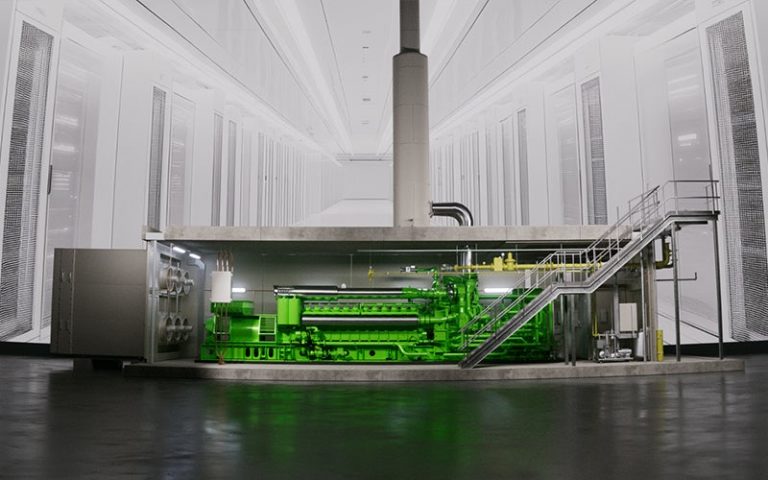
The Munich-based distributed energy group priced 90 million shares at $27 each, above the 75 million shares originally planned and at the upper end of the $24 to $27 range. The shares were sold by AI Alpine, the company’s principal shareholder, which is co-owned by funds managed by Advent International and the Abu Dhabi Investment Authority.
Innio is expected to begin trading on the Nasdaq Global Select Market under the ticker INIO, placing the company among a wave of infrastructure-linked listings seeking to benefit from strong demand for assets connected to data centres, grid resilience and electrification. The offering consists entirely of secondary shares, meaning Innio will not receive proceeds from the IPO.
The transaction values Innio at about $20 billion, based on the indicated valuation target set during the roadshow, and marks a significant exit window for Advent, which created the business after agreeing to buy General Electric’s distributed power unit for $3.25 billion in 2018. ADIA became a minority shareholder in 2023, giving the company a Gulf institutional investor base at a time when sovereign funds are increasing exposure to energy transition and digital infrastructure.
Goldman Sachs, J. P. Morgan and Morgan Stanley served as joint lead book-running managers for the offering. BofA Securities, Barclays and Citigroup were also part of the banking syndicate, alongside other bookrunners and co-managers. The underwriters have been granted an option to buy up to 13.5 million additional shares at the IPO price, less underwriting discounts and commissions.
The listing comes as public markets show stronger appetite for businesses positioned around AI infrastructure, even outside the software and semiconductor sectors. Data centre operators are facing heavy power requirements as cloud computing, generative AI and high-performance workloads increase electricity consumption. Grid connection delays in parts of North America and Europe have pushed operators to consider on-site and distributed power solutions, including modular gas engines, microgrids and hybrid systems.
Innio manufactures engines under the Jenbacher and Waukesha brands, serving customers in data centres, microgrids, grid stabilisation, industrial energy and gas compression. Its products are used where operators require fast-starting, flexible and scalable power generation, particularly in locations where grid access is constrained or where reliability is critical.
The company’s data centre exposure has expanded sharply. Annual data centre equipment order intake rose to $2.28 billion in 2025 from $27 million in 2023, making the sector one of Innio’s most closely watched growth engines. Broader equipment order intake reached $3.88 billion in 2025, while equipment backlog stood at about $3.6 billion at the end of that year and rose further in the first quarter of 2026.
Innio delivered revenue of about $2.64 billion in 2025, up more than a fifth from the previous year, with gross profit of about $912 million and net income of roughly $142 million. Its installed base is estimated at about 44 gigawatts, supported by a services business that provides maintenance, spare parts, overhauls and digital monitoring across engines already in operation.
The company has also sought to position its portfolio within the energy transition, highlighting engines capable of using alternative fuels, including hydrogen blends, depending on project design and fuel availability. That message is important for investors weighing the near-term attraction of natural gas generation against longer-term pressure to cut emissions from power systems.
Demand from data centres remains the central driver of the IPO narrative. Innio has disclosed large power infrastructure agreements, including a 2.3-gigawatt supply arrangement involving 92 power packs of 25 megawatts each, aimed at supporting major AI data centre power needs. Such deals illustrate why investors are treating distributed energy equipment as part of the wider AI supply chain rather than a conventional industrial segment.
The offering also shows how private equity owners are using improved equity market conditions to bring infrastructure-adjacent assets to public investors. After a subdued period for new listings, companies with exposure to AI, power, software and specialist industrial markets have found a more receptive audience, helped by stronger US equities and demand for growth stories with tangible revenue.
Risks remain. Innio’s growth depends partly on the pace of data centre construction, customer concentration, supply chain execution and regulatory treatment of gas-fired generation. Environmental scrutiny could intensify if large-scale on-site gas power expands faster than low-carbon alternatives. At the same time, the company’s established installed base, service revenues and manufacturing footprint give it a wider platform than a single-cycle equipment supplier.
Follow Arabian Post
Select Arabian Post as your preferred source on Google and MSN News for trusted business news and Arab politics and updates.



