Dogecoin climbed on Friday, extending a 24-hour advance that outpaced some larger digital assets and lifted sentiment across the meme-coin corner of the market, as traders responded to a burst in turnover and a broader recovery in risk appetite. Market trackers showed DOGE trading near 9.8 US cents on 17 April, with daily volumes above $2.5 billion and sharply higher than the previous day, pointing to […]
Trend Micro’s enterprise business accelerates its transformation as AI security category leader
HONG KONG SAR – Media OutReach Newswire – 17 April 2026 – TrendAI™, the enterprise AI security leader from Trend Micro Incorporated (TYO: 4704; TSE: 4704), today announced a strategic engagement with Anthropic, embedding Claude models across its platform to power agentic workflows, automation, AI-native security operations, and develop threat research to identify vulnerabilities in AI systems and infrastructure. TrendAI™ will use Claude to advance vulnerability discovery while ensuring coordinated action in real-world risk reduction.
Rachel Jin, Chief Platform and Business Officer, Head of TrendAI™: “We launched TrendAI™ to define the AI security category. This next phase is about scaling that vision globally, with leading partners like Anthropic. Our broad, strategic collaboration across research, defense, and innovation will define how AI is secured moving forward.”
TrendAI™’s use of Claude spans threat research, real-world risk reduction, platform innovation, and global go-to-market execution. This will operate across the full AI security lifecycle, from vulnerability discovery to automated defense and AI-native operations.
Ash Alhashim, Head of Cybersecurity GTM at Anthropic: “For 35 years, TrendAI™ has been at the forefront of cybersecurity. By using Claude to power TrendAI Vision One™ and initiatives like TrendAI™ Zero Day Initiative™ (ZDI) and Pwn2Own, TrendAI™ is advancing the next iteration of vulnerability discovery and reporting—and tilting the scales toward defenders.”
Focus areas include:
Advancing AI Threat Research: TrendAI™ is scaling its threat research to address the growing attack surface of AI, building on proven programs like Pwn2Own Berlin under TrendAI™ ZDI. This approach brings real-world vulnerability discoveries into AI systems, helping identify and address critical weaknesses before it reaches production environments.
Driving AI-Native Innovation: Anthropic’s Claude models will help power TrendAI™’s platform innovation, enhancing agentic workflows, automation, and AI-native security operations. This enables organizations to reduce noise, act faster, and scale security alongside AI adoption.
The announcement comes as TrendAI™ prepares to welcome over 600 cybersecurity leaders to its Spark Leadership Exchange in Phoenix, Arizona in May. Anthropic will join TrendAI™ on stage at the event alongside other industry leaders, reinforcing a shared commitment to shaping the future of AI security and engaging directly with global enterprise leaders.
The issuer is solely responsible for the content of this announcement.
About TrendAI™
TrendAI™, the global AI security leader and enterprise business unit of Trend Micro, empowers organizations with full AI visibility and consolidated security that inspires confidence, drives innovation, and eliminates risk. Trusted by the largest enterprises and governments across 185 countries, TrendAI™ secures the entire organization, from identities to infrastructure to data. Global Fortune 500 companies rely on TrendAI™ to cut risk and stop threats up to three months earlier, powered by world-leading threat and attack intelligence. Through deep ecosystem partnerships with market leaders like NVIDIA, Anthropic, AWS, Google, and Microsoft, TrendAI™ empowers your organization to securely drive forward at the speed of AI. AI Fearlessly. Learn more at trendaisecurity.com.
Alarm over the Strait of Hormuz is spilling far beyond the Gulf, sharpening attention on the Malacca Strait near Singapore as traders, shipowners and Asian governments weigh what a prolonged disruption in West Asian energy flows could mean for the region’s busiest maritime corridor. The immediate military confrontation is centred on Hormuz, where Iran has tightened restrictions and the United States has imposed a blockade on Iranian […]
Arabian Post Staff -Dubai Sequoia Capital has raised about $7 billion for a new fund, giving one of Silicon Valley’s best-known venture firms fresh firepower to back its largest and most expensive bets, especially in artificial intelligence, according to people familiar with the discussions. The fundraising marks the first major capital raise under the firm’s newer leadership era and arrives as investor appetite has swung sharply toward […]
By Dr. Gyan Pathak On the first day of the three-day Special Session – April 16 to April 18, 2026 – of the Parliament convened by the Prime Minister Narendra Modi led government, three legislations have been introduced seeking to change the electoral map of India. Lok Sabha Speaker Om Birla has said that there […]
Anthropic has rolled out Claude Opus 4.7, an upgraded version of its top broadly available artificial intelligence model, pitching it as a stronger tool for advanced software engineering just days after keeping its more powerful Mythos Preview behind tight access controls because of cyber-risk concerns. The move gives developers a more capable coding model while signalling that Anthropic is trying to balance commercial momentum with a more […]
Ukrainian municipal authorities and healthcare institutions have come under a coordinated wave of cyberattacks that security officials say was designed to steal sensitive information from web browsers and WhatsApp accounts, widening concern over espionage operations aimed at essential public services during wartime. The campaign, attributed by Ukraine’s Computer Emergency Response Team to threat cluster UAC-0247, struck local government bodies and municipal medical facilities, including clinical and […]
United Arab Emirates has won a seat on the World Food Programme’s Executive Board for the 2026–2028 term, giving it a direct role in shaping policy at the UN’s main food assistance agency as conflict, supply disruption and funding pressure deepen the global hunger crisis. The appointment places the country inside the WFP’s top governing structure at a moment when aid agencies are being forced to balance […]
Greenlogue/AP The UAE Ministry of Investment has signed a memorandum of understanding with China’s Jereh Group to develop an integrated clean energy and industrial platform in the Emirates, in a move that aligns industrial expansion with lower-carbon power and deeper commercial ties between Abu Dhabi and Beijing. The agreement was signed by Mohammad Abdulrahman Alhawi, Undersecretary at the Ministry of Investment, and Li Weibin, Executive President of […]
Cyber attackers are abusing the low-code automation platform n8n to push malware and track targets through phishing emails, in a campaign that security researchers say gathered pace between October 2025 and March 2026 and reflects a broader shift in how legitimate cloud tools are being repurposed for intrusion activity. Cisco Talos said it observed a sharp increase in emails containing n8n webhook links, with March 2026 volumes […]
South Korea is drawing a new wave of travellers who no longer see beauty as a shopping category alone but as a reason to travel. What began with online demand for Korean serums, masks and sunscreens has widened into a tourism stream built around dermatology appointments, skin clinics, make-up studios, scalp care, wellness packages and cosmetic procedures, with Seoul at its centre. Official data show the country’s tourism and medical visitor numbers have climbed sharply, giving stronger backing to the idea that beauty has become one of South Korea’s most marketable travel experiences.
The scale of that shift is visible in the medical figures. South Korea’s health authorities said 606,000 foreign patients visited in 2023, the highest number recorded since the country began tracking the sector in 2009. By 2024, the official Medical Korea platform put the figure at about 1.17 million foreign patients from 202 countries, while Seoul alone accounted for 999,642 of them, or about 85 per cent of the national total. The concentration in the capital is striking: Gangnam, Seocho, Mapo, Jung and Songpa handled the overwhelming bulk of these visits, confirming that beauty tourism is being shaped by a handful of highly specialised urban clusters rather than by the country as a whole.
Dermatology has emerged as the clearest entry point. Health ministry data for 2023 showed dermatology attracting the largest share of foreign patients, ahead of plastic surgery, and industry reporting through 2025 indicated skin treatments were outpacing more invasive procedures among international visitors. That matters because it widens the customer base. Travellers who might hesitate over surgery are more willing to book laser treatments, pigmentation care, lifting procedures, injectables or intensive facials during a short stay. The result is a form of tourism that overlaps with shopping and leisure rather than replacing them, making beauty visits easier to package into ordinary city breaks.
Government and tourism bodies have not treated this as a side trend. The Korea Tourism Organization has already built beauty directly into destination marketing through programmes such as the Korea Beauty Festival, which offers overseas visitors discounts and experiences across hair, make-up, fashion, medical treatment and wellbeing. Seoul authorities have also expanded the infrastructure around foreign patients, pointing to a jump in registered international medical centres and greater use of interpreter coordinators to help overseas visitors navigate consultations and aftercare. That kind of support helps explain why South Korea’s beauty appeal now rests not just on trendsetting products but on the ease of consuming beauty services inside a highly organised visitor ecosystem.
Another force behind the surge is the spread of Korean popular culture. K-pop, drama and celebrity social media have long influenced global beauty standards, but the commercial effect is now spilling into travel. Reuters reported on Thursday that South Korea logged an all-time monthly tourism high of 2.06 million foreign visitors in March, with first-quarter arrivals reaching 4.76 million. That growth was linked chiefly to cultural pull, including the return of BTS activity and wider interest in Korean entertainment. Beauty tourism benefits from the same soft-power halo: audiences who first encounter Korean looks through idols, actors or influencers are increasingly seeking the clinics, salons and skincare routines associated with them.
Commerce tells the same story. Reuters reported last year that South Korea overtook France as the largest cosmetics exporter to the United States in 2024, underlining how deeply Korean brands have penetrated daily routines abroad. Official trade ministry material later said cosmetics exports reached a record $10.2 billion in 2024 and were still climbing in 2025, while other official data cited in January put 2025 exports at an all-time high of $11.43 billion. Those sales matter because they function as marketing for the destination itself. Consumers who begin with Beauty of Joseon, Medicube, Biodance or similar brands often move from product loyalty to place loyalty, treating Seoul as the authentic site where innovation, testing and experience come together.
Yet the boom is not without friction. South Korea ended its VAT refund scheme for foreign cosmetic and dermatological procedures from January 2026 after allowing the incentive to run for about a decade. Industry groups warned that the move could dent price competitiveness and push more cost-sensitive travellers towards rivals such as Singapore or other regional markets. Some clinics, however, argued that the refund had become less decisive than reputation, safety and trust, especially for visitors worried about counterfeit products, opaque pricing or weaker specialist ecosystems elsewhere. That debate goes to the heart of South Korea’s position: whether it is winning mainly on affordability or on brand, quality and concentration of expertise.
Global growth prospects have darkened after the International Monetary Fund cut its forecasts and warned that the war involving the United States, Israel and Iran has delivered a fresh energy shock just as many economies were regaining stability. The Fund’s latest assessment points to weaker output, firmer inflation and mounting fiscal pressure as oil flows through the Gulf remain disrupted and governments weigh how to shield households […]
Attackers are exploiting trust in Adobe’s brand to deliver covert remote access, using a fake Acrobat Reader download page to install ConnectWise ScreenConnect through a fileless, memory-heavy attack chain that is designed to leave few traces on disk and make forensic analysis harder. Security researchers who uncovered the campaign said the operation began with a phishing site made to resemble Adobe’s official software page, where victims were […]
China’s economy expanded faster than expected in the first quarter, giving Beijing a firmer platform as it confronts the fallout from the war involving Iran, but the details beneath the headline number pointed to a recovery still leaning heavily on industry and exports while households remain cautious. Official data released on Thursday showed gross domestic product grew 5.0% from a year earlier in January to March, above the 4.8% forecast in a Reuters poll and up from 4.5% in the final quarter of 2025. Quarterly growth came in at 1.3%, slightly ahead of the previous quarter.
The stronger reading suggested that the first shockwaves from the conflict in the Middle East have not yet knocked China off course. Markets took the figures as a sign of resilience. Mainland share indices rose after the release and the yuan held near its strongest levels in three years, reflecting confidence that the world’s second-largest economy has, for now, absorbed higher energy risks better than some had feared.
Yet the composition of growth was less reassuring. March industrial output rose 5.7% from a year earlier, beating expectations, but retail sales slowed to 1.7%, well below forecasts and down from 2.8% in the first two months of the year. Fixed-asset investment in the first quarter rose 1.7%, also missing expectations, while property investment fell 11.2%. Those figures reinforced a pattern that has defined China’s economy for months: factories, infrastructure and technology manufacturing are carrying more of the load than domestic consumption or housing.
That imbalance matters because Beijing has repeatedly signalled that stronger household demand is essential to putting growth on a steadier footing. Economists cited in the reporting on Thursday said the first-quarter strength was driven largely by momentum built in January and February, especially through exports and industrial activity, while March showed signs of softer conditions. The slowdown in shop spending is particularly sensitive because consumer confidence has remained fragile even as policymakers talk up support for incomes, jobs and services-led demand.
The war has complicated that task without yet derailing it. Since hostilities erupted on 28 February, China has faced a familiar vulnerability: it is the world’s largest energy importer and still relies on stable global shipping and manageable oil prices to protect factory margins and household purchasing power. Reuters reported that economists believe China has so far weathered the shock because of large oil reserves, a diversified energy mix and price controls, but they also warned that persistently higher oil costs are beginning to filter through supply chains and squeeze profits.
Evidence of that pressure is already visible. Reuters noted this week that factory-gate prices in March rose for the first time in more than three years, a signal that energy-driven cost increases are feeding into production. Export growth, which had been one of the brighter spots, also lost momentum in March after a very strong start to the year, raising the possibility that manufacturers will find it harder to sustain their pace if shipping costs stay elevated and overseas demand weakens.
Beijing’s response is likely to stay measured unless the conflict worsens. Policymakers have already set a budget deficit of about 4% of GDP for 2026 and planned heavy bond issuance to support activity. Analysts polled by Reuters expect the central bank to keep the one-year loan prime rate steady through the year, with only a modest cut to reserve requirements anticipated later on. A stronger first quarter gives officials more room to avoid large-scale stimulus at this month’s Politburo meeting, though that calculus could change if oil prices climb further or exports weaken more sharply.
The broader international backdrop is not especially forgiving. The IMF said in its April World Economic Outlook material that the Middle East conflict is lowering growth expectations for advanced economies in 2026, even if the aggregate effect is described as modest. For China, that matters less through direct battlefield exposure than through energy costs, shipping uncertainty and the health of major overseas markets. A prolonged conflict would test the durability of China’s export-led strength at the same time as its consumer recovery remains incomplete.
Malaysia is positioning itself as a discreet diplomatic channel between Gulf capitals and Tehran, with Prime Minister Anwar Ibrahim saying leaders from the Arab world have asked Kuala Lumpur to convey their concerns to Iran’s leadership as governments search for ways to contain the Middle East conflict. Anwar made the remarks in Putrajaya on 16 April during a joint appearance with Australian Prime Minister Anthony Albanese, adding a new dimension to Malaysia’s response after it had already secured passage for its vessels through the Strait of Hormuz through direct engagement with Tehran.
The comments suggest Malaysia sees room to act beyond its traditional Southeast Asian brief at a moment when the war-linked shock in the Gulf is reverberating through energy markets, shipping lanes and food supply chains far beyond the region. Anwar’s statement also points to how some Gulf states may be looking for intermediaries that maintain workable ties with Iran while still being able to speak with a broader range of governments. Malaysia has presented itself as a neutral actor, and Anwar has argued that any contact with Tehran should be aimed at de-escalation rather than tactical positioning inside the conflict.
His remarks fit into a chronology that has been building for weeks. On 26 March, Anwar said Iran had agreed to allow Malaysian-flagged vessels to pass through the Strait of Hormuz after he held talks with leaders from Iran, Egypt, Turkey and other regional states. He thanked Iran’s president for facilitating the release of Malaysian oil tankers and their crews, while also acknowledging that Tehran remained wary because of what he described as broken assurances and the lack of firm security guarantees.
That earlier intervention mattered because the Strait has become one of the most sensitive pressure points in the wider confrontation. Iran’s restrictions and the broader conflict have disrupted oil and gas shipments, pushed governments to seek alternative supply arrangements and revived fears over the security of one of the world’s most important maritime corridors. ASEAN foreign ministers, in a virtual meeting on 13 April, urged the United States and Iran to sustain negotiations toward a permanent resolution and called for the restoration of safe and continuous navigation for vessels and aircraft through the Hormuz corridor.
Malaysia’s diplomatic posture is being shaped as much by economic exposure as by political calculation. Reuters reported this week that Kuala Lumpur and Canberra agreed to strengthen energy and trade ties in response to disruption caused by the Middle East conflict, with Anwar saying Petronas would prioritise supplying Australia with excess fuel. That followed reporting on Albanese’s 14-17 April visit to Brunei and Malaysia, where fuel security and fertiliser supply were central themes as Canberra sought to cushion the impact of the Hormuz disruption.
For Malaysia, that means diplomacy cannot be separated from domestic cost pressures. The government has already had to manage the implications of tighter oil and gas supplies, and Anwar said in March that while fuel subsidies would stay, Putrajaya would move to reduce subsidised fuel allocations to contain the fiscal strain. The message was that Malaysia’s outreach to Tehran is not only about foreign policy profile; it is also about protecting shipping, energy flows and household stability at home.
The broader regional setting helps explain why Gulf states might see value in using a country such as Malaysia as a messenger. Several governments in the Gulf are recalibrating how they deal with Tehran after the conflict exposed both their vulnerability to retaliation and the limits of outside security guarantees. At the same time, alternative mediators are emerging. Pakistan’s army chief was in Tehran on 16 April for talks linked to possible new US-Iran negotiations, underscoring how middle powers across Asia are trying to create off-ramps before the ceasefire window narrows further.
Malaysia is unlikely to become a formal broker on its own, and Anwar has not claimed such a mandate. What he has done is signal that Kuala Lumpur is already part of a live diplomatic relay, trusted by some Arab leaders to transmit messages to Tehran and willing to use that access in support of a political settlement. That role may suit all sides precisely because it is informal, low-key and tied to a country that has avoided the sharper alignments defining the conflict.
Arabian Post Staff -Dubai Middle East conflict damage to energy infrastructure could leave the region facing as much as $58 billion in repair costs, according to a sharply revised estimate from Rystad Energy, with oil and gas facilities alone accounting for up to $50 billion and much of the burden falling on complex plants whose restoration may take years rather than months. The research firm said the […]
Splunk has disclosed a high-severity security flaw that can allow remote code execution in affected Splunk Enterprise and Splunk Cloud Platform deployments, raising concern for organisations that rely on the software to collect, search and analyse machine data for cyber defence, compliance and operations. The issue, tracked as CVE-2026-20204, was published on April 15 and carries a CVSS score of 7.1. Splunk said the weakness affects Splunk […]
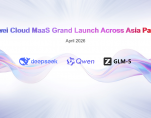
JAKARTA, INDONESIA – Media OutReach Newswire – 15 April 2026 – Huawei Cloud AI Boost Day, themed “Agentic AI Practice”, was successfully held in Jakarta. At the event, Huawei Cloud announced the official launch of its MaaS service in Asia Pacific.
Huawei Cloud MaaS grand launch across Asia Pacific
Following the rollout of AI Compute Service in Hong Kong (China), Thailand, Indonesia, and Singapore in 2025, Huawei Cloud MaaS (Model-as-a-Service) is now available, leveraging Huawei’s in-house acceleration engine to support mainstream models and provide customers with stable and high-quality token services.
Huawei Cloud continues to strengthen its collaboration with high-quality open-source models in the industry. Six models from three categories—GLM, DeepSeek, and Qwen—are the first to be supported by MaaS. These models are designed for two major application scenarios: intelligent Q&A and AI coding. They offer one-click access and out-of-the-box model hosting services, covering the entire lifecycle of model management from deployment to inference, fine-tuning, and evaluation. With elastic compute and pay-per-use billing, enterprises and developers can quickly integrate AI capabilities into their service systems without having to worry about the underlying infrastructure. This makes AI accessible to everyone.
Notably, this release includes support for the latest GLM-5 model. GLM-5 has attained state-of-the-art (SOTA) performance in coding and agent capabilities, making it an ideal general-purpose agent foundation for complex system engineering and long-text agent tasks in enterprise environments.
Huawei Cloud’s long-term strategic investment in AI has resulted in a comprehensive suite of AI solutions, including CloudMatrix AI Infra, MaaS, ModelArts (a model training and inference platform), CodeArts (a coding agent), AgentArts (an agent platform), and DataArts (a data agent).
CodeArts and AgentArts will be launched outside the Chinese mainland in the second half of 2026.
Huawei Cloud has established an optimized cloud infrastructure network in the Asia Pacific region. This network comprises five Regions and 18 availability zones (AZs) located in Singapore, Thailand, Hong Kong (China), Indonesia, and the Philippines, ensuring a 50 ms access latency. Additionally, in Malaysia, Huawei Cloud and partners have jointly built a local cloud.
Huawei Cloud AI Compute Service have helped many Asia Pacific customers elevate their cloud journey from simply migrating to the cloud to using AI well. They have benefited from improved productivity and better adaptation to changing environments.
iFLYTEK, a leading intelligent voice and AI company, selected Singapore as the first destination for its global expansion strategy in 2023, naturally extending its collaboration with Huawei Cloud from China to a global scale. Huawei Cloud AI Compute Service helped iFLYTEK quickly deploy their large language model training resources within two weeks. The training remained stable for 60 days without interruption, ensuring zero faults during the release of major versions.
In Vietnam, Green and Smart Mobility (GSM), an emerging green mobility platform, migrated its core operations platform to Huawei Cloud to reduce costs, enhance efficiency, and achieve multi-cloud flexibility. GSM has developed a comprehensive fleet management platform using AI and IoT. By utilizing Huawei Cloud IoTDA and ModelArts AI technologies, GSM analyzes violations and generates risk alerts to ensure driver and passenger safety, thereby fulfilling its mission of promoting green and safe transportation.
Huawei Cloud will continue to invest in AI innovation and provide a secure, stable, and intelligent cloud foundation to help enterprises in Asia Pacific achieve sustainable business growth in the AI era.
The issuer is solely responsible for the content of this announcement.
About Huawei
Founded in 1987, Huawei is a leading global provider of information and communications technology (ICT) infrastructure and smart devices. We have 207,000 employees and we operate in more than 170 countries and regions, serving more than three billion people around the world.
Our vision and mission is to bring digital to every person, home and organisation for a fully connected, intelligent world. To this end, we will work towards ubiquitous connectivity and inclusive network access, laying the foundation for an intelligent world; providing diversified computing power where you need it, when you need it, to bring cloud and intelligence to all four corners of the earth; build digital platforms to help all industries and organisations become more agile, efficient, and dynamic; and redefine user experience with AI, making it smarter and more personalised for people in all aspects of their life, whether they’re at home, on the go, in the office, having fun, or working out. For more information, please visit Huawei online at www.huawei.com
Mercedes-Benz is recalling 24,092 vehicles in the United States after safety regulators said a defect in the drive shaft universal joint could lead to a sudden loss of propulsion and raise the risk of a crash. The action covers selected 2018 to 2020 model-year E-Class and S-Class vehicles with 4MATIC all-wheel drive, including some coupe, cabriolet and Maybach variants. Owners are due to be notified by June […]
Attackers are exploiting a critical flaw in nginx-ui, an open-source web interface used to manage Nginx servers, exposing organisations to unauthorised server control through a weakness in the product’s Model Context Protocol integration. The bug, tracked as CVE-2026-33032, carries a CVSS severity score of 9.8 and allows an unauthenticated attacker on the network to invoke privileged functions that can rewrite configuration files, reload services and alter how […]
A digitally signed software operation tied to Dragon Boss Solutions LLC has been linked to the disabling of antivirus protections on more than 23,000 endpoints worldwide, raising concerns that what had been treated as aggressive adware was operating much closer to a supply-chain style threat. Security researchers said infected machines were found checking in from 124 countries, with affected systems present in education, government, utilities, healthcare […]
Europe’s cybersecurity agency has moved to strengthen its influence over the global system used to identify and catalogue software flaws, with ENISA no longer merely seeking a bigger role in the Common Vulnerabilities and Exposures programme but already holding Root status in a shift that gives the EU a stronger hand in how vulnerabilities are coordinated across borders. The development matters because the CVE system remains a […]
Asian equities pushed higher on Thursday as hopes of a diplomatic opening in the US-Iran conflict combined with solid corporate earnings to lift sentiment across the region, extending a rebound that has carried global benchmarks back towards, and in some cases beyond, their pre-war highs. MSCI’s broadest index of Asia-Pacific shares outside Japan rose about 0.9 per cent, while Japan’s Nikkei jumped 2.2 per cent to a fresh record, tracking Wall Street gains after the S&P 500 and Nasdaq ended at all-time closing highs on 15 April.
The rally reflected a market view that the worst-case economic fallout from the conflict may yet be avoided if negotiations regain momentum. Investors were encouraged by signs that talks between Washington and Tehran could resume after earlier efforts faltered, easing some fears over energy supply disruptions and allowing attention to swing back to earnings, economic data and the resilience of household demand in the United States and Asia. That shift in mood helped lift US stock futures and underpinned broader gains from Tokyo to Mumbai.
Japan led the advance, with exporters and technology names benefiting from stronger risk appetite and the market’s belief that any easing in Middle East tensions could reduce pressure on fuel costs and shipping. The Nikkei’s record level also reflected investor confidence that large Japanese companies remain well placed to benefit from global demand for semiconductors, automation and artificial intelligence infrastructure. Elsewhere, South Korean and Hong Kong shares also moved higher, while mainland Chinese markets were supported by data showing the economy expanded by 5.0 per cent in the first quarter, beating expectations and offering some reassurance that domestic activity has retained momentum despite the geopolitical shock.
Wall Street’s lead mattered. The S&P 500 closed at 7,022.95 on Wednesday, a record that marked a full recovery from losses triggered after the conflict began in late February, while the Nasdaq posted another record finish and extended a powerful winning streak. Strong results from major banks, including Bank of America and Morgan Stanley, reinforced the idea that corporate America is entering the earnings season on firmer footing than many investors had feared when oil prices spiked and risk assets sold off. Reuters reported that 84 per cent of companies that had reported by then had beaten expectations, helping to steady nerves about margins and consumer activity.
The earnings story is now sharing the stage with geopolitics. Markets are effectively pricing a narrower range of negative outcomes than they were only weeks ago, but that optimism remains conditional. Oil prices, while off their most alarming levels, are still elevated by historical standards, and every diplomatic headline continues to carry outsized weight because the Strait of Hormuz remains central to global crude flows. Reports that Iran may allow shipping through the waterway helped calm traders, though supply risks have not disappeared, especially with refinery disruptions in Australia and the threat of fresh sanctions or military miscalculation still present.
That tension between relief and caution is visible across asset classes. The dollar was broadly steady, the euro stayed firm, gold edged up and cryptocurrencies drifted lower, all signs that investors have not fully abandoned hedges even as they add exposure to equities. In India, shares opened higher as lower oil prices and hopes of renewed dialogue supported all major sectors, with the Nifty 50 and Sensex building on gains from the previous session. For economies that import large volumes of energy, any sustained cooling in crude would ease inflation pressure, support currencies and give central banks more room to focus on domestic growth rather than external shocks.
Technology remains a central pillar of the market’s confidence. Taiwan Semiconductor Manufacturing Co. was in focus ahead of results that investors expected to show a sharp profit jump, driven by demand tied to artificial intelligence chips. That anticipation has fed into a broader belief that the AI investment cycle can continue to offset weakness elsewhere in the global economy. Yet the strength of that narrative also creates a vulnerability: richly valued technology shares leave little room for disappointment, and any sign of slowing orders or tighter capital spending could quickly change the market tone.
Arabian Post Staff -Dubai UAE investors are moving faster than their peers almost anywhere in the world to bring artificial intelligence into investment decision-making, with a new global study by wealth-tech firm BridgeWise placing the country second overall in its AI optimism rankings and first on “momentum”, a measure of how strongly investors intend to replace traditional research methods with AI tools over the next year. The […]



 https://www.trendaisecurity.com
 https://www.linkedin.com/company/trendai-security
 https://x.com/trendaisecurity
 https://www.facebook.com/trendaisecurity/
 https://www.instagram.com/trendaisecurity/