Mac users are being targeted by a widening ClickFix campaign that disguises malicious commands as disk-cleaning and system-maintenance advice, turning routine troubleshooting into a route for credential theft, wallet compromise and cloud-data exposure. The attacks use pages that appear to offer help with storage optimisation, system clean-up or utility installation. Victims are instructed to copy commands into Terminal, or in some variants to trigger Apple’s Script Editor, […]
Cybersecurity investigators have linked a Microsoft Teams-based credential theft operation to MuddyWater, the state-sponsored threat group associated with Iran’s intelligence apparatus, after an intrusion first presented itself as an ordinary Chaos ransomware attack. The operation, detected in early 2026 and detailed this week, shows how trusted workplace collaboration tools are being turned into entry points for espionage. Attackers used Teams chats and screen-sharing sessions to trick employees […]
LOS ANGELES, US – Newsaktuell – 7 May 2026 – The newly released 2026 Berggruen Governance Index (BGI) paints a mixed picture of global governance heading into a future of mounting shocks, finding widespread gains in public-goods provision from 2000 to 2023 even as democratic accountability edged down and state capacity showed little overall improvement.
Presentation of the 2026 Berggruen Governance Index: On 6 May in Los Angeles, the following individuals discussed the findings of the study (from left): Vinay Lai (Professor of History, UCLA), Michael Storper (Distinguished Professor of Urban Planning, UCLA), Stella Ghervas (Professor of History, UCLA) and the two authors of the study, Joseph Saraceno and Prof. Helmut Anheier (both from UCLA’s Luskin School of Public Affairs). Democracy News Alliance / Jordan Strauss/AP for DNA
The BGI, presented Wednesday by an international group of governance scholars, analyses measurable benchmarks of democratic accountability across 145 countries.
On a 100-point scale, the global score for democratic accountability slipped slightly from 65 in 2000 to 64 in 2023, the most recent data used in the project. The wave of democratisation observed in the closing decades of the last century has stalled in the last 15 years. Democratic accountability fell in 54 countries while it improved in 48 countries.
Yet the BGI — a collaborative project of the Luskin School of Public Affairs at the University of California, Los Angeles (UCLA), Berlin’s Hertie School and the Berggruen Institute, a think tank headquartered in Los Angeles — captures remarkably widespread growth in provision of public goods.
Encompassing healthcare, education, infrastructure, environmental sustainability and conditions to foster employment and rising prosperity, public goods improved in 135 of the countries studied, while declining slightly in just four. The global average jumped from 58 to 69 points from 2000 to 2023.
The third component of what the BGI authors refer to as the “governance triangle” is state capacity, defined as the ability to tax, borrow and spend, control territory, operate scrupulous, competent bureaucracies and administer predictable rule of law. The index finds the global average ticking up from 48 to 49 points; 56 countries had increased state capacity while 57 declined.
“What does it tell us about the world ahead?” Prof. Helmut K. Anheier, a Luskin School sociologist and BGI principal investigator, asked during the public release of the 2026 BGI on the UCLA campus.
“Countries are not really improving in their governance performance in significant ways. … We’re not really having forward-looking investment in governance capacity. There is considerable inertia.”
The largest improvements across all three BGI components occurred in Gambia, which the report groups with “low-capacity developing states.” These states score low across the board, particularly in the provision of public goods. This cluster constitutes the poorest countries with the least developed economies, which face the most serious challenges.
“They have the greatest exposure to likely future crises, whether it’s global warming, whether it’s a new pandemic, whether it’s another financial crisis, whether it’s the impact of AI,” Anheier said. “And they have the least capacity to respond to it.”
Bhutan, Georgia, Iraq and Tunisia — which make up the remaining top five countries with the largest improvements in the BGI — are classified as “capacity-constrained states.” They tend to be middle-income with struggling democracies. These countries score higher across the board than the low-capacity developing states, but their state capacity tends to lag compared to public goods and democratic accountability.
The capacity-constrained states risk falling into “a cycle that erodes the institutions they have built,” Anheier said.
“Consolidated democratic states”, a cluster of most of the world’s richest countries, which score highly in all three BGI components, have to confront domestic complacency. Further, in the United States and some others, “political dysfunction” is leaving mounting problems unaddressed and risking erosion of state capacity, Anheier said.
At the other end of the spectrum, the country with the farthest fall on the BGI since 2000 is Nicaragua. Second from last is Venezuela, followed by Hong Kong, Hungary and Turkey. The rest of the bottom 10 are Russia, Iran, Poland, El Salvador and Belarus.
Since 2023, which is the last year of data available for the study, Poland and Hungary have both seen government changes via election, despite serious democratic backsliding. Both had fallen out of the group of “consolidated democratic states” by 2023 and moved into the capacity constrained cluster.
The other eight countries at the bottom of the list are all places that once had some semblance of competitive elections, but by now have little or no remaining pretense of democracy. They are grouped by the authors among the “authoritarian and hybrid states”, which have by far the lowest democratic accountability but outperform even some struggling democracies in delivering public goods.
These regimes have tended toward faster economic growth in the period observed. But that seeming prosperity, typically fueled by extractive industries or overreliance on exports, masks “serious institutional weaknesses in these countries, including divided elites,” Anheier said.
Relatively few countries — 21 of the 145 — changed enough for better or worse to be classified in a new group by the end of the 23-year study period.
“Movement between them is rare, but this is largely what we should expect,” said Stella Ghervas, a UCLA historian on a panel of experts who discussed the BGI findings Wednesday. “Government systems are not created in a moment. They evolve over long periods of time.”
Local conditions shaping governance in each country can rarely be quickly reset through political will or even external shocks, Joseph C. Saraceno, a Luskin School data scientist and BGI co-author, said Wednesday.
“Despite all the talk of major transformations happening in global affairs, the underlying configuration of governance simply doesn’t appear to change very much,” Saraceno said. “We use the term inertia to describe this reoccurring pattern. In other words, the structures of global governance are resistant to movement as the conditions beneath them are quite sticky: political economies, demographics, resource endowments. These are deeply layered, and they push each country toward the world that it already inhabits.”
But the challenges lurking around the world may not wait for the slow and difficult processes of political change and development to catch up.
“With the few exceptions of those countries in the consolidated democratic world,” Anheier said, “the great majority of the countries in the world is ill-prepared for the future.”
This text and the accompanying material (photos and graphics) are an offer from the Democracy News Alliance, a close co-operation between Agence France-Presse (AFP, France), Agenzia Nazionale Stampa Associata (ANSA, Italy), The Canadian Press (CP, Canada), Deutsche Presse-Agentur (dpa, Germany) and PA Media (PA, UK). All recipients can use this material without the need for a separate subscription agreement with one or more of the participating agencies. This includes the recipient’s right to publish the material in own products.
The DNA content is an independent journalistic service that operates separately from the other services of the participating agencies. It is produced by editorial units that are not involved in the production of the agencies’ main news services. Nevertheless, the editorial standards of the agencies and their assurance of completely independent, impartial and unbiased reporting also apply here.
The issuer is solely responsible for the content of this announcement.
Cybercriminals are exploiting Microsoft’s Phone Link app to intercept text messages and one-time passwords from connected smartphones without installing malware on the phone itself, exposing a fresh weakness in cross-device authentication systems. The activity centres on CloudZ, a modular remote access trojan deployed on Windows machines, and a previously undocumented plugin called Pheno. The malware has been observed in an intrusion active since at least January 2026, […]
North Korea-linked hackers compromised a gaming platform used by ethnic Koreans in China’s Yanbian region, turning Windows and Android game software into surveillance tools aimed at users in a strategically sensitive border community. Cybersecurity researchers identified the operation as the work of ScarCruft, also tracked as APT37, Reaper and Ricochet Chollima, a long-running espionage group aligned with Pyongyang. The campaign appears to have been active since late […]
Lebanese soldiers entered Beirut’s southern suburbs and detained suspected gunmen after celebratory fire and rocket-propelled grenades were discharged during a Hezbollah funeral, an unusual assertion of state authority inside one of the group’s most sensitive urban strongholds. The operation in Kafaat followed gunfire during a procession for Hezbollah supporters killed in Israeli strikes, with residents reporting panic as bullets rang out across densely populated neighbourhoods. Army units […]
India is preparing a new electronic venue for bond-forward trades, seeking to bring greater transparency to a fast-growing derivatives segment that still relies heavily on negotiated over-the-counter deals.
The proposed platform is being developed around the Clearing Corporation of India’s market infrastructure and is expected to be placed before the Reserve Bank of India for regulatory approval. Market participants have been working with the clearing corporation on design features, including trade execution, clearing, margining and reporting, with a rollout being discussed for the current financial quarter if approvals and operational testing proceed on schedule.
Bond forwards allow investors to buy or sell government securities at a pre-agreed price for settlement at a future date. The instrument is designed to help banks, insurers, primary dealers, overseas investors and other large holders manage interest-rate risk without requiring an immediate exchange of securities. Its wider use has become more important as India’s sovereign debt market draws larger cross-border flows after entry into major global bond indices.
The initiative follows the Reserve Bank of India’s February 2025 framework permitting forward contracts in government securities. The rules allow residents and eligible non-residents to undertake bond-forward transactions, while scheduled commercial banks and standalone primary dealers are permitted to act as market-makers. At least one party to a transaction must be a market-maker or a central counterparty authorised by the central bank.
Market officials see the platform as a step towards shifting a largely bilateral market into a more standardised structure. The present system is dominated by negotiated trades, with pricing often shaped by dealer relationships and limited visibility beyond counterparties. A screen-based mechanism could help create firmer reference prices, reduce information gaps and support more consistent valuation of related interest-rate products.
The bond-forward market is estimated at about ₹4 trillion to ₹4.5 trillion, with foreign banks accounting for the bulk of activity. That concentration has helped establish liquidity in parts of the curve but has also limited wider participation by domestic lenders, insurers and other institutional investors. A platform backed by central clearing could lower operational uncertainty for new entrants and improve confidence in settlement arrangements.
Clearing will be central to the reform. A centrally cleared structure would place the clearing corporation between counterparties, reducing bilateral credit exposure and applying margining standards across participants. The Reserve Bank’s directions already require non-centrally cleared bond-forward transactions to comply with margin rules for over-the-counter derivatives, while market-makers must use robust methods to mark positions to market.
The move also fits a wider regulatory push to improve surveillance of over-the-counter derivatives. Reporting of forward contracts in government securities to CCIL’s trade repository began on May 2, 2025, giving regulators access to transaction data through the life of a contract. A separate framework will require unique transaction identifiers for eligible over-the-counter derivative trades from January 1, 2027, improving traceability across counterparties and systems.
Foreign investor access is another factor behind the timing. Electronic trading providers have been building links to India’s government securities market as global investors increase allocations. MarketAxess executed its first platform trade in India government bonds between BlackRock and Standard Chartered Bank in 2025, using an integration with CCIL’s NDS-Order Matching system. Overseas investors bought nearly ₹1 trillion of government bonds over 13 months after inclusion in JPMorgan’s emerging market debt index, while other index inclusions have kept the market on global fixed-income desks’ radar.
The proposed bond-forward platform will still face practical tests. Dealers will need clarity on eligible securities, collateral treatment, settlement failure procedures, reporting formats, position limits and margin models. Participants will also need to align front-office systems, treasury risk controls and back-office processes before meaningful volumes migrate from bilateral trades to a shared electronic venue.
For insurers and long-duration investors, the instrument could become a more precise hedging tool across rate cycles. For banks, it could deepen market-making opportunities while making price discovery more transparent. For regulators, the key benefit lies in cleaner data, stronger risk monitoring and a structure that may reduce opacity in a derivatives market linked directly to sovereign bond pricing.
By T N Ashok The verdict from India’s sprawling five-state assembly elections of 2026 has redrawn the country’s political map with a force few had anticipated. What began as a routine electoral cycle across West Bengal, Tamil Nadu, Kerala, Assam and Puducherry has culminated in something far more consequential: a consolidation of power for the […]
Danish shipping group A. P. Moller–Maersk has confirmed that its US-flagged vehicle carrier Alliance Fairfax has left the Arabian Gulf through the Strait of Hormuz under US military escort, giving Washington’s effort to reopen one of the world’s most important maritime chokepoints its most visible commercial test so far. The vessel, operated by Maersk’s Farrell Lines subsidiary, completed the passage on May 4 accompanied by US military […]
Matein Khalid It is significant that Abu Dhabi joined Opec from the moment the emirate exported its first barrel of oil in 1967, four years before the birth of the UAE itself. For 59 years the UAE was a member of Opec enduring an era of multiple shocks, wars, revolutions, recessions, banking crises, oil price wars, supply shocks, embargoes and the pandemic. Saudi Arabia has been the ultimate power […]
A publicly released exploit for a critical cPanel and WebHost Manager flaw has intensified pressure on hosting companies and website operators after monitoring groups reported tens of thousands of likely compromised internet-facing systems. The vulnerability, tracked as CVE-2026-41940, allows unauthenticated attackers to bypass login controls and obtain administrative access to affected cPanel & WHM environments. The weakness carries a CVSS severity score of 9.8, placing it among […]
A new botnet campaign is turning poorly secured Jenkins servers into attack nodes aimed at online game infrastructure, including Valve Source Engine servers used for titles such as Counter-Strike and Team Fortress 2. The activity shows how a single exposed continuous integration system can be repurposed to generate UDP, TCP and application-layer floods against multiplayer platforms. Cybersecurity researchers observed the activity on March 18, 2026, after a […]
MCP’s rapid rise as the preferred bridge between AI assistants and external tools is running into a harder test inside production software teams: whether convenience justifies the security, reliability and governance risks now surfacing around the protocol. Model Context Protocol, introduced by Anthropic in November 2024 and later moved into broader open governance under the Linux Foundation’s Agentic AI Foundation, was designed to solve a real engineering […]
Arabian Post Staff -Dubai Dubai has lowered a key entry barrier for property-linked residency, allowing sole owners of completed real estate to apply for a two-year visa without meeting the previous Dh750,000 minimum property value threshold. The revised criteria, published through the Dubai Land Department’s Cube platform, shift the visa framework away from a single asset-value test and towards ownership structure. Sole owners can now seek the […]
SINGAPORE – Media OutReach Newswire – 29 April 2026 – Bracell, a global leader in soluble pulp production, has been awarded the prestigious Lilac Seal for the second consecutive time by the Secretariat for Women’s Policies of the State of Bahia (SPM), recognising the company’s continued commitment to promoting gender equality, diversity and the development of female talent in the workplace.
The certification, valid for two years, was formally presented during a ceremony held at SESC – Casa do Comércio in Salvador – in March. With this achievement, Bracell joins 111 companies and organisations recognised in the 2026 edition, reinforcing its role in fostering a fairer, safer and more inclusive work environment for women.
Bracell’s recognition reflects a structured, long-term strategy anchored in its Bracell 2030 sustainability plan, which includes a commitment to achieving 30% female representation in leadership roles by the end of the decade. The company has implemented a range of targeted initiatives to support this goal, focusing on talent attraction, development and retention.
“Promoting gender equality is directly connected to our sustainability strategy,” said Angela Ribeiro, Sustainability Manager at Bracell Bahia, who represented the company at the ceremony. “Attracting and retaining female talent is a key pillar of Bracell 2030, and we are committed to building pathways for women to grow and lead within our organisation.”
Among the company’s flagship initiatives is the Development Path for Women under the Cultivating Potential programme, which combines technical training, career acceleration and support policies. Bracell also offers exclusive English-language training for senior analysts and above, supporting continuous professional development.
The company’s Diversity Programme further strengthens inclusion through a Gender Affinity Group composed of employee volunteers who propose and help implement initiatives in collaboration with Human Resources. Notable actions include the establishment of breastfeeding support rooms and the extension of maternity leave from 120 to 180 days.
Bracell, a member of the RGE group of companies founded by Sukanto Tanoto, has also expanded access to employment opportunities through its Acelera Programme, which targets local community talent with no prior experience and reserves positions for women. In recruitment, the company recommends including at least one female candidate in final selection stages for analyst-level roles and above. By 2025, women accounted for 33% of new hires at Bracell’s Bahia operations.
To ensure fairness in career progression, Bracell conducts regular salary equity analyses aimed at maintaining equal compensation and advancement opportunities for men and women. The company also actively engages male leaders in diversity and inclusion efforts through training on inclusive leadership and unconscious bias, as well as ongoing awareness initiatives.
“The Lilac Seal recognises not only the progress we have made but also our ongoing commitment to advancing gender equality,” said Lorena Brasil, Human Resources (Organisational Human Development) Manager at Bracell Bahia. “Our strategic initiatives strengthen the attraction, development, and retention of female talent, reinforcing diversity and inclusion as priorities across all areas of the organisation.” Hashtag: #RGE #Bracell #Bracell2030 #Brazil #award #genderequality #sustainability
The issuer is solely responsible for the content of this announcement.
About Bracell
Bracell is a global leader in the production of dissolving pulp and specialty cellulose with two main mill operations in Brazil in Bahia and São Paulo. In addition to its operations in Brazil, Bracell has a management office in Singapore and sales offices in Asia, Europe and the U.S.
Please visit Bracell’s website for more information.
A hardcoded API key embedded in ClickUp’s public website exposed 959 corporate and government email addresses and more than 3,000 internal feature flags for over a year, intensifying scrutiny of security controls at widely used software-as-a-service platforms. The exposure was tied to a production JavaScript bundle that loaded before authentication, allowing anyone inspecting the page source to extract a third-party SDK token and send an unauthenticated request […]
Security researchers have identified a 2005-era malware framework that appears to have targeted high-precision engineering software, raising new questions about covert attempts to disrupt Iran’s nuclear programme before Stuxnet became the defining case of cyber sabotage. The malware, tracked as Fast16, was analysed by SentinelOne researchers Vitaly Kamluk and Juan Andrés Guerrero-Saade, who found that its core components pre-date the earliest known Stuxnet operations by at least […]
HONG KONG SAR – Media OutReach Newswire – 23 April 2026 – Hong Kong’s small businesses delivered their strongest performance in a decade in 2025, while confidence in the year ahead has climbed to a record high, according to CPA Australia’s latest Asia‑Pacific Small Business Survey 2025–26.
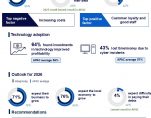
The survey shows that 68 per cent of Hong Kong SMEs recorded growth in 2025, up from 65 per cent in 2024 and marking the highest result on record. This positive momentum is expected to continue this year, with 71 per cent of SMEs expecting their businesses to grow and 76 per cent anticipating growth in the local economy — both at record highs. Customer loyalty and a strong workforce were identified as key drivers behind SMEs’ solid performance last year.
Mr Cliff Ip, Councillor of CPA Australia’s Greater China Divisional Council, said Hong Kong’s improving business environment played a critical role in supporting SME growth. “Hong Kong’s business confidence and economic growth strengthened last year, supported by robust capital markets, a recovery in tourism and consumption, and signs of stabilisation in the property market,” said Mr Ip. “Against this stable and supportive backdrop, small businesses not only benefited from increased business activity, but were also able to expand in a healthy and sustainable manner.”
Looking ahead, Mr Ip noted that while global geopolitical tensions and external uncertainties pose rising challenges, Hong Kong’s underlying strengths remain a key advantage for SMEs. “Rising geopolitical risks are likely to create headwinds for many sectors such as trade and logistics through higher fuel costs and supply chain disruptions. However, I remain confident about Hong Kong’s overall business outlook this year,” he said. “As many regions become more unpredictable or less secure, Hong Kong’s stable and consistent business environment, together with supportive policy settings including the city’s low and simple tax regime stand out as important advantages in attracting international companies and investors.”
Mr Ip added that these developments also present new opportunities for local SMEs, particularly as increased international interest creates scope to build partnerships, expand networks and tap into new markets. “This environment also creates favourable conditions for younger entrepreneurs to explore emerging markets and pursue new business opportunities,” he said.
Improved business performance has strengthened the solvency of many local SMEs. The share of businesses reporting difficulty paying debts fell sharply from 22 per cent in 2024 to just 3 per cent in 2025, while only 4 per cent expect to face difficulties this year, down markedly from 26 per cent previously. As a result, Hong Kong small businesses are now the least likely among the surveyed businesses to report solvency concerns.
Mr Ip said, “The solvency of many SMEs has notably improved, driven by stronger cash flow from improved business growth, a robust capital market and a recovering property market over the past year. This healthier cashflow has both supported easier access to external finance and reduced the need for such finance.”
Hong Kong SMEs have also strengthened their capability to invest in technology that delivers rapid improvements in profitability. In 2025, 64 per cent of SMEs reported that their technology investment in that year helped improve profitability, up from 59 per cent in 2024. Two in five Hong Kong SMEs invested in artificial intelligence (AI) last year, making it the leading technology investment among local SMEs, followed by customer relationship management (CRM) software.
At the same time, cyber protection has improved, with the share of Hong Kong businesses reporting losses from cyber incidents falling sharply from 72 per cent in 2024 to 43 per cent in 2025. However, as digitalisation accelerates, cyber risks remain elevated, with nearly three in five SMEs expecting to face cyber threats this year, above the survey average 42 per cent.
Mr Davy Leung, Deputy Chairperson of CPA Australia’s SME and Entrepreneurship Committee of Greater China, said the growing maturity and availability of AI tools is helping SMEs enhance productivity, reduce operating costs and improve customer experience.
(Left) Mr Davy Leung, Deputy Chairperson of SME and Entrepreneurship Committee 2026 from CPA Australia (Right) Mr Cliff Ip Greater China Divisional Councillor 2025 from CPA Australia
“However, rising digital fraud, wider AI adoption and SMEs’ increasing reliance on digital banking have prompted the Hong Kong Government to significantly strengthen banking security and cybersecurity resilience over the past year. This includes the rollout of low-cost and practical initiatives such as the Cybersec One Programme and the continued implementation of the ‘9+5’ SME support measures. The decline of cyberattack-related losses reported in the survey in part reflects the effectiveness of these measures.
“As cybersecurity threats and digital fraud risks continue to escalate, SMEs should make better use of these available resources, including free website risk assessments and vulnerability identification services, to strengthen their defence capabilities and safeguard business operations.”
Mr Leung also suggested that the Government consider revamping the Technology Voucher Programme to support broader digitalisation efforts, including the adoption of both AI and non-AI technologies. He added that enhanced training support would help SMEs identify and implement modern tools to drive innovation, improve efficiency and strengthen long-term competitiveness.
Rising costs remain a key challenge for Hong Kong SMEs in 2025, with 29 per cent reporting it having a negative impact on their business. However, this was the second‑lowest level among all surveyed markets, underscoring Hong Kong’s relatively low inflationary environment last year. Notably, the share of SMEs citing staff costs as a negative factor rose from 35 per cent to 42 per cent, making it the most significant cost pressure for Hong Kong businesses in 2025. This increase may help explain why the proportion of SMEs hiring additional staff declined from 42 per cent to 38 per cent last year.
Mr Leung said, “Increasing costs remain a significant barrier for many SMEs across Asia‑Pacific region, but Hong Kong’s relatively low inflation has helped cushion the impact on local small businesses,” Mr Leung said.
Mr Leung added that while headcount growth has moderated, overall staff costs have continued to rise as businesses invest in higher‑value talent. “Greater digitalisation and automation have helped ease labour constraints in Hong Kong. When SMEs do add staff, they are increasingly recruiting employees with digital and AI capabilities, or creating new roles to support business transformation. These positions typically command higher salaries, which has contributed to higher overall staff costs despite slower hiring growth.”
The annual survey collected the views of 4,166 small businesses across 11 Asia-Pacific markets, including Singapore, the Chinese Mainland, and Australia, with 305 respondents from Hong Kong. Hashtag: #CPAAustralia
The issuer is solely responsible for the content of this announcement.
About CPA Australia
CPA Australia is Australia’s leading professional accounting body and one of the largest in the world. We have more than 176,000 members in over 100 countries and regions. Our core services include education, training, technical support and advocacy. CPA Australia provides thought leadership on local, national and international issues affecting the accounting profession and public interest. We engage with governments, regulators and industries to advocate policies that stimulate sustainable economic growth and have positive business and public outcomes. A CPA is a Certified Practising Accountant. More at cpaaustralia.com.au
By K Raveendran Oil’s refusal to break decisively towards $100 a barrel, despite a tense geopolitical backdrop and repeated threats tied to the Strait of Hormuz, says something important about how markets are reading the balance between rhetoric and reality. At one level, the price action looks counterintuitive. A blockade or even a serious disruption […]
A newly disclosed cyberattack using destructive malware known as Lotus Wiper has put Venezuela’s energy and utilities sector under sharper scrutiny, highlighting how digital sabotage is moving beyond theft and extortion towards permanent operational damage. Security researchers say the malware was designed to erase data, cripple recovery options and leave affected systems unusable, signalling a far more aggressive intent than the ransomware campaigns that have dominated critical […]
Two fully laden Iranian tankers have slipped out of the Persian Gulf with their tracking signals muted, underscoring how Tehran’s oil trade is adapting to a tightening US-led maritime squeeze even as warships, seizures and threats of interception raise the stakes across one of the world’s most critical energy corridors. Reports circulating on Wednesday said the vessels were part of a broader flotilla that has moved millions […]
A software platform traced to Belarus has been identified as a key enabler of a sprawling SIM-farm ecosystem that investigators say is helping cybercriminal operations run at scale across multiple continents. The platform, known as ProxySmart, was linked to at least 94 SIM-farm locations in 17 countries, with researchers identifying 87 exposed instances of its control panel across 24 proxy providers and 35 mobile carriers. The findings […]
Unauthorized access to Anthropic’s tightly restricted Claude Mythos Preview has sharpened concerns over how even limited-release cybersecurity AI can slip beyond its intended perimeter, raising fresh questions about vendor oversight, access governance and the pace at which powerful offensive-capable tools are entering real-world environments. Anthropic announced Mythos on 7 April as part of a controlled programme for defensive cybersecurity use, and the company is now investigating […]
Blackstone-owned AirTrunk is preparing what could become a landmark financing for Asia-Pacific digital infrastructure, with the data-centre operator seeking to raise at least A$500 million through asset-backed bonds backed by its facilities, according to market reports and company disclosures on its broader funding platform. The move would mark a notable step in bringing securitised debt structures, long familiar in other asset classes, into the region’s fast-growing data-centre […]






 https://www.bracell.com/