

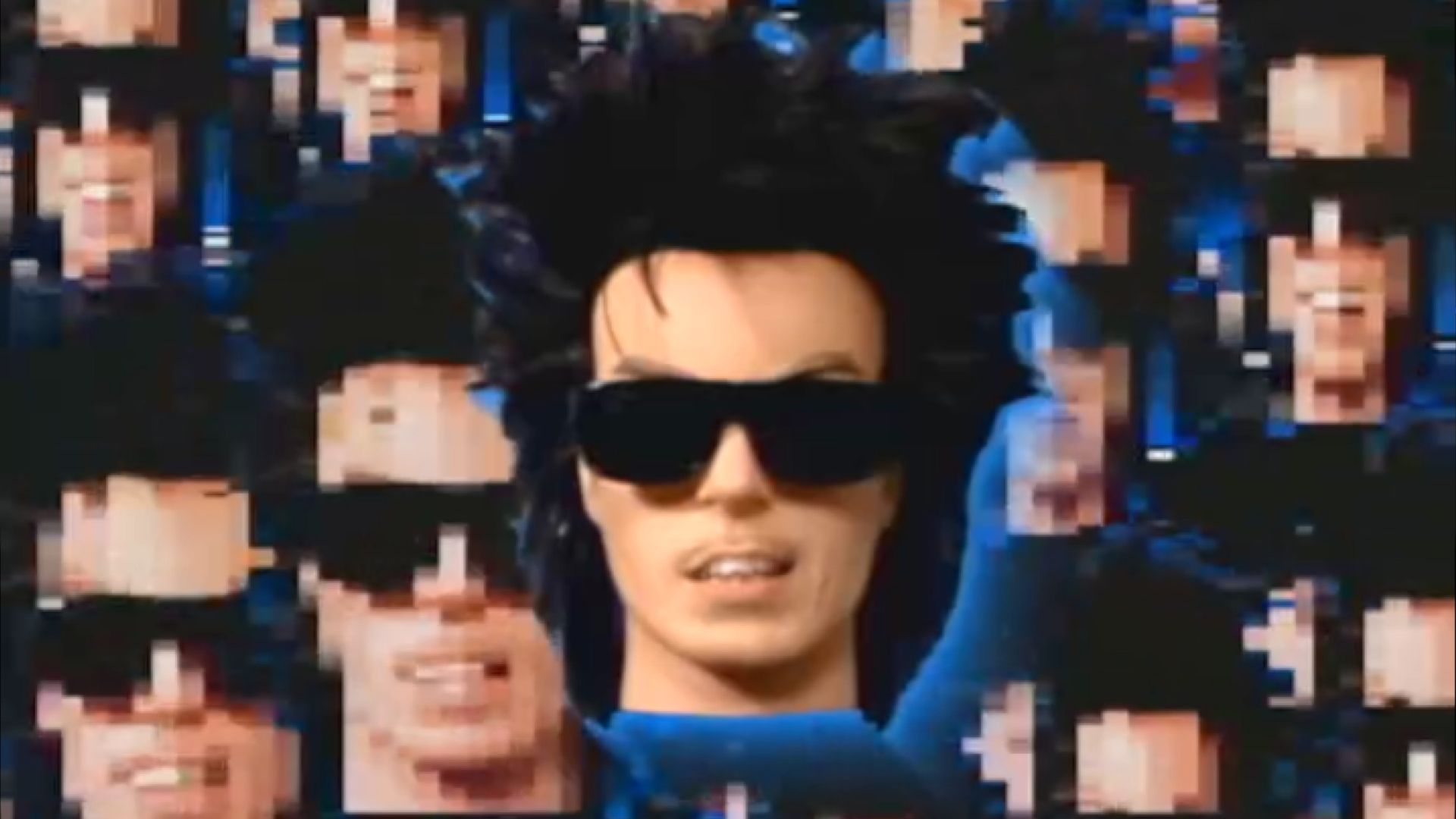
Blippo+ has arrived as one of the stranger releases to gain traction across independent gaming, presenting itself not as a conventional narrative title but as a faux television service from an alien world. Built around channel surfing, short-form live-action broadcasts and a deliberately warped retro aesthetic, the project has drawn attention for turning the language of late-20th-century television into an interactive spectacle that feels equal parts parody, art installation and game.
Published by Panic and developed by YACHT, Telefantasy Studios and Noble Robot, Blippo+ first appeared on Playdate in May 2025 before expanding to Steam and Nintendo Switch in September 2025, with a Mac App Store version following in January 2026. Its premise is simple on the surface: viewers move through a stack of programmes from Planet Blip, hopping between soaps, news, quizzes, weather, public-access oddities and surreal talk shows while a wider story slowly emerges between the channels. That structure has helped it stand out in a market crowded with action titles, sequels and open-world releases.
What makes Blippo+ notable is how little it behaves like a traditional game. There are interactions, but they are sparse. Much of the experience lies in watching, absorbing and piecing together meaning from fragments. The result places it in a growing category of works that blur the boundaries between game design, video art and performance. Its makers lean into that ambiguity. The world of Planet Blip is presented through static, glitches, faux analogue interfaces and exaggerated performances that echo cable access television, pirate broadcasts, teletext graphics and the camp visual culture of the 1980s and 1990s.
That approach has won admiration from critics who see the project as a rare example of FMV being used for something more inventive than nostalgia. Reviewers have praised its humour, world-building and willingness to commit fully to its own bizarre tone. The fictional schedules, recurring personalities and shifting broadcasts create the impression of an entire media ecosystem rather than a standard scripted plot. There is also a strong musical and visual identity behind it, supported by an original soundtrack from Rob Kieswetter and Jona Bechtolt of YACHT, which adds to the sensation of tuning into a signal from a parallel pop universe.
The reception, however, has not been uniformly glowing. Some commentary has argued that the same design choice that makes Blippo+ distinctive can also make it frustrating. Because progress is tied to watching enough of the available material, repetition becomes part of the experience, and not always in a rewarding way. For players expecting stronger interactivity or clearer narrative pay-offs, the structure can feel thin. This tension goes to the centre of the game’s identity. Admirers see a bold experiment in form; sceptics see a clever concept stretched across too much passive viewing.
That divide reflects a broader shift in the independent games business, where smaller studios and publishers are finding audiences for projects that sit outside established genre labels. Blippo+ belongs to the same creative current that has allowed interactive fiction, anti-games, lo-fi simulators and deliberately awkward art objects to find commercial space. Panic, which has built a reputation for backing unusual projects, has used that positioning effectively. By framing Blippo+ as an “off-cable TV simulator” rather than a straightforward adventure or FMV game, it has marketed peculiarity as a strength.
There is also a technological and cultural layer to its appeal. Blippo+ trades on the revival of analogue textures and media archaeology, tapping into affection for old broadcast formats without simply reproducing them. Its humour depends on recognising the grammar of low-budget television: over-eager hosts, strange local adverts, community bulletin boards, melodramatic serials and awkward studio banter. Yet it is not merely nostalgic. Its version of television is stranger, queerer and more fragmented than the original inspirations, using the familiar shape of old media to deliver something more alien and self-aware.
For Panic, the rollout across Playdate, PC, Switch and Mac has also shown how niche concepts can travel across platforms when they carry a strong identity. The Playdate release gave Blippo+ an ideal early home because of that device’s reputation for eccentric, design-forward titles. The later colour editions broadened its reach and made its dense visual styling more accessible. By early 2026, the game had built a small but enthusiastic following, with strong user sentiment on Steam and continued critical discussion around whether it should be read as satire, interactive TV or avant-garde game design.
Follow Arabian Post
Select Arabian Post as your preferred source on Google and MSN News for trusted business news and Arab politics and updates.




