

Arabian Post Staff -Dubai
ADNOC said on Friday that 15 of its vessels had been targeted by missiles and drones while passing through the strategic waterway since the regional conflict erupted. Three attacks occurred during the past week, leaving one crew member dead and bringing the number of injured personnel to 20.
The company described the attacks as unprovoked and said it was operating in an “exceptionally challenging environment”. It maintained that efforts were continuing to meet customer requirements while additional measures were being taken to protect employees, vessels and infrastructure.
ADNOC also called for international navigation to be protected and for commercial vessels to be allowed to move through regional waters without threats or interference. The warning underscored the growing operational risks facing one of the world’s largest energy producers as repeated attacks complicate tanker movements through the Gulf.
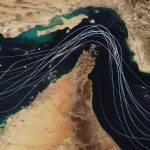
The Strait of Hormuz, separating Iran from Oman, remains among the most important maritime passages for global energy trade. About 20.9 million barrels of petroleum liquids passed through the strait each day during the first half of 2025, equivalent to roughly a fifth of worldwide consumption and about a quarter of internationally traded seaborne oil.
Traffic through Hormuz has fallen sharply during the conflict. Only 33 vessels crossed the strait between Monday and Thursday this week, compared with 50 during the equivalent period a week earlier. Four vessels made the passage on Thursday, highlighting the continuing reluctance of shipowners to expose crews and vessels to the security risks.
Before the conflict disrupted shipping patterns, daily vessel movements through Hormuz were substantially higher. Tankers have since faced missile and drone threats, boarding attempts and heightened uncertainty over insurance coverage. Some operators have avoided the route altogether, while others have demanded sharply higher freight charges before accepting Gulf voyages.
The disruption has pushed tanker costs to exceptional levels. Reliance Industries this week booked a very large crude carrier capable of transporting about two million barrels of Iraqi oil at a freight cost estimated at $23 million to $25 million. Comparable voyages before the war could cost around $2 million, illustrating the scale of the security premium now attached to Gulf shipping.
Iraq has responded to the transport difficulties by offering substantial discounts on crude loaded at Basrah. Discounts for some August cargoes have reached about $25 to $30 a barrel below regional benchmarks as producers seek to compensate buyers for expensive freight, insurance and operational uncertainty.
The squeeze has emerged despite diplomatic efforts aimed at restoring dependable passage through Hormuz. Negotiations involving Iran, Oman and the United States have raised expectations that arrangements could eventually allow more commercial vessels to transit safely. Market confidence, however, remains fragile while attacks continue and insurers retain substantial war-risk premiums.
Hormuz had begun recovering after a June understanding intended to ease hostilities and restore shipping following months of disruption. Expectations that regional production and trade would gradually return towards pre-war levels were subsequently challenged by renewed security incidents and uncertainty surrounding the durability of diplomatic arrangements.
The disruption has affected far more than vessel availability. Producers across the Gulf were forced earlier in the conflict to curtail millions of barrels of daily output when limited tanker access prevented crude from reaching international markets. Global inventories were drawn down sharply, while refiners and trading companies sought alternative supplies and shipping routes.
Alternative pipelines provide some protection against a prolonged Hormuz disruption but cannot replace the waterway’s full capacity. Pipeline systems running across the UAE and Saudi Arabia can bypass several million barrels of daily traffic, allowing some crude to reach export terminals outside the Gulf. Their combined capacity remains well below the volumes normally carried through the strait.
Also published on Medium.
Follow Arabian Post
Select Arabian Post as your preferred source on Google and MSN News for trusted business news and Arab politics and updates.




