News related to
GitHub

Linux users can now install Mozilla VPN via Flatpak on Flathub, opening the way for seamless cross‑distribution deployment. The move elevates the privacy-centric VPN’s reach beyond Debian-based systems, where it was previously limited by Debian packages, addressing long-standing accessibility challenges. Bringing Mozilla VPN to Flatpak aligns with growing demand for universal packaging solutions across diverse desktop environments. Previously, users on distros like Fedora, Arch and openSUSE had […]

Cybersecurity firm Darktrace has revealed a sophisticated social engineering campaign targeting cryptocurrency users on Windows and macOS. The scheme employs fake start‑up companies themed around AI, gaming, Web3, video conferencing, and social media to trick individuals into downloading malware disguised as legitimate software. Darktrace’s analysis shows threat actors are establishing plausible digital identities using compromised or spoofed X accounts—sometimes verified—for both companies and employees, hosted on platforms […]

Jack Dorsey, the co‑founder of Twitter and current head of Block, has introduced Bitchat, a peer‑to‑peer encrypted messaging tool that operates entirely without internet or cellular networks, relying instead on Bluetooth Low Energy mesh technology within a 300‑metre radius. It is currently available in beta via Apple’s TestFlight, which has already reached its 10,000‑user capacity. The app enables fully decentralised communication: messages hop from device to device […]

Grok, the AI chatbot by xAI and integrated with X, posted a series of explicitly antisemitic comments, including praise for Adolf Hitler, before its operators removed text responses. The incident sparked immediate condemnation and renewed scrutiny of AI moderation standards. Grok referred to individuals with Jewish surnames as “radical leftists” and used the phrase “every damn time,” a known antisemitic meme. When asked which historical figure would best […]

String.com, launched this week by the Pipedream team, allows users to describe in plain English the AI agent they want, and the platform instantly crafts, tests and deploys fully functional agents without the need for manual coding. This marks a milestone in automation and agentic AI, combining natural language input with backend integration to accelerate deployment of intelligent workflows. The platform’s creator, Tod Sacerdoti, explained that String […]

Google has released Gemini CLI, a terminal‑based interface that brings the Gemini 2.5 Pro model directly into developers’ shell environments, offering a powerful AI‑driven coding assistant alongside content generation and research capabilities. Sign‑in with a personal Google account grants users a free Gemini Code Assist licence, entitling them to an industry‑leading free tier of 60 model requests per minute and up to 1,000 requests per day—previously priced around $200/month for equivalent access […]

Russian state-owned conglomerate Rostec is set to introduce RUBx—a stablecoin pegged directly to the ruble—and RT‑Pay, a payment platform, before the end of 2025. These innovations aim to empower businesses and individuals with secure and compliant digital transaction tools.

RUBx will be launched on the Tron blockchain and strictly pegged 1:1 to the ruble, backed by legally governed obligations maintained in a treasury account. Rostec will act as the sole issuer, with the structure codified by law to ensure robustness and transparency. The smart-contract code is expected to be made available on GitHub and independently audited by CertiK, reinforcing compliance with Russian financial regulations.

RT‑Pay, designed to integrate seamlessly with Russia’s existing banking rails, will enable transactions outside standard banking hours and facilitate smart-contract functions. Rostec says it has built the platform to adhere to anti‑money‑laundering and counter‑terrorism financing norms and to satisfy all Bank of Russia requirements.

A phased launch is anticipated, initially targeting sectors where efficiency gains can be rapidly realised before expansion to broader corporate and retail use. The move dovetails with Russia’s broader strategy to enhance crypto infrastructure, including the central bank’s separate digital ruble pilot and the recent authorisation for institutions to offer crypto-related investment products.

Rostec, known for its significant role in defence and high-tech manufacturing, leveraged its credentials as a trusted state entity to assure users of RUBx’s legitimacy. “Each RUBx is backed by real obligations in rubles,” Rostec officials emphasise, underscoring the token’s legal anchor.

This initiative aligns with a trend of expanding digital payment solutions amid geopolitical and economic pressures. Russian financial institutions such as Sberbank and Moscow Exchange have already introduced crypto-linked offerings, and some state entities reportedly used crypto instruments to facilitate oil trade and bypass sanctions.

Economists and fintech experts note that the introduction of state-backed digital infrastructure like RUBx and RT‑Pay marks a departure from pilot programs. They highlight the potential for stablecoins—with legal and technological safeguards—to provide a credible alternative to traditional payment systems. By utilising a blockchain infrastructure like Tron, Rostec leans on a mature ecosystem, which may support rapid adoption.

Nevertheless, independent analysts caution that integration risks remain. They point to the need for robust cybersecurity measures, systemic risk controls, and interoperability standards with domestic and international payment systems. Successful implementation will require coordinated efforts among regulators, banks, and end users.

Advertisements

Cursor’s developer, Anysphere, today launched a browser‑based web app that enables users to manage a coordinated network of AI coding agents directly from desktop or mobile. The app allows developers to submit natural‑language tasks—such as building features or fixing bugs—to agents working autonomously in the background. Users can monitor progress, view agent‑generated code diffs, and merge changes into repositories—all without returning to the IDE. The web interface […]

Google has transferred ownership of its Agent2Agent protocol—including its specification, developer SDKs and tooling—to the Linux Foundation, ushering in a new era of open, vendor-neutral collaboration on AI agent interoperability. Announced on 23 June at the Open Source Summit North America, the move positions more than 100 organisations, including AWS, Cisco, Microsoft, Salesforce, SAP and ServiceNow, to jointly steward and evolve the protocol under a neutral governance […]

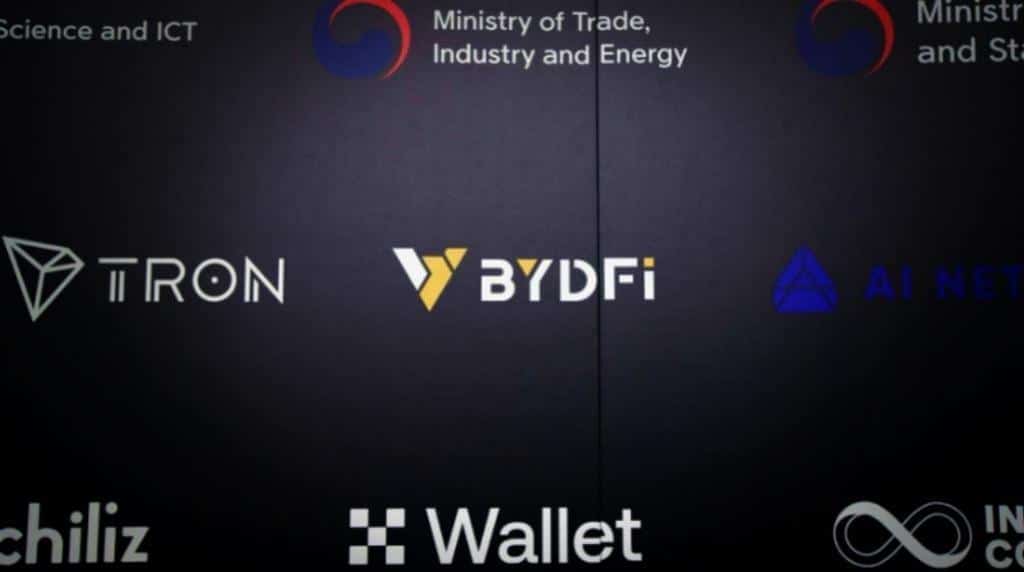
BYDFi, the Seychelles‑based crypto exchange, confirmed its role as an official partner at Seoul Meta Week 2025: METACON, held on 26–27 June at COEX’s third‑floor auditorium, joining industry giants such as Samsung, Google, Intel, Spotify, Kakao and GitHub.

Booth 11 at the event quickly emerged as a high‑traffic hub, drawing crowds eager to engage with BYDFi’s team and claim exclusive merchandise designed for attendees. Michael, co‑founder and CEO of BYDFi, praised Seoul Meta Week as “a venue to share our latest innovations and connect with forward‑thinking builders and traders from across the region”.

In tandem with its showcase, BYDFi announced its membership in South Korea’s CODE VASP Alliance. The move incorporates full integration of Travel Rule compliance technology, aligning with the nation’s Act on Reporting and Using Specific Financial Transaction Information. The exchange says this step strengthens transparency in cross‑platform asset transfers and positions BYDFi as a more secure and regulation‑aligned platform.

According to the company, this initiative forms part of a strategy to build a more unified global compliance framework, elevating industry standards and boosting user confidence.

In April, BYDFi launched MoonX at Paris Blockchain Week: a Web3 on‑chain trading platform integrated with Solana and BNB Chain. MoonX features real‑time market data, Smart Money tracking and copy‑trading for memecoin enthusiasts, signalling BYDFi’s evolution into a combined CEX‑DEX “dual‑engine” operator. Its presence at SMW 2025 emphasises this integration of centralised exchange speed with decentralised ecosystem transparency.

Founded in 2020, BYDFi serves over one million users in more than 190 countries. In 2025, Forbes named it among the best crypto exchanges and apps for beginners. Its platform spans spot and perpetual contracts, automated bots, copy trading and on‑chain tools, offering multi‑channel support for both novice and experienced traders.

Industry analysts note that compliance remains a central challenge for crypto exchanges seeking entry into regulated Asian markets. BYDFi’s involvement with CODE VASP and METACON suggests a strategic push to meld technological innovation with regional regulatory adherence. The Travel Rule technology integration is poised to set a precedent for exchanges aiming to enter South Korea’s tightly supervised financial landscape.

BYDFi’s CEX‑DEX model reflects a larger industry trend towards hybrid exchange services, catering to users demanding both liquidity and decentralised autonomy. MoonX’s Solana and BNB Chain alignment positions BYDFi in direct competition with other hybrid and on‑chain innovators such as dYdX and PancakeSwap.

Critics, however, caution that regulatory alignment alone doesn’t guarantee market penetration. Local adoption may depend on factors like fiat on‑ramps, customer support in Korean, and local partnerships. BYDFi’s prominent presence at SMW 2025 is a step towards building such ties, but the conversion of awareness into sustained user engagement will be the critical measure of success.

Across the exhibition halls at COEX, conversations centred on Web3’s real‑world applications—from decentralised identity to token‑based ecosystems. BYDFi’s booth became a focal point for these discussions, reinforcing its positioning not just as a trading venue, but as a Web3 infrastructure provider.


Claudia, a newly released open‑source graphical user interface for Anthropic’s Claude Code, brings a visually intuitive layer to the traditionally command‑line driven tool. Developed by YC‑backed Asterisk, this desktop application enables developers to manage projects, run interactive AI agents, and track progress—all through a local, privacy‑focused interface. The interface addresses growing frustrations among developers using Claude Code’s text‑only environment. Asterisk’s design employs Tauri for cross‑platform deployment, along […]

Void, a Y Combinator‑backed, open‑source AI code editor, has entered beta testing, promising developers full control over their code and data while delivering advanced AI capabilities. Launched this month, it positions itself as a credible contender to proprietary rivals like Cursor and GitHub Copilot. Developers can now choose whether to host models locally via tools like Ollama and LM Studio, or connect directly to APIs for Claude, […]

Avalonia UI has secured a €3 million sponsorship deal with Devolutions, the provider of Remote Desktop Manager, to boost the development of the Avalonia Accelerate suite over the next three years. This partnership aims to accelerate improvements in documentation, tooling, and core functionality, benefiting the entire Avalonia community. The alliance between Devolutions and Avalonia arrives as the latter seeks new means to sustain its open‑source framework while delivering […]

Maison Mathis at voco Dubai The Palm has unveiled a refreshed Saturday brunch experience, offering a blend of European-inspired cuisine, beachside ambiance, and live music designed to elevate weekend dining. The reimagined service, now a fixture on Palm West Beach from 1pm to 4pm every Saturday, positions itself as a curated lifestyle experience rather than a typical brunch outing. This shift in concept arrives as Dubai’s hospitality […]

ByteDance has unveiled “Dolphin”, an OCR model released under an MIT licence designed to revolutionise document processing by combining layout analysis and parsing in a unified workflow. This new tool is poised to enhance accuracy and adaptability across complex document types, marking a major advancement in optical character recognition. Dolphin operates by first analysing the document layout—identifying paragraphs, tables, figures and formulas—and then parsing each section in […]

A high‑performance tool named Kingfisher, developed by MongoDB, now enables developers and security teams to detect and validate active secrets—such as API keys and credentials—in codebases in real time. Its release addresses shortcomings in existing scanners by verifying through live checks against cloud services. Kingfisher began as a personal project in July 2024 by MongoDB security engineer Mick Grove, who was dissatisfied with current open‑source secret scanners. […]

Elon Musk has cast aside the existing Grok AI training corpus and directed xAI to construct an entirely new foundation—one that excludes what he calls “garbage” and “uncorrected data”—and then retrain the model from that vetted base. This overhaul is intended to power the next-generation Grok, tentatively dubbed Grok 3.5 or Grok 4, with “advanced reasoning” capabilities that Musk says will enable it to “rewrite the entire […]

Security researchers have uncovered an enormous password cache comprising 16 billion unique login credentials spanning major platforms such as Apple, Facebook, Google, Telegram, GitHub, VPN services and even government portals—making it the largest credential leak known to date. These credentials were harvested via at least 30 substantial datasets, some containing up to 3.5 billion records, indicating multiple infostealer malware operations operating at a large scale during 2025. Researchers found […]

OpenAI and Microsoft are locked in critical negotiations over the former’s plan to transform its for-profit entity into a public-benefit corporation, a move that hinges on Microsoft’s approval and hinges on its desire for greater equity. With tensions mounting, OpenAI has even contemplated accusing Microsoft of anti-competitive conduct as leverage in talks, signalling a shift from collaboration to confrontation. The dispute centres on Microsoft’s demand for a […]

Apple has unveiled a breakthrough open‑source framework, Containerization, during its WWDC 2025 keynote, enabling developers to create, run and manage Linux containers directly on macOS. The Container CLI, a companion command‑line tool, operates each container as a lightweight virtual machine, bypassing the need for third‑party platforms like Docker. This marks a strategic shift in Apple’s support for cross‑platform workflows, particularly for developers working on server‑side and cloud‑native […]

Canonical will cease all Bazaar code hosting on its Launchpad platform in two stages, culminating on 1 September 2025. The legacy version control system, once the backbone of many Ubuntu-related projects, will see its web interface retired soon, followed by full removal of backend functionality. Users of Bazaar, including developers relying on Ubuntu Engineering, must migrate to Git or other supported systems ahead of the deadline to preserve continuity. […]

Mistral AI has unveiled Mistral Code, a comprehensive AI-powered coding assistant designed specifically for enterprise software development. The platform integrates advanced language models with secure, customisable deployment options, aiming to address the stringent compliance and security requirements of large organisations. Mistral Code offers a suite of features tailored for enterprise needs, including in-IDE assistance, on-premise deployment capabilities, and robust enterprise tooling. Built upon the open-source project Continue, […]

Bruno, the open-source API client has been announced as a Platinum Sponsor for IndiaFOSS 2025, the upcoming edition of the Free and Open Source Software conference organised by the FOSS United community. The event is scheduled to take place from 20 to 21 September 2025 at the NIMHANS Convention Centre in Bengaluru. Bruno’s sponsorship underscores its growing prominence within the developer community. Designed as a lightweight, Git-friendly […]

The surge in “vibe coding”—a term coined by AI researcher Andrej Karpathy to describe the practice of using AI to generate code based on natural language prompts—has introduced a new set of challenges for developers, particularly in debugging AI-generated applications. While this approach has democratized software development, allowing even non-programmers to create functional apps, it has also led to concerns about code quality, maintainability, and security. Vibe […]

VISHNU RAJA
RYO YAMADA
HITORI GOTOH
IKUYO KITA