

News related to
widen

Rupee trading came under renewed pressure on Tuesday as the currency slipped to 95.43 against the US dollar in early deals, weighed down by firm crude oil prices, month-end dollar demand and fading optimism over a quick easing of tensions in the Middle East.

At the interbank foreign exchange market, the currency opened weaker than Monday’s close of 95.26, losing 17 paise as importers and oil companies stepped up dollar purchases. The fall interrupted a brief recovery in the previous session, when the rupee had gained ground after suspected Reserve Bank of India intervention and softer crude prices lifted sentiment.

Market participants said the rupee’s early weakness reflected a broader risk-off mood across Asia. Oil-sensitive currencies faced selling pressure as traders reassessed the likelihood of a quick diplomatic settlement between Washington and Tehran. The rupee, already vulnerable because of the country’s heavy dependence on imported crude, moved in line with regional peers as energy prices rebounded and the dollar drew support from safe-haven demand.

Brent crude moved sharply higher towards the $100-a-barrel mark after fresh military action involving Iran raised doubts over the durability of peace efforts. Higher oil prices typically increase demand for dollars from refiners and importers, widening pressure on the trade balance and adding to inflation risks. For a country that imports nearly nine-tenths of its crude requirement, each sustained rise in oil prices feeds directly into currency, bond and equity market expectations.

The Reserve Bank of India is expected to remain active in the foreign exchange market to prevent disorderly moves rather than defend a fixed level. State-run banks were seen selling dollars in earlier sessions, a pattern traders often associate with central bank intervention. The central bank has used spot and forward market tools through periods of sharp volatility, drawing on its foreign exchange reserves while seeking to preserve market stability.

Foreign exchange reserves remain substantial by global standards, though they have eased from their February peak amid currency management and valuation changes. The buffer gives policymakers room to smooth volatility, but it does not fully insulate the rupee from external shocks when oil prices, global yields and geopolitical risks move in the same direction.

The rupee’s trajectory now hinges on three immediate variables: the price of crude, the strength of the dollar and the credibility of diplomatic efforts in the Middle East. A sustained climb in oil would complicate the inflation outlook and increase pressure on the current account. A softer dollar or clearer signs of de-escalation could help the rupee recover some lost ground, particularly if portfolio flows stabilise.

Bond markets also reflected caution. The benchmark 10-year yield edged higher as traders priced in the risk that imported inflation could narrow the central bank’s room for policy easing. Money-market rates showed a firmer bias, with swap markets reassessing the path of interest rates ahead of the next monetary policy review.

Equity markets faced a parallel adjustment, with energy-sensitive sectors, import-heavy companies and businesses exposed to foreign currency costs attracting closer scrutiny. Exporters, especially technology and pharmaceutical firms, may gain a translation benefit from a weaker rupee, but broader market sentiment remains tied to oil, capital flows and global risk appetite.

The pressure on the currency comes at a delicate moment for policymakers. Retail inflation has moderated from earlier peaks, but fuel costs and a weaker exchange rate can quickly alter expectations if the move persists. A weaker rupee raises the landed cost of crude, fertilisers, electronics and other imported goods, while also increasing the rupee value of external debt servicing for firms without adequate hedges.

Companies with dollar liabilities are likely to increase hedging activity if volatility persists. Importers generally prefer to cover near-term exposures when oil and the dollar rise together, while exporters may stagger dollar sales in expectation of better rates. This tug of war often intensifies near month-end, when corporate demand for foreign currency rises.

Sebi is preparing a regulatory reset for debt-only listed companies as it seeks to widen corporate bond issuance, reduce avoidable compliance costs and test a tokenised bond market that could make settlement faster and records more transparent.

The Securities and Exchange Board of India is examining whether companies that list only debt securities should continue to face disclosure and compliance obligations similar to those imposed on equity-listed companies. The review is part of a wider effort to deepen the corporate bond market, where heavy reliance on private placements, limited retail participation and concentration among highly rated issuers have kept market breadth below policy ambitions.

Chairman Tuhin Kanta Pandey, who took charge of the regulator in March 2025, has signalled that the next phase of reform will focus on making the debt market more usable for issuers and investors without weakening safeguards. A pilot framework for tokenising corporate bonds is expected to be launched within six to nine months, testing whether distributed-ledger technology can improve settlement speed, servicing, traceability and operational efficiency.

The proposed easing would be especially relevant for entities that raise money only through listed non-convertible securities and do not have listed shares. Such issuers have argued that several provisions under the Listing Obligations and Disclosure Requirements framework were designed primarily for equity-market governance, where public shareholders carry voting and ownership rights. Debt investors, by contrast, are focused mainly on credit quality, repayment capacity, covenant compliance and timely interest payments.

The regulatory challenge is to separate investor-useful disclosure from procedural duplication. Quarterly financials, credit-rating updates, default alerts, asset-cover statements, related-party exposure and material event reporting remain central to creditor protection. Requirements linked more closely to equity ownership, board-shareholder dynamics and public float may be reviewed where they impose costs disproportionate to the risks faced by bondholders.

India’s corporate bond market has expanded sharply but remains structurally narrow. Net outstanding corporate bonds rose from ₹17.5 trillion in FY2014-15 to about ₹53.6 trillion in FY2024-25, with fresh issuances touching ₹9.9 trillion during 2024-25. The market accounts for roughly 15-16 per cent of GDP, far below deeper Asian and developed markets, and is still dominated by highly rated financial and public-sector issuers.

Private placements remain the preferred route for large borrowers, while public bond issues account for only a small share of overall issuance. That pattern has kept institutional investors at the centre of the market and limited participation by individuals, smaller corporates and lower-rated issuers. For policymakers, the issue is not simply market size but market diversity, liquidity and the ability of bonds to finance infrastructure, housing, manufacturing and growth-stage companies at competitive rates.

Tokenisation is being positioned as a market-infrastructure experiment rather than a replacement for existing bond-market systems. Under such a model, a bond can be represented as a digital token on a permissioned ledger, with ownership transfers, coupon payments and redemption records updated through automated processes. A well-designed pilot could reduce reconciliation gaps, improve audit trails and allow faster post-trade processing while preserving regulatory oversight.

Global fixed-income markets have been exploring tokenisation for similar reasons. Automation through smart contracts can simplify issuance, settlement and corporate actions, while better record keeping can lower operational risk. The benefits, however, depend on legal clarity, interoperability with depositories and clearing systems, cyber-security standards and clear rules on investor rights if technology vendors, wallets or ledger nodes fail.

Sebi’s review also comes amid wider changes in India’s debt-market architecture. Online bond platforms have been brought under regulation, the request-for-quote platform has gained traction, and policymakers are looking at ways to widen access to international debt products through regulated channels. Municipal bonds are also drawing greater attention as cities seek market funding for infrastructure, adding to the broader shift from bank-led financing towards market-based debt.

Investor protection will remain the central test for any relaxation. Lighter disclosure rules could encourage more issuers to list debt securities, but weaker transparency would raise borrowing costs and damage confidence if defaults rise or credit risks are obscured. The most likely outcome is a calibrated framework that retains credit-critical reporting while reducing requirements that do not materially affect bondholder decisions.

Iran-linked hackers have expanded cyber-espionage operations against aviation and software organisations in the United States, Europe and the Middle East, using fake recruitment pitches and search-engine manipulation to deliver malware capable of long-term surveillance and data theft. The campaign has been tied to Nimbus Manticore, also tracked as UNC1549, Screening Serpens, Smoke Sandstorm and Iranian Dream Job. The group is assessed to be aligned with Iran’s Islamic […]

Arabian Post Staff -Dubai UAE office rents rose at double-digit rates in the first quarter of 2026 as limited prime supply, resilient tenant demand and stronger renewal activity kept pressure on occupiers across Dubai and Abu Dhabi, even as new leasing decisions became more cautious amid regional uncertainty. Abu Dhabi’s prime office rents increased 11.7 per cent year on year, while Grade A and Grade B spaces […]

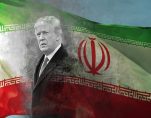
Washington has moved to fold Middle East normalisation into its Iran diplomacy, with President Donald Trump urging key Muslim-majority states to join the Abraham Accords as negotiations with Tehran enter a delicate phase. Trump used a Truth Social post to say talks with the Islamic Republic of Iran were “proceeding nicely”, while warning that failure to reach what he called a “great deal” could send the parties […]

Hyperliquid’s HYPE token has climbed to record levels after the decentralised exchange channelled almost all of its trading-fee revenue into open-market token purchases, strengthening confidence in one of the fastest-growing protocols in crypto derivatives. The token traded above $64 over the weekend, extending a sharp advance that has taken it from below $4 at its 2024 lows to a position among the largest digital assets by market […]

Jensen Huang’s arrival in Taipei ahead of Computex has put Nvidia’s next AI platform at the centre of a widening test for Taiwan’s semiconductor supply chain, as the company seeks more production capacity for Vera Rubin while riding record demand for data-centre chips.

Huang is expected to meet Taiwan Semiconductor Manufacturing Company chairman and chief executive C. C. Wei as Nvidia prepares a second-half production ramp for Vera Rubin, the next-generation platform that combines new Vera CPUs, Rubin GPUs, advanced memory and high-speed networking for rack-scale AI systems. The visit has drawn close attention because Nvidia’s product cycle is now tied more tightly than ever to Taiwan’s foundries, packaging houses, server assemblers and component suppliers.

Nvidia reported revenue of $81.6bn for the quarter ended April 26, up 85 per cent from a year earlier, with data-centre revenue reaching $75.2bn, up 92 per cent. The company also authorised an additional $80bn in share repurchases and raised its quarterly dividend to 25 cents a share from 1 cent, underscoring the scale of cash generation from the AI infrastructure boom.

Demand is being driven by cloud providers, AI model developers, enterprise customers and sovereign AI projects, all seeking clusters capable of training and running larger generative and agentic AI systems. Nvidia has described the buildout of “AI factories” as one of the largest infrastructure expansions in technology history, with its platform spanning chips, networking, systems software and reference designs for data centres.

Vera Rubin is expected to follow the Blackwell and Grace Blackwell generation, which is still being shipped in high volumes. That overlap is creating pressure across Taiwan’s supply chain because new capacity must support existing commitments while preparing for a platform with different requirements in advanced packaging, high-bandwidth memory integration, board assembly, cooling and system validation.

Huang has described Vera Rubin as potentially the biggest product ramp in Nvidia’s history and one of the largest technology manufacturing efforts Taiwan has handled. Industry estimates around the platform point to millions of parts across each system and the involvement of well over 100 Taiwan-based ecosystem partners, from chip fabrication and advanced packaging to printed circuit boards, power systems, connectors, thermal modules and final server integration.

TSMC remains central to the effort because Nvidia depends on its leading-edge process technology and advanced packaging capacity. The challenge is not limited to wafers. CoWoS and other packaging technologies have become strategic bottlenecks as AI accelerators require multiple logic dies, high-bandwidth memory stacks and dense interconnects. Any delay in packaging expansion can ripple through server production schedules, cloud deployment plans and Nvidia’s revenue timing.

Taiwan’s broader technology sector has become a critical artery for the global AI trade. TSMC, Foxconn, Quanta, Wistron, Wiwynn, Inventec and a dense network of specialist suppliers are competing to add capacity while dealing with constraints in land, power, water, skilled labour and equipment availability. The concentration gives Nvidia speed and engineering depth, but also exposes the company to geopolitical and operational risks.

China remains the clearest commercial setback. Huang has said US export controls have pushed Nvidia’s share of China’s advanced AI chip market to zero, a striking reversal for a company that once held a dominant position there. The restrictions have strengthened the opening for Huawei and other domestic suppliers, while leaving Nvidia dependent on whether Washington and Beijing allow compliant chips to be sold without triggering national-security objections.

That loss has not slowed Nvidia’s global momentum, but it has changed the composition of growth. Revenue is now increasingly concentrated in markets where hyperscale cloud companies, enterprise AI developers and governments are building large AI data centres outside China. For investors, the question is whether demand can keep absorbing each successive architecture at the scale implied by Nvidia’s guidance.

Nvidia forecast revenue of about $91bn for the current quarter, above market expectations, signalling that orders for AI infrastructure remain strong despite concerns about overcapacity, power shortages and the pace at which customers can monetise AI services. Operating expenses rose 49 per cent to $7.75bn, reflecting the growing cost of research, supply commitments and ecosystem investments needed to sustain the company’s lead.

Advertisements

Vibe coding has moved from a developer shortcut to a mainstream software-building habit, with non-developers now making up 63 per cent of users creating applications through natural-language prompts rather than conventional programming. The shift is drawing writers, students, founders, investors, teachers and small businesses into a field that had long required technical training. These users are building websites, internal dashboards, classroom tools, workflow apps and lightweight commercial […]

New Delhi will send its largest business delegation to Canada this week, marking a sharp acceleration in efforts to rebuild commercial ties after more than two years of diplomatic strain and stalled trade negotiations.

Commerce and Industry Minister Piyush Goyal is scheduled to visit Canada from May 25 to 27, accompanied by around 150 business leaders for meetings in Ottawa and Toronto. The delegation is expected to include senior representatives from mining, energy, automotive, aerospace, manufacturing, pharmaceuticals, education and technology, with talks centred on investment, market access and the proposed Comprehensive Economic Partnership Agreement.

The visit comes as negotiators from both countries hold another round of discussions in Ottawa from May 25 to 29. Officials are working towards an early conclusion of the trade pact after formally relaunching negotiations this year. The agreement is intended to widen market access, reduce barriers and deepen supply-chain cooperation across sectors where both economies see strategic value.

Bilateral trade stood at nearly $9bn in 2024-25, modest in relation to the size of the two economies. Both governments have set a target of raising trade to $50bn by 2030, a goal that would require faster progress in goods, services, investment and energy cooperation. Canada is seeking stronger commercial links beyond its heavy dependence on the United States, while New Delhi is trying to secure reliable supplies of critical minerals, uranium, clean-energy technology and advanced manufacturing inputs.

Energy and minerals are expected to figure prominently in the discussions. Canada holds significant reserves of uranium, potash, lithium, nickel, cobalt and rare earth elements, all of which are relevant to New Delhi’s nuclear power, fertiliser security, electric mobility and electronics manufacturing plans. Earlier this year, the two sides announced a C$2.6bn uranium supply arrangement involving Cameco, giving fresh weight to talks on long-term clean-energy cooperation.

Market access will be another sensitive area. New Delhi wants wider entry for textiles, leather goods, processed foods, pharmaceuticals and services, while Canada is expected to push for opportunities in agriculture, energy, education, financial services and high-technology sectors. Businesses on both sides have argued that tariffs, standards, certification rules and mobility restrictions have limited the relationship despite strong people-to-people ties and a large diaspora in Canada.

The delegation also carries political significance. Relations deteriorated sharply in 2023 after Ottawa alleged involvement by New Delhi in the killing of Sikh separatist leader Hardeep Singh Nijjar in British Columbia. New Delhi rejected the allegation, and both sides expelled diplomats as the dispute spread into security, visa and intelligence cooperation. The strain interrupted trade talks and pushed commercial engagement into a lower gear.

A gradual reset began after political engagement resumed at senior levels. Canada’s Prime Minister Mark Carney invited Prime Minister Narendra Modi to the G7 summit in Alberta in June 2025, and the two governments subsequently restored channels for trade and strategic dialogue. Carney’s visit to India in March 2026 gave the relationship a clearer economic framework, including the signing of terms of reference for the trade pact and a commitment to expand cooperation in energy, technology, agriculture, education and defence-related sectors.

The May visit is designed to move that process from political signalling to business execution. Meetings with Canadian ministers, industry bodies and corporate leaders are expected to test where near-term agreements are possible, especially in sectors less vulnerable to political friction. Ottawa and New Delhi are also exploring cooperation in shipbuilding, pharmaceuticals, tourism and education, areas identified during earlier ministerial exchanges.

Canada’s interest is shaped by a broader effort to diversify export markets and reduce exposure to shifts in US trade policy. New Delhi, meanwhile, is looking for partners that can support its manufacturing expansion, clean-energy transition and mineral security. The fit is commercially evident, but negotiations are likely to remain complex because both sides have defensive interests in agriculture, labour mobility, procurement and regulatory standards.

For businesses, the scale of the delegation suggests a wider appetite to resume investment conversations that had slowed during the diplomatic dispute. More than 600 Canadian companies have a business presence in India, while firms from India have built interests in information technology, steel, automotive components, hospitality and financial services in Canada. Student mobility and professional services also remain important links, although visa and security concerns have added caution to the relationship.

Nicolas Cage’s first leading television role has arrived with a strong critical start, as Spider-Noir opened on MGM+ with a 91 per cent Tomatometer score on Rotten Tomatoes from 45 reviews, giving Sony’s live-action Spider-Man television experiment an early boost before its global Prime Video launch on 27 May. The eight-episode series places Cage at the centre of a 1930s New York crime story as Ben Reilly, […]

Tether is preparing to launch GEL₮, a blockchain-based stablecoin tied to the Georgian lari, with backing from Georgia’s government in a move aimed at putting the country’s currency on digital asset rails and strengthening its position as a regional fintech hub. The project, announced on Monday, would make GEL₮ a digital representation of the lari rather than a central bank digital currency. It is being positioned as […]

Australia is moving to extend its domestic gas reservation scheme across liquefied natural gas projects and export arrangements, including volumes tied to existing contracts, sharpening a policy shift aimed at easing pressure on households, power generators and manufacturers exposed to volatile east coast gas prices. The draft design framework for the scheme requires LNG exporters to supply gas equal to 20 per cent of their export volumes […]

Qatar has stepped up its investment campaign in China with high-level business meetings in Shanghai and Hangzhou aimed at turning long-standing trade links into deeper industrial, technology and financial partnerships.

Invest Qatar’s delegation, led by its chief executive Sheikh Ali bin Alwaleed Al-Thani, held executive-level meetings, site visits and closed-door business discussions with Chinese companies across advanced manufacturing, life sciences, industrial technologies and digital platforms. The engagements included WuXi Biologics, Shanghai SUS Environment, Cainiao Group and Ant International, placing the tour at the intersection of Qatar’s diversification agenda and China’s strengths in biotechnology, logistics, environmental services and digital finance.

The visit was designed to present Qatar as a platform for regional expansion, with Invest Qatar highlighting support for market entry, regulatory coordination, site selection, expansion planning and aftercare services. The pitch reflects Doha’s effort to move beyond energy-led ties and attract capital, technology and operational expertise into sectors linked to the Third National Development Strategy and Qatar National Vision 2030.

China already occupies a central place in Qatar’s external economic network. Bilateral cooperation spans energy, logistics, manufacturing, technology and financial services, while Qatar hosts about 520 Chinese companies. Over the 2017-2026 period, China has ranked among Qatar’s top 10 sources of foreign direct investment, with 59 projects generating more than $3bn in capital expenditure and creating more than 3,200 jobs across multiple sectors.

The Shanghai and Hangzhou programme signals a more targeted approach by Qatar’s investment promotion authorities. Rather than broad promotional activity, the delegation focused on companies that fit Qatar’s priority clusters. WuXi Biologics brings relevance to life sciences and contract research, Shanghai SUS Environment operates in waste-to-energy and environmental infrastructure, Cainiao Group is a major logistics and supply-chain player, and Ant International strengthens the digital payments and fintech dimension of the outreach.

Energy remains the anchor of Qatar-China economic relations. China is Qatar’s largest trading partner, with bilateral trade reaching $24.22bn in 2024. China exported goods worth about $4.17bn to Qatar and imported about $20.05bn, led by liquefied natural gas and industrial helium. Qatar is also China’s second-largest source of LNG imports, reinforcing the strategic weight of the relationship at a time when Asian demand remains central to global gas markets.

QatarEnergy’s expansion strategy has further tightened industrial links with China. Long-term LNG supply arrangements linked to the Chinese market, together with major vessel orders placed with Chinese shipbuilders, have created a broader commercial ecosystem around the North Field expansion. Qatar aims to raise LNG production capacity from 77mn tonnes a year to 142mn tonnes by 2030, a target that will require shipping, engineering, financing and downstream partnerships across Asia.

The investment outreach comes as Gulf states increasingly seek to use energy relationships as a foundation for wider economic cooperation with Asia. For Qatar, China offers scale, capital depth and technology capacity. For Chinese groups, Qatar provides political stability, strong transport connectivity, free-zone infrastructure and access to Gulf, African and South Asian markets.

Doha is also seeking to position itself as a business base for companies navigating a more fragmented global trade environment. Regulatory certainty, a relatively high-income market, advanced digital infrastructure and a sovereign investment ecosystem give Qatar tools to compete for regional headquarters, specialised manufacturing and services projects. The challenge will be converting exploratory meetings into project commitments in sectors where regional competition is intense, particularly from Saudi Arabia and the UAE.

Financial services form another important strand of the relationship. Qatar Investment Authority’s moves in China’s asset management sector and broader Gulf interest in Asian financial markets point to a shift from passive portfolio exposure towards more strategic investment channels. That trend could support new capital-market links, fintech partnerships and investment vehicles connecting Doha and Chinese financial centres.

The latest Invest Qatar tour also reflects a diplomatic-economic strategy that has become more visible across Asia. Qatar has sought to deepen ties with major economies while keeping its partnerships diversified across the United States, Europe, China and other Asian markets. This balancing approach allows Doha to pursue commercial opportunities while avoiding excessive dependence on any single investment corridor.

For Chinese companies, Qatar’s offer is strongest where national development goals align with corporate expansion plans. Life sciences companies can tap healthcare investment and research partnerships, logistics operators can link into Hamad Port, Hamad International Airport and regional re-export networks, and digital platforms can benefit from a market that has been investing in cashless payments, cloud services and smart-city infrastructure.

Arabian Post Staff -Dubai Abu Dhabi has gained a new artificial intelligence venture aimed at removing one of the most persistent barriers facing deaf and hard-of-hearing people: the absence of instant, affordable sign-language interpretation in everyday public services. New York University Abu Dhabi has launched ChatSign, a commercial AI spin-out developed from research at its Embodied AI and Robotics Lab. The system translates spoken Arabic and English […]

California Governor Gavin Newsom has declared a state of emergency in Orange County after an overheating chemical storage tank at a Garden Grove aerospace facility raised fears of an explosion, toxic release or hazardous spill affecting tens of thousands of residents. The emergency proclamation covers a GKN Aerospace site where a tank holding roughly 5,000 to 7,000 gallons of methyl methacrylate began heating and emitting fumes on […]

OpenAI-generated images are now easier to trace after the company added two embedded provenance signals to pictures created through ChatGPT, Codex and its application programming interface, marking a significant shift for users who rely on AI visuals but cannot openly disclose generative AI use. The change, introduced on May 19, places OpenAI’s image tools inside a widening industry push to label synthetic media as platforms, publishers, regulators […]

Matein Khalid US President Donald Trump’s recent state visit to China has done little to end the stalemate in the Strait of Hormuz. If anything, Iran appears to have been emboldened enough to escalate Gulf tensions through drone strikes near the Barakah Nuclear Energy Plant in Abu Dhabi and rocket attacks targeting sites in Saudi Arabia. Brent crude trading at about $110 a barrel has coincided with a brutal sell-off […]

Hackers have compromised the Laravel-Lang open-source ecosystem, turning trusted PHP localisation packages into a vehicle for credential theft and remote code execution across developer machines and build systems. The attack, detected on May 22, targeted packages used by Laravel applications to manage translations, attributes and HTTP status messages. Security teams tracking the incident identified malicious activity across laravel-lang/lang, laravel-lang/http-statuses, laravel-lang/attributes and laravel-lang/actions, with more than 700 historical […]

Ras Al Khaimah’s first university research and innovation awards have drawn 189 submissions, giving the emirate a new platform to connect student ideas with national priorities in technology, sustainability, healthcare and advanced industry. The inaugural RAK Award for Excellence in University Research and Innovation 2026, organised by the American University of Ras Al Khaimah, brought together entries from 20 universities across the UAE. Of those, 94 projects […]

Arabian Post Staff -Dubai Saudi Arabia’s ambassador to Canada hosted Defence Minister David J. McGuinty in Ottawa, underscoring a continuing effort by both governments to deepen diplomatic, security and economic engagement after years of strain in the relationship. Ambassador Amal Almoalimi received McGuinty at her official residence on May 22, where the two sides discussed issues of mutual interest and reaffirmed the strength of relations between the […]

Huawei has deepened its Saudi Arabia cloud strategy through a distribution partnership with Gulf Applications, widening enterprise access to cloud infrastructure, artificial intelligence tools and disaster recovery services as the kingdom pushes ahead with its Vision 2030 digital agenda. The agreement appoints GAPP as Huawei Cloud’s official cloud solutions distributor in Saudi Arabia, placing the company at the centre of Huawei’s channel expansion in one of the […]

Arabian Post Staff -Dubai President Donald Trump has said a peace agreement with Iran is close to completion, raising expectations of a diplomatic breakthrough that could reopen the Strait of Hormuz after months of conflict disrupted one of the world’s most important energy corridors. Trump wrote on Saturday that an agreement had been “largely negotiated” but remained subject to finalisation between the United States, Iran and other […]

Hackers are exploiting unsupported F5 BIG-IP appliances to gain SSH access to enterprise Linux systems, turning trusted edge infrastructure into entry points for deeper attacks on identity systems and internal applications. A May 22 threat intelligence disclosure detailed a multi-stage intrusion that began with an exposed F5 BIG-IP load balancer and moved through Linux infrastructure, an internal Atlassian Confluence server and eventually Active Directory. The case underlines […]

Arabian Post Staff -Dubai Dubai has frozen private school fees for the 2026-27 academic year, giving families relief from education cost pressures as the emirate moves to balance household affordability with the stability of a fast-growing private education sector. Knowledge and Human Development Authority confirmed that schools under its regulation will not be permitted to raise tuition fees in the next academic year. The decision follows directives […]

VISHNU RAJA
RYO YAMADA
HITORI GOTOH
IKUYO KITA
Just in:
Workday targets Honeydew purchase to unify AI metrics // Balagopal challenges CM over tax revenue // PayerMax and ShopeePay Strengthen Strategic Partnership to Advance Digital Payment Collaboration in Southeast Asia // Dubai Introduces SHARH, an AI-Powered Platform Helping Entrepreneurs Buy, Sell and Manage Businesses in the UAE // Jaiedco and Golden Bridge Announce Strategic Collaboration for a New Dubai Islands Development //
Centre grants aircraft cabin access for Sabarimala pilgrims’ irumudi
// Egypt’s African Union trade climbs to $8.2 billion // US military rebuts Iran’s Gulf F-16 strike allegation // Coinbase targets 2027 launch amid state gambling lawsuits // 2026 Tropical Rainforest Ecosystem Partners Conference Kicks off in Hainan // Diabetes Malaysia And Alpro Pharmacy Set National Record With 11,007 Most Blood Glucose Screenings Conducted Across Malaysia In Just 48 Hours // Yeebo Announces Interim Results for FY26/27 Revenue Increases by 45.5% to HK$806.7 Million Profit Attributable to Owners Surges 87.6% to HK$2,284.7 Million // Technology at Work, Heritage for All: The “Chinese Approach” to Safeguarding the Leshan Giant Buddha // Ex-minister named accused in Messi visit fraud case // Bail refused to 17-year old in Abhiram murder // Crypto market loses $150 billion amid broad sell-off // Promoting Common Human Development Through Exchanges and Mutual Learning Among Civilizations // Singapore regulator cautions against AI access to bank logins // Padmini follows Padmaja for ‘ghar vapsi’ // Sui activates Hashi Bitcoin lending across partner network //


