Just in:
Toward a Shared Future for Humanity: Rethinking Civilizational Exchange // Phancy Announces Business Performance for the Nine Months Ended September 30, 2026 // Promoting Common Human Development Through Exchanges and Mutual Learning Among Civilizations //
Rahul addresses League’s INDIA bloc grievances
// US military rebuts Iran’s Gulf F-16 strike allegation // Fungal toxins detected across 212 UK plant-based products // Workday targets Honeydew purchase to unify AI metrics // Jaiedco and Golden Bridge Announce Strategic Collaboration for a New Dubai Islands Development // Padmini follows Padmaja for ‘ghar vapsi’ // Dalilk Academy reaches 27 million, targets 100 million by 2030 // Sui activates Hashi Bitcoin lending across partner network // 2026 Tropical Rainforest Ecosystem Partners Conference Kicks off in Hainan // Ex-minister named accused in Messi visit fraud case // Singapore regulator cautions against AI access to bank logins // Energy Markets Find Little Substance In Shenzhen Summit Promises // Sabarimala booking discrepancies prompt sabotage angle probe // Yeebo Announces Interim Results for FY26/27 Revenue Increases by 45.5% to HK$806.7 Million Profit Attributable to Owners Surges 87.6% to HK$2,284.7 Million // ED searches five districts in probe against hawala // Diabetes Malaysia And Alpro Pharmacy Set National Record With 11,007 Most Blood Glucose Screenings Conducted Across Malaysia In Just 48 Hours // Saudi defences destroy three Houthi missiles targeting Riyadh //

News related to
widen

Arabian Post Staff -Dubai National Human Rights Institution has issued a strong condemnation of Iranian military attacks targeting the United Arab Emirates, describing the strikes as a grave violation of sovereignty and a direct threat to civilian safety and fundamental human rights. The institution said the attacks, which have involved missiles and drones striking or attempting to strike locations across the country since late February, amount to […]

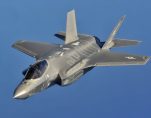
Stalled software development for the F-35 Lightning II has drawn scrutiny from Pentagon auditors, even as the stealth fighters continue to fly operational missions linked to tensions with Iran, underscoring a widening gap between battlefield deployment and technological modernisation. An annual assessment by the Pentagon’s weapons testing office found that efforts to introduce new software capabilities for the aircraft failed to produce additional combat functionality during the […]

Central Board of Secondary Education has cancelled all Class 12 board examinations scheduled between March 16 and April 10 across several Middle Eastern countries, citing security concerns linked to the widening conflict involving Iran and regional powers.

The decision affects CBSE-affiliated schools in Bahrain, Iran, Kuwait, Oman, Qatar, Saudi Arabia and the United Arab Emirates, where thousands of expatriate students were preparing for the final phase of the 2026 board examination cycle. The board said all remaining and previously postponed examinations for Class 12 in these locations stand cancelled and that an alternative evaluation method for students will be announced separately.

Officials indicated that safety considerations were the primary factor behind the move as tensions and military activity across parts of West Asia disrupted normal operations, including international travel and school schedules. Schools across the region had already reported logistical difficulties, uncertainty among students and disruptions to classroom teaching as governments issued security advisories and airlines altered flight routes.

The cancellation marks the culmination of a series of escalating measures by the board over the past weeks. Earlier in March, several examinations scheduled for overseas centres in the region were first postponed following a review of the geopolitical situation. Papers scheduled between March 9 and March 11 were delayed, with authorities saying conditions would be reassessed before deciding whether to continue with the examination calendar.

Subsequent circulars extended the postponement to additional dates as regional uncertainty deepened, affecting exam centres that serve large expatriate student communities in Gulf states. The board had already cancelled Class 10 examinations in the region earlier in the month, indicating that authorities were increasingly concerned about the ability of schools to conduct secure and orderly examinations during the conflict.

CBSE-affiliated institutions in the Gulf represent a significant segment of the overseas education network linked to the board’s curriculum. More than 150 schools operate across West Asia under CBSE affiliation, serving children of expatriate professionals working in sectors ranging from construction and healthcare to technology and finance. These schools follow the same academic calendar and examination framework as institutions in India, with board examinations playing a decisive role in university admissions.

Students and parents across the region had been closely monitoring official notifications as the situation evolved. The postponements earlier triggered confusion among candidates preparing for key subjects, particularly because board examinations typically determine eligibility for higher education programmes both in India and internationally.

Education administrators say the uncertainty surrounding examinations has added pressure on students who had spent months preparing for the crucial assessments. Community organisations representing expatriate families in Gulf countries had appealed to authorities for a decision that would prioritise student welfare and minimise academic disruption.

School leaders in the United Arab Emirates and Saudi Arabia described the board’s decision as a difficult but necessary step given the circumstances. Administrators had warned that maintaining examination schedules amid heightened security concerns could expose students, invigilators and school staff to unnecessary risks, especially in locations where travel advisories or temporary airspace restrictions complicated logistics.

Education experts note that examination cancellations in overseas centres remain rare, reflecting the exceptional circumstances affecting the region. Board examinations are normally conducted simultaneously across India and international centres to maintain standardised assessment procedures.

Authorities are now expected to announce a mechanism for evaluating the performance of affected students. Education analysts say possible options could include internal assessment scores, practical examination results or a formula combining school-based evaluations with earlier academic performance. Similar methods have been used during extraordinary disruptions in the past to ensure students are not disadvantaged in university admissions.

Universities and higher-education institutions that admit CBSE students are also monitoring developments closely. Admission timelines in many countries coincide with the board examination season, making timely declaration of results critical for students applying to degree programmes abroad.

Parents and teachers say clarity on the evaluation process will be essential in the coming days. Many schools have begun counselling sessions and online support programmes to help students manage anxiety and remain focused on academic planning despite the upheaval.

Rising oil prices linked to the war involving Iran are creating fresh economic strain for Indonesia just as millions prepare for the annual Eid al-Fitr travel surge, placing President Prabowo Subianto’s administration under mounting pressure to shield consumers from higher fuel costs.

Energy markets have been rattled by escalating conflict across the Persian Gulf, where attacks on shipping routes and oil infrastructure have disrupted global crude supplies. A large share of the world’s petroleum exports passes through the Strait of Hormuz, a narrow maritime corridor connecting Gulf producers with international markets. Disruption to tanker traffic through this chokepoint has pushed benchmark crude prices sharply higher, triggering fuel price increases across Asia and raising fears of supply shortages in import-dependent economies.

Indonesia faces particular vulnerability because it relies heavily on imported energy. Around a quarter of its crude oil and roughly a third of liquefied petroleum gas supplies originate in the Middle East. Shipping disruptions in the Gulf have already complicated trade flows, with tanker movements slowed by security risks and insurance costs rising for vessels operating in the region. Market volatility has driven crude prices beyond the psychological threshold of $100 per barrel, fuelling concern that further escalation could drive them even higher.

The timing of the price shock has heightened the challenge for Jakarta. Eid al-Fitr, marking the end of Ramadan, triggers one of the largest annual travel movements in the country as families journey from major cities to hometowns across the archipelago. State energy company Pertamina anticipates gasoline demand during the holiday period to climb by more than 10 per cent, intensifying pressure on supply chains already strained by global market turbulence.

Authorities have attempted to reassure the public that domestic fuel supplies remain sufficient. Officials say government stockpiles and logistics networks can support the expected surge in consumption during the festive season. At the same time, policymakers have signalled that subsidised fuel prices will remain unchanged until the Eid holidays conclude, a move designed to prevent abrupt increases in transport costs during the peak travel period.

Holding prices steady carries significant fiscal implications. Indonesia already devotes substantial resources to energy subsidies, allocating more than 380 trillion rupiah in the state budget to keep fuel and electricity costs manageable for households and businesses. Sustaining those subsidies while global oil prices rise could widen the fiscal deficit or force adjustments elsewhere in the budget.

Economists warn that prolonged turbulence in global oil markets may reverberate across the broader economy. Higher crude prices increase the cost of imports and can erode Indonesia’s trade balance, particularly because the country has transitioned from being an oil exporter to a net importer over the past two decades. Analysts estimate that each $10 increase in the price of oil could shave hundreds of millions of dollars from the country’s trade surplus while raising domestic inflationary pressures.

Currency markets have already reacted to the geopolitical shock. The rupiah has faced downward pressure amid investor concerns about rising energy import costs and potential fiscal strain from expanded subsidies. A weaker currency makes fuel imports more expensive, compounding the burden on state finances and increasing the risk that domestic prices may eventually need to adjust.

Officials are exploring alternative strategies to mitigate the impact. One approach involves diversifying crude imports away from the Middle East by securing additional shipments from suppliers such as the United States and other regions less affected by the conflict. Authorities are also considering longer-term measures including accelerated blending of biofuels and the expansion of renewable energy capacity to reduce dependence on imported oil.

Energy security has become a central concern for policymakers across Southeast Asia as the Gulf crisis unfolds. Countries throughout the region rely heavily on imported petroleum and have limited capacity to absorb sustained price shocks. Governments have begun introducing conservation measures, adjusting subsidies, and seeking alternative suppliers as they attempt to stabilise domestic markets.

Indonesia’s logistical challenges are magnified by its geography. The archipelago spans more than 17,000 islands, making fuel distribution complex even during stable market conditions. Sudden shifts in global prices can ripple quickly through domestic supply chains, affecting transportation costs, food prices, and broader consumer inflation.

Political pressures add another layer of complexity for the administration. Public sensitivity to fuel prices has historically been high, and previous attempts to reduce subsidies have sparked protests and social unrest. Managing the current crisis therefore requires balancing fiscal prudence with the need to maintain social stability and support economic growth.

Market analysts say the duration of the Middle East conflict will determine how severe the economic impact becomes. If disruptions to shipping lanes and energy infrastructure persist, global crude supplies could tighten further, pushing prices to levels that strain government budgets and household finances alike. A prolonged crisis could also prompt broader shifts in energy policy, encouraging faster investment in domestic energy resources and renewable alternatives.

Al Habtoor Polo and Jehangiri Polo have secured places in the final of the fourth Dubai Polo Challenge Cup after winning their respective qualifying matches at the Al Habtoor Polo Resort and Club in Dubai, setting up a decisive clash in one of the region’s prominent mid-handicap tournaments. The competition, staged at the sprawling polo grounds on the outskirts of Dubai, features four teams with handicap ratings […]

By K Raveendran #Oil markets have entered a phase of acute uncertainty as military escalation involving strikes on Iran and the resulting closure of the Strait of Hormuz begin to reverberate through global energy supply chains. Within just over a week of the disruption, more than 12 million barrels of oil equivalent per day of […]

The article Analysts See Prolonged War Cutting Up To 70% Of Crude Output appeared first on Latest India news, analysis and reports on Newspack by India Press Agency).

Authorities in Hong Kong have launched one of the most sweeping investigations into the territory’s financial industry in nearly a decade, placing hedge fund Infini Capital Management at the centre of a widening insider-trading probe that has rattled brokers, banks and investors across Asia’s leading financial hub.

The investigation, conducted jointly by the Securities and Futures Commission and the Independent Commission Against Corruption, has led to the arrest of eight people and the search of offices and residences across the city. The operation targeted suspected exchanges of confidential market information tied to share placements in Hong Kong-listed companies, a practice that authorities say may have generated illicit profits while undermining confidence in capital markets.

Sources familiar with the matter have identified Infini Capital Management, alongside brokerage operations linked to Citic Securities and Guotai Junan International, as among the firms caught up in the crackdown. The investigation centres on allegations that executives accepted more than HK$4 million in bribes in return for non-public information about equity placements before those transactions were disclosed to investors.

According to regulatory statements, the suspected information leaks allowed traders to establish short positions in companies whose share placements would later depress prices once announced publicly. Authorities estimate the strategy generated profits of roughly HK$315 million, underscoring the scale of the alleged misconduct.

Infini Capital has said its operations remain normal and that its investment management processes have not been disrupted by the investigation. The firm has pledged to comply fully with regulatory authorities while declining to comment on what it described as unverified reports circulating in the market.

Founded in 2015 by former investment banker Tony Chin, the hedge fund built a reputation for aggressive trading strategies and direct negotiations with companies seeking capital. Market participants say the firm sometimes approached share placement deals in ways that bypassed traditional investment bank intermediaries, a tactic that brought both attention and scrutiny within Hong Kong’s tightly interconnected financial community.

Chin, who previously worked at major global financial institutions before establishing the fund, has not responded publicly to requests for comment regarding the probe. Regulatory filings indicate that he stepped down as a responsible officer for Infini Capital at the end of 2025, meaning he no longer holds the licence required to oversee regulated asset management activities on behalf of the firm.

Developments surrounding the investigation have reverberated beyond the immediate targets of the raid. Several global banks, including JPMorgan and UBS, had already severed prime brokerage relationships with Infini Capital months before the probe became public, according to people familiar with the matter. The reasons behind the decisions were not disclosed, though the timing has drawn attention among market observers assessing the fund’s risk profile and compliance record.

Prime brokerage services play a critical role in hedge fund operations, providing financing, securities lending and trade execution support. Losing such relationships can constrain trading activity and signal broader concerns among financial institutions regarding counterparty risk.

The crackdown arrives at a moment when Hong Kong’s equity capital markets have been undergoing a revival following a prolonged downturn in listings. Fundraising through share offerings surged in the past year as Chinese technology and industrial companies turned to the territory for capital, helping restore the city’s position as one of the world’s busiest venues for initial public offerings.

Regulators have responded to that surge by intensifying scrutiny of investment banks and brokers responsible for underwriting and distributing share sales. Officials have warned repeatedly that lapses in due diligence or market conduct could undermine investor trust and the credibility of Hong Kong’s financial system.

Analysts say the case highlights the complex ecosystem that has developed around equity placements, where hedge funds, banks and corporate issuers interact in fast-moving transactions worth hundreds of millions of dollars. Such deals often involve limited groups of investors receiving shares at discounted prices, creating incentives for traders to speculate on how markets will react once the placements are disclosed.

Authorities believe that confidential information about several such deals was circulated before public announcements, allowing certain investors to position themselves advantageously. The resulting trades allegedly generated substantial profits when share prices fell following the disclosure of the placements.

Operation “Fuse”, the codename given to the joint investigation, involved searches at fourteen locations across Hong Kong, including corporate offices and private residences. The arrests included senior executives within financial firms, signalling that regulators are pursuing accountability at the highest levels of the industry.

Market participants are watching closely to see whether the probe expands further. Hong Kong’s regulators have historically pursued insider trading cases aggressively, but raids on multiple high-profile financial institutions simultaneously are comparatively rare.

Infini Capital had become an active participant in the city’s equity markets over the past several years, taking positions in a number of high-profile share placements linked to technology companies and other fast-growing sectors. The firm also forged financing partnerships with emerging robotics and artificial intelligence businesses seeking funding through Hong Kong’s capital markets.


Advertisements

Digital asset markets received renewed attention after Coinbase chief executive Brian Armstrong argued that tokenisation of financial assets could remove entrenched inequities in global finance by widening participation in investment markets and lowering structural barriers that historically limited access. Armstrong, speaking in comments circulated across financial and crypto industry platforms, said tokenisation could “strip away a huge amount of unfairness from the system by increasing asset access […]

BlackRock has introduced a new exchange-traded fund offering investors exposure to ethereum alongside staking-based income, marking another step in the expansion of institutional products tied to digital assets. The fund, trading under the ticker ETHB, opened with more than $100 million in assets and generated over $15 million in trading volume during its first day on the market, signalling strong early demand from investors seeking yield in […]

Arabian Post Staff -Dubai Commercial shipping across the Gulf and the Strait of Hormuz has come under direct attack after a series of coordinated strikes hit at least five vessels, leaving one crew member dead and several ships damaged or ablaze amid escalating regional conflict. Explosive-laden boats believed to be linked to Iran struck two fuel tankers in Iraqi waters near the port of Al-Faw, igniting fires […]

SINGAPORE – Media OutReach Newswire – 12 March 2026 – Zuellig Pharma, a leading healthcare solutions company in Asia, today announced that it has acquired all rights, title, and interest in and to Cialis® (Tadalafil), a leading men’s health product from Eli Lilly and Company (“Lilly”) in Hong Kong, Macau and South Korea.

Following the acquisition, Zuellig Pharma will now own the trademarks, marketing authorizations and license manufacturing know-how for Cialis®, a treatment for erectile dysfunction (ED) and benign prostatic hyperplasia (BPH), in 11 markets in Asia, with the expansion of its ownership into three additional markets beyond the original eight. Zuellig Pharma will also continue to promote and distribute the brand in these markets.

The expanded ownership of Cialis® will widen accessibility of the drug to a significant population of men in Asia who are affected by ED and BPH. The acquisition also aligns with Zuellig Pharma’s strategic priority of building a strong portfolio of owned prescription healthcare products as an integrated healthcare solutions company.

“Our acquisition of Cialis® in three additional markets builds on the strong foundation we established two years ago and highlights our proven success in scaling trusted brands effectively through our commercial capabilities and deep expertise. As we broaden our footprint, we remain focused on delivering sustainable growth and advancing our purpose of making in-demand healthcare solutions more accessible to communities in Asia,” said John Graham, CEO of Zuellig Pharma.
Hashtag: #ZuelligPharma #EliLillyandCompany #Cialis #MensHealth #Healthcare #Pharmaceuticals


The issuer is solely responsible for the content of this announcement.

About Zuellig Pharma

Zuellig Pharma is a leading healthcare solutions company in Asia, and our purpose is to make healthcare more accessible to the communities we serve. We provide world-class distribution, commercialization, and clinical trial support services, underpinned by a strong culture of innovation to support the growing healthcare needs in this region. The company was founded a hundred years ago and has grown to become a multibillion-dollar business covering 18 markets with over 12,000 employees. Our people serve more than 200,000 medical facilities and work with over 450 clients, including the top 20 pharmaceutical companies in the world.

Brendan Greene, the creator of the influential battle-royale game PlayerUnknown’s Battlegrounds, has issued a stark warning about the growing flood of artificial intelligence-generated material online, arguing that the internet risks becoming polluted by automated content that feeds on itself and erodes trust in digital information. Greene described the problem as a dangerous feedback loop in which large language models absorb machine-generated material and reproduce it as authoritative […]

Israeli forces struck an apartment in central Beirut on Wednesday, Lebanese state media reported, marking another escalation in a widening conflict that has drawn Lebanon deeper into regional hostilities and heightened fears of further urban strikes in the capital. Lebanon’s official National News Agency said the attack targeted a residential unit in the city centre, sending smoke rising above one of Beirut’s densely populated districts. Initial reports […]

OpenAI has agreed to acquire Promptfoo, a fast-growing artificial intelligence security platform, in a move aimed at strengthening the safety and reliability of enterprise AI systems as companies accelerate the deployment of autonomous agents and generative models across critical operations. The acquisition will bring Promptfoo’s specialised testing and vulnerability-detection technology into OpenAI’s enterprise environment, known as OpenAI Frontier, a platform designed to help organisations develop and operate […]

Al-Futtaim BYD KSA has expanded its retail network in Saudi Arabia with the launch of three fully integrated showrooms in Abha, Khurais and Mall of Dhahran, signalling a broader push to strengthen the presence of electric and hybrid vehicles across the Kingdom. The openings form part of the company’s expansion programme for the first quarter of 2026 and underline a strategy aimed at widening access to new-energy […]

A drone attack struck fuel storage facilities at Kuwait International Airport late on Saturday, igniting a large fire and raising fresh security concerns across the Gulf as regional tensions escalate. Authorities said two fuel depots at the airport were hit, with one tank catching fire and sending thick smoke into the night sky while emergency crews rushed to contain the blaze. Kuwaiti officials described the incident as […]

Abu Dhabi will host the 2026 Modon World Triathlon Championship Series event on 28 and 29 March as scheduled, organisers confirmed, reinforcing the emirate’s growing status as a global hub for endurance sport and international competition. Officials from Abu Dhabi Sports Council and the governing body World Triathlon said preparations for the season-opening race are progressing as planned, with elite athletes from across the world expected to […]

OpenAI has introduced Codex Security, an artificial intelligence–driven application security agent designed to identify and remediate software vulnerabilities automatically, signalling a broader shift toward AI-powered cyber-defence in software development pipelines. The system, released in a research preview, expands the company’s earlier internal project known as Aardvark and aims to help development teams detect flaws in code and deploy fixes with minimal human intervention. Growing complexity in modern […]

By K Raveendran Escalating hostilities between the United States, Israel and Iran are rapidly transforming a regional confrontation into a global economic and geopolitical crisis, raising the spectre of what many analysts are beginning to describe as a Third Gulf War. Tehran’s early warning that Washington might possess the ability to ignite the conflict but […]

The article Oil Shock Fears Mount As Gulf Conflict Impact Spreads Far And Wide appeared first on Latest India news, analysis and reports on Newspack by India Press Agency).

Government officials confirmed that a warship from Iran was granted permission to dock at a naval facility in Kochi shortly before another vessel from the same flotilla was sunk by a United States submarine in the Indian Ocean, an episode that has drawn global attention to maritime diplomacy and escalating naval tensions around South Asia.

The vessel, identified as IRIS Lavan, sought permission to enter Kochi harbour citing technical problems while sailing in the region. Authorities approved the request, allowing the ship and its crew to remain at the naval base as a humanitarian measure after Tehran asked for urgent assistance. Around 183 sailors from the ship were accommodated at naval facilities after the vessel reached the port.

The docking occurred against the backdrop of a widening military confrontation involving Washington and Tehran. Only days later, the Iranian frigate IRIS Dena was torpedoed by a United States submarine near the southern coast of Sri Lanka, killing at least 87 sailors and triggering a rescue operation by Sri Lankan authorities.

Officials explained that the decision to allow the Iranian ship to dock was based on established maritime norms requiring assistance to vessels in distress. External affairs minister Subrahmanyam Jaishankar said the vessel had asked for access to a port and authorities responded on humanitarian grounds.

The IRIS Dena had been returning from international naval events hosted along the eastern seaboard, including a fleet review and exercises involving several foreign navies. The frigate, part of Iran’s Moudge-class warship programme, had previously participated in naval engagements aimed at expanding cooperation between regional maritime forces.

Military analysts say the sequence of events highlights how the expanding confrontation between Iran and the United States is spilling into waters far from the Persian Gulf. The submarine strike on the Dena marked one of the rare occasions in modern naval warfare when a surface warship was destroyed by a torpedo attack launched from a submarine.

According to defence officials and maritime observers, the attack occurred about 40 nautical miles off Sri Lanka’s coast near Galle. A distress signal transmitted from the frigate prompted an immediate search and rescue operation by the Sri Lanka Navy and Air Force, which recovered survivors and bodies from the water.

The episode has placed India’s maritime diplomacy under scrutiny as regional tensions intensify. Authorities emphasised that the docking of the Iranian vessel was not connected to the military escalation and was conducted in line with international maritime conventions governing emergency access to ports.

Diplomats familiar with the situation indicated that Tehran had contacted authorities seeking temporary refuge for one of its ships after mechanical problems developed during its voyage in the Indian Ocean. Permission was granted for the vessel to dock in Kochi while the crew remained under naval supervision.

Another Iranian vessel operating in the region also encountered difficulties. The ship IRIS Bushehr reported engine trouble while sailing near Sri Lanka’s exclusive economic zone, prompting authorities there to escort it to harbour and relocate more than 200 sailors to a naval facility near Colombo.

The developments illustrate the complex position regional governments face as the confrontation between Washington and Tehran spreads beyond West Asia. Both powers maintain strategic ties with several countries around the Indian Ocean, leaving governments to balance diplomatic relations while responding to humanitarian requests at sea.

Strategic experts note that the Indian Ocean has long served as a vital corridor for energy shipments and naval deployments. The presence of Iranian vessels in the region had increased in recent years as Tehran attempted to demonstrate blue-water naval capabilities and deepen engagement with foreign maritime forces.

The Dena itself had previously taken part in international naval gatherings designed to encourage cooperation on maritime security, anti-piracy operations and humanitarian missions. Participation in those exercises underscored Iran’s attempt to portray its navy as an active participant in multinational maritime dialogue.

However, the destruction of the frigate has underscored how quickly cooperative settings can give way to confrontation during geopolitical crises. Analysts say the use of a submarine-launched torpedo against a warship outside the immediate conflict zone represents a striking demonstration of undersea warfare capabilities.

United States defence officials described the strike as a legitimate military action against an enemy naval vessel. Some legal experts have argued that attacking a military ship is permissible under the laws of armed conflict, though debate has emerged over the circumstances surrounding the incident and the obligations to rescue survivors.

Iranian authorities condemned the attack as an act of aggression and demanded the return of the bodies of sailors who died when the frigate sank. The incident has intensified diplomatic friction while raising questions about maritime security in waters linking the Middle East, South Asia and Southeast Asia.

Credit spreads across Gulf bond markets have stabilised after widening briefly during the opening phase of the Middle East conflict, with investor demand returning to regional debt and supporting prices across several sectors. Trading activity in the days following the escalation showed spreads narrowing from earlier volatility, particularly in high-yield real estate bonds issued by companies across the Gulf Cooperation Council. Market participants say the shift reflects […]

Arabian Post Staff -Dubai Emerging market assets have endured one of their sharpest jolts in years as conflict spreading across the Middle East triggered a global flight from risk, driving currencies, equities and bonds lower while prompting major investment banks to scale back bullish positions. Heightened geopolitical tensions following United States and Israeli strikes on Iran unsettled financial markets, pushing investors towards the safety of the US […]

Arabian Post Staff -Dubai Iran has denied responsibility for reports linking Tehran to drone strikes targeting Saudi Aramco’s Ras Tanura complex, as tensions in the Gulf deepen amid an expanding conflict involving Israel and the United States. Officials in Tehran said the Iranian government had not attacked the oil giant’s facility, dismissing claims circulating in regional media and online that Iranian forces had deliberately targeted the refinery. […]

Arabian Post Staff -Dubai Rome hosted high-level talks between the United Arab Emirates and Italy as both sides explored ways to expand economic cooperation and deepen strategic ties across trade, energy, investment and technology sectors. Discussions centred on strengthening an already growing partnership between the Gulf state and one of Europe’s largest economies, reflecting a broader push by both governments to widen collaboration in a shifting geopolitical […]

VISHNU RAJA
RYO YAMADA
HITORI GOTOH
IKUYO KITA
Just in:
Promoting Common Human Development Through Exchanges and Mutual Learning Among Civilizations // Bail refused to 17-year old in Abhiram murder // Toward a Shared Future for Humanity: Rethinking Civilizational Exchange // Sabarimala booking discrepancies prompt sabotage angle probe // Egypt’s African Union trade climbs to $8.2 billion // Crypto market loses $150 billion amid broad sell-off // Workday targets Honeydew purchase to unify AI metrics //
Centre grants aircraft cabin access for Sabarimala pilgrims’ irumudi
// Ex-minister named accused in Messi visit fraud case // Sui activates Hashi Bitcoin lending across partner network // Yeebo Announces Interim Results for FY26/27 Revenue Increases by 45.5% to HK$806.7 Million Profit Attributable to Owners Surges 87.6% to HK$2,284.7 Million // Diabetes Malaysia And Alpro Pharmacy Set National Record With 11,007 Most Blood Glucose Screenings Conducted Across Malaysia In Just 48 Hours // Phancy Announces Business Performance for the Nine Months Ended September 30, 2026 // Russia permits retail cryptocurrency purchases under regulated framework // Jaiedco and Golden Bridge Announce Strategic Collaboration for a New Dubai Islands Development // Fungal toxins detected across 212 UK plant-based products // Energy Markets Find Little Substance In Shenzhen Summit Promises // US military rebuts Iran’s Gulf F-16 strike allegation // ED searches five districts in probe against hawala //
Rahul addresses League’s INDIA bloc grievances
//