

The government may disagree but India’s persistent trade deficit is ruining the country’s economy despite its impressive growth. Last month, import-happy India’s trade deficit reached a record high level of US$41 billion as exports witnessed the sharpest monthly decline over a year. Unfortunately, a big surge in gold imports during October by the country, having the world’s largest number of people living in acute poverty (234 million individuals) as recorded by the 2024 Global Multidimensional Poverty Index (MPI), is a reason behind the massive trade deficit.
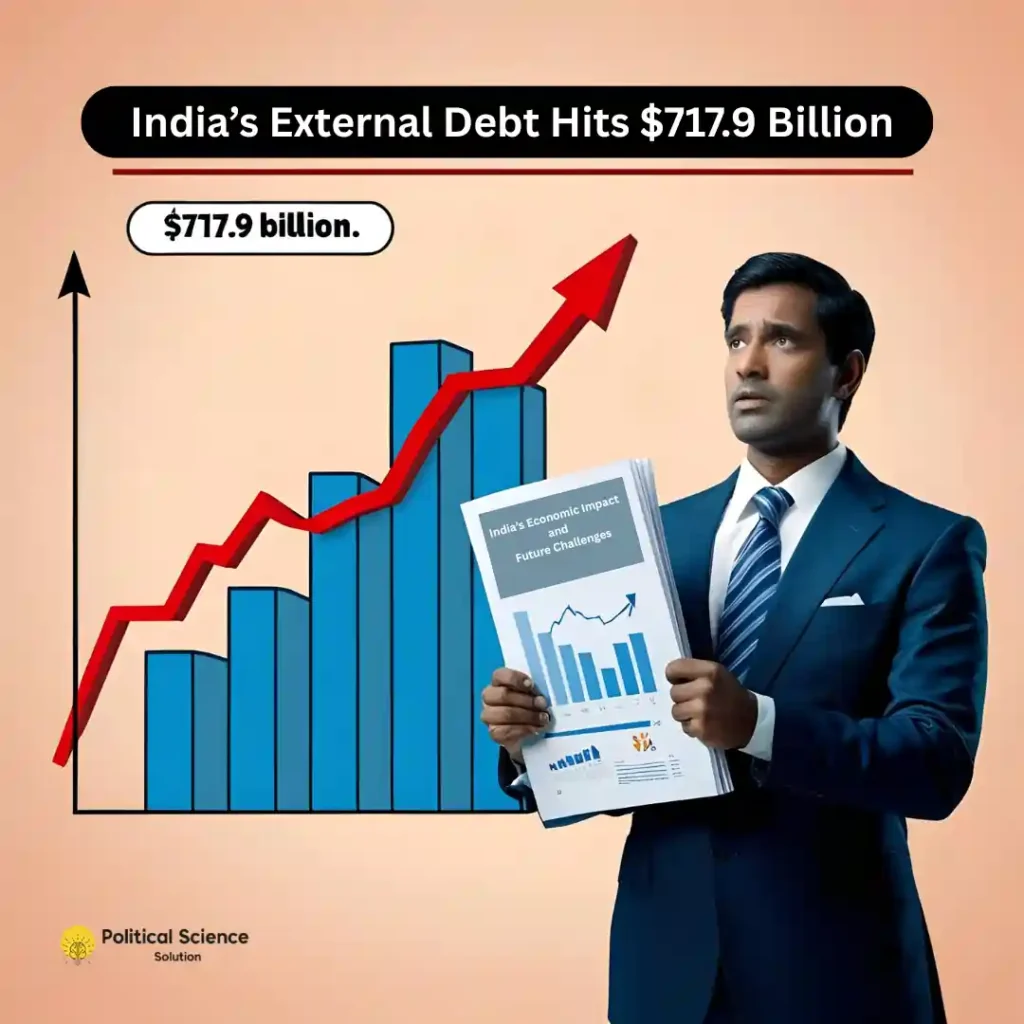
The continuous trade deficit is pushing the country toward more external borrowings, diminishing the value of Indian Rupee (INR). The country’s external debt had gone up to nearly $718 billion at the end of December 2024, which was an increase of $69.2 billion from December 2023, pushing up the external debt to GDP ratio to 19.1 percent. By the end of June, this year, the external debt surged to $747.2 billion.
The question is: why is the country not drastically compressing import of non-essentials such as gold, silver, precious metals, consumer electronics and gadgets, products like air-conditioners, headphones, footwear, plastic-based items, furniture and home décor, and food products like apples, almonds, and cashew nuts? In fact, the country is witnessing a continuous rise in non-essential goods imports, driven by consumer demand from the rich and upper middle-class, and also by industry, which are contributing to a widening trade deficit.
Although the government is believed to be lately monitoring some of these imports, including electronics, and certain consumer durables, the steps taken to curb their import growth through measures like higher import duties, implementing Quality Control Orders (QCOs), and imposing restrictions on certain goods like laptops and phones, are simply not restrictive enough. A massive forex saving out of the import of oil from Russia at a discounted rate had little impact on the overall trade deficit because of the growing imports of non-essential goods.
Surprisingly, gold has been left out of the recent selective increase in import duties to the delight of Mumbai’s Zaveri Bazar-based India Bullion and Jewellers Association. The association operates nationwide and plays a key role in determining daily gold rates in the country. A significant portion of India’s historical and current bullion trade has strong ties to the Gujarati community, and major entities like the Gujarat Bullion Refinery in Ahmedabad. India’s gold import has a strong Swiss connection. A leading supplier of gold to India, Switzerland accounts for a significant portion of India’s total gold imports.
The recently ratified India-EFTA (European Free Trade Association) Trade and Economic Partnership Agreement is expected to further boost trade and investment between India and Switzerland. Ironically, India’s export to Switzerland has always been a bare minimum. In 2024-25, India’s total exports to Switzerland were valued at only around $1.51 billion while imports stood at $22.4 billion, resulting in a significant trade deficit for India. The vast majority of India’s imports from Switzerland consists of gold. The trade volume with Switzerland grew at an annual compound rate of 4.62 percent between 2020-21 and 2024-25.
India’s persistently large trade deficits and substantially growing external debt have been putting significant downward pressure on INR’s value as demand for foreign currency such as the US dollar has been constantly going up to pay for higher and higher imports and also debt servicing. Historically, the country has been heavily relying on imports of crude oil, gold, and electronics. Large trade deficits are impacting the balance of payments (BoP). A persistent trade deficit leads to a wider current account deficit (CAD), which is often perceived as a sign of economic instability by foreign investors, further pressuring the domestic currency.
This explains why foreign investors are not showing enough enthusiasm to invest in India despite its large and expanding market and impressive economic growth. INR has been constantly under pressure. In 2014, when the NDA government came to power, the INR-US$ exchange rate was: Rs.60.95 for US$1. Last Friday, it surpassed Rs. 90 for a US$. The month is yet to end. The INR weakened significantly in 2025, not due to poor economic fundamentals (which remain strong), but primarily because of a sharp decline in capital inflows, including lacklustre FDI and $16 billion in FPI outflows.
The constant Rupee depreciation has created a vicious cycle, making imports more expensive in terms of INR and servicing foreign debts becomes more expensive with eroding exchange value of the domestic currency. The amount in INR required to service and repay foreign currency-denominated debt increases significantly. This strains the finances of the government and Indian business corporations with foreign loans. Exchange rate fluctuations directly impact the cost of debt servicing.
A sudden or sharp depreciation can lead to an unexpected and substantial increase in the debt burden. Such a situation is bound to negatively impact investors’ confidence. Rising levels of foreign debt, especially short-term debt, can signal potential vulnerability to global economic shocks or debt crises. This can deter foreign portfolio investors (FPIs) and foreign direct investors (FDI). In fact, the situation is leading to capital outflows further weakening INR.
It is time that the government takes a strong position to link the country’s import of non-essentials with its export earnings. India must provide a strong policy boost over a period of time to improve its export manufacturing and global competitiveness. The character of India’s exports also needs a change in keeping with the world market trend. India has faced a persistent trade deficit for many years, largely driven by its reliance on imports for energy (especially crude oil), gold, and electronics.
The country does not import oil from China. Yet, India has a very large and growing trade deficit with China, which reached a record $99 billion in FY25, due to high imports of electronics and industrial inputs. China does not encourage imports from India. India’s oil imports accounted for only 29.24 percent of its total merchandise imports in FY 2024-25. It’s a pity that the government is failing to control the import of non-essential goods despite the increasing trade deficit burden and its impact on the country’s foreign borrowing and inward foreign investment. (IPA Service)
The article Behind India’s Rising Foreign Debt Is Growing Trade Deficit appeared first on Latest India news, analysis and reports on Newspack by India Press Agency).