Arabian Post Staff -Dubai
The unexpectedly deep reduction comes as Brent crude remains above $100 a barrel amid persistent Middle East security risks, while recovering regional exports and planned emergency stock releases are adding pressure on physical crude pricing.
Aramco also reduced the November prices of Arab Medium and Arab Heavy for Asia by $5 a barrel. The cuts contrasted sharply with market expectations that Saudi prices would rise after gains in Middle East benchmark crudes.
The pricing decision underscores the unusual split between elevated international futures and the costs confronting Asian refiners buying Gulf barrels. Freight rates have surged as conflict and security risks complicate shipping routes, making the delivered cost of crude substantially higher even when producers lower their official differentials.
Saudi crude normally supplied from Gulf terminals must contend with the risks surrounding the Strait of Hormuz. Aramco has used alternative logistics, including ship-to-ship transfers outside the strait, as producers seek to sustain exports despite disruption to regional trade routes.
A very large crude carrier capable of transporting about two million barrels from the Gulf to China was commanding roughly $1.2 million a day by Friday, compared with about $80,000 a day a year earlier. Such freight costs have become an increasingly important factor in refiners’ purchasing decisions.
Saudi pricing moved in the opposite direction for Europe. Aramco raised November official selling prices for north-west Europe and the Mediterranean by $3 a barrel across its grades after crude loadings resumed from the Red Sea port of Yanbu. Prices for customers in the United States were left unchanged.
Oil markets nevertheless remained tense on Monday. Brent traded above $100 after Yemen’s Houthi movement claimed missile and drone attacks against Aramco facilities in Riyadh and the Khurais area. Saudi authorities had not confirmed the Houthis’ account of Sunday’s claimed attacks, and the cause and extent of damage could not immediately be independently established.
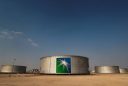
Images showed fire and smoke at an Aramco site south of Riyadh over the weekend, but the Saudi-led coalition disputed Houthi assertions surrounding the episode. The distinction remains significant for oil markets because any confirmed disruption to Saudi production or export infrastructure could rapidly alter supply expectations.
Benchmark prices later eased as traders weighed stronger Middle East crude flows against the continuing geopolitical risk. Brent was around $101.59 a barrel during Monday trading, while US West Texas Intermediate was near $90.12.
Regional exports have recovered substantially from the severe disruption earlier in the conflict. That recovery has helped temper fears of an immediate crude shortage, even though shipping, insurance and logistical costs remain elevated and refined-product supplies are tighter in several markets.
The Group of Seven has also agreed to coordinate the release of 100 million barrels of crude and refined products from emergency stocks through the International Energy Agency over four months. The programme is due to include a substantial front-loaded release of diesel within the first 20 days, intended to ease pressure on fuel markets.
Saudi Arabia’s pricing decision arrived alongside an OPEC+ agreement to keep November production targets unchanged. Seven producers participating in the group’s voluntary supply arrangements — Saudi Arabia, Russia, Iraq, Kuwait, Kazakhstan, Algeria and Oman — maintained their existing targets after meeting on Sunday.
The producers are navigating competing signals: crude futures remain elevated because of geopolitical danger, while restored export flows and emergency inventories provide additional supply to the market. For Saudi Arabia, Asia remains the central destination for crude sales, making monthly official selling prices an important indicator of conditions facing refiners.
Also published on Medium.
Follow Arabian Post
Select Arabian Post as your preferred source on Google and MSN News for trusted business news and Arab politics and updates.