

Arabian Post Staff -Dubai
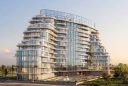
BNW Developments, which describes itself as Ras Al Khaimah’s largest private developer, has entered Dubai’s off-plan market with Orvessa Residences by Michel Adam, a branded residential scheme in Al Furjan that marks the company’s latest push beyond its fast-growing base in the northern emirate. The move extends BNW’s branded-homes strategy at a time when Dubai continues to draw both end-users and investors into projects carrying lifestyle and hospitality labels.
The Dubai launch is significant because BNW has built its profile largely through Ras Al Khaimah, where it has tied itself to the emirate’s luxury-property and tourism-led expansion. Over the past few months, the developer has announced a string of branded and hospitality-linked projects there, including Radisson Blu Hotel and Radisson Blu Residences at RAK Central, while earlier unveiling Tonino Lamborghini Residences on Al Marjan Island. That record helps explain why its first higher-profile step into Dubai is being framed around a branded concept rather than a conventional apartment block.
Orvessa Residences is being positioned as a boutique scheme rather than a mega-development. Market listings and launch material indicate the project will comprise 92 apartments, with one-, two- and three-bedroom units, alongside amenities such as a rooftop pool, gym, co-working areas, outdoor lounges and family-oriented spaces. The branding link comes through Michel Adam, widely known as the founder of FashionTV, with the project pitched as design-led and lifestyle-focused rather than purely hospitality-branded.
Its setting in Al Furjan is also telling. Unlike Dubai’s better-known beachfront luxury districts, Al Furjan has developed as a connected suburban community built around family housing, transport access and neighbourhood retail. Property portals tracking current launches show a broad off-plan pipeline in the district, confirming that BNW is stepping into a competitive but active sub-market rather than a niche enclave with little supply. The area’s appeal lies in its location near major road links, metro connectivity, schools and established residential infrastructure, which broadens the buyer base beyond pure speculative investors.
That matters because Dubai’s branded-residences market has become much larger and more crowded than it was only a few years ago. CBRE says Dubai has established itself as one of the world’s highest-concentration markets for branded homes, with a 26 per cent year-on-year rise in transaction volumes during the first nine months of 2025 and a 51 per cent increase in total sales value to almost AED 50 billion. The same report says buyers in Dubai were paying an average premium of about 64 per cent for branded units over comparable non-branded homes in the same location, underlining why developers are eager to attach names, design identities or hospitality links to new stock.
BNW’s Dubai debut therefore aligns with a broader market pattern, but it also carries risks. Branded residences can command stronger pricing and sharper visibility, yet the segment is becoming more crowded as more developers chase the same premium buyer. CBRE’s research shows Dubai’s branded market is heavily tilted towards apartments and off-plan transactions, suggesting both strong demand and growing future supply. In practical terms, that means developers must work harder to differentiate projects on design, location, service offer and delivery credibility.
BNW’s own corporate trajectory is also unusually compressed. Its leadership material says the development arm was initiated in 2024, after earlier land-acquisition and consultancy activity, meaning the company is trying to scale from a young platform into a multi-emirate branded developer within a short period. Supporters will argue that speed has helped it capture momentum in Ras Al Khaimah and now gives it a chance to ride Dubai’s deeper market. More cautious investors may focus on execution risk, especially in off-plan property where delivery schedules, construction quality and resale performance matter as much as launch-day branding.
The wider UAE backdrop helps explain the confidence. CBRE says the country’s economic outlook has been supported by non-oil growth, while wealth migration has remained a major driver of prime residential demand. Its report cites projections that the UAE would attract more than 9,800 millionaire migrants in 2025, adding to the pool of buyers seeking globally recognisable products, long-term residency options and professionally managed assets. Knight Frank, meanwhile, has highlighted the growing global shift towards standalone branded residences, indicating that branding in housing is no longer limited to hotel operators alone.
Also published on Medium.
Follow Arabian Post
Select Arabian Post as your preferred source on Google and MSN News for trusted business news and Arab politics and updates.




