By Dr. Gyan Pathak Hundreds of protesters ultimately were able to reach near Jantar Mantar on October 10 to protest against CEC Gyanesh Kumar despite the Union Government’s unprecedentedly locking off the venue and the entire Central Delhi, heavy deployment of police force in entire Delhi, internet shut down, erecting blockades across Delhi and its […]
HONG KONG SAR – Media OutReach Newswire – 7 October 2026 – Hong Kong has again been rated as the world’s freest economy, according to the Economic Freedom of the World 2026 Annual Report, published on October 6 by the Canada-based Fraser Institute. Hong Kong remained top among 165 jurisdictions worldwide with Switzerland in second place.
The Hong Kong Special Administrative Region (HKSAR) Government welcomed the latest report, noting that, among the five areas of assessment, the city continued to be ranked first globally in “Freedom to trade internationally” and second in “Regulation”.
“The Fraser Institute’s report once again affirms Hong Kong’s strengths as a free-market economy and its open, efficient and fair business environment,” a spokesman for the HKSAR Government said. “Amid increasing global economic uncertainties and rising trade protectionism, Hong Kong remains firmly committed to maintaining its free port status, zero-tariff policy, and simple and low tax regime, providing a secure, stable, fair, predictable and internationalised business and investment environment for investors and entrepreneurs from around the world.”
“One country, two systems” advantages
The HKSAR Government highlighted that, under the “one country, two systems” framework, Hong Kong enjoys the strong support of the Chinese Mainland and maintains close connections with the rest of the world.
“While offering convenient access to both the Chinese Mainland and international markets, Hong Kong continues to practise common law in both Chinese and English,” the spokesman said. “It also offers financial, shipping, trading and professional services that align seamlessly with international best standards, supported by an efficient government structure and a clean and professional civil service.”
These strengths enable Hong Kong to fully leverage its roles and functions as a ‘super connector’ and ‘super value-adder’, making it the best gateway for Mainland enterprises to enter international markets and for overseas enterprises to enter the Mainland.
Attracting investment and talent
So far this year, Hong Kong has continued to scale new heights in various international competitiveness rankings covering finance, innovation and technology (I&T), education and talent, reflecting wide recognition by the international community of Hong Kong’s core strengths and the HKSAR Government’s efforts to promote high-quality social and economic development.
Indeed, Hong Kong’s favourable business and living environment, coupled with the proactive and concerted efforts of the HKSAR Government and all sectors of the community, continues to attract enterprises and talent from around the world.
Last year, the number of companies in Hong Kong with parent companies overseas or in the Mainland exceeded 11,000, an increase of 11 per cent over 2024 and a record high.
The Office for Attracting Strategic Enterprises (OASES), established by the HKSAR Government in 2022, has successfully attracted over 120 strategic enterprises to date, including many global industry leaders with a market capitalisation or valuation exceeding $100 billion and possessing cutting-edge technologies.
On talent attraction, from end-2022 to August this year, over 670,000 applications were received and over 470,000 were approved under various talent admission schemes, with more than 310,000 individuals having arrived in Hong Kong.
Over the past year, Hong Kong recorded considerable growth in funds raised through initial public offerings, bank deposits and assets under management in the asset and wealth management business, reflecting international investors’ confidence in and recognition of Hong Kong.
Looking ahead
Last month, the HKSAR’s Chief Executive, John Lee, announced the First Five-Year Plan for Economic and Social Development of the Hong Kong Special Administrative Region (2026-2030) (Hong Kong’s First Five-Year Plan) and the 2026 Policy Address.
Hong Kong’s First Five-Year Plan states that Hong Kong will remain committed to a free and open economic system and the free flow of capital, goods, people and information, all of which are Hong Kong’s core strengths under the “one country, two systems” framework.
“These efforts will inject stronger impetus into social and economic development, open up broader development prospects for local enterprises and the public, and provide greater opportunities for enterprises, investors and talent worldwide,” the spokesman said.
US$10 Billion in Venture Capital Convenes to Meet Hong Kong Start-ups; Government, Business and Young Professionals Explore Opportunities in the New Economy
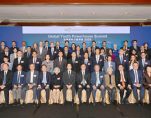
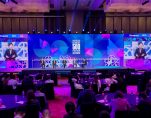
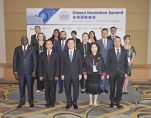
HONG KONG SAR – Media OutReach Newswire – 7 October 2026 – The Global Youth Powerhouse Summit 2026, organised by Hong Kong Youth Professional Global Advocacy, was held on 5 October at the Conrad Hong Kong. Now in its third edition, the Summit coincides with the release of the Hong Kong Special Administrative Region’s First Five-Year Plan for Economic and Social Development (2026–2030) and the latest Policy Address, which together set a clear blueprint for the city’s future. Anchored on these core themes and conducted entirely in English, the full-day programme focused on artificial intelligence, geopolitics, Hong Kong as an education hub, capital markets, life and health technology, and start-up financing. Government and business leaders, corporate representatives and young professionals were invited to examine Hong Kong’s strategic opportunities in the new economic landscape.
The Global Youth Powerhouse Summit 2026 brings together more than 600 young professionals, government and business leaders and corporate representatives
The Summit aims to connect young professionals with international resources, enabling participants to engage directly with industry leaders, grasp developments at the frontier of industry, and look ahead to the opportunities and challenges arising from artificial intelligence and Greater Bay Area integration. Previous editions have drawn a strong response. Across three editions, the Summit has attracted more than thousands of in-person participants and about 17,000 online participants from over 30 countries and regions, with social media reach exceeding 50 million.
This year’s Summit was the largest yet, bringing together more than 600 young professionals, government and business leaders and corporate representatives. Participants from over 60 countries and regions joined online. More than 30 distinguished speakers and moderators were invited, including officials of the Hong Kong Special Administrative Region Government and representatives of leading local and international organisations such as Huawei, the Alibaba Hong Kong Entrepreneurs Fund, Hong Kong Exchanges and Clearing Limited, Bullish and Endowus. In addition, consular representatives from up to 20 countries attended the Summit.
The Chief Executive of the Hong Kong Special Administrative Region, Mr John Lee, GBM, SBS, PDSM, PMSM, delivered a pre-recorded video speech, encouraging young professionals to seize the opportunities of the times and inject fresh momentum into Hong Kong’s high-quality development. He said: “For our young people, I firmly believe that your opportunities ahead outweigh the difficulties. The HKSAR Government will join hands with all sectors to build platforms for you to thrive in Hong Kong, in our country, and in the global arena.”
The Deputy Secretary for Justice of the Hong Kong Special Administrative Region, Dr Cheung Kwok-kwan, SBS, JP, delivered an opening keynote entitled “Opportunities for the Professional Development of Young People”, and stressed: “As the saying goes, ‘Change is the only constant’—or as our Cantopop classic famously put it, ‘變幻原是永恆’. Today, we no longer measure change in years or decades, but in months and days. For our young professionals, this fast-paced era unlocks unprecedented career horizons. By accelerating Greater Bay Area integration through our new GBA Task Force and empowering you to act as the ultimate ‘super-connectors’ and ‘super value-adders’ helping Mainland enterprises go global, we are turning rapid change into your greatest professional advantage.”
Dr Kevin Lau, MH, Founding Convenor of Hong Kong Youth Professional Global Advocacy, said: “This is more than a high-level forum. It marks a milestone in the maturing of our network of young professionals. This afternoon, venture funds managing an estimated US$10 billion in assets gathered in the room — and what they are looking at is Hong Kong’s next generation. In life and health technology, our core belief is clear: artificial intelligence can assist imaging and diagnosis, but a physician’s care, and the warmth of a human hand, can never be replaced by technology.”
Other distinguished guests included Mr Kevin Choi, JP, Permanent Secretary for Innovation, Technology and Industry; Professor Frederick Ma, GBS, JP, Chairman of the Hong Kong Trade Development Council; Ms Bonnie Y Chan, JP, Chief Executive Officer of Hong Kong Exchanges and Clearing Limited; and Mr James Chau, President of the China-United States Exchange Foundation and World Health Organization Goodwill Ambassador for Sustainable Development Goals. Mr Bryan Che, Chief Strategy Officer of Huawei, and Ms Cindy Chow, Executive Director and Chief Executive Officer of the Alibaba Hong Kong Entrepreneurs Fund, also attended in person to exchange views with young professionals.
Panel discussions
Artificial intelligence: from first-time users to advanced users The opening session began with remarks by Mr Kevin Choi, JP, Permanent Secretary for Innovation, Technology and Industry, and was moderated by Ms Stephaine Chan, Director of the Office of the Vice Chairman of Esquel Group. Panellists included Ms Ilaria Chan, Chair of the Tech For Good Institute; Mr Bryan Che, Chief Strategy Officer of Huawei; and Ms Cindy Chow, Executive Director and Chief Executive Officer of the Alibaba Hong Kong Entrepreneurs Fund. The discussion focused on whether small and medium-sized enterprises, non-governmental organisations and schools can genuinely put artificial intelligence to use, and on the talent, trust and practical-application issues Hong Kong faces in driving “AI for all”.
Mr Kevin Choi, JP mentioned: “Every major technology shift brings uncertainty. Our theme today from entry-level shock to AI-powered users building the next talent leader.”
Ms Stephaine Chan said: “Every AI conversation ends in the same place, right? More investment, better people, better models and stronger policy.”
Ms Ilaria Chan said: “These days, Al is so powerful that they can scan the Internet and social media and find vulnerable young people or old people. They can find it instantly and have a very sophisticated way to trick them and fraud them from scamming.”
Mr Bryan Che: “One of the opportunities of Al is because the interface is much more natural for most people to interact with. On one sense, it’s a lot easier for everyone to get started.”
Ms Cindy Chow said: “So I guess some of the most damaging thing is not allowing people to use or not, you know, really have the attitude to embrace all this new technology, what this new technology has to bring to you.”
Geopolitics: the super-connector This session was moderated by Mr James Chau, President of the China-United States Exchange Foundation and World Health Organization Goodwill Ambassador for Sustainable Development Goals. Speakers included Ms Ilaria Chan, Chair of the Tech For Good Institute; Ms Ellana Lee, Senior Vice President, Managing Editor, Asia Pacific, and Global Head of Productions at CNN; and Professor Frederick Ma, GBS, JP, Chairman of the Hong Kong Trade Development Council.
Mr James Chau said: “Against this backdrop, we often hear Hong Kong described as a super connector, typically framed in terms of trade volumes, capital markets and logistics but I think that these connections that we’re speaking of really only become very valuable and we understand and recognize the human bonds that pin these together.”
Professor Frederick Ma , GBS, JP said: “We are part of China. And yet we are under one country 2 systems connected to the rest of the world. That is the power of Hong Kong.”
Ms Ellana Lee said: “We made a very strategic decision when the times were tough to stay and remain in Hong Kong. I think that has and you know, we make these decisions not just out of a whim, but we are very calculative on why we need to stay. I have 8 cities across Asia Pacific. Hong Kong happens to be the hub for Asia Pacific. And there’s it boils down to four major reasons.”
Ms IIaria Chan: “Simple of how tech is helping people, there is an organization, WHO care for children that was founded 20 years ago that helps orphans in developing China back then Vietnam, Thailand now in Africa, Middle East to find loving permanent homes. But their bottleneck is how they train social workers and governments on how to take care of orphan welfare. Now this year we’ve actually been launching an online product that is able to scale these bottlenecks, especially in areas that are underfunded. This is a great example of Al tech.”
Education: Hong Kong as Asia’s education hub This session was co-moderated by Mrs Jennifer Yu Cheng, JP, Founder of the Future Leaders Foundation, and Ms Jennifer Ma, Founder of JM Edu Consulting. Speakers included Ms Maggie Chau, School Partnership Advisor at the Academy for Educational Development and Innovation of The Education University of Hong Kong; Mr Dion CHEN, MH, Vice-Chairman of the Hong Kong Direct Subsidy Scheme Schools Council; and Professor Charles Ng Wang-Wai, Vice-President for Institutional Advancement of The Hong Kong University of Science and Technology.
Mrs Jennifer Yu Cheng, JP said: “An education hub is more than a place with excellent institutions. It is a place that students and families choose, where young people flourish, and connects education with research, innovation, careers and a wider community.”
Professor Charles Ng said: “With our national policy. And I think we should do better to support this great initiatives and thinking back actually 2023 and home government already in in the government policy in October, if I remember correctly to start to increase the local student quota from 20% to 40%.”
Ms Jennifer Ma said: “As a consultant we need demand to meet supply and we are definitely seeing the demand for Hong Kong education at K12 level…….The advocacy for Hong Kong to be the gateway for China Resources and talents to leave China and go into international arenas. But at the same time, we also see a lot of international people interested in what’s happening in mainland, and therefore Hong Kong is a great gateway. So, with that global education, global education philosophy, that means they really appreciate Hong Kong trilingual education by cultural mindset.”
Mr Dion CHEN, MH mentioned: “In 2026, a lot of DSS schools will work very hard to try to welcome and also promote welcome to Hong Kong and also promote Hong Kong’s education to the students in different countries.”
Ms Maggie Chau said: “Maggie: I can see that all the universities are actually implementing AI in their curriculum. Talking about teacher education, the programs we offer, I mean, not just The Education University of Hong Kong, the programs we offer in all universities implement Al in the curriculum in a way that we draw attention to the use of Al is it has to be ethical.”
Capital markets: AI listings, asset tokenisation and the new economy This session was moderated by Ms Emily CHAN Tan, a former CNBC anchor. Speakers included Ms Bonnie Y Chan, JP; Ms Clara CHAN Ka Chai, Chief Executive Officer of the Hong Kong Investment Corporation Limited; Mr Michael Lau, Senior Vice President and Head of Group Business Development at Bullish and Chairman of Consensus; and Mr Samuel RHEE, Co-founder, Chairman and Group Chief Investment Officer of Endowus.
Ms Clara CHAN Ka Chai said: “We always say that from zero to 1 is the most challenging part. So, the patients in terms of having staying power is the core, but it has to go in hand with other qualities like being proactive, being professional.”
Mr Michael Lau said: “I think it’s an interesting proposition to consider that these types of companies that are so capital. I would start looking beyond the current horizon of where we are to see where it could go next. And so I do think that there is a demand looking to that future where this idea of a tokenized capital market could be quite interesting.”
Mr Samuel RHEE mentioned: “First of all, maybe we just take a step back and just try to understand all of the capital markets, not just equities.”
Ms Bonnie Y Chan, JP said: “I want to point out one thing. I mean, we are operating a stock exchange and I think capital markets at the end of the day, the basic function is to match capital with opportunity. So what I’m very focused on is that I’m not just focused on technology or AI.”
Ms Emily CHAN Tan said: “We are not just witnessing a cyclical recovery, but also some would call this the threshold of a capital markets renaissance.”
Life and health technology: building a health-industry hub This session was moderated by Professor Lo Yuk-lam, BBS, Founding President of the Hong Kong Biotechnology Organisation. Speakers included Professor LI King-Chuen, Founding Dean of the School of Medicine at The Hong Kong University of Science and Technology; Dr Sarah SALVILLA, Director of Health and Strategic Partnerships at FWD Group; and Professor Anthony Wu Ting-yuk, GBS, JP, former Chairman of the Hospital Authority and Non-executive Chairman of Trinity Medical Group. The discussion focused on how AI in healthcare can strengthen the competitiveness of Hong Kong’s health industry.
Professor Lo Yuk-lam, BBS said: “Building HK’s holistic wellness hub, this year marks a defining moment for HK. With the release of our first ever five year plan and their chief executive policy address just a few weeks ago, our city’s road map for healthcare and biotechnology knowledge has never been clearer or more ambitious.”
Professor Anthony Wu Ting-yuk, GBS, JP said: “Every country every city is trying to recruit more talent and I think Hong Kong is an ideal position to attract talents.”
Professor LI King-Chuen said: “Our education system will be individualized. And we will do the factual knowledge transfer through mostly self-directed learning. So we guide them, we build an AI system with prescribed information.”
Dr Sarah SALVILLA said: “Prevention for sure in terms of how do we educate people to be much more proactive in their everyday lives, yes you know, kind of the lifestyle things.”
Start-up pitching: connecting with capital The closing session was moderated by business journalist Ms Elaine Yu, with Mr LU Chin Yung, Senior Vice President (Start-ups) of the Sector Specialist Group at Invest Hong Kong. Representatives of 11 venture funds were present, including the Alibaba Hong Kong Entrepreneurs Fund, Clee Capital, Click Ventures, GT Healthcare Capital Partners, Gobi Partners GBA, HKSTP Ventures, MindWorks Capital, Ryoden Medical Holdings, Seveno Capital, Verge HealthTech Fund and W2 Venture Partners. Together, the funds manage an estimated US$10 billion, have invested in more than 600 start-ups across more than 30 economies, and have backed at least nine unicorns, including Airwallex, Animoca Brands, Prenetics and GoGoX. Start-ups taking part in the pitching session included CELLmeric, Entoptica, PointFit, Syngular, Kodifly, AilsynBio, EveryBaby, A-grade, Orimmune Biotech, Nordia Biotech, Oncolmmu Nostics Limited, The Harbour School (THS), VisionBridge, Eden’s Garden, and CARE CONNECT.
Ms Elaine Yu said: “We have 15 startups and I think a group of students as well, very precocious students WHO are already thinking of ideas, real businesses with commercial viability at the cutting edge of science, research, healthcare and so forth. So, this should be a fun dynamic session.”
Mr LU Chin Yung pointed out: “Hong Kong is great in a lot of rankings in the world and this is not given, this is hard earned by your parents, by some of you sitting here. But as a young founder in Hong Kong, if you come to Hong Kong, you get to enjoy all this very safe environment. You have efficiency and then you also have a very clean government. This one I can say for sure. Yeah. And and all this, it helps the the founders to focus on your business, focus on grow, growing instead of you have to deal with many, many things.”
The Summit closed amid lively exchange. Hong Kong Youth Professional Global Advocacy said it will continue to build the Summit into a platform for dialogue between young professionals and leading figures in government and business, helping Hong Kong’s young talent seize the opportunities of the new economy.
Vice-Chairman, Hong Kong Direct Subsidy Scheme Schools Council
Mrs Carrie Cheng, JP
Founder, Future Leaders Foundation
Dr Cheung Kwok-kwan, SBS, JP
Deputy Secretary for Justice, Hong Kong Special Administrative Region
Mr Kevin Choi, JP
Permanent Secretary for Innovation, Technology and Industry
Ms Cindy Chow
Executive Director and Chief Executive Officer, Alibaba Hong Kong Entrepreneurs Fund
Dr Kevin Lau, MH
Founding Convenor, Hong Kong Youth Professional Global Advocacy
Mr Lau Tak-ho
Senior Vice President and Head of Group Business Development, Bullish, and Chairman, Consensus
Ms Ellana Lee
Senior Vice President, Managing Editor, Asia Pacific, and Global Head of Productions, CNN
Professor King Li
Founding Dean, School of Medicine, The Hong Kong University of Science and Technology
Professor Lo Yuk-lam, BBS
Founding President, Hong Kong Biotechnology Organisation
Mr Raymond Lui
Senior Vice President (Start-ups), Sector Specialist Group, Invest Hong Kong
Ms Michelle Ma
Founder, JM Edu Consulting
Professor Frederick Ma, GBS, JP
Chairman, Hong Kong Trade Development Council
Professor Charles Ng
Vice-President for Institutional Advancement, The Hong Kong University of Science and Technology
Mr Samuel Rhee
Co-founder, Chairman and Group Chief Investment Officer, Endowus
Dr Sit Wai-nga
Director, Health and Strategic Partnerships, FWD Group
Professor Anthony Wu, GBS, JP
Former Chairman, Hospital Authority, and Non-executive Chairman, 全仁醫療集團
Ms Elaine Yu
Business Journalist
Ms Jeanne Cheng, JP
District Officer (Central and Western)
Dr Elsie Leung, GBM, JP
Former Secretary for Justice, Hong Kong Special Administrative Region
Professor Teresa Cheng, GBM, GBS, SC, JP
Secretary-General, International Organization for Mediation, and former Secretary for Justice
The Hon Tommy Cheung, GBM, GBS, JP
Non-official Member, Executive Council
The Hon Dr Lam Ching-choi, GBS, JP
Non-official Member, Executive Council
The Hon Chan Hoi-fung, BBS, MH, JP
Legislative Council Member
The Hon Chan Kin-por, GBM, GBS, JP
Non-official Member, Executive Council
The Hon Nixie Lam
Legislative Council Member
Mr Andrew Yao, SBS, JP
Hong Kong Deputy to the 14th National People’s Congress
Professor Herman Hu, GBS, JP
Hong Kong Deputy to the 14th National People’s Congress
Mr Gordon Lam
Hong Kong Deputy to the 14th National People’s Congress
Mr Chan Chung-ni, SBS, JP
Hong Kong Deputy to the 14th National People’s Congress
Mr Ho Hon-kuen, BBS, MH
Hong Kong Member, 14th National Committee of the Chinese People’s Political Consultative Conference
Mr Tu Haiming, BBS
Hong Kong Member, 14th National Committee of the Chinese People’s Political Consultative Conference
Mr Kung Wing-tak
Hong Kong Member, 14th National Committee of the Chinese People’s Political Consultative Conference
Dr Lo Kam-wing, BBS, JP
Hong Kong Member, 14th National Committee of the Chinese People’s Political Consultative Conference, and President, The Chinese Manufacturers’ Association of Hong Kong
Mr Li Tai-chong, SBS, OM, JP
Member, National Committee of the Chinese People’s Political Consultative Conference
The Hon Lam Wai-chuen
Legislative Council Member
The Hon Lau Man-kwan, JP
Legislative Council Member
The Hon Chong Ho-fung
Legislative Council Member
The Hon Lee Kwong-yu, MH
Legislative Council Member
The Hon Leung Tsz-wing, MH
Legislative Council Member
Mr Ng Yuk-yeung
Hong Kong Member, 14th National Committee of the Chinese People’s Political Consultative Conference
The Hon Fong Kwok-shan
Legislative Council Member
The Hon Lau Ka-keung, BBS, MH, JP
Legislative Council Member
The Hon Revd Canon Peter Koon, SBS, JP
Legislative Council Member
Mr Pablo Macedo Riba
Consul General of Mexico in Hong Kong
Dr Esteban Ramírez González
Consul General of Mexico in Hong Kong
Mr Alberto Martínez
Representative, Consulate General of Spain in Hong Kong
Ms Silvia Civera
Representative, Consulate General of Spain in Hong Kong
Mr Javier Sampedro
Commercial Representative, Consulate General of Spain in Hong Kong
Mr Juha Niemi
Consul General of Finland in Hong Kong and Macao
Mr O’Brien Ernesto Guerra Córdova
Consul General of Venezuela in Hong Kong
Mr Ammala Saenchonghack
Consul General of the Lao People’s Democratic Republic in Hong Kong
Mr Riaz Ahmed Shaikh
Consul General of Pakistan in Hong Kong
Mr Yos Sokhemrin
Consul General of Cambodia in Hong Kong
Mr Maurits Ter Kulve
Consul General of the Netherlands in Hong Kong
Ms Lim Kim Suan
Consul General of Brunei Darussalam in Hong Kong
Mr Hassan Doutaghi
Consul General of Iran in Hong Kong
Mr Ali Abdulla Al-Hitmi
Deputy Consul General of Qatar in Hong Kong
Ms Helen Silvester
British Council
Mr Wilhelm Brauner
Belgium-Luxembourg Chamber of Commerce
Professor Sin Kuen-fung, MH
Co-Executive Director, Academy for Educational Development and Innovation, The Education University of Hong Kong
Mr Lam Siu-hong, JP
Commissioner for Youth, Home and Youth Affairs Bureau
Mr Arnold Lau
Assistant Director-General, Invest Hong Kong
Professor James Dai
Associate Dean of Students, The Hong Kong Polytechnic University
Dr Chan Pui-yin
Vice-President, Hong Kong Medical Association
Ms Cecilia Ho
Chief Executive, Lee Hysan Foundation
Mr Quentin Merour
Consulate General of France in Hong Kong
Ms Christine Ma Lau
Founder and Principal, JEMS Character Academy
Ms Agnes Chan, BBS
Senior Advisor, Office of the Chairman, Greater China, EY
Ms Melissa Pang, BBS, MH, JP
Former President, The Law Society of Hong Kong, and Member, National Committee of the Chinese People’s Political Consultative Conference
Mr Patrick Yeung
Chief Executive Officer, Hong Kong General Chamber of Commerce
Ms Kimberly Kwok
Founder, Mighty Oaks
Mr Larry Chiang
Founder and Chief Executive Officer, International Finance Capital Group Limited
Ms Sophia Kao, GBS, JP
Former Chairperson, Women’s Commission, and founding Chairperson, Financial Reporting Council
Ms Marie Mercy
Consulate General of France in Hong Kong
Mr Peter Shum
Deputy Chairman of Federation of Hong Kong Industries
Mr Daryl Lin
JCI Hong Kong
Mr Jacky Chung
Hong Kong Trade Development Council (represented by Mr Andrew Chui)
Mr Silas Chu
Hong Kong Trade Development Council
Mr Lot Chan
Assistant Director of Health (Preparatory Office for Centre for Medical Products Regulation)
Dr Jeff Lee
Head of the Health Informatics and Technology Office
The issuer is solely responsible for the content of this announcement.
Hong Kong Youth Professional Global Advocacy
Hong Kong Youth Professional Global Advocacy is a community organisation founded in 2023 by young professionals in Hong Kong. It seeks to serve as a bridge between Hong Kong and the world, uniting Hong Kong young people globally through a range of exchange activities and cultivating an overseas youth network that supports “Hong Kong opportunities”. The organisation brings together more than 120 young professionals across finance, real estate, building surveying, manufacturing, environmental protection, healthcare, law, accounting and technology, and works closely with professional bodies, industry associations and the media. Through monthly salons and online exchanges with the Greater Bay Area, Southeast Asia and countries along the Belt and Road, it promotes understanding of the development of the Hong Kong Special Administrative Region and the Chinese Mainland, explores opportunities for collaboration, and ultimately aims to build a stronger network of professional youth and deepen exchange and cooperation with young people around the world.
HONG KONG SAR – Media OutReach Newswire – 22 September 2026 – Hong Kong’s Chief Executive John Lee announced the First Five-Year Plan for Economic and Social Development of the Hong Kong Special Administrative Region (HKSAR) (2026-2030) and his fifth Policy Address on September 16, rolling out measures to further sharpen Hong Kong’s edge amid global competition, consolidate development of the Guangdong-Hong Kong-Macao Greater Bay Area (GBA) and promote green transformation.
Initiatives aim to support high-quality development of the GBA, align rules and mechanisms within the region, and promote cross-boundary collaboration.
“The HKSAR Government will continue its efforts in fostering synergistic development of the GBA,” said Mr Lee. “We will strengthen co‑operation in technological innovation, promote ‘hard connectivity’ in infrastructure, foster ‘soft connectivity’ by deepening the alignment of rules and mechanisms, and achieve ‘connectivity of hearts’ among residents of the three places.”
The HKSAR Government will continue to actively participate in the development of the various major co-operation platforms, including Qianhai of Shenzhen, Nansha of Guangzhou, Hengqin of Zhuhai and the Hetao Shenzhen-Hong Kong Co-operation Zone, to promote mutual benefits.
In terms of “hard connectivity” the HKSAR Government will support Nansha in its role as a high‑standard gateway for opening up, including encouraging the trade to participate in Nansha’s infrastructure development.
“To promote the co‑ordinated development of rail transit in Guangdong, Hong Kong and Macao, we are pressing ahead with the Northern Link Project and the Hong Kong‑Shenzhen Western Rail Link (Hung Shui Kiu‑Qianhai), with target commissioning in 2034 and 2035 respectively, to fully connect the rail transit networks of Hong Kong and Shenzhen,” Mr Lee said.
Regarding “soft connectivity”, Mr Lee said the HKSAR Government will set up a Task Force to explore ways to advance the alignment of rules and mechanisms within the GBA.
To achieve “Connectivity of Hearts” among residents across the GBA, Hong Kong will strengthen co-operation between its higher education institutions and those in other GBA cities by establishing cross‑disciplinary partnerships, facilitating scientific research, knowledge transfer, and commercialisation, with a view to promoting high‑level research.
Hong Kong’s Secretary for Constitutional and Mainland Affairs, Janice Tse, noted that the First Five-Year Plan clearly states that Hong Kong will participate in the development of the GBA into an international first‑class bay area and a world‑class city cluster with global influence.
“Hong Kong will forge closer alignment and synergy with the nine GBA cities in Guangdong Province and Macao, making full use of our respective advantages to jointly promote the high-quality development of the GBA,” Miss Tse said.
To foster financial development in the GBA, Hong Kong will continue to capitalise on institutional innovation, financial infrastructure upgrading and enhanced regulatory alignment to encourage the orderly flow of financial elements among GBA cities.
The Hong Kong Exchanges and Clearing Limited’s Core Climate, in collaboration with the Guangzhou Power Exchange Centre, is working towards the pilot trading of national renewable‑energy, green electricity certificates in Hong Kong in 2026.
“On connecting the Chinese Mainland and the world, the HKSAR Government will continue to support green technology development through the HK$400 million (aboutUS$51 million) Green Tech Fund, leveraging Hong Kong’s function as a springboard for green technology and assisting national green technologies and products in going global,” said Hong Kong’sSecretary for Environment and Ecology, Tse Chin-wan. “On the development of hydrogen energy, we have participated in drafting national hydrogen energy standards with a view to helping these standards align with international practice.”
To meet the country’s “dual carbon” targets and fulfil Hong Kong’s commitment to achieving carbon neutrality before 2050, the HKSAR Government steered the establishment of a production base for sustainable aviation fuel (SAF) in Dongguan, leveraging the leading position of Hong Kong enterprises in the international SAF industry.
“By combining technology strengths with industrial foundation, Hong Kong and Guangdong will jointly develop a globally influential green industry,” Mr Lee said.
The HKSAR Government will take forward the construction of an SAF blending facility in Hong Kong to build an end‑to‑end SAF value chain and reduce logistics costs to make SAF prices more competitive. The target is to achieve an SAF consumption ratio of 1% to 3% for flights departing from Hong Kong International Airport in 2030.
Hong Kong’s Five-Year Plan promotes the integrated development of culture, sports, and tourism, to develop the GBA into a cultured bay area.
Under the strategic framework of the Agreement on Strengthening of Sports Cooperation and Promotion of Integrated Development, Hong Kong will deepen co-operation, and strive to co‑organise important regional and international single‑sport events. It will also strengthen cultural exchanges, pass on Cantonese opera and the characteristics of Lingnan culture, and promote the sales and cross‑boundary exhibition of Hong Kong publications.
HONG KONG SAR – Media OutReach Newswire – 11 September 2026 – The 11th Belt and Road Summit was successfully held at the Hong Kong Convention & Exhibition Centre (September 9–10), attracting over 6,200 political and business elites from more than 70 countries and regions under the Belt and Road Initiative (BRI) and beyond, exploring co-operation opportunities for mutually beneficial development.
During the two-day event, more than 60 Memoranda of Understanding (MoUs) and bilateral co-operation agreements were witnessed. The total value of these MoUs, together with new projects and deals finalised before and during the Summit, is over US$3.1 billion.
Hosted by the Hong Kong Special Administrative Region (HKSAR) Government since 2016, the summit remains the premier business and investment platform for Hong Kong’s participation in and contribution to the BRI.
Noting that the BRI is a shared blueprint for the future, rooted in a rich history of cross-cultural collaboration, HKSAR Chief Executive John Lee said: “Hong Kong, as a place where East meets West, is where capital, talent, businesses and opportunities converge. In addition to strengthening our relations with traditional partners, Hong Kong continues to expand our network of friends along the Belt and Road.”
Under the theme “Advancing High-quality Development · Embarking on a New Journey”, business and government leaders discussed co-operation across trade and commerce, legal services, green technology, logistics, artificial intelligence and new quality productive forces.
The summit explored new co-operation landscapes and emerging opportunities in trade, investment and development across Belt & Road markets and other regions, with a special focus on ASEAN, Central Asia and the Middle East, underscoring Hong Kong’s unique role as a “super connector” and “super value-adder”.
Mr Lee has led high-level business delegations to explore opportunities in 13 Belt and Road countries across ASEAN, the Middle East and Central Asia, delivering a total of over 250 MoUs and other agreements. These covered policy coordination, trade and investment, expanded connectivity and support for companies, underlining Hong Kong’s focus on opening new markets, forming new partnerships and advancing regional co-operation.
This year’s summit featured three newly-added special chapters – the GoGlobal Chapter, Central Asia Chapter and Middle East Chapter. The GoGlobal Chapter offered a one-stop platform for exchange and matchmaking for Chinese Mainland enterprises looking to tap new markets overseas, while the Central Asia and Middle East chapters invited local officials and business leaders to share investment opportunities.
“In light of the shifting geopolitics, rising trade protectionism and the reshaping of global supply chains, businesses going global is no longer simply an option; it is an increasingly important strategy for Chinese Mainland enterprises to diversify risks, strengthen resilience and pursue new growth opportunities,” said the HKSAR Government’s Secretary for Commerce and Economic Development, Mr Algernon Yau.
A freshly integrated University Zone highlighted Hong Kong universities’ R&D strengths and their capabilities in technology commercialisation across the Belt & Road region, consolidating Hong Kong’s position as an international education hub. The Summit also introduced a debut Dialogue for Future session, promoting think-tank exchanges on “The Belt and Road Initiative and Asia-Pacific Co-operation in a Changing Global Landscape”.
Through the Project Investment Session, Belt and Road Deal-Making, and Exhibition Zones, this year’s event showcased over 300 investment projects, and arranged more than 800 one-on-one deal-making meetings, helping enterprises connect with potential partners.
Hong Kong has laid out a five-year programme to strengthen its established economic pillars while building new growth engines, with a gold-led commodity trading ecosystem among the centrepieces of its strategy through 2030.
Chief Executive John Lee’s 2026 Policy Address and the city’s first Five-Year Plan for Economic and Social Development set out measures covering finance, trade, shipping, aviation, innovation and technology, alongside efforts to attract capital, companies and skilled workers. The government said the programme is designed to reinforce Hong Kong’s international competitiveness and support longer-term economic development.
Gold will serve as the entry point for a broader commodity trading ecosystem. Hong Kong plans to formally launch its central clearing and settlement system for gold in the first quarter of 2027, following trial operations that began in July. The system is intended to support trading that meets international standards and strengthen links among clearing, settlement, storage and physical delivery.
Hong Kong Exchanges and Clearing will announce details this year of new renminbi-denominated, physically settled gold futures contracts. The government also plans to explore tax concessions for qualifying activities across the gold and commodity trading chain, with proposals expected to be put to the Legislative Council for consultation next year.
The Hong Kong Monetary Authority is studying whether the Exchange Fund should moderately increase its gold holdings and participate in local spot and futures markets. Existing physical gold inventories could gradually be transferred to designated vaults appointed by the Hong Kong Precious Metals Central Clearing Company.
Authorities also plan to expand storage and related infrastructure. Since the London Metal Exchange added Hong Kong to its global warehousing network in 2025, approved storage space has exceeded 60,000 square metres and inventories have risen above 20,000 tonnes of metal. More LME-approved warehouses are planned for the Northern Metropolis.
A half-rate tax concession for physical commodity trading is also being pursued to encourage traders to establish or enlarge operations in the city. A joint working group led by the Secretary for Financial Services and the Treasury will examine market opportunities and possible collaboration between exchanges.
The wider financial strategy seeks to strengthen Hong Kong’s role as an offshore renminbi business hub and an international centre for asset management and risk management. The government plans to deepen green and digital finance, widen financing channels for technology companies and strengthen trade finance, supply-chain finance, clearing, settlement and risk-management services.
A proposed Innovation and Technology Industry-Oriented Fund will receive HK$10 billion in government funding and is expected to reach at least HK$40 billion when market capital is included. Priority areas include life and health technology, artificial intelligence and robotics, semiconductors and smart devices, digitalisation, and sustainable development.
The five-year plan also calls for greater emphasis on high-value maritime services rather than relying mainly on traditional port logistics. Measures include reforms to ship registration, support for ship financing and marine insurance, and further development of maritime arbitration and other professional services.
Hong Kong also intends to build a broader aviation industry ecosystem. Plans include developing aircraft-parts processing and trading, participating in research and certification connected with domestically developed aircraft, and expanding sustainable aviation fuel supply chains across the Greater Bay Area. Authorities aim for sustainable aviation fuel to account for 1% to 3% of fuel used by departing flights at Hong Kong International Airport in 2030.
Trade policy will focus on digitalisation, diversification and higher-value supply-chain services. The government wants more companies to use Hong Kong for international orders, foreign-exchange transactions, treasury operations, trade finance and supply-chain management, while attracting regional and international headquarters.
The plan places innovation alongside the traditional pillars, with support directed towards artificial intelligence, robotics, life sciences, microelectronics and advanced manufacturing. It also identifies aerospace technology, marine technology, quantum technology and embodied intelligence as fields for longer-term development.
HONG KONG SAR – Media OutReach Newswire – 19 September 2026 – Hong Kong’s Chief Executive John Lee rolled out various measures to develop Hong Kong’s key economic centres when he unveiled the First Five-Year Plan for Economic and Social Development of the Hong Kong Special Administrative Region (HKSAR) (2026-2030) and his fifth Policy Address on September 16.
Under Hong Kong’s First Five-Year Plan, Hong Kong will focus on strengthening the four centres, developing the hub for high-calibre talent, consolidating and enhancing its competitive edge as an international city.
Hong Kong’s status as world-renowned international financial, maritime and trade centres as well as an international aviation hub underpin the city’s high-quality development and provide a firm foundation for the city’s long-term stability and prosperity.
“We will consolidate and enhance Hong Kong’s status as an international financial centre, and stay committed to our global positioning,” Mr Lee said. “Hong Kong will deepen the development of its global offshore Renminbi business and capital market, develop an international asset and wealth management centre and international risk management centre, enhance the securities market and expand fixed income and commodity trading.”
Hong Kong has become the world’s largest cross‑boundary wealth management centre this year, and the HKSAR Government will continue to develop a more attractive asset and wealth management ecosystem, Mr Lee said.
Hong Kong will develop a commodity trading ecosystem with gold as an entry point by driving the development of the clearing system, storage, supply, and infrastructure related to gold trading. The city’s central clearing and settlement system for gold will be officially launched in the first quarter of 2027.
“The significance of the First Five-Year Plan for Hong Kong lies in a mindset shift; we must plan Hong Kong’s financial development with a longer-term vision and broader perspective to adapt with flexibility and diversity,” said Christopher Hui, Hong Kong’s Secretary for Financial Services and the Treasury. “Each of our initiatives centres around one objective, which is to elevate Hong Kong from a ‘corridor of capital’ to a ‘destination of choice’.”
Hong Kong was ranked the world’s fifth‑largest entity in merchandise trade in 2025. The HKSAR Government announced plans to consolidate and enhance Hong Kong’s status as an international trade centre, playing a greater role in the high‑level opening up of the Chinese Mainland.
Since the Task Force on Supporting Mainland Enterprises in Going Global was established last October, it has provided assistance, including listing and raising capital in Hong Kong, aligning with overseas standards, acquiring industry certifications and fulfilling compliance requirements for more than 340 Mainland enterprises.
The Task Force will strengthen collaboration with professional organisations to train talent for the GoGlobal initiative and enhance professional services, among other areas.
“In alignment with the National 15th Five-Year Plan’s call to advocate and practise true multilateralism, the First Five-Year Plan proposes to continue expanding international economic and trade network,” said Algernon Yau, Hong Kong’s Secretary for Commerce and Economic Development.
“We will actively forge free trade agreements and investment agreements with economies that are of development potential or strategic locations. Meanwhile, we will expand our network of overseas offices, and leverage the combined networks of our overseas Economic and Trade Offices, InvestHK, and the Hong Kong Trade Development Council offices globally to deepen overseas ties and step up trade and investment promotion.”
As an international maritime centre, Hong Kong has ranked fourth globally in maritime comprehensive strength for seven consecutive years. The Five-Year Plan will drive a “volume to value” transformation of the Hong Kong Port, capitalising on its strengths in high value‑added maritime services, to develop Hong Kong into a “Global Maritime Capital”.
To promote high value-added services, the industry will develop “Finance + Shipping”.
Taking advantage of the city’s well‑established maritime finance, insurance and maritime arbitration under common law, Hong Kong will build an integrated ecosystem under which Hong Kong‑invested enterprises adopt Hong Kong law, take out Hong Kong insurance and choose for arbitration to be seated in Hong Kong.
Regarding aviation, Hong Kong’s passenger throughput recorded a year‑on‑year increase of 15% last year, to 61 million, with flights to over 220 destinations. The city’s air cargo throughput reached 5.07 million tonnes, making its airport the world’s busiest cargo airport for the 15th year since 2010.
To strengthen development as international aviation hub, Hong Kong will expand its aviation network, and diversify business opportunities.
The HKSAR Government will continue to take the initiative to visit South America, Africa, Central Asia, the Middle East and the Caucasus to expedite the conclusion of new air services agreements and the expansion of traffic rights, thereby assisting the industry in exploring new passenger and cargo sources.
As for building Hong Kong as an international innovation and technology centre, the HKSAR Government will step up its efforts to promote artificial intelligence (AI) applications across various trades, and continue to strike a balance between encouraging innovation and protecting security, thereby enhancing Hong Kong’s international competitiveness in AI development.
In alignment with the national strategic technology areas, Hong Kong will focus on core technologies such as life and health, AI and robotics, microelectronics, new energy, advanced manufacturing and new materials. It will also continue to raise the ratio of Total Domestic Expenditure on Innovation Activities to Gross Domestic Product, striving to reach 3% after 2030.
HONG KONG SAR – Media OutReach Newswire – 18 September 2026 – Hong Kong’s Chief Executive, John Lee, took part in a radio phone-in programme this morning (September 18), fielding questions about the First Five-Year Plan for Economic and Social Development of the Hong Kong Special Administrative Region (HKSAR) (2026-2030) and his fifth Policy Address, which were unveiled on Wednesday (September 16).
Quizzed on various aspects of the HKSAR Government’s new blueprint for economic and social development, Mr Lee said the inaugural Five-Year Plan set out five main objectives for Hong Kong: better livelihoods for all; breakthroughs in economic development; expanding global competitiveness and influence; faster development of the Northern Metropolis; and to better serve the country.
On expanding global competitiveness, Mr Lee said the Government would make good use of its international networks.
“The strength of Hong Kong is its international status, and we have been emphasising on how we ensure the internationalism or the ‘internationalness’ of Hong Kong. We are expanding to cover every part of the world where we can reach,” Mr Lee said, noting that the Government had offices, including Economic and Trade Offices, and the offices of Invest Hong Kong and the Hong Kong Trade Development Council, in countries around the world. “I’m very serious about expanding our network.”
Since taking office four years ago, Mr Lee has led delegation visits to regions, including ASEAN Member States, the Middle East, and recently Central Asia. “And my colleagues really go more often to different parts of the world, so for South Africa, and also Kenya and these are the very popular African places that my colleagues go to visit,” he added.
To boost Hong Kong’s influence in overseas markets, Mr Lee highlighted the example of the International Organization for Mediation (IOMed).
“We are very proud to have the headquarters of IOMed set up in Hong Kong, because this is an organisation which is of United Nations status,” Mr Lee said. He added that an international office would be set up in Hong Kong under the global network of corruption prevention authorities. “Hong Kong is an international city, which not just is very good at doing business, but is exercising its responsibility as a global participator, and also, we really can contribute.”
“And this is also very important, because it just means how, in different areas, Hong Kong is doing very well, and also very connected to the world. And not just being a member, but being a contributor, being really a driver, and we want to share our good experiences, and also learn from other experiences.”
The First Five-Year Plan and the 2026 Policy Address placed strong focus on speeding up the development of the Northern Metropolis (NM) project, so as to boost long-term economic development, improve people’s livelihoods and help the city to further integrate into overall national development.
“The Northern Metropolis represents about one third of our geographical area. So it is a big piece of land that gives us new opportunities. An opportunity to upgrade ourselves, both from the accommodation angle as well as development angle,” Mr Lee said.
Beyond the city’s core economic strengths such as finance, shipping and trade, Mr Lee said the NM would provide room for diversifying local industries, creating new jobs and a brighter future as more development opportunities emerge from different kinds of industries as well as closer alignment with national development.
“The NM is actually mentioned in our country’s 15th Five-Year Plan. That means it is not just a Hong Kong development, it has been elevated as a state-driven project. And with the elevation of position, we will have to work hard. And I am sure that the Central Government will also help us to ensure that this will be a success story.
“And so, doing the Five-Year Plan has this advantage. We will capitalise on all the opportunities that the state can give us. At the same time, we will remain very fully connected to the international world. So we have the beauty of both worlds.”
Asked about Hong Kong’s approach to adopting artificial intelligence (AI), Mr Lee stressed the need to take advantage of the opportunities brought by AI, while also protecting against the risks of AI, in areas such as crime, fraud, sexual abuse and potential negative impacts on younger people.
“Last year, we talk very much about how we should benefit from the application of AI, how it will do things faster, and how it will also do things more correctly,” Mr Lee said.
“So while we develop and ensure people understand and use it, we also need to tell everybody the potential risks that it will bring.”
Mr Lee said the Government would create a post of Commissioner for AI, with a mandate that he is “the chief for the whole government, in terms of AI. It means setting the policy. It means coordinating resources, identify problems for them, setting the best practices, issuing guidelines. And also, very importantly, is developing AI for the whole of government with a view to, after we have developed our experience, let the world also learn from these experiences.”
Dr. Julie Xing, Global Board Chairman and CEO Discusses New Pathways to High-Quality Growth with Global Business Leaders
GUANGZHOU, CHINA – Media OutReach Newswire – 17 September 2026 – Lee Kum Kee Sauce (“Lee Kum Kee”), the century-old sauce brand and the only sauce and condiments brand among this year’s Forum partners, actively participated in the 2026 Fortune Global 500 Forum, held on September 16 in Guangzhou, China. Julie Xing, Ph.D., Global Board Chairman and Chief Executive Officer of Lee Kum Kee Sauce, was invited to speak at a panel discussion and to attend the Most Powerful Women (MPW) Breakfast, joining other leading global business leaders to explore the key pathways for enterprises to achieve sustainable growth.
Dr. Julie Xing, Global Board Chairman and Chief Executive Officer of Lee Kum Kee Sauce, speaks at the panel discussion of the 2026 Fortune Global 500 Forum, exchanging insights with industry leaders.
Under the theme “The New Growth Equation”, this year’s forum brought Dr. Xing and three other industry leaders, including Pingyi Huang, Senior Vice President of Shandong Weiqiao Pioneering Group Co., Ltd.; Weiming Xiang, Vice President, GE Aerospace and President, GE Aerospace Greater China; and John Qu, Senior Partner, McKinsey & Company, for a panel discussion titled “The Invisible Moat: Revaluing Soft Power and Sustainability”. Moderated by Wei Yue, Senior Editor at Fortune China, the discussion explored what truly constitutes long-term advantages that can withstand cycles amid rapid technological iteration and intensifying competition. Topics spanned brand trust and consumer mindshare in consumer goods, data insights and organizational transformation in the AI era, and the pathways and stages of globalization for Chinese enterprises.
During the panel discussion, Dr. Xing points out that a true moat is a 360-degree, multi-dimensional structure built on product quality, consumer experience, emotional value, and innovative scenarios. (Photo credit: Fortune Global 500 Forum)
“In an era where almost everything can be replicated, consumers’ mindshare and trust cannot,” Dr. Xing said during the discussion. “The real moat is not just the product itself — it is a 360-degree, multi-dimensional moat built on product quality, consumer experience, emotional value and innovative scenarios.” She added that AI is bringing disruptive changes from consumer insights to organizational structure, and that future-ready organizations must embrace a flatter structure powered by AI agents, redirecting freed-up resources toward strategic decision-making and long-term value creation.
On the topic of Chinese enterprise globalization, Dr. Xing shared a three-stage pathway from product export to local manufacturing to glocalization, emphasizing that true globalization means deeply understanding local consumers and serving local markets with local insights.
Dr. Julie Xing, named to the 2026 Fortune China MPW list, attends the MPW Breakfast and shares her thoughts on corporate competitiveness in the AI era. (Photo credit: Fortune Global 500 Forum)
During the Forum, Dr. Xing was invited to share her insights at the MPW Breakfast themed “Decision-Making Power in the Age of Efficiency”, where she joined leaders from across industries to discuss opportunities and challenges for businesses in the new era. She highlighted that while AI enhances operational efficiency, human judgment, leadership and long-termism remain more critical competitive advantages.
As a recipient of the 2026 Fortune China’s MPW list, Dr. Xing has earned this recognition for three consecutive years. Launched in 2010, the MPW list is regarded as one of the most representative rankings of women business leaders in China.
The Fortune Global 500 Forum this year brought together representatives from over 350 leading global companies, academic institutions, and business leaders worldwide. Discussions focused on topics including artificial intelligence, global supply chain transformation, sustainable development, and opportunities in emerging markets.
Looking ahead, Lee Kum Kee will continue to uphold its commitment to quality and innovation. Alongside driving business growth, the company will further deepen its sustainability practices, nurture talent, and enhance corporate governance, working with all stakeholders to forge new pathways to high-quality growth. Hashtag: #LeeKumKee #LKK
The issuer is solely responsible for the content of this announcement.
About Lee Kum Kee Sauce
Lee Kum Kee Sauce is the global gateway to Asian culinary culture, dedicated to promoting Chinese culinary culture worldwide. Since 1888, it has brought people together over joyful reunions, shared traditions and memorable meals. Beloved by consumers and chefs alike, Lee Kum Kee Sauce’s range of more than 300 sauces and condiments sparks creativity in kitchens everywhere, inspiring professional and home chefs to experiment, create and delight. Headquartered in Hong Kong, China and serving over 100 countries and regions, Lee Kum Kee Sauce’s rich heritage, unwavering commitment to quality, sustainable practices and “Constant Entrepreneurship” combine to enable superior experiences through Asian cuisine for people worldwide. For more information, please visit www.LKK.com.
About Fortune
Fortune is the premier global media company for global business leaders, built on a 96-year-old legacy of trusted, award-winning journalism. Independently owned, Fortune tells the story of business, spanning legacy companies to the world’s new generation of innovators. Fortune measures corporate performance through rigorous benchmarks, and holds companies accountable, in regions around the world. Its iconic rankings include Fortune 500, Fortune Global 500, Most Powerful Women, and World’s Most Admired Companies. Fortune builds world-class communities by convening industry thought leaders for exclusive summits and conferences, including the Fortune Global Forum, Fortune Brainstorm Tech, and Fortune Most Powerful Women. For more information, visit fortune.com.
HONG KONG SAR – Media OutReach Newswire – 16 September 2026 – Hong Kong’s Chief Executive, John Lee, today (September 16) announced his fifth Policy Address, putting forward a series of measures to create development opportunities and enhance the well-being of the people.
“This year marks the opening year of the National 15th Five-Year Plan. In the thick of accelerating global changes not seen in a century, the vibrant momentum driven by our country’s robust strength, enormous market and high-quality development presents Hong Kong with boundless opportunities. We will better develop our economy and boost social well-being, starting a bright new chapter for Hong Kong,” Mr Lee said.
Entitled “A Strategic Vision for a Bright New Era, Driving Reform and Boosting Development, Unleashing Opportunities and Enhancing Livelihood”, the Policy Address takes the First Five-Year Plan for Economic and Social Development of the Hong Kong Special Administrative Region (2026-2030) (Hong Kong’s First Five-Year Plan) as its blueprint, and proposes numerous key measures focusing on five major development opportunities to advance high-quality development.
To attract and retain high-calibre talent, the Hong Kong Special Administrative Region (HKSAR) Government will expedite the development of the Northern Metropolis University Town to strengthen the city’s position as an international education hub. The HKSAR Government will also increase the research postgraduate places by around 30 per cent and the quota for government scholarships by 200, and establish five new major academies for training international talent: the International Clinical Trial Academy, Maritime Academy, Hong Kong International Legal Talents Training Academy, Hong Kong Intellectual Property Academy and Hong Kong International Academy of Policing.
To promote industry development, the Policy Address proposes to accelerate development of an international gold trading market and to explore a proposal to provide tax concessions for qualifying activities within the gold and commodity trading ecosystem. The HKSAR Government will also announce details of the new Renminbi-denominated and physically settled gold futures contracts; explore the possibility of increasing the Exchange Fund’s gold holdings, and gradually transfer its physical gold holdings to designated vaults appointed by the Hong Kong Precious Metals Central Clearing Company Limited.
A number of policies are proposed to promote industry development, including introducing specialty insurance (e.g. commodity, commercial aerospace, etc.); injecting funding into the Artificial Intelligence Subsidy Scheme to support the development of the intelligent computing industry; accelerating the adoption of medical innovation and industry chain development to enable the public to benefit from better and newer drugs; and fostering a new economic landscape for the low-altitude and emerging industries, such as commercial aerospace.
The Government is developing six special industry parks, including the Loop Hong Kong Park, San Tin Technopole, Hung Shui Kiu Industry Park, Sandy Ridge Data Facility Cluster and Hung Shui Kiu/Ha Tsuen modern logistics cluster. Land is also earmarked for building an advanced construction industry park to increase investment opportunities for enterprises.
To attract enterprises to establish a foothold in Hong Kong, tax concessions will be granted on the basis of the value brought by enterprises, instead of solely considering the industry sector. The Government will introduce an amendment bill this year, providing preferential tax rates of 5 per cent, or half-rate, for selected enterprises operating in key sectors such as finance, advanced manufacturing, innovation and technology, as well as research and development, headquarters activities and logistics and supply chain management.
The HKSAR Government will fully support the work of the International Organization for Mediation headquartered in Hong Kong, and build a global capital of mediation. It will also drive the establishment of the International Institute for the Unification of Private Law in Hong Kong, support the Judiciary to advance the development of the International Commercial Court, and establish the “Strategy Committee on Intellectual Property Trading Development” to assist the Government in formulating strategies and support measures for the promotion of intellectual property trading.
Regarding international co-operation, two United Nations (UN) organisations, the centre of excellence on global advanced manufacturing and the Office on Drugs and Crime’s GlobE Network Asia Pacific Regional Bureau, will establish their presence in Hong Kong respectively. Elsewhere, the new WestK Performing Arts Centre, scheduled to open next year, will feature four performance venues built to the highest international theatre standards, while Asian and international sports associations will be encouraged to establish a presence in Hong Kong.
“Today, Hong Kong is at a critical juncture in advancing from stability to prosperity. We are fully aware that formulating a comprehensive, strategic roadmap is integral to our long-term development. The Government has been persistent in mapping our way by driving development through reform. The primary goal of our policies is to enable economic development that can benefit the people of Hong Kong, and meet their aspirations for a better life,” Mr Lee said.
Hong Kong has placed a global gold trading hub at the centre of its first five-year economic plan, using the market as an entry point to expand commodity trading and broaden international use of the renminbi.
The 2026-2030 plan, released on Wednesday, calls for an integrated gold ecosystem covering storage, trading, clearing, refining and related financial services, while encouraging more renminbi-denominated commodity products. The government said it would strengthen links with mainland exchanges and attract international investors as it develops the city’s role as a global offshore renminbi centre.
It describes gold as an asset and envisages a one-stop storage, trading and clearing centre.
The strategy gives formal five-year backing to a gold-market expansion already under way. Hong Kong began trial operations of a central clearing and settlement system for gold in July and plans to launch the system formally in the first quarter of 2027. The administration is also seeking to expand storage capacity, improve refining capability and support more gold dealers and financial institutions in establishing operations in the city.
The plan says Hong Kong will explore renminbi-denominated gold and commodity markets and deepen co-operation with the Shanghai Gold Exchange and Shanghai Futures Exchange. It also aims to increase the range of products priced in the Chinese currency and encourage the use of renminbi for pricing and settlement in spot commodity transactions.
Chief Executive John Lee’s administration has framed the programme as part of a broader effort to strengthen Hong Kong’s position as an international financial centre while aligning more closely with China’s national development priorities. The five-year plan also seeks to enlarge the city’s offshore renminbi business, improve liquidity support and expand the range of renminbi bonds and other financial products.
Hong Kong remains the world’s largest offshore renminbi market. The government said offshore renminbi lending reached a record 935 billion yuan in 2025, while renminbi bond issuance reached 1 trillion yuan for a second consecutive year. The new plan proposes a dedicated offshore renminbi liquidity provision mechanism and wider use of the currency in trade, investment, financing and government expenditure.
Gold is intended to provide the first platform for a wider commodities push. The government said Hong Kong would use its status as an approved delivery point in the London Metal Exchange’s global warehousing network to develop trading, risk-management and financing services across additional commodities.
Since Hong Kong joined the LME warehousing network in 2025, approved storage space has exceeded 60,000 square metres and metal inventories have risen above 20,000 tonnes, according to the government. Authorities plan to facilitate more LME-approved warehouses in the Northern Metropolis and introduce a half-rate tax concession for physical commodity trading to attract additional market participants.
The Hong Kong Exchanges and Clearing group also plans to announce details this year for new renminbi-denominated, physically settled gold futures contracts. The government said the contracts are intended to strengthen the currency’s role in precious-metal pricing and provide another channel for international investors to gain renminbi exposure.
Other measures include possible tax concessions for qualifying gold and commodity activities, additional insurance capacity for gold storage and trading, and support for an industry-led trade association. Officials are also examining tokenised warehouse-receipt financing and blockchain-based systems that would allow commodity inventories to be used more flexibly as collateral.
The administration has set a target of lifting Hong Kong’s gold storage capacity to more than 2,000 tonnes within three years. It is also encouraging internationally qualified refiners to establish or expand local operations, with government agencies assisting interested companies in identifying sites and navigating regulatory requirements.
Closer integration with mainland markets is another element of the strategy. The plan calls for wider market access between Hong Kong and mainland gold markets and further collaboration with the Qianhai Mercantile Exchange, including development of renminbi-settled commodity futures, options and spot products.
Torrential rain battered Kerala on Saturday, killing at least four people in landslides and flooding homes, roads and commercial centres as authorities placed nine districts under the highest weather warning.
The most severe damage was reported from Idukki, Kottayam and Pathanamthitta, where saturated hillsides collapsed, rivers crossed warning levels and rescue teams moved families from vulnerable areas. The state government directed district administrations to prepare for emergencies and assigned ministers to coordinate relief operations in badly affected areas.
Sumathi, a resident of Kudayathoor near Thodupuzha, was killed when a landslide struck her house at Adurmala around 2 am. Her husband Ravi and son Ratheesh were pulled from the debris with injuries. The building was destroyed, and rescuers recovered Sumathi’s body after a search lasting several hours.
Another landslide at Kolahalamedu in Vagamon killed 72-year-old Prabhakaran Nair. A mass of earth crashed through a window and buried the room where he was sleeping. Fire and Rescue Services personnel, police and residents used an earthmover to clear the wreckage before recovering his body.
Joseph Johnny and his mother Regina Johnny were also killed after a landslide buried a house near Poonjar in Kottayam district. Search and rescue teams were deployed to the area as heavy rain continued to restrict access through hilly roads.
The weather department issued red warnings for Thrissur, Malappuram, Kozhikode, Wayanad, Kannur and Kasaragod, where isolated rainfall exceeding 20 centimetres within 24 hours was considered possible. Pathanamthitta, Kottayam and Idukki were also placed under red warnings for rainfall ranging between 12 and 20 centimetres.
Orange warnings covering Thiruvananthapuram, Kollam, Alappuzha, Ernakulam and Palakkad indicated the likelihood of very heavy rainfall. The warnings covered nearly the entire state and reflected the possibility of flash floods, landslides, uprooted trees, power disruption and damage to weak structures.
An offshore trough extending from south Gujarat to Kerala, combined with strong lower-level westerly winds, intensified the rainfall. Rain or thundershowers were forecast across most parts of Kerala through the weekend, although the heaviest phase was expected on Saturday.
Flooding spread across central districts as rivers and streams overflowed. Erattupetta was inundated after the Meenachil River breached its banks, while the Mundakkayam causeway went under water. Sections of the Pala-Poonjar road became impassable, affecting movement between several towns and villages.
Ranni in Pathanamthitta faced extensive flooding, with water entering the Ittiyappara bus stand, shops and houses. Landslides were reported from surrounding highland areas, while the Pamba and other rivers rose rapidly following overnight rainfall.
Thodupuzha town and nearby settlements experienced waterlogging after streams spilled into residential colonies. The Thodupuzha River crossed the danger mark, while the Muvattupuzha River moved above its warning level. Residents along riverbanks and in low-lying areas were told to prepare for evacuation.
Authorities increased controlled releases from the Malankara Dam as inflows surged. Four shutters that had been opened by 1.5 metres were scheduled to be raised in stages to 2.5 metres. Officials warned that the release could further increase levels in the Thodupuzha and Muvattupuzha rivers.
Road travel was disrupted across Idukki after landslips blocked the Moolamattom-Vagamon, Vagamon-Ettumanoor, Vagamon-Upputhara and Kattappana-Vazhavara routes. Debris also halted traffic near Machiplavu on the Kochi-Dhanushkodi National Highway, where a car and a heavy vehicle were caught in a landslide.
Sam Neill, the New Zealand actor whose portrayal of palaeontologist Alan Grant in Jurassic Park made him one of cinema’s most recognisable stars, has died in Sydney aged 78. His family announced that Neill died on Monday, July 13, surrounded by relatives. The death was described as sudden and unexpected, although the actor remained free of the blood cancer for which he had undergone treatment. The family […]
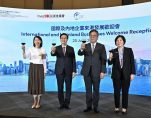
HONG KONG SAR – Media OutReach Newswire – 26 June 2026 – More than 380 representatives of global enterprises joined a welcome reception yesterday (June 25) for 413 newly arrived or expanded overseas and Chinese Mainland companies in Hong Kong.
During the reception, Invest Hong Kong (InvestHK), the government’s investment promotion agency, announced impressive results for the first half of 2026, revealing that these enterprises are expected to bring in over HK$53 billion (US$6.8 billion) in foreign direct investment and create over 8,600 new jobs for Hong Kong.
Hong Kong SAR’s Chief Executive, John Lee (second left); the Secretary for Commerce and Economic Development, Algernon Yau (second right); the Director of the Chief Executive’s Office, Carol Yip (first left); and the Director-General of Investment Promotion, Alpha Lau (first right), toast the success of enterprises expanding in Hong Kong at Invest Hong Kong’s annual welcome reception.
Speaking at the reception, John Lee, Chief Executive of the Hong Kong Special Administrative Region (HKSAR), said Hong Kong is one of the best places in the world to do business, being ranked as the world’s freest economy by the Fraser Institute and the second most competitive economy according to the latest IMD World Competitiveness Yearbook.
“In choosing Hong Kong for your Asian and global business expansion, you share my belief in Hong Kong’s flourishing future,” Mr Lee said. “You have made a wise choice. Hong Kong is one of the world’s best economies to do business in and with.”
Under the “one country, two systems” principle, Hong Kong possesses the distinctive advantages of enjoying strong support from the country (China) and being closely connected to the world. The city offers an open and business-friendly environment, a simple and low tax regime, and a common law system that seamlessly connects with global financial centres.
Austria-based transport and logistics firm Gebrüder Weiss recently upgraded its Hong Kong office to become regional headquarters in East Asia and Oceania. Its Regional Director East Asia/Oceania, Michael Zankel, said of Hong Kong, “The business environment is great, you have a lot of talent around here to employ. It has always been the gateway to the Chinese Mainland but for us it is more a gateway to Asia.”
According to Merwann Younes, Global Head of Hospitality & Lifestyle Channels for Italian company Moleskine, Hong Kong is a “a very dynamic and creative city, which are also the core values for Moleskine as a brand.”
Etienne Dubois, Chief Strategy Officer, Unlimitics, which has developed an AI-powered school simulation game designed for neurodivergent children, said Hong Kong is a good place for start-up entrepreneurs like himself. “It is a very good melting pot for talent and opportunities and for growth,” he said.
Expanding on its first half results for 2026, InvestHK announced that its number of completed projects had increased 9% compared to the same period in 2025, while anticipated direct investment was up 36% and new jobs created rose 6% year-on-year.
In terms of place of origin of the 413 enterprises, 246 came from the Chinese Mainland, followed by Singapore (26), the United States (21), the United Kingdom (18), France (11) and Italy (11).
The top five sectors are innovation and technology (93), financial services and fintech (89), tourism and hospitality (55), transport, logistics and industrials (44), and business and professional services (39).
Looking ahead, Mr Lee said the HKSAR Government was expediting development of the Northern Metropolis, a new economic engine destined to rise as an international I&T and business hub.
“This will unlock abundant opportunities and shape a prosperous future for Hong Kong,” Mr Lee said, adding that the HKSAR Government is creating Hong Kong’s first Five-Year Plan, a strategic blueprint that will focus on long-term economic momentum, advancing technology and improving livelihoods.
President Lee Jae Myung has invited Pope Leo XIV to visit South Korea next year for World Youth Day in Seoul, using his first Vatican audience as president to seek support for efforts to lower tensions with North Korea and revive dialogue on the Korean Peninsula.
Lee met the Pope at the Apostolic Palace on Monday during the Vatican leg of a wider European tour, accompanied by first lady Kim Hea Kyung. The meeting placed religion and diplomacy at the centre of Seoul’s outreach strategy, as the Lee administration looks for channels beyond formal security talks to keep a peace agenda alive despite Pyongyang’s weapons programme.
The invitation was tied to World Youth Day 2027, the Catholic Church’s largest youth gathering, which Seoul will host from August 3 to 8. The event is expected to bring large numbers of young Catholics and other visitors to the capital, giving South Korea a global platform and offering Pope Leo his first major Asian pastoral journey if he accepts.
Lee and Pope Leo agreed to cooperate on the successful staging of the event, while the South Korean leader briefed the pontiff on his government’s approach to peace-building. Seoul wants the Vatican to sustain moral and diplomatic attention on the peninsula at a time when inter-Korean contact remains frozen and North Korea has shown little interest in official exchanges.
The meeting also touched on the possibility of a papal visit to North Korea, a move that would be unprecedented and politically sensitive. No pope has visited Pyongyang, and any such trip would require a formal invitation and guarantees from the North Korean authorities. The late Pope Francis had repeatedly signalled willingness to go if invited, but the plan never progressed beyond exploratory diplomacy.
Lee’s Vatican stop followed a peace Mass at the Basilica of Saint Paul Outside the Walls in Rome, celebrated by South Korea-born Cardinal Lazzaro You Heung-sik. Lee told the congregation that the “ember of hope” for dialogue and cooperation with North Korea remained alive, recalling the June 15, 2000 inter-Korean declaration that opened the way for family reunions, exchanges and humanitarian cooperation before relations deteriorated again.
The president has sought to present his North Korea policy as a shift from confrontation towards risk reduction. His administration has suspended propaganda loudspeaker broadcasts across the border and has said it does not seek unification by absorption or ideological competition. Officials frame those steps as confidence-building measures aimed at preventing accidental clashes and rebuilding basic military trust.
Pyongyang has not responded positively. North Korea has continued to define relations with Seoul as those between hostile states and has maintained its commitment to nuclear weapons and missile development. That position limits the scope for diplomacy and makes any papal role dependent on choices by Kim Jong Un’s government rather than on Vatican willingness alone.
After meeting Pope Leo, Lee held separate talks with Cardinal Secretary of State Pietro Parolin and Archbishop Paul Richard Gallagher, the Holy See’s senior diplomat for relations with states and international organisations. Those discussions covered bilateral ties, World Youth Day, regional affairs and the contribution of the local Catholic Church to education, welfare and democratic development.
The Vatican and the Republic of Korea established diplomatic relations in 1963. Pope John Paul II visited the country in 1984 and 1989, while Pope Francis travelled there in 2014 for Asian Youth Day. The 2027 event will return the papacy to a society where Catholics are a minority but hold a visible role in civic life and social services.
South Korea’s Catholic population surpassed 6 million at the end of 2025, representing about 11.4 per cent of the population. The Church has grown steadily over the past two decades, though it faces the same demographic pressures as the wider country, including ageing congregations and fewer vocations. World Youth Day is therefore being treated as both a diplomatic opportunity and a test of the Church’s appeal to younger generations.
HONG KONG SAR – Media OutReach Newswire – 5 June 2026 – A large high-level business delegation led by John Lee, Chief Executive of the Hong Kong Special Administrative Region (HKSAR), today (June 5) wrapped up its five-day visit to Kazakhstan and Uzbekistan respectively, achieving fruitful results of strengthening bilateral relations and deepening ties with Central Asia.
The delegation of over 70 business and institutional leaders from Hong Kong and the Chinese Mainland is the largest and most diverse overseas mission led by the current term of the HKSAR Government so far.
Hong Kong SAR’s Chief Executive, John Lee (fifth right) and the Advisor to the President of Uzbekistan on Strategic Development, Sardor Umurzakov (fourth right) witness the exchange of memoranda of understanding and co-operation agreements between government departments, enterprises and organisations from Hong Kong and Uzbekistan.
Speaking to the media in Uzbekistan yesterday (June 4), Mr Lee set out the three main objectives of the visit: further explore emerging markets and lay the foundation for long-term economic and trade development; strengthen government-to-government (G2G) relationships and promote closer bilateral co-operation; and build a “hub-to-hub” model of co-operation.
He said the visit had been successful, yielding achievements in eight areas, including:
Establishing high-level contacts and ties between the HKSAR Government and the Governments of Kazakhstan and Uzbekistan, and reaching consensus on co-operation in multiple areas;
A total of 96 co-operation agreements and memoranda of understanding (MoUs) were reached during the visit (61 with Kazakhstan, 35 with Uzbekistan), involving specific amounts exceeding US$1.65 billion in total;
The governments agreed to commence bilateral discussions on agreements in various areas;
Deepening project matching and research collaboration between Hong Kong and Central Asian region in areas including finance, innovation and technology (I&T), and aviation;
Demonstrating Hong Kong’s effective role as a platform for going global and achieving substantial results, with Hong Kong and Mainland enterprises joining forces in tapping new markets and bringing synergistic advantages into full play;
Facilitating more convenient people-to-people exchanges by promoting direct flights, aviation and transport co-operation, and extensions to the mutual visa-free period;
Promoting exchanges in education, talent and culture to further deepen people-to-people bonds; and
Advancing a hub-to-hub co-operation model to open up broader room for co-operation between Hong Kong and the Central Asian region.
While in Tashkent (June 3-5), Mr Lee met with local leaders, government officials and business representatives to deepen co-operation between Hong Kong and Uzbekistan in areas including trade, investment, finance, I&T, and people-to-people exchanges.
Mr Lee held meetings with the President of Uzbekistan, Shavkat Miromonovich Mirziyoyev, his Advisor on Strategic Development, Sardor Umurzakov, the Prime Minister, Abdulla Nigmatovich Aripov, as well as the Deputy Prime Minister, Jamshid Khodjayev, to exchange views on furthering mutual co-operation.
Mr Lee highlighted that under the “one country, two systems” principle, Hong Kong enjoys both the China advantage and the global advantage. He said that Hong Kong would continue to play its roles as a “super connector” and a “super value-adder” to further deepen co-operation and exchanges with Uzbekistan on various fronts in line with Uzbekistan’s goal of achieving high-quality development.
Hong Kong SAR’s Chief Executive, John Lee (left) meets with the President of Uzbekistan, Shavkat Miromonovich Mirziyoyev.
Earlier (June 3), Mr Lee met with the Minister of Foreign Affairs of Uzbekistan, Bakhtiyor Saidov, after which they jointly witnessed an exchange of notes between the two places on a mutual visa-free arrangement, which would allow a visa-free period of 30 days for visitors from both sides.
“Moreover, we are glad to have initialed the Air Services Agreement with Uzbekistan, and look forward to launching direct passenger flights between the two places soon,” Mr Lee said, during a high-level business dinner (June 4). The Chief Executive pointed out that Hong Kong and Uzbekistan are important trade and investment gateways to their respective regions – the Asia-Pacific and Central Asia.
“It helps that we are all believers in the Belt and Road (B&R) Initiative, a modern expression of the ancient Silk Road spirit,” Mr Lee said. “Today, China is Uzbekistan’s largest trading partner, and the two countries work closely on major infrastructure and connectivity projects that are revitalising the Silk Road. Hong Kong is a pivotal player in the B&R Initiative, thanks to our world-class professional and financial services expertise.”
The delegation also toured the IT Park Uzbekistan and the Center for Islamic Civilization before concluding its visit in Tashkent.
HONG KONG SAR – Media OutReach Newswire – 3 June 2026 – A large delegation, led by John Lee, Chief Executive of the Hong Kong Special Administrative Region (HKSAR), is visiting Kazakhstan and Uzbekistan (June 1-6) to forge closer ties with Central Asia.
Comprising over 70 business and professional representatives from Hong Kong and the Chinese Mainland, the delegation has already yielded significant results at its first stop in Kazakhstan.
Speaking at a business luncheon in Astana yesterday (June 2), Mr Lee highlighted that 43 memoranda of understanding (MOU) and agreements have been concluded by the visiting delegation with companies and organisations from Kazakhstan, with more agreements to come.
“They span aviation, finance and trade, innovation and technology, the digital economy, green development, and more,” Mr Lee said, adding that a Hong Kong airline plans to launch direct flights to Almaty in the first quarter of 2027.
“I believe that Kazakhstan can serve as a hub for Hong Kong to connect with the Central Asian market. In turn, Hong Kong can be Central Asia’s hub in the east and southeast Asian region,” Mr Lee said.
“By strengthening co-operation between our two hubs, we can construct a hub-to-hub co-operation model.”
On his first day of visit in Astana (June 1), Mr Lee met with top government officials including the President of Kazakhstan, Kassym-Jomart Tokayev, Prime Minister Olzhas Bektenov, and Deputy Prime Minister and Minister of National Economy Serik Zhumangarin.
Hong Kong SAR’s Chief Executive John Lee (left) meets with the President of Kazakhstan Kassym-Jomart Tokayev to exchange views on deepening bilateral relations.
Mr Lee noted that Kazakhstan has been actively promoting reforms on various fronts to bring about rapid economic growth.
“As one of the world’s three major financial centres, and the world’s largest cross-boundary wealth management centre and offshore Renminbi business hub, Hong Kong can provide diversified and flexible support including capital and asset allocation for Kazakhstan’s economic reforms and infrastructure development,” Mr Lee said.
The Chief Executive also encouraged companies in Kazakhstan to leverage Hong Kong’s advantages under the “one country, two systems” principle.
“Under this unique principle, Hong Kong has its own economic, social, legal, legislative and judicial systems. We are the only common law jurisdiction in China. We have our own currency, with no capital or foreign exchange controls. We are, as well, a separate customs territory,” Mr Lee said.
“The ‘one country, two systems’ principle ensures Hong Kong’s unparalleled access to the markets of the Chinese Mainland. Capitalising on our global connectivity and world-class professional services, Hong Kong is your ideal, two-way springboard for business expansion.”
Mr Lee also visited the Astana International Financial Centre and the Astana Hub, a local technology and innovation park, to respectively learn about Kazakhstan’s experience in promoting the development of the non-bank financial sector and the latest developments of the country in the field of AI.
Hong Kong SAR’s Chief Executive John Lee (centre) witnesses the exchange of memoranda of understanding and co-operation agreements between organisations from both sides with the Governor of the Astana International Financial Centre Renat Bekturov (second right).
Before leaving Kazakhstan today (June 3), Mr Lee visited Nazarbayev University, underscoring the historic significance of the trip.
“It was here, at Astana’s Nazarbayev University in 2013, that President Xi Jinping first raised the visionary initiative of jointly building the Silk Road Economic Belt – today’s Belt and Road Initiative (BRI),” Mr Lee said.
Last year, at the 10th Belt and Road Summit in Hong Kong, the university signed a MOU with the Hong Kong University of Science and Technology, demonstrating a shared commitment to advancing higher education co-operation under the BRI. It further reached MOUs with Hong Kong’s Education University and Polytechnic University today.
“These agreements will deepen academic and research collaboration.
“Hong Kong is the only city in the world with five of the top 100 universities. This talent environment is reinforced by our global standing: last year, Hong Kong ranked first in Asia, and fourth globally, in the World Talent Ranking,” he added.
Mr Lee will continue to lead the delegation to Uzbekistan for the second leg of the mission to Central Asia.
HONG KONG SAR – Media OutReach Newswire – 26 May 2026 – At 11.08pm on May 24, Dr Lai Ka-ying made history by becoming the first Hong Kong astronaut to blast off into space aboard the Shenzhou-23 manned spaceship. This momentous occasion also launched a new era for Hong Kong’s development of innovation and technology (I&T) as well as the city’s participation in national development under China’s 15th Five-Year Plan.
Congratulating Dr Lai on her achievement, John Lee, Chief Executive of the Hong Kong Special Administrative Region (HKSAR), said that the HKSAR can “transform from a ‘supporter’ of the country’s great aerospace endeavours into an ‘executor’ “.
Dr Lai Ka-ying (left) made history by becoming the first Hong Kong astronaut to blast off into space aboard the Shenzhou-23 manned spaceship.
“This not only demonstrates the HKSAR’s capability in contributing to the country’s development into an aerospace power, but also showcases how Hong Kong could better integrate into and serve the overall national development,” Mr Lee said.
“This mission is of great significance, as it is not only the first manned spaceflight mission during the 15th Five-Year Plan period, but also the first time for a payload expert from the HKSAR to participate in it.”
The Shenzhou-23 crew will conduct on-orbit rotation with the Shenzhou-21 crew. The crew, including Dr Lai, will stay in the space station and conduct multiple experiments and applications in various fields such as scientific applications.
The Secretary for Innovation, Technology and Industry of the HKSAR Government, Professor Sun Dong, led a delegation to the Jiuquan Satellite Launch Center to witness this historic moment. Members of the delegation included other government representatives, I&T experts, youths and students.
“I truly believe this is a great demonstration of Hong Kong integrating into and serving the overall national development through concrete actions, while contributing our strength in I&T,” Professor Sun said.
” ‘Science and technology is primary productive force, talent is primary resource, and innovation is primary driver of growth.’ The HKSAR Government will continue to drive the development of I&T, accelerate the establishment of an international I&T centre, and make greater contributions to building our nation into a strong power in science, technology, and aerospace.”
Commissioner for Innovation and Technology of the HKSAR Government, Mr Ivan Lee, said that the Government had been providing funding support for universities and research institutions in conducting aerospace technology-related projects through the Innovation and Technology Fund.
“In 2024, we launched a special call for funding applications, inviting universities to submit project proposals related to aerospace technology. Following a selection process, we supported six projects. Among them was the Multi‑Spectral Imaging Carbon Observatory (MUSICO) developed by a team from the Hong Kong University of Science and Technology,” he said.
On the Tiangong Space Station, Dr Lai will conduct experiments including operating the MUSICO — the world’s first lightweight, high-resolution synergistic observatory for carbon dioxide and methane emission point sources.
The Long March 2F Y23 carrier rocket carrying the Shenzhou-23 manned spaceship launched successfully at 11.08pm on May 24 at the Jiuquan Satellite Launch Center.
Born and raised in Hong Kong, Dr Lai is a Superintendent of the Hong Kong Police Force. In the recruitment exercise of China’s fourth batch of preparatory astronauts launched in 2022, she was successfully selected as a payload expert and was deployed to the China Astronaut Research and Training Center for training.
Before embarking on the historic spaceflight, Dr Lai expressed hope that it would inspire more Hong Kong youths to devote themselves to the field of I&T, thereby contributing to the country’s scientific and technological self-reliance and strength.
HONG KONG SAR – Media OutReach Newswire – 8 May 2026 – The Global Mediation Summit, the first international conference hosted by the International Organization for Mediation (IOMed) since its inauguration in Hong Kong last October, was held today (May 8) at the Hong Kong Convention and Exhibition Centre.
The event, with the Department of Justice (DoJ) and the Hong Kong International Legal Talents Training Academy as the key sponsors, gathered more than 400 leaders, policymakers and distinguished professionals from 48 countries and regions. They explored frontier topics such as cross-cultural international mediation, financial and investment dispute mediation, and the development of a global mediation ecosystem.
Speaking at the Summit, John Lee, Chief Executive of the Hong Kong Special Administrative Region (HKSAR), noted that Hong Kong has long supported mediation.
HKSAR’s Chief Executive, John Lee (first row, centre), attends the Global Mediation Summit today (May 8), joined by the Commissioner of the Ministry of Foreign Affairs of the People’s Republic of China in the HKSAR, Cui Jianchun (first row, second left); the Secretary for Justice, Paul Lam (first row, far right); the Secretary-General of the IOMed, Professor Teresa Cheng (first row, second right), along with other guests.
“Hong Kong is committed to becoming a global mediation capital. And we are well-positioned to do so,” Mr Lee said.
“Under ‘one country, two systems’, Hong Kong is a thriving hub for international finance, shipping and trade. We benefit from our country’s strong support and the opportunities it gives us, while maintaining extensive international connectivity as a world city.
“Hong Kong is the only common law jurisdiction in China, our country. And our legal professionals are internationally acknowledged for their professionalism and integrity. And now, as IOMed’s headquarters, Hong Kong is at the very heart of global dispute resolution and its promising future.”
Paul Lam, Secretary for Justice of the HKSAR, highlighted the HKSAR Government’s ongoing support for the IOMed in different ways.
“First, it will be responsible for the maintenance of the Headquarters. Second, the DoJ will continue to second Hong Kong legal professionals to the IOMed Secretariat. Since 2023, the DoJ has already seconded a total of four counsel to assist in the establishment of the IOMed. Third, the Government will actively promote the use of IOMed mediation by, among other things, taking the lead in procuring the inclusion of an IOMed mediation clause in suitable international agreements to which the HKSAR Government is a party,” Mr Lam said.
“Hong Kong is well recognised as a leading international legal and dispute resolution services centre. Indeed, one of the mandates stated in the National 15th Five-Year Plan is that Hong Kong shall strengthen its status in this respect.”
Since the IOMed’s inauguration, the number of signatory states has climbed from 37 to 41, while the number of contracting states has gone from eight to 13.
“IOMed is the first inter-governmental international organisation set up by a Convention to promote exclusively the use of mediation,” said Professor Teresa Cheng, Secretary-General of IOMed, in her welcome remarks at the summit. “It fills an institutional gap and brings forth mediation as a true viable alternative to resolving international disputes alongside litigation and arbitration.”
Professor Cheng shared two important developments of the IOMed.
First, a maritime dispute was successfully resolved through mediation administered by IOMed at its Hong Kong Headquarters in early May, just a few days ago. “The case marks an important milestone: it is the first international maritime dispute involving a charterparty chain referred to IOMed for mediation,” Professor Cheng said.
Second, aligning with Hong Kong’s goal to further develop the commodities market, and the intention to stipulate use of IOMed mediation in the related contracts and policy, the Secretariat of IOMed is working with the HKSAR Government and other stakeholders to explore the establishment of a dedicated special panel of mediators for commodities market disputes under the IOMed framework.
The Global Mediation Summit is the finale event of the Mediation Week 2026 held in Hong Kong under the theme of “Mediate First: An Attempt of Mediation, Harvests Abundant Harmony”, with a view to promoting mediation as a friendly way to amicably resolve disputes and conflicts, and to build a more harmonious community.
“Our commitment to mediation, locally and globally, is clear in the five-day Mediation Week programme that ends today with this Summit,” Mr Lee said. “Mediation Week events spotlighted disputes related to schools, sports, neighbourhoods and the elderly. The goal in each case was to apply mediation structure and skills to achieve peaceful and rational solutions to our problems.”
Panthalassa has secured $140 million in Series B financing to push artificial intelligence computing into open waters, backing a plan to run inference workloads on floating platforms powered by ocean waves rather than land-based grids. Peter Thiel led the round, joined by John Doerr, Marc Benioff’s TIME Ventures, Max Levchin’s SciFi Ventures, Susquehanna Sustainable Investments, Hanwha Asset Management’s venture fund, Fortescue Ventures, Future Positive, Super Micro Computer […]
Tiger Woods was arrested in Florida on Friday after a rollover crash near his Jupiter Island home, with authorities saying he showed signs of impairment after his Land Rover struck a truck trailer while attempting to pass on a two-lane residential road. Officers said a Breathalyzer test found no alcohol, but Woods refused a urine test, leading to an additional misdemeanour charge under Florida law. He was […]
HONG KONG SAR – Media OutReach Newswire – 23 March 2026 – A principal dinner was held by the Government this evening (March 23), bringing together about 130 family office decision-makers from Asia, Europe, the Americas, Oceania, and Africa to set the stage for the fourth edition of the Wealth for Good in Hong Kong (WGHK) Summit themed “Building Lasting Legacies”, which will take place tomorrow (March 24).
The Chief Executive, Mr John Lee, speaks at the principal dinner of the Wealth for Good in Hong Kong Summit today (March 23).
“For many, the future may feel less certain, more complex, than it did when we were at this event a year ago. But rest assured: Hong Kong stands strong and unwavering – a city where capital, institutions and families can keep a firm footing, even as the world around them is shifting,” the Chief Executive, Mr John Lee, said in his welcome remarks. “More and more family offices are turning to Hong Kong. We are now home to over 3 380 single family offices – a 25 per cent increase in the past two years. More than half of them have second-generation members, or beyond, in leadership roles. This reflects the confidence that ultra-high-net-worth families have in Hong Kong as a base for wealth transfer between generations.”
The night was highlighted by a magnificent “human-robot lion dance” performance at the start, where traditional lion dancers performed alongside agile robot dogs, bringing the stage to life through vivid movements. The display was a seamless blend of cultural heritage and cutting-edge technology, embodying Hong Kong’s spirit of embracing both tradition and innovation, while echoing the Summit’s focus on frontier themes such as AI and robotics.
Set against a vibrant blend of heritage and innovation, attendees of the principal dinner had an enjoyable night filled with great food and lively exchanges. They were also impressed by the fascinating world-famous Hong Kong skyline, glamourised by photo spots decorated with neon light and retro Hong Kong vibes set up at an open area of the venue. The beautiful night scene created a more relaxing atmosphere for them to connect and share their ideas of bringing social impacts with their wealth.
Tomorrow, family office decision makers and successors from around the world will engage in thought leadership by speakers on three core themes – “Strategic Asset Management for Family Legacy”, “Cultural Value Foundation for a Thriving Market”, and “Smart Tech Innovation Driving Capital Appreciation”- as well as a fireside chat on “Sports and Philanthropy” at the WGHK Summit. These conversations aim to inspire participants in various ways towards building legacies, reinforcing Hong Kong’s status as the premier hub for global family offices for legacy planning and value creation.
Hashtag: #WGHK
The issuer is solely responsible for the content of this announcement.
Markets fluctuated sharply on Friday as digital assets and traditional financial instruments digested the U. S. Supreme Court’s decision that struck down former President Donald Trump’s sweeping tariff regime, triggering a brief rally in bitcoin followed by rapid sell-offs and mixed sentiment among investors. The ruling, handed down by a 6-3 majority, found that the use of the International Emergency Economic Powers Act to impose broad tariffs […]
HONG KONG SAR – Media OutReach Newswire – 26 January 2026 – The 19th Asian Financial Forum (AFF), opened this morning (January 26) at the Hong Kong Convention and Exhibition Centre with more than 3,600 influential leaders from over 60 countries and regions joining the two-day summit, the region’s first major international financial event of 2026.
Co-organised by the Hong Kong Special Administrative Region (HKSAR) Government and the Hong Kong Trade Development Council (HKTDC), this year’s AFF, themed “Co-creating New Horizons Amid an Evolving Landscape”, takes on added significance being the first such event of China’s 15th Five-Year Plan period (2026-2030).
“Featuring more than 150 prominent speakers, from Hong Kong, throughout the Asian region and around the world, the Forum will inspire insight and innovation, create partnerships and explore fresh business opportunities,” John Lee, Chief Executive of the HKSAR, said in his opening remarks at the Forum.
Mr Lee also spoke of the boundless opportunities for Hong Kong under the unique principle of “one country, two systems”, that assures Hong Kong of the unwavering support of China, while continuing to expand its global markets and reach.
“This unparalleled positioning solidifies our institutional strengths: the rule of law, a judiciary that exercises its power independently, an open and transparent market, the free flow of capital and a low and simple tax regime,” Mr Lee said.
Mr Lee later witnessed the signing of a co-operation agreement between the Financial Services and the Treasury Bureau and the Shanghai Gold Exchange, marking a new milestone in deepening co-operation between the gold markets of Hong Kong and Shanghai.
The agreement was signed by the Secretary for Financial Services and the Treasury, Christopher Hui, and the Chairman of the Shanghai Gold Exchange, Yu Wenjian.
“The agreement just now signed is far more than a formal document,” said Mr Hui.
“It represents a resolute commitment to advancing the synergistic development of Hong Kong and Shanghai as premier international financial and gold markets. It reflects our joint determination to deepen the integration and complementary strengths of Hong Kong and Shanghai, so that together we can expand our share and influence in the global gold market, and better support Renminbi internationalisation.”
Mr Hui outlined the strategic significance of the agreement and the overall development blueprint for Hong Kong’s gold market.
“In recent years, amid heightened geopolitical uncertainty, inflationary pressures, and ongoing restructuring of the international monetary system, the strategic importance of gold has become even more pronounced,” Mr Hui said.
The agreement covers two major forward-looking areas of co-operation: establishing a high-level, collaborative governance structure for Hong Kong’s new gold central clearing system; and opening new avenues for physical infrastructure synergy and market interconnectivity.
“The signing of this agreement with the Shanghai Gold Exchange marks the dawn of a new chapter—one in which Hong Kong and Shanghai join forces to shape the future of global gold markets,” Mr Hui said.
A discussion session on gold trading themed “Global Spectrum – Gold Exchange” features expert panelists invited to examine recent market developments and share insights on Hong Kong’s role, potential and opportunity as a world-class gold trading centre. Speakers include overseas experts James Emmett, Chief Executive Officer, MKS PAMP SA and David Tait, Chief Executive Officer, World Gold Council.
Other highlights on day one of the AFF include a keynote luncheon speech by Dr José Manuel Barroso, former President of the European Commission, former Prime Minister of Portugal, and current Chairman of Goldman Sachs International Advisory Board, to share his insights on the current global landscape and macro‑level challenges.
Other notable speakers today include Zou Jiayi, President of Asian Infrastructure Investment Bank; Scott Morris, Vice-President (East and Southeast Asia, and the Pacific) of the Asian Development Bank; Mehmet Şimşek, Minister of Treasury and Finance of Türkiye; Klemen Boštjančič, Deputy Prime Minister and Minister of Finance of Slovenia; H.E. Waleed Saeed Abdul Salam Al Awadhi, Chief Executive Officer of Securities and Commodities Authority of United Arab Emirates; Burkhard Balz, Member of the Executive Board of the Deutsche Bundesbank; Rhee Chang-yong, Governor of the Bank of Korea; and Gokul Laroia, Chief Executive Officer Asia of Morgan Stanley.
The AFF serves as the opening event of the International Financial Week in Hong Kong, featuring over 10 partner activities covering a range of global financial and business topics, including ASEAN opportunities, asset and wealth management, and artificial intelligence.


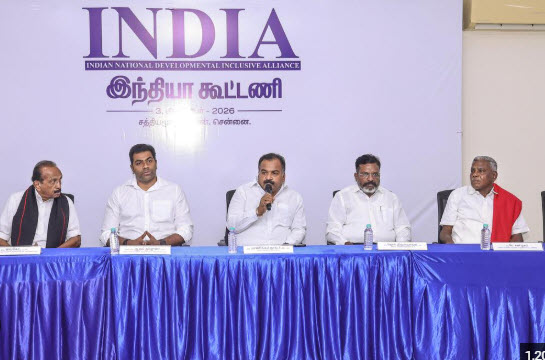
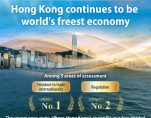

 https://www.brandhk.gov.hk/
 https://www.linkedin.com/company/brand-hong-kong/
 https://x.com/Brand_HK/
 https://www.facebook.com/brandhk.isd
 https://www.instagram.com/brandhongkong