

Arabian Post Staff -Dubai
The spending programme will cover continued infrastructure development and a broader expansion of Microsoft’s operations across the four countries, Vice Chair and President Brad Smith said on Wednesday. He said the company was maintaining investments planned before the Iran war and adding further commitments despite the heightened security risks affecting the region.
“We’re sustaining all the investments we planned to make before this conflict started, and we’re in fact adding to them,” Smith said, describing the pace of planned spending as aggressive.
Microsoft also plans to invest more than $400 million in subsea and terrestrial connectivity across the Middle East by 2030, strengthening links that support cloud services, data flows and business continuity. The company said the wider programme formed part of a new Middle East technology framework focused on technology, digital resilience and workforce development.
The initiative is being rolled out as governments across the Gulf accelerate spending on artificial intelligence, cloud computing and data centres as part of economic diversification programmes. Saudi Arabia, the UAE and Qatar have each expanded partnerships with global technology companies while developing national AI organisations and infrastructure intended to support large-scale adoption.
Security concerns have become more prominent as the Iran war has disrupted transport, energy and communications networks across parts of the Gulf. Smith said the conflict had reinforced the connection between digital resilience and digital sovereignty, increasing demand from governments and businesses for systems that can withstand physical and cyber disruption.
Microsoft said it had supported customers and partners with resilience assessments from the first week of the conflict and was now broadening that work through a regional digital resilience initiative. The programme will include continuity planning, readiness assessments and protection of critical data, with approaches tailored to regulatory and operational requirements in individual markets.
Smith said Microsoft could not provide a country-by-country breakdown of the planned $10 billion-plus investment or identify all projects, citing security considerations. The commitment covers both capital spending and operating expenditure associated with Microsoft’s regional build-out.
The company is also strengthening ties with national AI organisations, including Abu Dhabi-based G42, Saudi Arabia’s HUMAIN and Qatar’s QAI. Microsoft invested $1.5 billion in G42 in 2024 for a minority stake, while Smith said its work with HUMAIN and QAI was focused on selected areas of strategic importance and did not involve planned equity investments in those companies.
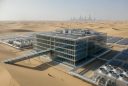
Microsoft’s Saudi expansion includes a new Saudi Arabia East data-centre region in the Eastern Province, which the company has said will become available to customers in November 2026. The region comprises three Azure availability zones and is designed to support local data residency, lower latency and cloud and AI workloads for government and private-sector users.
The group already operates cloud regions in Abu Dhabi and Dubai and has continued to expand its infrastructure footprint in the UAE. In 2025, Microsoft said it expected its total UAE investment between 2023 and the end of 2029 to reach $15.2 billion, including spending linked to cloud and AI capacity and its partnership with G42.
Alongside infrastructure, Microsoft said it would expand skills programmes aimed at helping more than 4.2 million people across the UAE, Saudi Arabia, Qatar and Kuwait by 2030. The training effort will target public-sector employees, students and women, with a focus on AI, cloud technologies and digital capability.
The company also plans to establish a network of cyber-security champions across the four countries to connect national priorities with Microsoft’s security expertise. Its AI for Good Labs programme is expected to receive additional regional investment, with projects focused on areas including education, healthcare and agriculture.
Microsoft said new data centres in the region would use zero-water cooling where feasible and that it would work with governments and utilities to increase access to carbon-free electricity as additional computing capacity comes online.
Also published on Medium.
Follow Arabian Post
Select Arabian Post as your preferred source on Google and MSN News for trusted business news and Arab politics and updates.



