Dubai has outlined the next phase of a Dh690 million overhaul of Hessa Street, setting out plans to ease persistent congestion along one of the city’s busiest east–west corridors and shorten daily travel times for thousands of motorists. Officials said the upgraded stretch will introduce additional lanes, new signal-controlled junctions and grade-separated interchanges designed to improve traffic flow between Sheikh Zayed Road and Al Khail Road. The […]
Belgian accessories brand Kipling is sharpening its focus on the Gulf as it unveils a redesigned flagship at Dubai Mall, betting that immersive retail and a renewed emphasis on its playful DNA will reconnect it with shoppers across the region. Domitille Parent, a senior executive overseeing the label’s regional strategy, said the store’s overhaul marks more than a cosmetic refresh. It signals a broader repositioning aimed […]
By Ashok Nilakantan Ayers NEW YORK: When the Supreme Court of the United States struck down Donald Trump’s sweeping global tariffs on February 20, delivering a 6–3 verdict that the International Emergency Economic Powers Act of 1977 confers no authority to impose broad-spectrum duties without Congressional approval, the most consequential reverberations were felt not in […]
Prime Minister Narendra Modi used a high-profile artificial intelligence summit to project India as a pivotal force in the global AI race, even as logistical strains and policy gaps underscored the scale of the challenge ahead.
The gathering brought together senior executives from global technology firms, domestic start-ups, academic leaders and policymakers, signalling a concerted push by New Delhi to position the country as both a major market and a development hub for AI. Modi framed the technology as central to economic growth, public service delivery and national competitiveness, arguing that India’s digital public infrastructure and vast talent pool provide a foundation for leadership in the field.
Speaking at the event, Modi said AI must be “inclusive and responsible”, emphasising applications in healthcare, agriculture, education and governance. He pointed to platforms such as Aadhaar, the Unified Payments Interface and the CoWIN vaccination system as examples of large-scale digital architecture that could integrate advanced analytics and machine learning.
The summit’s optics were carefully managed to reflect global engagement. Executives from leading US technology companies shared stages with founders of domestic firms working on generative AI models, language tools and enterprise software. Representatives from multilateral bodies and research institutions discussed governance frameworks, data protection and the need for cross-border collaboration.
Yet the conference also exposed tensions between ambition and execution. Several sessions ran behind schedule, and some industry participants privately expressed concern over policy uncertainty, particularly around data localisation, cross-border data flows and regulatory oversight. Draft frameworks on AI ethics and safety remain under consultation, and companies are awaiting clarity on compliance requirements.
The event unfolded against a backdrop of intensifying global competition. The United States continues to dominate foundational AI research and chip design, while China has invested heavily in domestic models and semiconductor capacity. The European Union has advanced comprehensive legislation through its AI Act, seeking to set global standards on risk and accountability.
India’s approach has been more incremental. The Ministry of Electronics and Information Technology has outlined plans to support compute infrastructure, encourage domestic large language models and expand skilling initiatives. Budget allocations for semiconductor manufacturing and design-linked incentives aim to reduce dependence on imports, although fabrication plants remain years away from full-scale production.
Industry analysts note that India’s strength lies in its software services sector and a large base of engineers. According to data from industry bodies, the country produces hundreds of thousands of engineering graduates annually, many of whom work in IT and business process outsourcing. Major domestic firms have announced internal AI integration plans, embedding generative tools into consulting, customer support and software development workflows.
At the same time, structural constraints are evident. High-performance computing resources are limited compared with those available in the US and China, and advanced chips are largely imported. Electricity reliability, data centre capacity and high-speed connectivity vary across regions. Venture capital funding for deep-tech ventures has fluctuated amid global market volatility.
Civil society groups and some academics used the summit to call for stronger safeguards. They warned that rapid deployment of AI systems without robust oversight could exacerbate misinformation, bias and privacy violations. India’s data protection law, enacted last year, sets out obligations for companies handling personal data, but implementing rules and enforcement mechanisms are still being developed.
Opposition figures have questioned whether headline events translate into durable policy outcomes. They argue that sustained investment in research universities, independent regulators and judicial capacity will be essential to manage the societal impact of AI. Some economists have also cautioned that automation could disrupt segments of the services workforce, requiring targeted reskilling programmes.
Global investors, however, continue to view India as a growth market. International cloud providers have expanded data centre footprints in cities such as Mumbai, Hyderabad and Chennai. Partnerships between domestic start-ups and multinational firms aim to build AI systems tailored to local languages and contexts, addressing a market of more than a billion people with diverse linguistic needs.
Modi’s messaging emphasised sovereignty alongside collaboration. He has repeatedly advocated for a global framework on AI governance that reflects the priorities of emerging economies, not solely those of advanced industrial nations. At the summit, he called for shared principles that balance innovation with ethical safeguards, while ensuring access for developing countries.
Diplomatically, the conference reinforced India’s profile as a convening power in technology policy, following its presidency of the G20 and engagement in forums on digital public goods. Whether that translates into tangible influence over global AI standards will depend on sustained coordination with like-minded partners and domestic regulatory coherence.
Mayo Clinic Platform is positioning the Gulf as a proving ground for a new generation of data-driven healthcare, with its chief operating officer Maneesh Goyal outlining plans to expand the organisation’s digital ecosystem and deploy two flagship offerings, Orchestrate and Insights, across the region. Speaking on the sidelines of World Health Expo Dubai 2026, Goyal said the future of medicine will be shaped less by individual hospitals […]
Arabian Post Staff -Dubai Google Pixel 10a has made its debut across global markets with pricing starting around $499, marking Google’s latest bid to capture value-minded smartphone buyers outside the premium segment. The mid-range handset balances a familiar design with upgraded display and software features, positioning it as a competitor to other sub-models from Samsung and Apple. The phone will begin shipping from 5 March 2026 after […]
Designed as the next milestone in Infinix’s flagship journey, the NOTE 60 SERIES elevates the brand’s signature NOTE line with a sharper focus on flagship-class performance, expressive design, and immersive everyday experiences that go beyond expectations.
HONG KONG SAR – Media OutReach Newswire – 18 February 2026 – At its annual flagship showcase, Infinix today unveiled the NOTE 60 SERIES, featuring the NOTE 60 Pro and NOTE 60—demonstrating a new chapter in delivering premium technology experiences to global users.
Infinix NOTE 60 Pro
Advancing design and performance within its class, the NOTE 60 Pro marks a significant milestone as Infinix’s first smartphone built on the Snapdragon® 7s Gen 4 Mobile Platform, delivering exceptional responsiveness and seamless multitasking that befits flagship-level performance.
It further elevates everyday experiences with an avant-garde Active Matrix Display that stays invisible when inactive, yet transforms into a dynamic interface for personalized interactivity, intelligent notifications, and on-screen entertainment—expanding what a smartphone can do in everyday life. Paired with a fluid 144Hz 1.5K Ultra HDR Cinematic Display and immersive SOUND BY JBL, the NOTE 60 Pro sets a new benchmark for premium multimedia experiences within its segment, proving that exceptional technology can be both powerful and pleasurable.
“NOTE 60 SERIES is our annual flagship showcase—an ‘all‑out’ blockbuster created with industry leaders,” said Tony Zhao, CEO of Infinix. “Embracing a whole-series 5G strategy, we are bringing together the best of performance, design, and entertainment—from our first NOTE powered by Snapdragon from Qualcomm Technologies, Inc., to premium design craftsmanship with Pininfarina, and immersive SOUND BY JBL. This ensures we deliver a pleasurable, fun experience that lets our global consumers actively enjoy the best modern technology.”
Performance Without Compromise with Snapdragon
The NOTE 60 Pro is powered by the Snapdragon® 7s Gen 4 Mobile Platform, delivering robust multitasking and exceptional gaming efficiency with up to 75%¹ faster CPU performance and 210%¹ improved GPU rendering compared to the NOTE 50 Pro. Infinix and Qualcomm Technologies have collaborated for the NOTE 60 Pro, integrating Infinix’s proprietary performance engine to fully harness the hardware’s capabilities. These optimizations deliver up to 25%¹ enhancement in multitasking performance, significantly faster app launch speeds, and a smoother, more stable experience when switching between apps during heavy use.
Powered by its strong Snapdragon chipset, the NOTE 60 Pro takes gaming performance even further, delivering smooth high‑frame‑rate gameplay across popular titles. Mobile Legends: Bang Bang and Honor of Kings run up to 120 FPS, ensuring ultra‑responsive, fluid action even during intense team battles. To maintain consistent performance, the NOTE 60 Pro also introduces an upgraded 3D IceCore Vapor Chamber cooling system featuring a 0.36 mm copper sheet that directs heat from the chipset to the vapor chamber, reducing temperature by up to 3 °C¹ during intense gaming for stable, sustained performance.
Active Matrix Display: Functionality Through Design
Featured on the back of the NOTE 60 Pro, the all-new Active Matrix Display represents a major design innovation for the NOTE SERIES.
This miniature, interactive LED interface stays invisible until activated, then instantly lights up to show smart notifications, animated pets, or mini-games. It enables at-a-glance information, versatile alerts, and moments of playful interaction. Users can personalize it with custom signatures, emojis, or dynamic patterns, giving users a creative outlet to express their personality and emotions, and turning the phone into a more emotionally connected personal companion.
Built around a robust one-piece frame of high-strength aluminum alloy with a refined micro-matte texture, the NOTE 60 Pro delivers a sophisticated, high-end feel while offering durable practicality and dependable IP64 protection² against dust, splashes, and everyday wear. Infinix NOTE 60 SERIES introduces multiple practical functions on the robust middle frame, including the new One‑Tap Button providing instant, customizable activation of Silent Mode or tools like the flashlight. It also features an industry-exclusive Advanced Health Monitor, providing proactive wellness tracking of key vitals like heart rate, blood oxygen, and long-term HRV to deliver actionable health insights.
Immersive Entertainment: A Stunning 1.5K Display Paired with SOUND BY JBL
The NOTE 60 Pro is engineered for an immersive, all-day comfortable audiovisual experience. It features a vivid 1.5K display with ultra-slim bezels, reaching 4500 nits peak brightness for visibility in any light and a 144Hz refresh rate for ultra-smooth visuals. The display is designed for extended viewing comfort, featuring motion sickness prevention technology, which helps users stay comfortable while reading, watching videos, or gaming when commuting or traveling. Last but not least, NOTE 60 Pro is protected by durable Corning® Gorilla® Glass 7i, and this visual excellence is complemented by a high-fidelity stereo sound system with SOUND BY JBL, to complete a truly compelling entertainment experience.
Capture Anything, Day or Night: The Pro-Grade Camera Setup
At the core of the Infinix NOTE 60 Pro’s imaging system is the exclusive 50MP OIS Night Master Camera, engineered to deliver crystal-clear photos and stable videos even in low light. Paired with a 112° ultrawide sensor, the system effortlessly captures everything from expansive landscapes to group portraits.
The device marks a major leap in imaging with Infinix’s first Ultra HDR pipeline, enabling full-chain HDR imaging, from capture and processing to display for brilliant, true-to-life photos. This high-end shooting mode preserves details in shadows and highlights that standard shots often miss, resulting in greater dynamic contrast range and rendering everything from daylight to neon with perfect clarity. Complementing this, the new Live Photo mode captures life as it happens and turns every photo into a vivid, pocket-sized memory.
Rounding out the professional imaging suite are intelligent features like 2x Lossless Portrait Zoom for studio-quality framing, 4K Ultra-Steady Video recording³ with creative filters, and the Infinix AI Studio for effortless, intelligent editing.
All-Day Power, Intelligent Care
The NOTE 60 Pro features a battery capacity up to 6500mAh⁴, a substantial 25%¹ increase over its predecessor. This provides ample power to support all-day browsing, messaging, and gameplay. To ensure power and performance are maintained in the long run, Infinix combines the increased energy density with an industry-first active healing system that automatically repairs internal battery materials in the long term, extending the battery longevity up to 200 cycles over time and ensuring at least 6 years of effective, hassle-free battery performance. The NOTE 60 Pro keeps you charged with 90W wired and 30W wireless⁵ charging. For the fastest wireless experience, an Infinix MagCharge phone case⁵ is included to guarantee perfect alignment. This gives you both the speed and the flexible convenience to power up seamlessly throughout your day.
Infinix NOTE 60: Flagship Implementation with Greater Accessibility
A design similar in high-end refinement to the NOTE 60 Pro’s graces Infinix NOTE 60, another 5G phone featuring a premium metal frame, a 1.5K Ultra HDR display at up to 144Hz, and exceptional battery capacity with advanced charging and longevity management. It’s built around the ultra-efficient MediaTek Dimensity 7400 Ultimate 5G mobile platform and delivers true 5G performance. The NOTE 60 sports many of the quality features common to the latest NOTE lineup, including Active Halo notification lighting, highly optimized system-level software, and the 3D IceCore Vapor Chamber cooling system. It retains the 50MP OIS Night Master Cam and Live Photo mode of NOTE 60 Pro, promising fun memory capture, editing, organization, and sharing with family, friends, and more.
Beyond “Pro”: Expanding the NOTE 60 SERIES
As a key step in its flagship journey, Infinix also previewed the NOTE 60 Ultra, marking a bold move into the premium segment. Designed by Pininfarina, the NOTE 60 Ultra introduces breakthroughs in form and delivers comprehensive upgrades in imaging, performance, and connectivity—representing the pinnacle of performance and experience within the NOTE 60 SERIES. More details about the NOTE 60 Ultra will be announced at a later date.
Demonstrating Infinix’s commitment to long‑term user support, the entire NOTE 60 SERIES comes equipped with the upgraded XOS 16, offering three generations of XOS platform upgrades and five years of security patches⁶. In addition, the whole series also supports eSIM connectivity⁷, providing users with greater flexibility and convenience in managing their mobile network experience.
Product availability
NOTE 60 Pro is available in five colors:* Mist Titanium, Solar Orange, Deep Ocean Blue, Mocha Brown, Frost Silver, Torino Black (Design by Pininfarina)*
It will be available in three variants:* 8GB + 128GB, 8GB + 256GB, 12GB + 256GB
NOTE 60 is available in five colors:* Mist Titanium, Rose Gold, Fizz Blue, Midnight Black, Mocha Brown
It will be available in two variants:* 8GB + 128GB, 8GB + 256GB
*Availability may vary by country/region. The Turino Black (Design by Pininfarina) will be released at a later date. Please consult local retailers and third-party shopping websites for more purchasing options.
*Available storage and RAM are less than the total memory due to storage of the operating system and software pre-installed on the device.
Price and availability vary between markets and sales channels. Please refer to the Infinix Official website for product availability and detailed regional sales information.
Disclaimer
Snapdragon is a trademark or registered trademark of Qualcomm Incorporated. Snapdragon is a product of Qualcomm Technologies, Inc. and/or its subsidiaries.
¹All data comes from Infinix laboratories. The testing data may vary slightly between different test versions and testing environments.
²The phone is dustproof and splash-proof under normal use. Under controlled laboratory conditions, its performance can reach IP64 level under IEC 60529 standard. Differences exist between real-life scenarios. Any damage caused to the phone by immersion in liquid is not covered under the warranty.
³Record at up to 4K 30 fps, with ultra-steady stabilization and a wide range of creative filters.
⁴Battery capacity and configurations may vary by market.
⁵MagCharge requires using the Infinix-branded magnetic attachment phone case.
⁶The specific XOS upgrade plan for each model will be announced separately. Please note that availability of this upgrade may be limited in certain countries.
⁷eSIM availability is carrier and region-dependent; it may not be supported in all countries.
Hashtag: #Infinix
The issuer is solely responsible for the content of this announcement.
About Infinix
Established in 2013, Infinix is an innovation-driven brand dedicated to delivering cutting-edge technology, bold design, and outstanding performance. The brand provides smart, enjoyable mobile experiences that enhance everyday life. Beyond smartphones, Infinix has expanded its portfolio to include TWS earbuds, smartwatches, laptops, tablets, smart TVs, and more—building a comprehensive ecosystem of smart devices. Currently, Infinix products are available in over 70 countries and regions worldwide, including Africa, Latin America, the Middle East, South Asia, and Southeast Asia.
Snapdragon branded products are products of Qualcomm Technologies, Inc. and/or its subsidiaries.Qualcomm, Snapdragon, Qualcomm Oryon, Hexagon and Adreno are trademarks or registered trademarks of Qualcomm Incorporated.
Spot Bitcoin exchange-traded funds in the United States continue to hold around $85 billion in assets despite a sharp downturn in the price of Bitcoin, highlighting a divergence between investor behaviour in regulated funds and the broader cryptocurrency market. The resilience of these funds, which trade on regulated exchanges and offer exposure to Bitcoin without direct ownership of the digital currency, underscores both the growing institutional participation […]
Arabian Post Staff -Dubai China’s Belt and Road Initiative recorded $213.5 billion in engagement during 2025, the highest annual level since its launch more than a decade ago, as a wave of construction contracts and energy investments reshaped the geographic balance of the programme and propelled the Middle East into the top ranks of recipients. Data compiled in the China Belt and Road Initiative Investment Report […]
Financial markets are moving at unprecedented speed. AI and tech stocks surge on earnings momentum, then retrace on valuation concerns. Oil whipsaws on geopolitical complexities. Crypto rallies sharply on liquidity optimism, only to correct just as quickly. Currency markets adjust in real time to growth differentials and fiscal developments. There’s no doubt that investors are trying to protect and grow their wealth in an environment defined by […]
Arabian Post Staff -Dubai Abu Dhabi-based Global South Utilities has inaugurated a 5 megawatt-peak grid-connected solar photovoltaic plant in Berbera, marking a significant step in Somaliland’s efforts to diversify its energy mix and curb dependence on diesel generation. The project, developed under a public-private partnership model, is accompanied by the launch of the Green Berbera initiative aimed at accelerating renewable energy adoption and sustainable infrastructure in the […]
Dragonfly Capital has secured $650 million for its fourth investment vehicle, pressing ahead with fresh commitments to digital asset infrastructure even as senior partners describe the current venture climate in crypto as a “mass extinction event”. The San Francisco and Singapore-based firm said the new capital will be directed towards foundational blockchain systems, stablecoins, on-chain financial services and tokenised real-world assets, signalling a long-term strategy despite persistent […]
Arabian Post Staff -Dubai Yango Group says its artificial intelligence-driven routing system saved users more than five million hours in 2025, with riders in Dubai and Abu Dhabi alone reclaiming over 34,000 hours through dynamic route optimisation. The mobility and technology company, which operates ride-hailing and delivery services across the Middle East, Africa, Europe and Latin America, reported that its AI models analysed billions of data points […]
OpenAI’s chief executive Sam Altman has said that India now has 100 million weekly active users of ChatGPT, elevating the country to the position of the platform’s second-largest market globally after the United States and underscoring its growing influence in the artificial intelligence ecosystem. Altman disclosed the figure in an opinion piece published ahead of the Global AI Impact Summit 2026 in New Delhi, where government officials and global tech leaders are convening to discuss the future of AI and its integration into education, enterprise and public services.
This milestone reflects not just a vast user base but also a distinct pattern of adoption: students in India now represent the largest single demographic of ChatGPT users worldwide, according to Altman, who highlighted the role younger generations are playing in embedding generative AI into daily workflows for learning and productivity.
The 100 million figure forms a significant share of ChatGPT’s global weekly active user count, which stood at about 800 million as of October 2025 and is widely projected to edge closer to 900 million as platforms refine their offerings and expand reach. OpenAI’s decision to open an office in New Delhi in August 2025 and tailor pricing, including a lower-cost subscription tier later made free for a year, is seen as part of a strategy to deepen engagement in what many technology firms regard as a key growth market.
Altman underscored India’s demographic advantages, including a population exceeding one billion internet users and a large proportion of English speakers outside native English-speaking countries — factors that have made the country fertile ground for generative AI adoption. Many students have turned to ChatGPT for support with research, coding, examination preparation and language practice, reflecting a broader trend of digital tools being woven into educational routines.
Despite this surge, translating sheer user numbers into sustained economic returns poses challenges for AI firms. India’s price-sensitive market and uneven internet access complicate monetisation, causing some companies to adjust their strategies to balance affordability with revenue generation. OpenAI’s tailored pricing and promotional offers have helped lower entry barriers, but broader monetisation across emerging markets may require further innovation in business models.
The competitive landscape in India’s AI space is intensifying. Alphabet’s Google has made inroads with its Gemini AI suite, aggressively targeting younger users through free one-year subscriptions and partnerships with telecom firms to broaden adoption among students and professionals. These efforts are part of a broader contest among technology giants to capture share in a market that has vast potential due to its size and digital engagement.
The presence of global tech leaders and politicians at the New Delhi summit highlights the geopolitical and economic significance of India’s AI trajectory. Policy discussions span topics from responsible AI governance and equitable access to scaling infrastructure and boosting domestic innovation capacity. Indian policymakers, alongside industry executives, are advocating approaches that leverage technology to enhance education, public services and economic participation, while grappling with concerns over job displacement and digital divides.
Altman has outlined priorities for fostering inclusive AI growth in India, emphasising the need for practical digital literacy, robust computing infrastructure and frameworks that ensure ethical deployment. Such an approach, he argues, will empower users to harness AI’s potential effectively rather than just expanding access to tools.
The prominence of India’s student base on ChatGPT has broader implications for how AI products are developed and tailored. Feedback from a large and diverse user community helps shape feature enhancements and localisation efforts, influencing global development roadmaps. For companies like OpenAI, this dynamic underscores a strategic shift from traditional markets in Europe and North America toward regions where usage patterns reflect unique demographic and cultural needs.
India has emerged as the second-largest market globally for Claude, the generative artificial intelligence model developed by US-based start-up Anthropic, underscoring the country’s expanding influence in the global AI ecosystem.
Debjani Ghosh, who leads Anthropic’s operations and policy engagement in India, said the scale of adoption by developers, enterprises and start-ups has placed the country just behind the United States in terms of usage and integration of Claude’s models. She described India as a “strategic growth engine” for the company, citing strong demand from sectors including financial services, healthcare, education and software development.
Anthropic, founded in 2021 by siblings Dario Amodei and Daniela Amodei, has positioned Claude as a competitor to models from OpenAI and Google. The company has attracted substantial backing from Amazon and Google, with Amazon committing up to $4 billion as part of a strategic partnership to integrate Claude into Amazon Web Services infrastructure. The funding has enabled Anthropic to expand globally, with India becoming a focal point due to its developer base and digital economy.
India’s prominence in the AI adoption cycle reflects broader structural factors. The country has one of the world’s largest pools of software engineers, a fast-growing start-up ecosystem, and a government push towards digital public infrastructure. Enterprises across banking and fintech have begun embedding generative AI tools to automate compliance checks, summarise documents and enhance customer interaction. In healthcare, pilot projects are under way to use AI systems for clinical documentation and triage support, while education technology platforms are deploying AI-driven tutoring tools.
Ghosh indicated that India’s market dynamics differ from those of Western economies. Cost sensitivity and the need for scalable deployment across diverse languages and devices have shaped how enterprises experiment with large language models. Claude’s emphasis on constitutional AI — a framework designed to make outputs safer and more aligned with human values — has resonated with corporate clients concerned about regulatory risk and reputational exposure.
Regulatory considerations are central to the AI conversation in India. The Ministry of Electronics and Information Technology has signalled its intent to craft a framework that balances innovation with safeguards against misinformation, bias and misuse. While India has not enacted a standalone AI law, policy discussions have intensified around data governance and algorithmic accountability. Companies operating in the country must also comply with the Digital Personal Data Protection Act, which imposes obligations on data fiduciaries and processors.
Industry analysts note that India’s large English-speaking population has historically accelerated the adoption of global technology platforms. However, the next phase of growth in AI is expected to depend on multilingual capabilities. Claude’s ability to handle multiple languages is seen as an advantage in a country with 22 constitutionally recognised languages and hundreds of dialects. Developers are increasingly testing generative models for vernacular content generation and customer support.
Competition in the Indian market is intensifying. OpenAI’s ChatGPT has built a strong user base, while Google has integrated its Gemini models into productivity tools and cloud services. Domestic start-ups are also entering the field, building foundation models trained on local datasets. Analysts say that enterprise adoption, rather than consumer usage alone, will determine long-term market leadership.
Anthropic’s expansion strategy in India includes partnerships with cloud providers and enterprise software companies. By leveraging Amazon Web Services’ presence in major Indian cities, Claude is being offered as part of broader digital transformation packages. Ghosh emphasised that collaboration with academic institutions and start-up incubators is another priority, with the aim of fostering responsible AI research and skills development.
The rapid uptake of generative AI has also raised concerns. Experts warn of the risks of hallucinations, data leakage and overreliance on automated systems. In financial services, regulators have cautioned against using AI outputs without human oversight. Cybersecurity specialists highlight the potential for AI tools to be misused for phishing or deepfake generation. Anthropic has sought to address such issues by embedding guardrails into its models and conducting external safety evaluations.
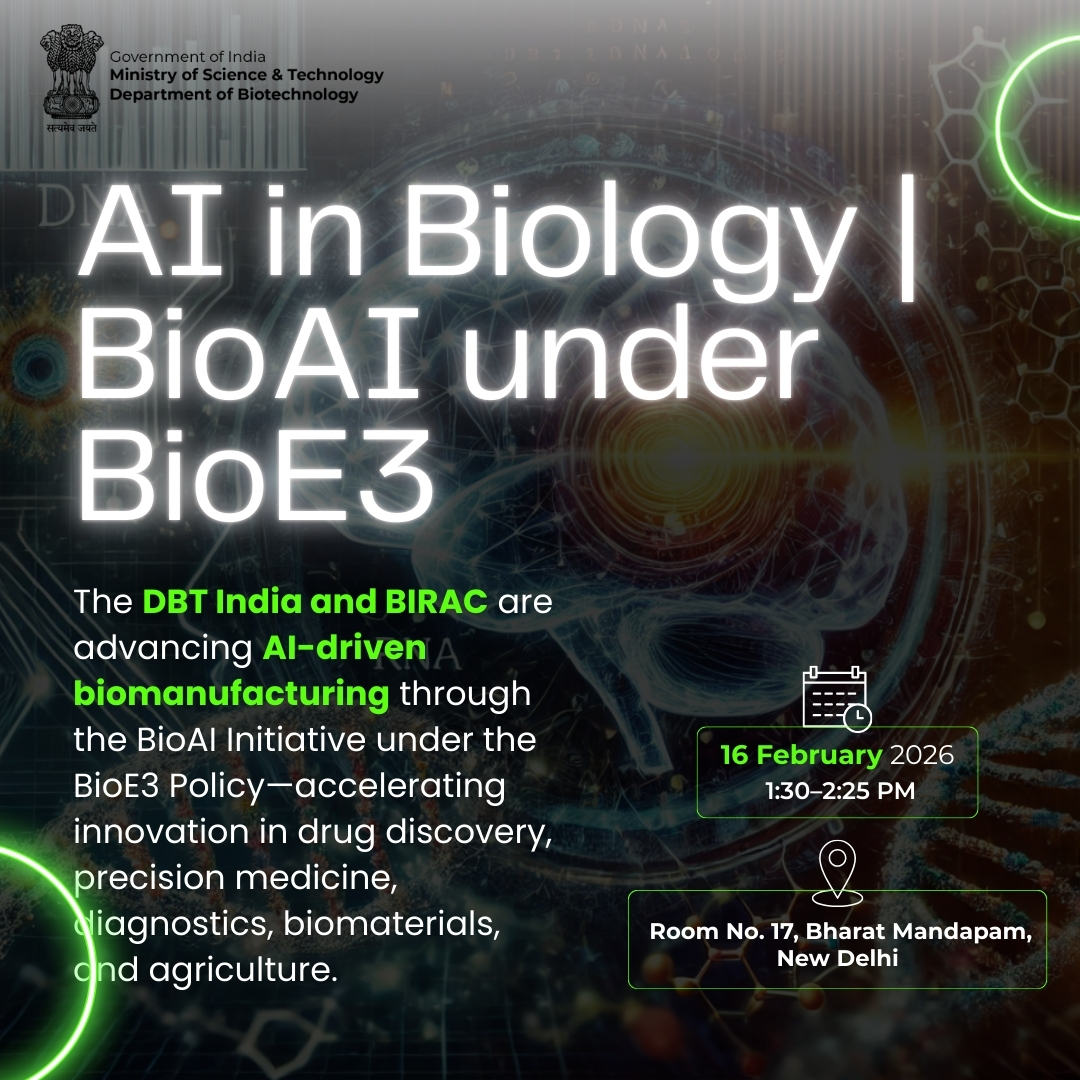
Artificial intelligence is being positioned as a catalytic force in reshaping biomanufacturing, with policymakers, scientists and industry leaders outlining a roadmap that blends computational power with biological science to accelerate drug discovery, industrial enzymes and sustainable materials. Discussions at the India AI Impact Summit placed BioAI at the centre of a strategy aimed at using genomics, in-silico modelling and closed data loops to build scalable and trusted production systems.
The convergence of AI and biology has moved from laboratory experimentation to commercial ambition. India’s biotechnology sector, valued at over $80 billion and targeting significant expansion by the end of the decade under the BioE3 policy framework, is seeking to harness machine learning tools to shorten development cycles that traditionally take years. Speakers at the summit argued that AI-enabled simulation and predictive modelling can reduce trial-and-error experimentation in fields ranging from vaccine development to precision fermentation.
BioAI refers to the integration of artificial intelligence techniques with biological data, particularly genomic sequencing, proteomics and metabolic engineering. The approach relies on large datasets and advanced algorithms capable of identifying patterns invisible to conventional research methods. Advances in protein structure prediction, including breakthroughs in computational biology over the past few years, have demonstrated how neural networks can model complex molecular interactions with remarkable accuracy.
At the summit, researchers described how generative AI systems are being trained to design novel proteins and enzymes tailored for industrial use. By feeding genomic datasets into predictive algorithms, scientists can simulate biological pathways in silico before conducting physical experiments. This method reduces costs and speeds up scaling, particularly in biopharmaceutical production and alternative protein manufacturing.
Government representatives outlined plans to expand national AI infrastructure to support such applications. IndiaAI Mission initiatives include the creation of high-performance computing resources and domain-specific data repositories to ensure that biotech firms and research institutes have access to secure and interoperable datasets. Officials emphasised that trust frameworks and regulatory clarity would be essential to encourage private investment while safeguarding data privacy and biosafety standards.
Industry leaders echoed that sentiment, highlighting that biomanufacturing requires rigorous validation. Unlike digital products, biological outputs interact with living systems, making quality control paramount. AI-driven feedback loops—where laboratory results continuously refine algorithms—were presented as a mechanism to maintain reliability while scaling up production. Data integrity, traceability and auditability were recurring themes, reflecting global debates about AI governance.
The global context underscores the strategic significance of BioAI. The United States and European Union have invested heavily in synthetic biology and AI-assisted drug discovery. China has also advanced computational genomics and large-scale fermentation capabilities. Analysts note that countries able to combine AI talent with robust biotech ecosystems stand to capture a growing share of the global bioeconomy, projected by several industry reports to exceed $4 trillion over the coming decade.
India’s strength in information technology services and pharmaceutical manufacturing offers a foundation for this convergence. The country is a major supplier of generic medicines and vaccines, supported by a network of research institutions and startups. By integrating AI tools into these value chains, stakeholders believe production timelines can be compressed and new therapeutic molecules identified with greater precision.
Academic voices at the summit stressed the importance of interdisciplinary training. Biologists must understand algorithmic thinking, while data scientists need grounding in molecular biology. Collaborative platforms linking universities, startups and established pharmaceutical firms were proposed to ensure knowledge transfer and talent development. Investment in computational biology curricula and shared research facilities is seen as critical to sustaining momentum.
Ethical considerations formed part of the dialogue. AI models trained on genomic data raise questions about consent, ownership and equitable benefit sharing. Experts argued for transparent governance structures aligned with international norms, noting that trust is fundamental when dealing with health-related information. Regulatory agencies are exploring how to evaluate AI-generated biological designs within existing approval pathways.
Private sector participation is accelerating. Venture capital funding in biotech startups leveraging machine learning has grown steadily, reflecting confidence in AI-assisted discovery platforms. Companies are experimenting with digital twins of biological systems, enabling simulation of fermentation processes before industrial deployment. Such capabilities can enhance efficiency and reduce resource consumption, aligning with sustainability goals.
Sustainability featured prominently in discussions on biomanufacturing. AI-optimised microbes can produce bio-based chemicals and materials that substitute fossil-derived inputs. Precision fermentation techniques, guided by predictive analytics, may lower energy use and waste. As global supply chains face pressure to decarbonise, the combination of AI and biotechnology is viewed as a pathway to cleaner industrial production.
Participants also highlighted challenges. High-quality biological datasets remain fragmented, and interoperability across laboratories is uneven. Ensuring cybersecurity in research networks is another concern, given the sensitivity of genetic information. Scaling laboratory successes to commercial volumes demands capital expenditure and regulatory compliance that can deter smaller enterprises.
Three decades after its modest debut on a handheld console, Pokémon has evolved into one of the most lucrative entertainment properties in history, generating tens of billions of dollars in revenue and emerging as a potent instrument of Japan’s cultural influence abroad. Created by Satoshi Tajiri and launched in 1996 by Nintendo, Game Freak and Creatures, the franchise began with Pokémon Red and Green for the Game […]
Galaxy Digital’s head of asset management, Steve Kurz, is projecting a structural shift in the cryptocurrency market as the industry grapples with price volatility and evolving investor behaviour. Speaking publicly this week, Kurz said the downturn in digital-asset prices is better understood as healthy deleveraging rather than evidence of systemic failure, and described a deepening integration between traditional financial systems and digital-asset infrastructure that he believes underpins […]
Strategy has said it could withstand a collapse in bitcoin’s price to $8,000 and still service its roughly $6 billion in net debt, outlining contingency plans that include converting portions of its borrowings into equity if market conditions deteriorate sharply. The Virginia-based software company, formerly known as MicroStrategy, has become one of the largest corporate holders of bitcoin under executive chairman Michael Saylor. Its balance sheet is […]
Concerns over inadequate privacy safeguards are holding back broader adoption of cryptocurrencies and blockchain technology, according to Binance founder Changpeng Zhao and several industry executives speaking at a major digital assets forum. Their remarks underline a growing consensus that transparency, long touted as blockchain’s defining strength, may also be constraining its appeal among retail users and large institutions. Zhao, widely known as CZ, told a panel at […]
Fireworks will illuminate parts of Dubai each evening during Ramadan, with organisers confirming a month-long programme across Al Seef, Dubai Creek waterfront and Global Village from 19 February to 19 March. Displays are scheduled daily at 9:30pm along Al Seef and the Dubai Creek waterfront, offering residents and visitors a waterfront spectacle shortly after iftar. At Global Village, fireworks are planned every Friday and Saturday at about […]
Wynn Resorts has posted a sharp drop in fourth-quarter profit despite edging up revenues, underscoring mounting pressure from softer gaming volumes on the Las Vegas Strip and uneven recovery in Macau as the company presses ahead with a multibillion-dollar expansion in the United Arab Emirates. The US-listed casino operator reported that net income for the final quarter fell markedly from a year earlier, even as overall revenue […]
Anthropic has entered a dispute with the United States Department of Defense over the proposed military use of its flagship artificial intelligence system, Claude, underscoring a widening rift between Silicon Valley’s safety-first rhetoric and Washington’s expanding appetite for advanced AI in national security. The San Francisco-based company, founded in 2021 by former OpenAI researchers including chief executive Dario Amodei and president Daniela Amodei, has built its brand […]
Arabian Post Staff -Dubai Saudi Arabia is accelerating a transformation of Mecca’s property market, opening parts of the holy city to foreign investment as lower oil prices strain state finances and flagship mega projects such as Neom undergo recalibration. Cranes line new promenades leading towards the Grand Mosque, where swathes of older neighbourhoods have been cleared to make way for high-rise hotels and mixed-use towers designed to […]



 By Ashok Nilakantan Ayers NEW YORK: When the Supreme Court of the United States struck down Donald Trump’s sweeping global tariffs on February 20, delivering a 6–3 verdict that the International Emergency Economic Powers Act of 1977 confers no authority to impose broad-spectrum duties without Congressional approval, the most consequential reverberations were felt not in […]


 http://www.infinixmobility.com/