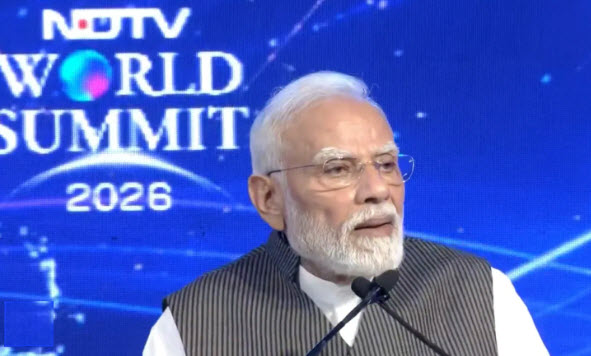
By Dr. Gyan Pathak Prime Minister is entitled to criticise the Leader of the Opposition forcefully, but the dignity of the office calls for a distinction between robust political criticism and personal ridicule. Nevertheless, PM Narendra Modi ridiculed his rival LoP Rahul Gandhi on 22 October 2026 at a World Summit organised by NDTV, where […]
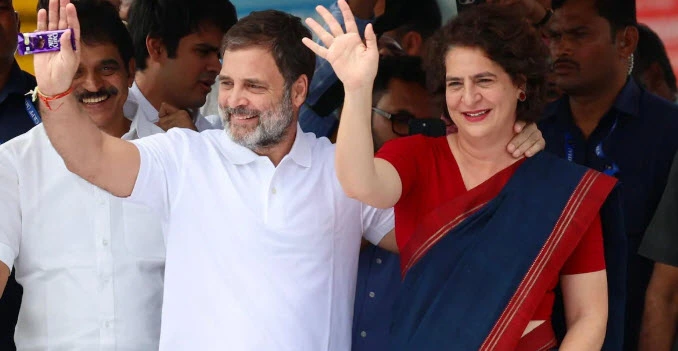
By Rahil Nora Chopra The UP Congress is gearing up for the 2027 Assembly elections and negotiating the seat-sharing arrangement with the Samajwadi Party (SP). With the aim of outlining the terms of negotiations with the SP, Congress general secretary Priyanka Gandhi held a three-hour-long meeting with UP Congress leaders regarding seat allocation. The Congress […]
JAKARTA, INDONESIA – Media OutReach Newswire – 22 October 2026 – The New Asia Forum (NAF) 2026 aims to mobilize US$30 billion in investment across the New Asia region by strengthening strategic partnerships and accelerating investment execution. Held under the patronage of President Prabowo Subianto, with Danantara Indonesia as a founding partner, the forum will take place on 3–4 December 2026 in Bali, Indonesia.
NAF 2026 is designed as an action-oriented platform connecting global investors, industry leaders, and policymakers to advance investment opportunities across strategic sectors. Moving beyond conventional economic dialogue, the forum seeks to translate investment interest into concrete commitments, financing structures, and measurable outcomes.
Pahala Nugraha Mansury, Managing Director of Global Relations & Communications at Danantara Indonesia, emphasized Asia’s growing potential to attract long-term global capital amid shifting economic and geopolitical dynamics.
“Our focus is on encouraging long-term capital to recognize the many investment opportunities across Asian countries, because this is precisely where the center of gravity for growth lies. This will enable growth at scale, anchored by ASEAN and driven by Indonesia as the largest country in ASEAN,” said Pahala.
The Asia-Pacific region currently accounts for nearly 60% of global economic growth. However, long-term international capital allocation to the region remains below its potential, presenting significant opportunities for greater investment collaboration.
NAF 2026 expects to convene more than 1,000 global leaders, feature over 100 speakers, and host more than 40 sessions involving sovereign wealth funds, institutional investors, development finance institutions, multinational corporations, and government representatives. Notable speakers include President Prabowo Subianto of Indonesia; Masayoshi Son, Chairman and CEO of SoftBank Group; Tshering Tobgay, Prime Minister of Bhutan; Kathleen Quirk, Chief Executive Officer of Freeport-McMoRan; Matteo Renzi, former Prime Minister of Italy; and Israfil Mammadov, Chief Executive Officer of the State Oil Fund of the Republic of Azerbaijan.
The forum will follow a two-day structure: Discovery & Diligence on 3 December, focusing on investment opportunities, feasibility, and transaction structures; and Action & Execution on 4 December, advancing capital commitments, strategic partnerships, and implementation milestones.
Eight priority sectors will anchor the discussions: strategic resources and downstreaming; energy and power; advanced mobility and manufacturing; digital infrastructure and AI; food and agribusiness; trade and connectivity; tourism and creative economy; and education and human capital.
As a founding partner, Danantara Indonesia will participate as a co-investor alongside global partners, supporting investment in strategic sectors and reinforcing Indonesia’s role in regional economic transformation.
Through its transaction-focused approach, NAF 2026 aims to deliver preliminary investment agreements, bankable financing structures, and clearly defined implementation milestones. Investment commitments and progress will be tracked across subsequent editions to promote accountability, continuity, and tangible economic impact for Indonesia and the wider region.
Hashtag: #NewAsiaForum2026
The issuer is solely responsible for the content of this announcement.
BJP leader P. K. Krishnadas has said his party remains open to leaders and workers from other political organisations, after a Facebook post by CPI(M) figure P. P. Divya prompted speculation about her political future in Kannur. Krishnadas said those considering joining the BJP should first make their intentions clear…
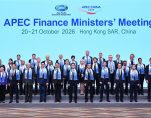
HONG KONG SAR – Media OutReach Newswire – 22 October 2026 – Finance leaders and representatives of international organisations attended the APEC (Asia-Pacific Economic Cooperation) Finance Ministers’ Meeting (FMM) 2026, successfully held in Hong Kong for the first time (October 20-21). Participants engaged in in-depth exchanges on issues concerning regional financial and economic development.
Yesterday (October 21), the FMM issued the 2026 APEC Finance Ministers’ Joint Statement, reaffirming the commitment to building an open, dynamic, resilient, and peaceful Asia-Pacific community by 2040 for the prosperity of all our people and future generations.
Representatives of the participating APEC member economies and international organisations during the meeting.
Minister of Finance and chair of the 2026 FMM, Lan Fo’an, said that all parties should firmly implement the consensus reached at the APEC Economic Leaders’ Meeting, uphold multilateralism, and deepen practical co-operation in fiscal and financial affairs, with a view to contributing to regional economic and financial stability and long-term sustainable growth.
Earlier, John Lee, Chief Executive of the Hong Kong Special Administrative Region (HKSAR) Government, welcomed participants to the FMM.
“This is a historic occasion for Hong Kong. The APEC Finance Ministers’ Meeting – part of APEC China 2026 – is taking place in our city for the very first time. We are honoured to support this significant international event, which brings together the member economies of the Asia-Pacific Economic Cooperation, representing some three billion people and accounting for over 60 per cent of global GDP,” Mr Lee said.
“Under the unique ‘one country, two systems’ principle, Hong Kong enjoys both the China advantage and the global advantage. We are the only common law jurisdiction in China, our country, and have a legal and regulatory regime similar to most of the world’s top financial hubs.”
Speaking during the discussion sessions, Paul Chan, Financial Secretary of the HKSAR, said that amid geopolitical tensions and uncertainties over trade policies, Asia-Pacific economies should strengthen co-operation to maintain the smooth flow of trade and investment, while guarding against financial risks and nurturing long-term growth drivers.
He said that Hong Kong would leverage its unique advantages under the “one country, two systems” principle, and make full use of its diverse financing channels and professional services as an international financial centre to serve as a “super connector” and “super value-adder”.
“Regionally, we need open channels for trade and investment, not new barriers. Connected markets allow capital to reach productive uses and technologies be adopted across borders,” Mr Chan said during a plenary session on Global and Regional Economic and Financial Outlook (October 20).
“Our collective task is to safeguard stability while strengthening the foundations for lasting prosperity. Hong Kong, China stands ready to work with fellow economies to seize opportunities, manage risks and support more resilient, sustainable and inclusive growth across the Asia Pacific.”
The Hong Kong Monetary Authority and the APEC Business Advisory Council (ABAC) held two thematic seminars (October 20) on “Fostering a digitalised, inclusive and sustainable supply chain ecosystem through finance” and “Mobilising capital for nature: scaling finance and regional cooperation across APEC” respectively.
In his welcoming remarks at the seminars, Christopher Hui, Secretary for Financial Services and the Treasury of the HKSAR, said: “In an era of profound economic transformation and evolving global challenges, prosperity will not be secured by any economy acting alone. It will be built through partnership, innovation and resilience. I am therefore delighted that this seminar brings together regulators, business leaders and experts from across the Asia-Pacific region for meaningful exchanges on how we can unlock new opportunities, strengthen financial resilience, and drive sustainable growth for all.”
Following the conclusion of the FMM, Mr Lee and other officials met Mr Lan at Government House to exchange views on economic and financial development of the Chinese Mainland and Hong Kong. Mr Lee expressed his heartfelt gratitude to the country for its trust in and support for Hong Kong, as well as its strong affirmation of Hong Kong’s status as an international financial centre.
During the FMM, a diverse range of tours and visits were arranged for members of delegations from participating economies and international organisations to enjoy the city’s cultural heritage and unique charm as an international metropolis.
The itineraries included visits to the Peak, Hong Kong Museum of Art, Hong Kong Palace Museum, Xiqu Centre, Chinese Culinary Institute and Ocean Park as well as a boat tour to enjoy the renowned views of Victoria Harbour.
Production-grade in-app messaging with no credit card required to start, plus an optional Cloud Bonus offering your choice of either 15% off AWS or 30% off Alibaba Cloud
SINGAPORE – Media OutReach Newswire – 22 October 2026 – Nexconn, a global cloud communications platform, announced the launch of its production-ready Free Chat Plan. Under the new initiative, developers and startups can deploy enterprise-grade chat infrastructure for up to 10,000 monthly active users (MAU) completely free—with full Chat Pro features enabled and no credit card required.
The launch tackles a persistent industry pain point: typical free tiers across the category cap at 100 to 1,000 MAU and restrict apps to sandbox environments—thresholds far too low to validate user retention or viral growth.
“A free tier should empower teams to validate their business model, not just verify that an SDK compiles,” said Will Song, Head of Global Business at Nexconn.
To further extend startup runway, Nexconn also introduced an additional Cloud Bonus: teams that link a payment method can choose between 15% off AWS or 30% off Alibaba Cloud to offset their backend cloud costs.
The offer is open to teams that simply send their first in-app message by December 31, 2026, 11:59 p.m. Singapore Time (SGT, UTC+8), locking in up to 10,000 MAU of Pro chat (valued at $860/month). Developers can claim the plan and view full details at https://www.nexconn.ai/free-chat-api?utm_source=pr.
What the Free Chat Plan Includes
The plan provides comprehensive capabilities across the entire application lifecycle:
Rich Messaging Architecture: Unlimited messages across direct (1-on-1), group, community, and open channels.
Modern Social Interactions: Read receipts, typing indicators, user mentions, unread badges, and cross-platform multi-device synchronization.
Native Push: Built-in multi-channel mobile push gateway included with no add-on fees.
High-Capacity Resource Quotas: Supports up to 500 peak concurrent connections, 10 GB of cloud storage, and 180 days of searchable message history.
No-charge Migration Support: End-to-end data migration support for teams transitioning from Sendbird, Stream, CometChat, PubNub, Agora, or Twilio.
Developer Acceleration: An open-source AI Integration Skill allows developers to generate client SDK code and backend token endpoints via simple text prompts.
The Cloud Bonus: The 10,000 MAU Chat plan remains free and does not require a credit card. Teams may optionally link a payment method to activate the Cloud Bonus—15% off AWS services or 30% off Alibaba Cloud services.
How to Get Started
Sign Up: Create an account in the Nexconn Console.
Build: Integrate the SDK manually or with the open-source AI Skill.
Activate Your Free Plan: Complete enrollment by simply sending at least one message before December 31, 2026, 11:59 p.m. Singapore Time (SGT, UTC+8).
(Optional) Cloud Discounts: Link a payment method to activate your choice of 15% off AWS services or 30% off Alibaba Cloud services.
The issuer is solely responsible for the content of this announcement.
About Nexconn
Nexconn is a global cloud communications platform engineered for developers, high-growth startups, and enterprises building real-time, mission-critical digital experiences.
The company delivers a unified real-time portfolio tailored to global scale:
AICP (AI Communication Platform): High-performance Chat and Call (voice/video) APIs, combined with production-ready, scenario-specific AI Agents (such as Smart Office and Social Marketing). This unified platform allows businesses to seamlessly embed intelligent, context-aware communications into any web or mobile application.
Enterprise & Public Sector Deployments: Carrier-grade private cloud and on-premises solutions engineered for organizations and government bodies requiring strict data residency, privacy, and compliance.
SoftBank Group shares fell sharply on Thursday, bringing the Japanese investment company’s market value close to half its June peak as investors questioned the cost of financing its expanding artificial intelligence commitments. The stock dropped more than 5% in Tokyo trading, extending a retreat that has accompanied broader selling across Asian technology markets. The decline has put renewed attention on SoftBank’s reliance on borrowing and the uncertain […]
The Orchard Road clinic outlines a goal-based alternative to off-the-shelf test packages*
SINGAPORE – Media OutReach Newswire – 22 October 2026 – Hisential Clinics Singapore, a doctor-led health screening and men’s health clinic at Mandarin Gallery, Orchard Road, has outlined its goal-based approach to men’s preventive health ahead of Movember 2026. As consumer platforms market standardised blood test panels directly to the public, the clinic is highlighting the role of doctor-led risk stratification, physical examination and long-term follow-up in effective health screening. Group Medical Director Dr Julian Ng is available for interviews during November to discuss the approach.
Each November, Movember campaigns encourage men to see a doctor. Health outcomes for men, however, have been slow to improve, according to the clinic. The clinic attributes this gap partly to preventive health having followed a consumerist route. Digital wellness platforms now sell blood tests the way meal-kit apps sell dinners: a panel is selected, purchased and delivered. Screening is packaged like phone plans, tiered and compared by item counts. The underlying assumption is that a health check is a product.
“The first question we ask is not which package are you here for. It is what is the goal,” Dr Ng said. “A thirty-five-year-old with a family history of heart disease and a fit fifty-year-old with none do not need the same tests. They need the same conversation. Everything that follows, what we test, what we watch, when we see you again, is built backwards from that answer.”
The clinical case against off-the-shelf testing is straightforward: medicine is not just blood tests. A number on a report means different things in different bodies. The same cholesterol reading can be reassuring for one man and a warning for another, depending on his age, family history, blood pressure, and what a doctor finds on examination.
This is risk stratification, and it is why the physical examination still matters in an age of app-ordered panels. A murmur heard through a stethoscope, a detail no mail-order test captures, can change how a doctor interprets a cholesterol reading and what target is appropriate for that patient. Without the examination and the history, screening becomes numbers without medical context.
“Men come to us carrying printouts from testing platforms, sometimes anxious over a value that means very little for them, sometimes reassured by one that should have prompted more questions,” Dr Ng said. “A blood test is a tool, not a diagnosis. It only becomes medicine when somebody takes the time to place it in the context of the person standing in front of them.”
The men who avoid screening appointments are often disciplined in other areas of life, the clinic has observed. What they avoid is being processed: selecting a package from a menu and leaving with numbers nobody explained.
Hisential’s answer is a different kind of appointment. At the Mandarin Gallery clinic, a consultation is built around two things: the goal, and the time to reach it. Time with the practitioner matters twice over. The first question a man asks is usually the safe one he rehearsed, often about cholesterol. The question that actually brought him in surfaces once he trusts the doctor and sees there is time for the answer. Most health systems never hear the second question.
The consultation also builds structure for what follows. Doctor and patient agree on what is being monitored, the patient’s baseline, and what happens at the next check. Patients who leave with that structure keep the habit, the clinic finds. Prevention, in this model, is a series of future decisions set up in advance.
The approach speaks to a wider conversation in Singapore about healthspan, healthy years rather than simply years. Healthspan is not bought in a single transaction, according to the clinic. It is built through understanding one’s health numbers, what they mean in context, and catching quiet changes early, when the response can still be small. That requires a practitioner who knows a patient’s goals and history, not a panel that knows neither.
“The men who do best in preventive health are not the ones who bought the biggest test package on day one,” Dr Ng said. “They are the ones who left with their questions answered, a goal defined, and a reason to return. Everything after that is easy.”
The clinic’s view is that men’s health services more broadly would benefit from the same shift: fewer standardised packages, more appointments and relationships worth keeping.
Hisential Clinics Singapore provides doctor-led health screening and men’s health services at Mandarin Gallery, 333A Orchard Road. Interviews with Dr Julian Ng, Group Medical Director, can be arranged on request. Hashtag: #MensHealth #HealthScreening #Movember
The issuer is solely responsible for the content of this announcement.
Hisential Clinics Singapore
Hisential Clinics Singapore offers doctor-led health screening and men’s health services at Mandarin Gallery, Orchard Road. More information: https://hisential.sg/health-screening
Healthcare reviews platform publishes first annual ranking of hospitals across the UAE as AI-driven patient search reshapes how people find care across the Gulf Doctify, the verified healthcare reviews and booking platform used by over ten million people each year, has published its first annual ranking of the top hospitals across the UAE as it marks six years of operations in the region. The rankings analyse hospitals […]
By Jag Mohan Thaken CHANDIGARH: Drug issue has boiled up the political and social atmosphere in the state of Punjab. Seeing the assembly elections on the head, all political parties are trying to get the waves in their own favour and targeting each other for the current deteriorated condition due to root level web of […]
LOS ANGELES, USA – Newsaktuell – 21 October 2026 – A newly released study of US state government performance found strong partisan and regional patterns within three pillars of governance: democratic accountability, state capacity and public goods provision. Yet, the US states’ outcomes differ in important ways from international comparisons, as the three governance dimensions show limited correlation, the researchers found.
Panel discussion at Columbia University in New York: Speaking about the study “The Governance Performance of the Fifty States: The U.S. Berggruen Governance Index” were (from left): Prof. Helmut K. Anheier (UCLA), Prof. Robert Y. Shapiro, Prof. Adam Tooze (both Columbia), and Joseph C. Saraceno (UCLA). (Picture: Jason DeCrow/AP Content Services for DNA)
The report, “The Governance Performance of the Fifty States: The U.S. Berggruen Governance Index”, applies the research team’s “governance triangle” from past global country rankings to the 50 US states. The report has now been presented to the public at Columbia University in New York.
“Unlike in the Berggruen Governance Index’s cross-national comparisons, where the three dimensions are broadly correlated, in the 50 U.S. states they often run counter to each other,” the authors conclude. “This may seem counterintuitive, as one might expect a well-governed state to finish high on all three and a poorly governed one to place low across all three.”
The report concluded that state capacity and public goods provision are “essentially uncorrelated.” Massachusetts, which has among the highest per capita incomes, was third in public goods but 49th in state capacity. Mining and agriculture-dependent Wyoming was 36th in public goods provision but No. 1 in state capacity.
Public goods provision, which combines quality-of-life metrics such as health and educational outcomes with infrastructure and quasi-public goods that are often delivered by the private sector, saw four of the top five from the Northeast, while the bottom seven were in the South. All but one of the top 16 states were won by Democratic nominee Kamala Harris in the 2024 US presidential election. Nineteen of the bottom 20 went to Donald Trump.
Democratic accountability measures election procedures, which vary widely among states, along with scores for civil society activity and government openness. These include among others lobbying disclosures and state auditor independence. The top 12 states were a geographical mix of the West, Northeast and Midwest. Nine of that dozen voted for Harris, though the state with the highest score was reliably Republican Montana. The 10 lowest-ranked states were all Southern, and the bottom 20 were all won by Trump in 2024.
State capacity foremost indicates debt levels, along with budget processes and effective welfare-state delivery such as unemployment insurance. The top-ranked states were geographically diversified, but no Northeastern state was among the top 12. All major regions were represented in the bottom 10, including notoriously debt-laden Rhode Island, Illinois, Connecticut and New Jersey.
The three components produce four state groupings identified by the authors:
14 fiscally sound and delivering states, which are half Republican and half Democratic and swing states, based on the 2024 presidential race.
16 strained but delivering states, which are mostly Democratic.
Nine fiscally strong but poorly served states, almost entirely Republican.
11 low performing states, including only one Democratic state.
The report was written by principal investigator Helmut K. Anheier with co-authors Joseph C. Saraceno and Edward L. Knudsen, all of the UCLA Luskin School of Public Affairs, and produced as a collaboration of the Luskin School with the Berlin-based Hertie School, supported by the Berggruen Institute, a Los Angeles think tank.
During a panel discussion held with the release of the report at Columbia University, economic historian Adam Tooze focused on the states with poor scores for provision of public goods. He pointed out that for many public goods that in Europe are assumed to be state-led, such as health care, education and utilities, in the US the private sector has a greater role.
“If you look at all of the states which are underperforming, it’s the South, and the variable that’s operating here is race,” said Tooze, a Columbia professor. “The reason why these states don’t have large-scale public services is that white people who are richer don’t want to pay taxes to redistribute income to black people. And it’s not a secret; it’s the logic of American politics.”
Among the 11 low performing states, the very worst performers are in the South: Louisiana, Mississippi, Alabama and Kentucky.
Joseph C. Saraceno said that the 14 states classified in the report as fiscally sound and delivering “provide a moderate level of public goods while also having state capacity, or this measure of fiscal room that they find to be comfortable, or have a rainy day fund as needed.”
The group of fiscally strong, poorly served states have strong balance sheets but little to show for it in quality of life. Arkansas, for example, ranks seventh in state capacity but 46th in public goods provision. Tooze said those states have better fiscal resilience and “rank high on their capacity score because basically they’ve never done anything. So unsurprisingly, when push comes to shove, they could do something if one supposed they had politics that would allow them to.”
Edward Knudsen, another researcher who worked on the previous global versions of the Berggruen Governance Index, pointed out that the strained but delivering states are heavily traditionally Democratic Party states that also score higher for democratic accountability. “In a lot of the Democratic leaning states, you have more ability for the population to demand public goods. They in turn are able to receive them. That places this fiscal stress,” Knudsen said.
This text and the accompanying material (photos and graphics) are an offer from the Democracy News Alliance, a close co-operation between Agence France-Presse (AFP, France), Agenzia Nazionale Stampa Associata (ANSA, Italy), The Canadian Press (CP, Canada), Deutsche Presse-Agentur (dpa, Germany) and Press Association (PA, United Kingdom). All recipients can use this material without the need for a separate subscription agreement with one or more of the participating agencies. This includes the recipient’s right to publish the material in own products.
The DNA content is an independent journalistic service that operates separately from the other services of the participating agencies. It is produced by editorial units that are not involved in the production of the agencies’ main news services. Nevertheless, the editorial standards of the agencies and their assurance of completely independent, impartial and unbiased reporting also apply here.
The issuer is solely responsible for the content of this announcement.
Britain has approved drilling at the Jackdaw gas field in the North Sea, seeking to strengthen domestic energy supplies and reduce dependence on imports despite objections from environmental campaigners. The government announced the decision on Wednesday, clearing a major obstacle to developing the offshore field approximately 150 miles east of Aberdeen. The project, operated by Adura, a joint venture between Shell and Norway’s Equinor, had faced prolonged […]
Figma co-founder and chief executive Dylan Field has questioned the limitations of the Model Context Protocol (MCP), warning that unrestricted access to company data could increase security risks even as the design software developer expands its artificial intelligence partnerships. Field said the open-source protocol, which enables AI agents to connect with external applications and information, requires substantial improvement. His comments followed Figma’s announcement of 20 additional MCP […]
Saudi Arabia’s Future Investment Initiative Institute has postponed its flagship investment conference in Riyadh until 2027, abandoning plans to hold the tenth edition from 26 to 29 October this year. The institute announced the decision on Monday, just one week before the scheduled opening of FII10, which was to carry the theme “The Power of Legacy”. It has not specified replacement dates but said a new timetable […]
In Singapore, global leaders in ocean science, exploration and conservation examine how evidence, storytelling and education can help shape the ocean’s future
SINGAPORE – Media OutReach Newswire – 19 October 2026 – What does it take to turn ocean discovery into lasting change? That question connected three days of conversations at the OceanX Summit 2026, where leaders from ocean science, government, exploration, education and conservation considered how evidence can inform protection, how immersive learning can engage the next generation, and how local leadership can shape solutions.
The Summit brought together oceanographer Sylvia Earle; filmmaker and deep-sea explorer James Cameron; Jill Tiefenthaler, CEO of the National Geographic Society; Takashi Kudo of international art collective teamLab; Benoît Dageville, Co-Founder and President of Products at Snowflake; Rizza Sacra-Dejucos, Asia Regional Coordinator of the High Seas Alliance; Professor Peter Ng of NUS; and conservation leaders Titouan Bernicot of Coral Gardeners and Rili Joani-Mohamed of the Coral Triangle Centre. Singapore Deputy Prime Minister and Minister for Energy, Trade and Industry (Trade) Gan Kim Yong opened the Summit, with Minister for Education Desmond Lee later addressing the role of ocean exploration in student learning.
A clear message emerged: ocean knowledge has its greatest value when it can be shared, understood and used. Discussions on artificial intelligence highlighted both its potential to connect fragmented datasets and its dependence on high-quality information from regions that remain underrepresented. Sessions on finance and marine protected areas explored how public policy, private-sector expertise and philanthropic support can work together, with the needs of coastal communities in view.
“The Summit brought the ocean into the room in a way people could experience. Immersive education can turn curiosity into a personal connection, and help students see how their skills can contribute to ocean science and its future. We need to open those experiences and career pathways to more young people,” said Mark Dalio.
Science that can inform action
The programme connected scientific discovery with the international effort to conserve marine biodiversity beyond national jurisdiction. The Into the Deep: Monsoon Rise expedition, jointly led by OceanX and NUS, mapped more than 8,300 square kilometres of seafloor in the eastern Indian Ocean. Scientists from Southeast Asia and the Pacific worked alongside Singapore researchers, with approximately 2,000 specimens now contributing to continuing biodiversity research.
The Summit also explored the wider challenge of making ocean data useful across disciplines and regions, as countries implement the BBNJ Agreement. OceanX has committed a significant share of its 2027 expedition time to high seas research.
“The Summit made clear that there is a need to collect much more ocean data which is necessary to make informed decisions around ocean stewardship. We need to connect information across disciplines, close gaps in what is known, and make evidence accessible to people working on decision making. Science must work in collaboration with all stakeholders to move together if knowledge is to support lasting ocean protection,” said Vincent Pieribone.
Education and storytelling bring the ocean closer
Singapore’s partnership with OceanX through the Ministry of Education and Science Centre Board has enabled more than 570 students and educators to visit OceanXplorer since 2024, while hundreds more have joined ship-to-shore expedition livestreams. At the Summit, Desmond Lee spoke about how experiences like these help students connect classroom learning to real research and see how skills in engineering, data science and communications contribute to scientific discovery.
The Summit also featured more than 20 immersive installations developed by OceanX Education and its Changemaker community. These experiences put audiences inside ocean stories and research, demonstrating how art, media and technology can build understanding and invite people into the work.
A discussion between Mark Dalio and Anderson Tanoto of Tanoto Foundation highlighted education pathways across Southeast Asia. Nine Tanoto Foundation scholars have participated in OceanX’s Young Explorers programme, while the partnership continues to develop opportunities through fellowships, hackathons and other immersive learning experiences.
Local leadership turns ambition into practice
Speakers from across the conservation community showed how ocean protection is already being advanced by local leaders. Coral Gardeners founder Titouan Bernicot described an island-led movement that has grown to 97 full-time employees and planted more than 250,000 corals across French Polynesia, Fiji and Thailand. Other changemakers presented projects using AI for reef monitoring and immersive media to connect audiences with marine ecosystems.
These examples brought the Summit’s discussions back to people and places: local knowledge must shape conservation, and communities need a meaningful voice in decisions affecting their ocean. The Summit convened more than 750+ participants, including 223 students and educators, around the relationships and ideas that can carry this work forward.
The issuer is solely responsible for the content of this announcement.
About OceanX
OceanX is a nonprofit working to unlock the ocean’s sustainable potential. Through a dual focus on science and education, we’re building a new paradigm where humanity and the ocean mutually thrive. Our approach is fueled by exploration, leveraging advanced research, multimedia educational programs, cross-sector partnerships, and advanced technology to transform how people understand and value the ocean. Our work strives to fortify biodiversity and increase the sustainable use of ocean resources to help ensure the ocean remains a foundation for human wellbeing and future potential. OceanX is a nonprofit operating program of Dalio Philanthropies. For more information, visit www.oceanx.org and follow OceanX on Facebook, Instagram, X,TikTok, LinkedIn, and YouTube.
Malaysia claims the inaugural Nations’ Trophy as athletes representing four Southeast Asian nations compete in Bangkok
BANGKOK, THAILAND – Media OutReach Newswire – 19 October 2026 – Brazilian athlete Yasmin Yukare, representing Indonesia, and Malaysia’s Saddam Pittli were crowned the inaugural Red Bull Power Race International Champions in Bangkok, while Malaysia claimed the Nations’ Trophy. Yukare and Pittli secured their historic victories with winning times of 8:26 and 7:16, respectively, becoming the first international titleholders in the new competition.
Yasmin Yukare And Saddam Pittli Crowned Inaugural Red Bull Power Race International Champions
The International Final in Bangkok rounded off a world premiere season that began in Kuala Lumpur and moved on to Yangon and Jakarta before reaching the Thai capital for the Thailand National Final on 17 October. The following day, the 12 fastest men and 12 fastest women representing each of the four countries competed in the International Final, with 96 athletes vying for the inaugural titles. Across the four national events held in 2026, Red Bull Power Race attracted participants from 33 different countries and territories, from Brazil to South Korea, highlighting its appeal well beyond the four host nations.
The competition delivered fiercely contested racing throughout the day, including a dramatic photo finish in the men’s semi-finals, where three athletes were separated by just four hundredths of a second.
Red Bull Power Race International_02
Brazilian athlete Yasmin Yukare, representing Indonesia, was crowned the first women’s Red Bull Power Race International Champion after a commanding performance in Bangkok. Having set the pace throughout qualifying and the semi-finals, Yukare delivered her fastest time of the competition in the final, crossing the finish line in 8:26. Malaysia’s Hui Teng Tobee Yip claimed second place in 8:51, narrowly ahead of compatriot Natasha Nazamil, who completed the podium in 8:52.
Malaysia’s Saddam Pittli claimed the inaugural men’s Red Bull Power Race International Championship with a winning time of 7:16, producing his fastest performance of the day in the decisive race. Having finished second in the semi-final standings, Pittli found another level in the championship final, improving his time by more than 21 seconds to secure victory. Indonesia completed the podium, with Damar Prasetyo taking second place in 7:30 and Ghian Herdiyana third in 7:31.
Beyond the individual titles, athletes also competed for national pride in the Nations’ Trophy, earning points for the country they represented based on their finishing positions. Malaysia emerged victorious with the highest combined points total, claiming the inaugural trophy and rounding off a day of intense competition and friendly international rivalry.
Ms Supasita Kraisri, Chief Global Marketing Officer of TCP Group, said: “Red Bull Power Race brings our international sporting spirit to a new generation. Young adults across Asia are choosing more variety in the ways they exercise that fit around busy modern lives, and this format speaks directly to that. Beyond the competition, it’s also about bringing people together, building communities and creating shared experiences through sport. We want to inspire young adults to pursue their own goals and strengthen Red Bull’s connection with their active lifestyles.”
Billed as “The Fastest Race, The Greatest Rush”, Red Bull Power Race is built around familiar bodyweight exercises in a short high-intensity format that requires no specialist exercise equipment. That makes it accessible to anyone with the determination to take it on. Athletes complete four 400m runs separated by three stations of push-ups, sit-ups and squats, with men performing 40 repetitions at each station and women 30.
Yasmin Yukare said: “I still can’t believe I’ve won! The other women from Malaysia, Myanmar and Thailand were so strong, and I knew it wasn’t going to be easy. I just kept pushing and never gave up. The atmosphere was incredible, and hearing my friends cheering me on around the course gave me so much energy. Crossing that finish line was such a special moment. To anyone thinking about trying Red Bull Power Race, don’t be afraid to give it a go. The energy here is amazing, and you can do it!”
The short, high-intensity format leaves little margin for error, with success demanding more than just speed and strength. Athletes must balance explosive effort with smart pacing, knowing when to push and when to conserve energy. With every second counting, strategy and composure can make the difference between winning and losing.
Saddam Pittli said: “Representing Malaysia was my biggest motivation. Every lap, every station, I kept thinking about my country, and that pushed me to give everything I had. To become the first Red Bull Power Race International Champion makes me incredibly happy and proud. I really enjoyed the competition, and I hope my victory encourages more people to give it a try. Don’t be afraid to challenge yourself. Just come and experience it!”
Red Bull Power Race International
Official Results: Red Bull Power Race International Final 2026
By Nantoo Banerjee The prolonged blockade of the Strait of Hormuz, lately due to the ego tussle between the United States and Iran, have inflicted severe financial, operational, and human costs on India’s merchant marine industry and broader import-export trade. But, thanks to an excellent supply chain management effort, it failed to impact the country’s […]
India’s space economy could expand fivefold to $45 billion within eight years as the government seeks more private investment, quicker regulatory clearances and stronger commercial demand, Space Minister Jitendra Singh has said.
Singh estimated the sector’s current value at approximately $9 billion and projected it could reach $40 billion to $45 billion over seven to eight years. Speaking at a New Delhi roundtable on Saturday, he said the next priority was building internationally competitive businesses rather than simply demonstrating technological capabilities.
The minister identified predictable customer demand, domestic and overseas capital, efficient approvals and sustainable business models as essential conditions for expansion. His remarks at the Bloomberg New Economy Forum placed commercial viability at the centre of the government’s efforts to enlarge the role of private companies in space activities.
Government departments could become anchor customers for emerging enterprises, Singh said, providing contracts that enable businesses to test technology and develop products for wider markets. Support for proof-of-concept projects would also help companies demonstrate practical applications before committing to larger production programmes.
Such arrangements could address a central challenge for space ventures: securing reliable revenue while facing substantial development costs and lengthy periods before projects generate returns. Singh argued that an identifiable customer base would encourage manufacturing investment and allow companies to establish more durable commercial operations.
He also called for defined timeframes for installation and export licences, alongside lower operating costs and better integration of supply chains. Regulatory improvements, he said, must produce practical results for companies seeking to enter the market or expand their activities.
Singh referred to goods and services tax measures affecting space products, saying policy changes should deliver tangible benefits to industry. He did not announce a fresh tax package or specify new deadlines for regulatory decisions during the discussion.
The forecast broadly matches the longer-term ambition set out by the Indian National Space Promotion and Authorisation Centre, or IN-SPACe, which has outlined a $44 billion space economy by 2033. Its strategy envisages $11 billion in exports, with opportunities spanning satellite communications, navigation, Earth observation, manufacturing and launch services.
That target remains an aspiration rather than an assured outcome. Delivering it would require sustained growth across multiple segments, with private operators securing customers and financing while navigating technical, regulatory and commercial risks.
Figures disclosed to Parliament in July illustrate both the expansion of private participation and the distance still to travel. Singh said cumulative private investment had reached $618.5 million by March 31, 2026, while $187 million had been reported during 2026. The government had granted 105 authorisations to non-government entities as of July 14.
Those authorisations are subject to national security and strategic considerations under IN-SPACe procedures. The government has said it is developing dedicated safety and security guidelines as commercial activity expands, reflecting the need to balance market access with oversight of sensitive technologies.
Singh said international partnerships could bring investment, technological expertise and access to overseas customers, while domestic capabilities remained important for strategic autonomy. He advocated closer cooperation among government agencies, private enterprises and foreign partners, particularly where collaboration could strengthen manufacturing networks and market access.
He pointed to satellite communications, geospatial services and Earth observation as areas where space technology already supports economic activity. Applications include infrastructure monitoring, agriculture, disaster management and defence, alongside services built around satellite data.
The minister highlighted government use of geotagging to monitor development projects, track implementation schedules and assist administrative clearances. He also cited space-based disaster information supplied to neighbouring countries, including Myanmar, Bangladesh and Sri Lanka.
The commercialisation programme follows the opening of space activities to private participation in 2019 and 2020, a change that enabled enterprises to work alongside public institutions. Singh said that cooperation had yielded results but that technical achievement alone would not guarantee commercial success. The distinction is significant for companies developing satellite hardware, data services and launch technologies: demonstrating that a system works is different from securing repeat orders at prices sufficient to sustain operations. Public procurement and export access could therefore influence investment decisions.
The roundtable, titled Space, Sovereignty and New Economy, included IN-SPACe promotion director Vinod Kumar and Aisha Bowe, founder and chief executive of STEMBoard and LINGO, a former NASA engineer who has flown with Blue Origin. Participants discussed investment, international cooperation and the challenge of converting national space capabilities into commercially viable enterprises.
CHANGSHA, CHINA – Media OutReach Newswire – 19 October 2026 – Co-produced by Hunan Satellite TV and Mango TV and created by Wang Qin Studio, Season 4 of the food and cultural tourism program Go Where Flavors of Hunan Abound premiered on October 12, 2026, and is airing simultaneously on Hunan Satellite TV and Mango TV from Monday to Thursday at 7:30 p.m.
Under the theme “A Season of World-Class Landscapes,” the new season focuses on the development of the Greater Zhangjiajie International Tourism Area. Host Wang Han leads the program’s food exploration team through Zhangjiajie, Cili, Jishou, Fenghuang, Changde, Shaoyang and Huaihua, presenting a cultural tourism journey that connects local cuisine with spectacular landscapes and the stories of the people who call these places home.
Connecting Landscapes Through Food
The opening episode takes viewers to Zhangjiajie, beginning with the towering Bailong Elevator before following the hiking trails along Golden Whip Stream. International tourists encountered along the way share that Zhangjiajie was their planned first stop in China. Zhangjiajie welcomes more than one million international visitors annually from over 190 countries.
Yet the destination’s international appeal extends beyond its extraordinary scenery. It also lies in the flavors nurtured by the land and the people whose lives are rooted in it.
In Longweiba Village, young entrepreneurs who have returned to their hometowns are rediscovering local ingredients such as kudzu root and vine tea, incorporating them into coffee and bingfen, a traditional chilled jelly dessert. Their creations bring new life to familiar mountain flavors and introduce them to younger generations.
In Cili, local cuisine reveals stories passed down through generations. The dish known as Yanghe Dumi carries a history of mutual support dating back to 1935. After receiving help from their neighbors during difficult times, local residents cut pork tripe into rice-sized pieces to prepare a dish that could be shared among more people. The recipe became a lasting reminder of community solidarity.
The team also visits a centuries-old tree associated with the Red Army and samples Xikou beef. Revolutionary commanders He Long and Xiao Ke once held a pre-battle mobilization meeting at the site. The ancient tree, which survived a lightning strike, embodies the resilience of the local community, a quality echoed in the firm, chewy texture of Xikou beef. Together, the stories and flavors reveal the enduring spirit of the mountains.
Discovering the People Behind the Flavors
At Jixiang Rice Noodle Shop in Jishou, owner Wang Jixiang has been running her business for 35 years. The shop serves four varieties of rice noodles with a selection of toppings. Among them, rice noodles topped with stir-fried pork and fermented chili offer a distinctive combination of sour and spicy flavors characteristic of western Hunan.
The journey continues along the Wanrong River and across Xinnü Bridge, adorned with wish plaques, before reaching the creative home of the Miao folk band Miao Ren San Man.
The band members moved from their mountain village to town to support their children’s education and earn a living by running a business, but they never abandoned their musical aspirations. Performing their original song Calling to the Mountains in a Miao village, they express a longing to reach a mountaintop together and release their deepest frustrations through a collective shout.
In Fenghuang, restaurant owner Xiao Yang offers another example of how local culinary traditions are finding new audiences. After leaving military service, he worked as a tour guide and discovered that many visitors knew little about Fenghuang’s distinctive local cuisine.
He subsequently introduced Miao-style smoked pork trotters in sour soup, a specialty of the La’ershan area, to a wider market, making modest adjustments to suit broader tastes while preserving its traditional character.
Wang Han also shares the history of Miao sour soup, which he learned about when first tasting the dish. During the migrations of their ancestors, the Miao people often faced shortages of supplies, including salt. They fermented green vegetables and relied on sour flavors for seasoning. Over time, sour soup became a culinary reminder of those journeys.
Today, the distinctive fermented flavor continues to evolve as it is paired with an increasingly diverse range of ingredients. Rather than remaining unchanged, traditional recipes continue to thrive through new interpretations, connecting generations of people to the land and its history.
Connecting Local Journeys with the World
One distinctive feature of the fourth season is the introduction of a food-tasting panel at each destination, bringing together local residents, visitors from other regions and international guests.
After sampling the dishes, panel members vote to select the “Hunan Flavor Signature Dishes.”
Among the selected specialties are claypot rice with farm-raised Chinese giant salamander and Tujia-style Sangun Wawa from Zhangjiajie; Xikou beef and Lao Sizhong rice noodles from Cili; and Fangyuan rice noodles and smoked pork trotters in sour soup from Fenghuang.
This interactive format demonstrates how people from different cultural backgrounds can experience and interpret the same dish in their own ways.
The towering sandstone peaks of Zhangjiajie, the Loushui River in Cili, the Wanrong River in Jishou, and the Tuojiang River, Hongqiao Bridge and traditional stilt houses of Fenghuang together form the scenic landscape of the Greater Zhangjiajie International Tourism Area.
Meanwhile, rice noodles, cured meats, sour soup and distinctive local delicacies bring warmth, flavor and everyday life to these natural and cultural landscapes.
About Season 4 of Go Where Flavors of Hunan Abound
Under the theme “A Season of World-Class Landscapes,” Season 4 of Go Where Flavors of Hunan Abound focuses on the Greater Zhangjiajie International Tourism Area and adopts a two-episode format for each destination.
The first episode, focusing on rural and mountain flavors, takes viewers hiking, exploring lesser-known destinations and participating in local challenges while visiting ordinary households to discover traditional home-cooked dishes.
The second episode explores the culinary life of urban neighborhoods, visiting long-established restaurants, discovering local food traditions and featuring signature dishes prepared by experienced chefs.
Landscapes provide the setting, while local flavors bring the stories to life. By bringing together China’s distinctive natural scenery and authentic regional cuisine, Go Where Flavors of Hunan Abound presents the Greater Zhangjiajie International Tourism Area to international audiences as a vibrant destination rich in culture, character and culinary heritage.
The issuer is solely responsible for the content of this announcement.
Technology companies, start-ups and financial technology ventures could help lift India-UAE bilateral trade to $200 billion, a diplomat told a Dubai forum, identifying opportunities beyond established trade.
Vishnu Vardhan Reddy, Consul General of India in Dubai and the Northern Emirates, said innovation, renewable energy, defence and space technology could contribute to the next phase of economic expansion. He was addressing the Innovators and Investors Series organised by the Indian People’s Forum on October 16.
The proposal comes as both governments pursue a target of $200 billion in bilateral trade by 2032. Trade reached $101.25 billion during India’s 2025-26 financial year, exceeding $100 billion for a second consecutive year, according to official figures.
Reddy urged businesses and investors to establish partnerships capable of taking emerging enterprises into international markets. Investment in technology businesses, he argued, could create additional commercial activity while linking the UAE’s capital providers with enterprises developing products and services in India.
His remarks were an assessment, not a new government commitment or forecast backed by contracts. Achieving the target would require substantial expansion across multiple sectors, including those already accounting for the largest share of bilateral commerce. The $200 billion figure is a bilateral merchandise trade ambition, not a valuation of technology investments or start-up fundraising.
India’s exports to the UAE totalled approximately $37.36 billion in 2025-26, while imports were about $63.89 billion. The UAE remained India’s third-largest trading partner and second-largest export destination. India was the UAE’s second-largest trading partner, according to diplomatic trade data.
The technology emphasis follows a September meeting of the UAE-India High Level Joint Task Force on Investments, where officials agreed to advance work on local-currency settlement, payment-system integration and central-bank digital currencies. Those initiatives are intended to make financial transactions and cross-border commerce more efficient. Officials also discussed cooperation in financial infrastructure, an area where payment interoperability could lower friction for businesses operating in both markets.
The task force also examined investment proposals involving manufacturing, food processing and logistics. Projects discussed included an integrated aluminium complex proposed for Odisha, a food park in Gujarat and opportunities for aviation and logistics development at Dholera.
At the Dubai forum, speakers called for greater participation by UAE investors in start-ups seeking financing, commercial partnerships and access to international customers. The gathering connected entrepreneurs with businesses and potential financial backers.
Two enterprises, JE Plus Healthcare and University Living, presented their business models. JE Plus Healthcare focuses on distribution and logistics for healthcare products, while University Living provides accommodation services for students studying away from home. Both were seeking investment to expand their operations. Their presentations illustrated the range of businesses seeking support, from physical supply chains to digital services for international customers.
Actor and investor Vivek Oberoi told participants that unsuccessful investments were part of entrepreneurship and that investors needed to recognise the lessons associated with business failures. He said he had invested in 35 companies, with mixed results across his portfolio.
Jitendra Vaidya, national president of the Indian People’s Forum, said stronger two-way investment could support commercial ties between the countries. The organisation’s business representatives encouraged investors to examine opportunities in technology, artificial intelligence, machine learning and robotics.
Mahesh Advani, convenor of the forum’s business council, urged UAE investors to consider start-up financing. Piyush Jhunjhunwala, co-convenor of its business and professional council, identified technology-led businesses as a potential destination for private capital.
Figures circulated at the event described a substantial start-up and venture investment ecosystem in India, including companies operating in financial services and advanced technology. However, the figures covered different categories of businesses and financing activity, making direct comparisons difficult without consistent definitions and reporting periods.
The bilateral trade framework rests on the Comprehensive Economic Partnership Agreement, which entered into force in May 2022. It reduced trade barriers across numerous product categories and provided a platform for wider business cooperation. Trade volumes nevertheless remain sensitive to energy prices, demand conditions and changes in the composition of imports and exports.
Government initiatives now include Bharat Mart, intended to support access to markets, and a Virtual Trade Corridor designed to simplify trade processes. Both form part of efforts to improve the movement of goods and information between the two economies.
The Dubai forum was organised by the Indian People’s Forum, a community organisation that also conducts business and professional networking activities in the UAE.
Katie Zacharia has been removed as White House press secretary after just five days in the position, following mounting scrutiny of her professional credentials and a troubled debut briefing that raised questions about her suitability for the high-profile role. President Donald Trump indicated on Friday that he had encouraged Zacharia to reconsider her position, expressing concern about the criticism she had encountered since assuming responsibility for the […]
Ras Al Khaimah Ruler Sheikh Saud bin Saqr Al Qasimi held talks with India’s External Affairs Minister Subrahmanyam Jaishankar on Friday, focusing on strengthening economic and trade cooperation between the UAE and India.
The meeting brought together the Supreme Council Member and the visiting minister as both countries seek to expand commercial partnerships, investment opportunities and diplomatic engagement. Discussions also covered bilateral relations and developments affecting the Gulf region.
Jaishankar described the meeting as an opportunity to exchange views on strengthening relations between the two countries and expanding engagement across the region. He acknowledged Sheikh Saud’s perspectives on bilateral cooperation and confirmed that the situation in the Gulf featured in their discussions.
The talks took place during the final day of Jaishankar’s three-day official visit to the UAE, which began on October 14. The visit was intended to review progress under the Comprehensive Strategic Partnership and identify opportunities for further cooperation across economic and diplomatic sectors.
Neither side announced a new investment agreement, trade target or commercial project following Friday’s meeting. The discussions nevertheless provided another channel for engagement between India’s government and the leadership of individual UAE emirates, alongside established federal diplomatic arrangements.
Economic cooperation remains central to relations between the two countries. Their Comprehensive Economic Partnership Agreement, which entered into force in May 2022, provides preferential market access for eligible goods and establishes mechanisms to facilitate trade and investment.
The agreement has supported efforts to diversify commercial exchanges beyond traditional energy transactions, with businesses exploring opportunities in manufacturing, logistics, infrastructure, technology and services. Its implementation also provides a framework for addressing commercial barriers and encouraging greater participation by companies operating in both markets.
Ras Al Khaimah has pursued investment partnerships involving manufacturing, industrial production, construction materials and logistics. Its industrial infrastructure and connections to regional shipping networks provide opportunities for businesses seeking production facilities and access to markets across the Gulf.
The emirate’s commercial engagement with India was also discussed during a July meeting between Sheikh Saud and India’s Ambassador to the UAE, Deepak Mittal, who was accompanied by business representatives.
That meeting examined opportunities for cooperation across several sectors and ways to utilise Ras Al Khaimah’s economic advantages. The discussions reflected continuing engagement between the emirate’s leadership and businesses interested in developing commercial operations within its jurisdiction.
Friday’s meeting followed talks on Wednesday between Jaishankar and UAE Deputy Prime Minister and Foreign Minister Sheikh Abdullah bin Zayed Al Nahyan in Abu Dhabi.
The two ministers reviewed cooperation under the Comprehensive Strategic Partnership and Comprehensive Economic Partnership, with particular attention to trade, investment and economic development. They also exchanged views on international issues and developments affecting regional stability.
Sheikh Abdullah reaffirmed the UAE’s commitment to strengthening bilateral relations and identifying opportunities that support the development priorities of both countries. Their discussions covered existing cooperation and possibilities for expanding engagement in sectors considered important to their respective economies.
The diplomatic exchanges come as governments and businesses assess the implications of uncertainty across the Gulf for investment, shipping and energy supplies. Regional stability remains an important consideration for commercial activity involving the UAE and India, particularly given their extensive trade and transport connections.
Jaishankar also participated in the Raisina Middle East Dialogue in Abu Dhabi on Thursday, joining discussions about international connectivity, strategic partnerships and the changing economic geography of global trade.
Speaking during a session examining continental corridors, he highlighted growing competition, emerging transport constraints and the importance of building reliable partnerships. His remarks addressed the challenges facing countries seeking secure commercial connections amid shifting geopolitical and economic conditions.
The dialogue, held on October 14 and 15, brought together participants to examine regional and international developments, including connectivity initiatives and cooperation between governments.
India’s relationship with the UAE also encompasses energy supplies, defence cooperation and investment, alongside extensive people-to-people connections. These established links provide an additional foundation for discussions involving the federal government and individual emirates.
The Embassy of India in Abu Dhabi estimated that approximately 4.3 million nationals from India were living in the UAE in 2024, representing roughly 35 per cent of the country’s population.
Ras Al Khaimah’s geographical position near the Strait of Hormuz adds a regional dimension to discussions about trade and connectivity. The emirate borders Oman and maintains industrial and maritime facilities serving businesses involved in manufacturing, construction materials and international commerce.
Arabian Post Staff -Dubai Dubai’s Government Media Office has opened discussions with Shenzhen News Group on expanding media cooperation, strengthening institutional links and increasing coverage of the emirate across Chinese news platforms. The meeting took place in Shenzhen during the Dubai Business Forum – China, organised by Dubai Chambers, bringing together representatives of both organisations to examine opportunities for content development, professional exchanges and collaboration in digital […]
Arabian Post Staff -Dubai Saudi Arabia’s next Media Forum will take place in Riyadh from February 1 to 3, 2027, under the patronage of King Salman bin Abdulaziz Al Saud, organisers have confirmed. Mohammed bin Fahad Al-Harthi, president of the Saudi Media Forum, reiterated the dates during a reception on the sidelines of MIPCOM, the international television and entertainment industry market in Cannes, France. The gathering brought […]





 https://www.brandhk.gov.hk/
 https://www.linkedin.com/company/brand-hong-kong/
 https://x.com/Brand_HK/
 https://www.facebook.com/brandhk.isd
 https://www.instagram.com/brandhongkong











 YouTube