News related to
Peak

Teams at GITEX Global 2025 in Dubai will put liquid-cooled AI laptops under extreme thermal stress, testing whether advanced cooling systems can uphold sustained performance in one of the world’s harshest climates. Omnix International’s HOT Systems division, in partnership with PNY, will unveil a lineup of AI workstations, liquid-cooled laptops and the new HOT Guard monitoring suite, aiming to prove that these machines can maintain stability in high ambient temperatures.

At the heart of the exhibit is the challenge posed by regional heat: daytime temperatures in Dubai frequently exceed 40 °C, while indoor exhibition halls still pose cooling constraints. For high-performance AI workloads—particularly those involving CAD, BIM and machine learning—thermal throttling can cripple throughput. HOT Systems claims its integrated cooling and hardware optimisation can circumvent that performance drop. The accompanying HOT Guard software will monitor temperatures, fan and pump behaviour and security in real time on site.

Liquid cooling is no novelty in high-density server enclosures, but applying it in portable form factors presents a tougher engineering problem. In data centres, the shift from air to liquid systems has accelerated because conventional cooling struggles to keep up with power densities above 10–15 kW per rack. Liquid systems offer reduced power use, higher thermal headroom and often reclaimed waste heat reuse. But translating that to mobile form demands compact and robust fluid paths, efficient pumps, and risk control against leakage.

Advances in chip cooling are reinforcing that liquid systems represent more than a marginal improvement. Microsoft engineers have developed a microfluidics cooling technique that embeds coolant channels within the silicon substrate itself, enhancing heat removal efficiency at the chip level. That suggests future AI hardware may increasingly rely on liquid solutions at a micro scale.

Regional data centre operators are already embracing the shift: Khazna Data Centres, active across the UAE, has rolled out the country’s first liquid-cooled AI data centre and is developing more AI-optimised campuses. The move reflects recognition that standard cooling infrastructure cannot scale profitably with AI workloads.

Technical design choices behind liquid cooling include direct-to-chip systems, which place cold plates atop CPUs or GPUs, and immersion cooling, where liquid envelops hardware. The former is more suited for modular, retrofit deployments; the latter can offer full heat removal but introduces maintenance and material challenges, especially for localised devices. A recent review in AI systems architecture emphasises single-phase direct cooling as a flexible compromise for power levels below extreme thresholds, though it demands high reliability in fluid delivery and sealing.

Within the exhibition context, the HOT Systems demo will likely emphasise sustained throughput rather than peak benchmarks. The company plans real-world workflows—such as rendering, simulation and AI model inference—to demonstrate how the cooling system maintains clock speeds under load. PNY’s involvement underlines the reliance on qualified memory, GPUs and driver support, ensuring that thermal gains translate into usable computing stability.

End-users in architecture, media, engineering and AI fields are closely watching such developments. If heat throttling can be mitigated in this climate, portable AI rigs could expand in markets previously constrained to air-conditioned labs. But adoption depends on how well the solutions resist failure under harsh dust, vibration and heat cycles inherent to Gulf environments.


More than 640,000 companies have registered under the UAE’s corporate tax scheme as the Federal Tax Authority reported strong uptake in tax returns and payments. The filings cover entities whose financial year ended 31 December 2024, and the FTA credited its digital infrastructure and awareness efforts for high compliance rates. Khalid Ali Al Bustani, Director-General of the FTA, announced that “hundreds of thousands” of corporate tax returns […]

Annual leadership business series by Canon Singapore equips business leaders with strategies and a resilience-ready toolkit to navigate global and economic shifts impacting Singapore SINGAPORE – Media OutReach Newswire – 6 October 2025 – Canon today announced the return of the highly-anticipated annual Think Big Leadership Business Series in Singapore, designed to help businesses tackle challenges in an era of global uncertainty and technological disruption. This year’s […]

SINGAPORE – Media OutReach Newswire – 6 October 2025 – Energea has introduced its Tangerine collection, a strategic mix of fresh innovations and popular products now enhanced with vibrant orange. Harmonizing with the iPhone 17 Pro and Pro Max’s new orange finish, this collection highlights the synergy between cutting-edge technology and thoughtful design. Introducing the latest collection in a bold orange shade, designed for a complete charging […]

OPEC+ delegates are weighing two divergent paths for November oil quotas: a modest lift mirroring October’s 137,000 barrels per day increase or a more aggressive jump, possibly two to three times larger. Diplomatic and market pressures appear to be pulling members in different directions.

Ahead of Sunday’s formal meeting, one source familiar with the deliberations described 137,000 bpd as the “base case,” replicating this month’s incremental pace. A second source, speaking on condition of anonymity, indicated that under more aggressive assumptions the group may opt for increases of 280,000 bpd or even 400,000 bpd. Those in favour of larger hikes argue that strengthening demand and constrained Russian output justify a bolder step.

Analysts are aligning with the moderate view. Goldman Sachs, for instance, projects a November quota increase of around 140,000 bpd, citing tight inventory levels in Asia and Europe and declining U. S. crude stockpiles. Pressure for a more substantial increase, however, is mounting given elevated oil prices and a desire among key producers to reclaim or expand market share.

During a meeting of the Joint Ministerial Monitoring Committee this week, OPEC+ emphasised full compliance with output agreements, urging shirking members to compensate for previous breaches. While the JMMC lacks decision-making power on quotas, it retains the ability to summon full OPEC+ sessions if necessary. This move underscores growing unease about cohesion ahead of the upcoming vote.

Market reaction has already shown sensitivity. Oil prices—which had climbed amid tight supply forecasts—slid more than 3 per cent early this week as traders factored in the possibility of an oversupplied market if OPEC+ moves decisively upward. Further pressure arrived as Iraq’s Kurdistan region resumed exports to Turkey, adding to short-term supply. Expectations of a November increase of at least 137,000 bpd have also fed concerns about potential gluts.

Saudi Arabia is anticipated to respond to this industrial backdrop by raising its official selling prices for November crude to Asia. Refining sources suggest increases of 20–40 cents per barrel for Arab Light, and larger bumps for heavier grades—moves intended to optimise returns amid the shifted supply landscape. Observers note, however, that these pricing adjustments may be constrained by growing global volumes and rising freight costs.

Within OPEC+ circles, some major players favour the status quo increment. They caution that a more aggressive hike could undermine prices and strain discipline among reluctant members. Others view a bold move as an opportunity to reshape global oil dynamics—forcing non-allied producers to respond and reasserting the cohesion and influence of the alliance.

Russia is under particular scrutiny. Its output has been running below forecasts, and further declines—coupled with Western sanctions and infrastructure disruptions—are cited by several sources as a justification for a larger quota increase across the group. Still, Moscow’s appetite for more substantial volume gains remains unclear, balancing revenue interests with geopolitical strategy.

South African equities climbed to unprecedented levels on Thursday, driven by buoyant momentum in mining and financial sectors. The benchmark FTSE/JSE All-Share Index rose past its prior peak, cementing the capital market’s status as one of the continent’s top performers this year. The rally has been underpinned by a strong commodity backdrop: iron ore, platinum, and gold all posted gains, boosting mining stocks across the board. The […]

Valetax, a leading global provider of trading services, is proud to announce its participation as an Elite Sponsor at Forex Expo Dubai 2025, one of the world’s most prestigious financial events. The expo will take place on 6–7 October 2025 at the Dubai World Trade Centre, drawing traders, partners, and industry experts from across the globe. As an Elite Sponsor, Valetax is set to make a remarkable […]

Advertisements

Oil prices are sliding as traders cite mounting unsold Middle Eastern crude and weakening demand from key importers. This shift raises prospects of a global oversupply even as OPEC+ debates its next policy move.

Estimates from trading houses place unsold crude cargoes for November loading in the Middle East between 6 million and 12 million barrels. These volumes represent a departure from usual patterns where discount-seeking buyers quickly absorb surplus cargoes. Market participants point to a combination of subdued Chinese demand and logistical bottlenecks as contributing factors.

Spot premiums on benchmark grades such as Oman, Dubai and Murban have plunged below $2 per barrel, reflecting the discounts sellers are forced to offer to entice buyers. One trading analyst noted that the drop in premiums signals heightened desperation amid a buyer’s market for Middle Eastern crude.

China, a traditional backstop for surplus exports, is showing signs of pulling back. In May, China recorded a crude surplus of 1.4 million barrels per day—indicating that imports significantly outpaced refinery throughput. That accumulated surplus suggests refiners are prioritising inventory building over active processing, perhaps in anticipation of future market volatility.

Iran adds another layer of complexity. Tanker-tracking firms estimate that between 23 million and 33 million barrels of Iranian crude are currently held in floating storage. While Iran’s oil minister has denied any unsold inventory, satellite and maritime data paint a different picture. Analysts say the discrepancy reflects the country’s use of ship-to-ship transfers and “ghost fleet” operations to obscure the origin and movement of crude, especially in shipments headed for China.

These movements coincide with a broader recalibration in OPEC+ strategy. Some member states, notably Iraq, have increased destination-free exports, signalling an intent to saturate markets and regain influence with trading partners. Iraq’s shipment of Basrah Medium crude is projected to rise significantly in the coming month, following a period in which pledged output increases by coalition members have lagged deliveries.

Many analysts believe that OPEC+ will proceed cautiously in its production decisions. A sudden output cut might stoke accusations of market manipulation, while continued supply expansion could exacerbate falling price trends. Ahead of its upcoming meeting, the group faces the dilemma of balancing the need to safeguard revenue against the risk of triggering a price collapse.

Meanwhile, U. S. domestic supply is contributing to uncertainty. The Energy Information Administration reports that U. S. output has strengthened marginally, offset by curtailed imports of Russian crude under tightened sanctions. But some industry observers warn that U. S. production may have peaked. One petroleum engineer pointed to a 12 percent decline in output from October 2024 to June 2025, citing state-level data that may undercut EIA projections.

Oil futures reflect growing anxiety. Brent crude and West Texas Intermediate have posted their steepest weekly drops since June, falling over 8 percent in some benchmarks amid concerns that global inventories will build significantly. Traders increasingly view OPEC’s next move as critical in determining whether markets stabilise or cede ground to excess supply.

In this environment, floating storage becomes a more active tool. The accumulation of oil held offshore is not just a symptom of imbalance but a way to temporally manage supply pressure. Floating oil reserves enable sellers to delay deliveries until market conditions improve—or until buyers return.

Refiners in Asia and Europe are approaching capacity constraints. Some are cutting processing rates or entering maintenance periods, reducing appetite for new crude. Because many surplus cargoes are being offered on destination-free terms, they face competition across regions—and the lack of clear demand is forcing suppliers to lengthen delivery offers or scale back premiums.

If the pricing squeeze deepens, some producers may respond by cutting output unilaterally. Others might seek to promote further cooperation on coordinated supply restraint, though such moves carry reputational risk if markets judge them as manipulative. Meanwhile, importers in developing markets—particularly in Africa and Southeast Asia—could benefit from cheaper crude. But those gains may not offset pressure on oil-producing economies that rely heavily on export revenue to fund budgets and social programmes.

HANGZHOU, CHINA – Media OutReach Newswire – 3 October 2025 – Geely Riddara launches the RD6 Econ all-electric pickup in Laos and the Philippines, with rollouts to Thailand, Malaysia, and Pakistan—Positioned as an economical, dual-use pickup for commercial and personal needs, the RD6 Econ combines outstanding cost efficiency with optimized energy consumption to offer global markets a more sustainable, value-driven choice. Geely Riddara Launches RD6 Econ All-electric […]

A plunge of nearly 90 percent in blockchain-related job postings across Europe underscores a stark contraction in the sector, even as industry leaders plan to rally through the 11th European Blockchain Convention in Barcelona. By one estimate, Europe went from over 100,000 jobs referencing “blockchain” in 2022 to roughly 10,000 in 2025, representing the dramatic erosion in demand. Analysts cite regulatory complexity, high energy costs, and capital […]

Dubai’s ride-hailing landscape has shifted dramatically as the UAE-based Zed app now encompasses 10,764 taxis across the emirate—equivalent to more than four in five licensed cabs. The move was enabled through strategic partnerships with Dubai Taxi Corporation and National Taxi, folding in the fleets of three major operators.

Under the new arrangement, DTC’s entire fleet and those of National Taxi and Kabi by Al Ghurair become bookable via the Zed platform, effectively making Zed the host of Dubai’s second-largest taxi fleet. Zed executives describe the expansion as a means of enhancing coverage, cutting cancellations, and lowering wait times, especially across areas traditionally underserved.

Badr Al Ghurair, Zed’s Chief Executive, emphasised the home-grown nature of the platform and its deep knowledge of Dubai’s commuting patterns: “this collaboration … further strengthens Dubai’s mobility ecosystem while ensuring that our communities have access to reliable, everyday transport solutions” he said. Abhinav Patwa, Zed’s EVP and Head, added that the alliances provide scale and reliability without losing sight of a customer-first approach.

The accord comes amid Dubai’s broader ambition of converting 80 per cent of taxi bookings to digital platforms—a target within reach through the emirate’s Smart City 2025 programme. The integrated fleet also introduces more electric and hybrid taxis into Zed’s pool, aligning with the city’s sustainability goals.

This consolidation represents a notable realignment in Dubai’s mobility market. For years, taxis and e-hailing apps operated largely in parallel, with limited overlap in booking channels. The new model bridges that divide, bringing traditional operators into the digital fold via a single platform. Analysts say the move may accelerate the decline in usage of standalone taxi apps and push rivals to forge similar alliances or risk falling behind.

Dubai Taxi Company, now a public joint stock firm under Law No. 21 of 2023, operates more than 10,000 vehicles, of which 6,200 taxis were folded into the agreement. Kabi by Al Ghurair contributed another 3,680 vehicles under the tie-up. According to RTA data, Dubai’s taxi sector expanded by 7 per cent in the first half of 2025 compared with the same period in 2024, signalling growing demand for urban mobility services.

Through the arrangement, newly commissioned taxis across the partner fleets will automatically integrate into Zed’s system—making service expansion incremental and scalable. Several of the added vehicles are electric or hybrid, helping Zed accelerate its greening efforts.

Passengers can now access all these taxis via Zed’s iOS and Android apps, with the platform continuing to offer features such as guaranteed on-time pickups for pre-booked premium rides. The enhanced capacity is expected to reduce wait times during peak hours, improve service in remote zones, and lower the incidence of ride cancellations.

Gold surged to an unprecedented high on Wednesday, driven by investor flight to safe assets after the United States entered a federal government shutdown that threatens to delay key economic data releases.

Spot gold climbed above $3,875 per ounce, and U. S. gold futures for December touched $3,887.40, marking fresh peaks in the metal’s dramatic rally this year. The dollar weakened, while U. S. stock futures slid, reflecting the heightened uncertainty gripping global markets.

The shutdown froze large swathes of federal operations after Congress failed to approve funding for the 2026 fiscal year, triggering furloughs for approximately 750,000 federal workers and imposing a daily cost to the government of around $400 million.

With the shutdown effectively halting the release of critical economic indicators—most notably the September non-farm payrolls data—the Federal Reserve is being forced to rely on alternate data sources to assess conditions ahead of its October meeting. Chicago Fed President Austan Goolsbee warned that central bankers will need to “turn to other data sources” if official reports are suspended.

In labor market reports released earlier, the JOLTS data showed only marginal growth in job openings in August, while hiring declined—signalling cooling momentum in the U. S. labour market. This, combined with the shutdown, has increased market expectations that the Fed will move to cut interest rates in October. Futures now price in a 96 per cent likelihood of a 25-basis-point cut.

Institutional demand has bolstered the gold rally: central banks have continued to accumulate bullion, even as inflows to gold-backed exchange-traded funds have surged. Analysts point to a powerful confluence of safe-haven inflows and speculative momentum. Deutsche Bank and other firms have flagged upside targets in the $3,900–$4,000 range if current conditions persist.

Silver also posted gains, hitting a 14-year high, while platinum and palladium lagged modestly. In India, gold prices on the MCX breached all-time highs, crossing ₹1,17,351 per 10 grams as global and domestic investors sought shelter from volatility.

Analysts caution, however, that the rally faces key risks. A rebound in the dollar, a surprise hawkish tilt from the Fed, or a sudden resolution of the funding impasse could reverse momentum. The longer the shutdown endures, the greater the danger that data collection becomes impaired—threatening the quality of future releases such as inflation, GDP, and employment statistics.

The valuation of the U. S. Treasury’s gold reserves has also gained attention: the gold holdings—officially booked at historical rates—now command a market value exceeding $1 trillion, driven by the steep rise in bullion prices.

Wall Street insiders note that the shutdown has injected a new element of volatility into markets already stretched by geopolitical tensions and macro imbalances. Equity futures were already under pressure on Wednesday, with the S&P 500 and Nasdaq both down nearly 0.5 per cent in early trade.

A community advisory committee in The Bronx authorised advancing the Bally’s proposal for a casino at the former Trump Golf Links property, while in Brooklyn a parallel committee declined to advance the Thor Equities-led “The Coney” casino project. The six-member panel for the Bronx site voted 5-1 in favour, clearing a key hurdle in the process for one of New York’s coveted downstate gaming licenses. The Coney […]

A UAE unveiling today brought BYD’s Megawatt Flash Charging system to public attention in partnership with Al-Futtaim, promising a vehicle charging speed that aims to rival petrol refuelling. The pilot is expected to add up to 400 km of range in five minutes under ideal conditions, with the infrastructure rollout to begin across selected locations in the Emirates. The technology is part of BYD’s Super e-Platform, leveraging […]

Bitcoin miners now hold approximately 1.8 million BTC, down from about 2.5 million in 2019—a shift that signals diminishing influence over the market and illustrates their evolving role in the ecosystem.

At their peak influence, miners were among the few entities controlling large pools of newly minted coins. Over time, however, many mining operators have adopted a business-like approach: periodically selling part of their mined yield to cover operational expenses, upgrade hardware, and manage liquidity. Those sales dilute their concentrated sway over supply movements.

On-chain data indicates miner outflows have shrunk sharply. CryptoQuant reports daily outflows dropped from 23,000 BTC in early 2025 to about 6,000 BTC in the most recent windows, with no extreme outflow days since February. Transfers from miner addresses to exchanges remain subdued, reinforcing the trend.

Despite dips in miner revenue—for example, daily earnings fell to about US$34 million in June—there is no evidence of forced liquidations. Instead, many miners are accumulating reserves while selectively monetising operations.

Publicly listed mining firms are increasingly decoupling their revenue streams from pure blockchain activity. CleanSpark, for instance, expanded a $100 million crypto-backed credit facility tied to its Coinbase holdings, with plans to fund growth across energy infrastructure and compute assets. Meanwhile, Cipher Mining struck a 10-year colocation deal with AI‐cloud provider Fluidstack, which could generate up to $3 billion in revenue over time and repurposes its infrastructure toward high-performance computing.

These developments reflect a broader industry evolution. With Paul’s halving in April 2024 slashing block rewards in half, miners now balance hash power growth against diminishing direct coin yield. To survive and scale, many operators are diversifying into hosting, AI, carbon credits, and “mining-as-a-service” models.

Smaller miners are under intense pressure. Rising energy costs, grid constraints, and compliance burdens marginalise those without scale or access to cheap power. Major operations are increasingly concentrated in jurisdictions with deregulated energy markets or surplus renewable capacity.

From a market impact perspective, miners’ strategic behaviour brings both stability and constraints. On one hand, their reduced dominance helps prevent supply shocks triggered by sudden bulk sales. On the other, their periodic selling still exerts friction on price rallies. Analysts suggest that sophisticated off-exchange OTC arrangements increasingly cloak miner sales, making their impact less visible but persistent.

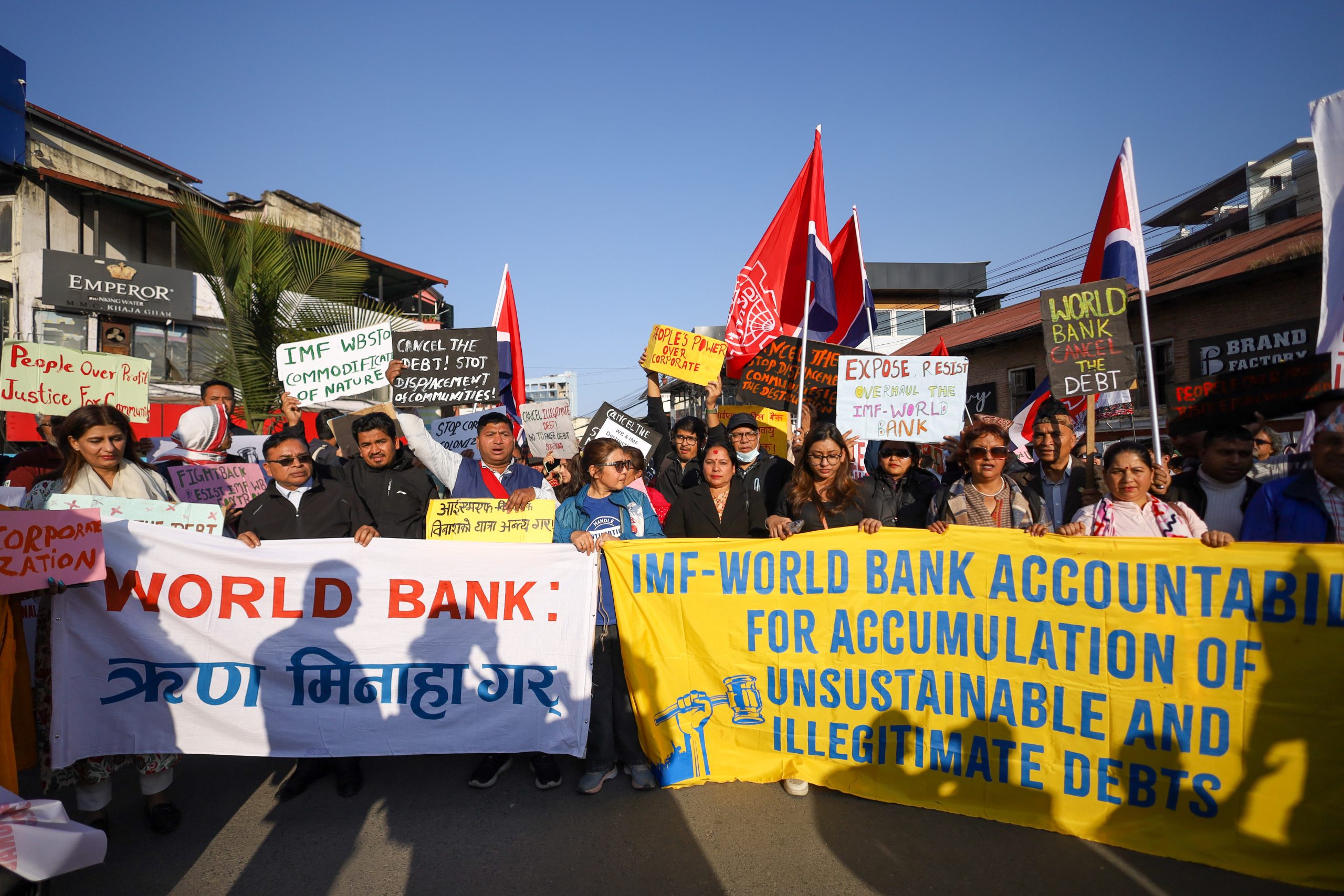
By Nitya Chakraborty In Nepal, following the tumultuous developments on September 8, 9 and 10 as a result of Generation Z uprising, the 2.9 crore nation is crawling back to normalcy . Under the leadership of interim Prime Minister Sushila Karki, the new administration is making sincere efforts to ensure law and order to prepare […]


The article Nepal’s Political Course Till March 5 Elections Gripped In Uncertainties appeared first on Latest India news, analysis and reports on Newspack by India Press Agency).

Dubai police have announced an extensive set of security measures and entry restrictions for spectators attending the Asia Cup 2025 final between India and Pakistan at the Dubai International Cricket Stadium. Violations of the rules could trigger fines of up to Dh30,000 and imprisonment under federal law governing sports venues.

Every seat for Sunday’s showdown has been sold, with organisers confirming a full capacity of 28,000 spectators. With the historic match being the first final between these arch-rivals in Asia Cup history, expectations of heightened emotions have driven authorities to step up security preparations.

The police directive mandates that attendees arrive at least three hours before the start and that each ticket admits a single entry—re-entry will not be allowed. All spectators must enter through gates assigned by organisers, follow instructions from stewards and security staff, and park only in specified areas. Any departure from the stadium during the match will forfeit re-entry.

The list of prohibited items is comprehensive. Fireworks, flares, laser pointers, and any flammable or hazardous materials are banned outright. Sharp objects, weapons, toxic substances, remote-controlled devices, large umbrellas, camera rigs, tripods, selfie sticks, and unauthorised photographic equipment are also barred. Flags, banners, or placards without official approval, pets, bicycles, skateboards, scooters, glass items, and outside food or drink are disallowed. Smoking or carrying any item that could endanger public safety will attract penalties.

Under the Federal Law on the Security of Sports Facilities and Events, the penalties range from Dh5,000 to Dh30,000 for breaches such as entering the pitch, carrying banned items or misbehaving. More severe violations — including throwing objects, abusive or racist language — may lead to fines in the Dh10,000 to Dh30,000 range or imprisonment for up to three months.

Multiple specialised police units and surveillance teams will be deployed around the stadium. Authorities have urged full cooperation from fans to allow the match to proceed without incident. The Events Security Committee is jointly monitoring crowd movement, traffic, and stadium access.

On the transport front, traffic congestion is expected to peak along Al Khail Road, Sheikh Mohammed bin Zayed Road, Hessa Street, Umm Al Suqeim Street, and via routes through Al Barsha, Dubai Motor City and surrounding neighbourhoods. Alternate routes such as Umm Al Suqeim Street or Al Fay Road via Sheikh Mohammed bin Zayed Road are being recommended, especially for motorists approaching from the south.

Parking zones P1 to P4 at the stadium are allocated, and overflow areas in Dubai Motor City and Dubai Studio City will provide shuttle services. Some park-and-ride facilities near Mall of the Emirates and First Abu Dhabi Bank Metro stations will function, connecting visitors to the venue via feeder services and taxis.

Dubai police have also issued multilingual advisories to reach a broader cross-section of fans. Authorities emphasise that the cooperation of spectators will be crucial to preserving a safe environment and ensuring that the focus remains on the cricketing spectacle.

Air raid sirens blared across Ukraine before dawn on 28 September as waves of Russian drones and missiles struck Kyiv and multiple regions, leaving fatalities and dozens of injuries while the assault continued into the morning, according to officials. Authorities in the capital reported deaths and widespread damage across more than 20 sites, including homes, a medical facility and a kindergarten; emergency services worked through debris as […]

Microsoft has halted specific cloud and artificial intelligence services to a unit within Israel’s Ministry of Defence after uncovering evidence that its Azure infrastructure was being used in a mass surveillance programme targeting Palestinians. The firm confirmed that access to a subset of its subscriptions has been suspended, while non-surveillance services remain unaffected. The decision follows an investigative exposé by The Guardian, in collaboration with +972 Magazine […]

TOKYO, JAPAN – Media OutReach Newswire – 26 September 2025 – Azbil Corporation (Tokyo Stock Exchange Code: 6845) announced its participation as a Gold sponsor and exhibitor at Data Centre World Asia (DCWA) 2025. As Asia’s largest data center show, part of Tech Week Singapore, DCWA will take place on October 8 and 9, 2025 at the Marina Bay Sands Expo & Convention Centre. The event is […]

Abu Dhabi-based XRG P. J. S. C. has finalised its acquisition of an 11.7 percent equity interest in Phase 1 of the Rio Grande LNG project in Brownsville, Texas, marking the company’s first natural gas investment in the United States. The purchase was made through a joint-venture structure involving Global Infrastructure Partners, an investment vehicle affiliated with BlackRock. Phase 1 of Rio Grande LNG is one of […]

Dubai’s Roads and Transport Authority has unveiled a new strategic focus for the 5th Dubai World Challenge for Self-Driving Transport, scheduled for 2027: smart integrated infrastructure. Mattar Al Tayer, Director-General and Chairman of the Board of Executive Directors of the RTA, said the competition will pivot to challenges that bind sensing, connectivity and analytics to urban infrastructure across Dubai.

At the closing of the Dubai World Congress for Self-Driving Transport held at the Dubai World Trade Centre, RTA inked four key agreements with Emaar Properties, Al Futtaim Group, and the winners of the 2025 challenge—WeRide and Deutsche Bahn consortium, together with Zelos Technology—to deploy and test autonomous systems in Festival City, Creek Harbour and other strategic urban zones. Al Tayer affirmed that the move aligns with Dubai’s ambition to serve as a global testbed for mobility innovation.

This year’s theme shifts from discrete vehicle-centric competition to a systems-level mandate: entrants will be judged on how well their solutions embed into city-wide networks of sensors, roads, communication links and data platforms. The RTA framework calls for designs that anticipate traffic dynamics, weather variations and public transit interaction, while maintaining safety, resilience and sustainability.

Over 3,000 participants and more than 80 expert speakers participated in the Congress, spanning government, academia and industry. The gathering marked the formal launch of the 2027 edition. The Congress also highlighted Dubai’s strategic goal that by 2030, one quarter of all journeys within the emirate will be autonomous or smart-enabled—an ambition already embedded in the RTA’s transport roadmap.

Stakeholders see this shift as an essential maturation of the challenge format. Rather than focusing only on individual vehicle prototypes, the next competition will test ecosystem coherence and scalability across urban modules. According to industry analysts, the new direction presses participants to align with evolving demands in mobility, where digital and physical layers must fuse.

Dubai’s prior edition in 2025 carried the theme “Dubai Autonomous Transport Zone,” pushing contestants to integrate multiple autonomous mobility modes in defined neighbourhoods. That foundation now gives way to a broader remit, with RTA officials stressing that smart infrastructure is the backbone for reliability and public acceptance of self-driving systems.

The agreements struck with developers and past challenge winners will see pilots in zones like Festival City and Creek Harbour, where road layouts, sensor grids and vehicle operations will be tested side by side. RTA counts on these field deployments to validate technical performance, operational cost and citizen experience before full-scale adoption.

Critics caution that the complexity of integrating diverse systems—communications, edge computing, failsafe control layers—could raise cost, regulatory and interoperability risks. Some stakeholders argue the success of the 2027 challenge will depend on whether entrants can navigate not only technical but institutional challenges across urban agencies and telecommunications providers.

For technology firms and research groups, the new emphasis offers both opportunity and challenge. It rewards proposals able to harmonise hardware, software, data and governance. Observers expect to see consortia spanning telecom operators, municipal agencies, AI firms, and road infrastructure specialists.

A high-profile gathering scheduled for 29 September in Singapore will convene health professionals, AI innovators and medtech entrepreneurs to examine the evolving intersection of artificial intelligence and clinical care. Titled CliniConnect: AI X Healthcare SG Edition, the event aims to catalyse collaboration across disciplines and continents.

Organisers say the agenda will include interactive panels, pitch sessions, and roundtable debates focused on real-world adoption of AI in diagnostics, hospital systems, and patient care. They expect participation from clinicians, researchers, startup founders and regulatory stakeholders alike. The event is expected to coincide with TOKEN2049, a major AI & blockchain gathering, offering cross-domain exposure and synergy.

CliniConnect has hosted several prior editions in Singapore and other regional hubs, with past speakers including Dr Adam Chee, founding lead of Singapore’s Centre for AI-Enabled Health. These gatherings have emphasised bridging the gap between algorithm development and clinical deployment, with attention to ethics, data governance and system integration.

One central topic will be how hospitals and health systems can scale AI solutions beyond pilot phase. Many institutions struggle to integrate point-solutions into legacy electronic health records or workflows. Executives and innovation leads at the event will share strategies for deploying AI at scale without fragmenting operations.

Another critical strand will explore trust, explainability and regulatory oversight. While AI is making strides in pathology, radiology and triage, clinicians often resist “black-box” models. Some speakers plan to advocate hybrid approaches combining model outputs with human oversight or modular interpretability frameworks.

Regulatory perspectives are expected to feature heavily. Several jurisdictions are updating medical device rules to account for adaptive algorithms. Singapore’s Health Sciences Authority has begun consultations on AI frameworks, and regional alignment across ASEAN markets remains a challenge. CliniConnect hopes to provide a forum for convergence on standards, data privacy and cross-border validation.

On the entrepreneurship front, medtech startups will pitch innovations aimed at workflow automation, predisposition risk modeling, remote patient monitoring, and imaging augmentation. Organisers have indicated that venture capital and hospital innovation arms will be present, seeking collaborations or early investments.

The event also intends to showcase case studies from institutions that have begun deploying AI in clinical settings. Narratives are expected from hospitals in Singapore, South Korea, India and Dubai on how they piloted decision-support tools, performance-monitoring systems or diagnostic assistants, and the bottlenecks they encountered in scaling. These stories will help attendees assess trade-offs, resource requirements and institutional readiness.

Observers note CliniConnect’s growing ambition: it now brands itself not just as a regional meetup but as a bridge between Asia’s health tech communities and global AI networks. By aligning with TOKEN2049 and leveraging cross-sector partnerships, it hopes to attract more international participants and raise its influence in defining health AI standards.

AVEVA has begun rolling out its AVEVA Advanced Analytics solution, integrated with its CONNECT platform, across multiple global industrial clients, claiming significant gains in efficiency, quality and energy use. The deployment underscores AVEVA’s push into industrial AI and predictive analytics within the manufacturing and consumer goods sectors. The offering, designed as a no-code, cloud-native framework, is built to transform large volumes of raw operational data into predictive […]

VISHNU RAJA
RYO YAMADA
HITORI GOTOH
IKUYO KITA
Just in:
OpenAI unveils ChatGPT Wallet for agent-led purchases // The Honey Trap Is The Headline, The Chip Pipeline Is The Story // TORRAS Launches Two New iPhone Duo Cases from Its Popular Ostand Series, Addressing Foldable Phone Users’ Concerns About Difficult Stand Positioning and Scratches // Woman found dead as bank moves to repossess home // IEA forecasts fourth-quarter oil surplus as Gulf shipments rebound // Nvidia appoints Colette Kress interim chief after Huang departure // US authorities dismantle North Korean cryptocurrency deception infrastructure // UAE crews sustain coastal oil removal as beaches reopen // Yicura BioMed Advances Dual Capital and Industrial Strategy: Completes First Closing of Series B Financing Led by Gobi Partners // Hackers falsify NVIDIA GPU readings to mask cryptomining // Fujairah highway pile-up leaves 14 dead and 30 injured // Salik posts Dhs1.045bn profit despite lower toll traffic // Lego restores BrickLink marketplace after security investigation // Electoral register gains 2.17 lakh voters // Messi affair SIT finds all-round violations // China Reconciled To U.S. Curbs On Chips Exports, Woos South Korea For Supply // From Dubai to the EU: how UAE-based crypto firms can expand under MiCA // Sun World Ba Den Mountain marks Vietnam Culture Day, welcoming Cambodian visitors over Bon Om Touk // EBANX and Eneba strengthen partnership in Latin America with 138% YoY growth in payment volume // October Food Price Shock Has Far Reaching Consequences //