Just in:
Promoting Common Human Development Through Exchanges and Mutual Learning Among Civilizations // Technology at Work, Heritage for All: The “Chinese Approach” to Safeguarding the Leshan Giant Buddha // Jaiedco and Golden Bridge Announce Strategic Collaboration for a New Dubai Islands Development // Bail refused to 17-year old in Abhiram murder // Diabetes Malaysia And Alpro Pharmacy Set National Record With 11,007 Most Blood Glucose Screenings Conducted Across Malaysia In Just 48 Hours // Toward a Shared Future for Humanity: Rethinking Civilizational Exchange // ED searches five districts in probe against hawala // Egypt’s African Union trade climbs to $8.2 billion // Phancy Announces Business Performance for the Nine Months Ended September 30, 2026 //
Centre grants aircraft cabin access for Sabarimala pilgrims’ irumudi
// Saudi defences destroy three Houthi missiles targeting Riyadh // Balagopal challenges CM over tax revenue // Crypto market loses $150 billion amid broad sell-off // US military rebuts Iran’s Gulf F-16 strike allegation // Sabarimala booking discrepancies prompt sabotage angle probe // Ex-minister named accused in Messi visit fraud case // Energy Markets Find Little Substance In Shenzhen Summit Promises // 2026 Tropical Rainforest Ecosystem Partners Conference Kicks off in Hainan // Russia permits retail cryptocurrency purchases under regulated framework // Yeebo Announces Interim Results for FY26/27 Revenue Increases by 45.5% to HK$806.7 Million Profit Attributable to Owners Surges 87.6% to HK$2,284.7 Million //

News related to
Peak

Madame Tussauds Hong Kong’s new Taylor Swift wax figure will celebrate the folklore era, as part of the global entertainment brand’s biggest launch to date HONG KONG SAR – Media OutReach Newswire – 23 July 2025 – In news that’s sure to make every Swiftie’s wildest dreams come true, global entertainment brand Madame Tussauds today unveils its biggest figure launch to date, creating not one, but 13 […]

By Nitya Chakraborty After nearly a year of frosty relations between the two neighbours India and Bangladesh, signs are there of a breakthrough as India is sending a team of burn doctors and nurses to Dhaka to treat the victims of the Monday’s devastating crash of a fighter jet plane leading to the death of […]

Global crude consumption is now cresting in the third quarter rather than the fourth, as China and India’s surging summer demand upends decades of winter-driven market patterns. The reversal of the traditional seasonality, first observed around 2015, is being amplified in 2025, with implications for supply strategies, prices and refinery operations worldwide. OPEC’s July report highlights strong refinery throughput in June, with intake rising by 2.1 million bpd—clear evidence […]

Dubai’s real estate market achieved a landmark surge during the first half of 2025, with transactions climbing 26 per cent to 125,538 and total value reaching AED 431 billion—an increase of 25 per cent year‑on‑year. The performance underscores the emirate’s growing appeal to both local and international investors.

Investor activity gathered notable momentum, with approximately 94,700 individuals completing transactions worth AED 326 billion—39 per cent more than a year earlier. Of this group, 59,075 were first‑time investors, injecting AED 157 billion and marking both a growth in investor numbers and value. UAE residents constituted 45 per cent of this cohort, signalling effective measures to convert renters into homeowners.

Women also bolstered the market’s resilience, executing nearly 35,000 transactions worth AED 73.2 billion. Meanwhile, foreign investors led contributions at AED 228 billion, with Arab and GCC nationals contributing AED 28.4 billion and AED 22.6 billion respectively.

Residential and luxury segments showed marked performance. Al Barsha South Fourth recorded the highest transaction volume, followed by Al Yalayis 1 and Wadi Al Safa 5. In terms of value, Dubai Marina topped the list with AED 25.1 billion, followed by Business Bay, Burj Khalifa zone, and Palm Jumeirah.

ValuStrat’s H1 property index reported that unbuilt villas now command values 66 per cent above their 2014 peaks and 175 per cent above post‑pandemic levels. Apartment prices rose 1.1 per cent month‑on‑month, translating to annual growth of 20 per cent, notably in The Greens, Dubai Silicon Oasis, Dubailand Residence Complex, Palm Jumeirah, and Town Square—all exhibiting capital gains of over 22 per cent.

Parallel to sales growth, rental price inflation decelerated mid‑year: by May, annual residential rent increase eased to 8.5 per cent from 14.3 per cent in January. Cavendish Maxwell attributed this moderation to the delivery of approximately 9,300 new units in Q1 and the introduction of the “New Smart Rental Index,” which is influencing both landlord expectations and market dynamics.

Mortgage activity reflected evolving buyer preferences. Data from DXB Interact indicates a 38 per cent rise in loan volume, although total mortgage value dipped by 8 per cent—signalling a shift towards cash purchases or smaller financing commitments. Off‑plan sales stood strong at 64,907 transactions, with a total value of AED 209.1 billion. Resale transactions numbered 34,150, valued at AED 119.7 billion.

Amid this buoyancy, caution flags exist. Fitch Ratings warns of potential double‑digit price corrections—up to 15 per cent—in late 2025 and 2026, due to an expected supply surge of around 210,000 units. The agency nevertheless noted that banks and developers have reduced exposure and are poised to manage potential adjustments.

Planning authorities have responded proactively. Dubai intends to add 73,000 homes in 2025, targeting a total of 300,000 new units by 2028—efforts aimed at aligning supply with investor momentum and population growth. Meanwhile, ongoing state‑led consolidation of developers, regulatory improvements under the Economic Agenda D33, and the Dubai Real Estate Strategy 2033 continue to underpin structural confidence.

As forecasted by ValuStrat, property price growth may moderate but remain positive—potentially adding another 10 per cent by the end of 2025 as market dynamics evolve. The challenge now lies in balancing supply expansion, evolving mortgage behaviour, and price stability to sustain long‑term viability for investors and residents alike.

Building a successful food delivery app requires more than a great idea—it needs the expertise of a reliable mobile app development company in Dubai and the right framework to ensure performance, scalability, and a smooth user experience. In this blog, we’ll explore: Why framework choice matters in app development Best frameworks to build food delivery app in Dubai How to choose the right framework for food startup […]

The National Centre of Meteorology issued an advisory este morn for southeasterly winds gusting up to 40 km/h across the UAE, leading to heavy dust and sand lifting in internal and coastal areas. The conditions are expected to significantly reduce horizontal visibility—at times below 2,000 metres—between roughly 08:45 and 17:00. Abu Dhabi Police cautioned motorists to drive with care, maintain low speeds, and avoid distractions like using phones or filming while on the move.

Winds forecast for the day have already led to hazy skies over urban centres, with dust clouds drifting across highways and neighbourhoods. Officials warn that compromised visibility on roads will heighten accident risks, prompting emergency services to remain on alert.

Abu Dhabi Police reinforced the message, urging:

“Drivers to remain alert and reduce speed … For your safety and the safety of others on the road, please avoid using mobile phones or taking videos while driving.”

The statement formed part of a broader appeal urging residents to secure outdoor items and stay informed via official channels.

High winds sweeping the region echo seasonal patterns observed in previous years. The meteorological phenomenon known as “Shamal” brings northwesterly gusts that whip up desert dust, especially during summer’s peak between April and October. These episodes often downgrade visibility to well under 2 km. In fact, storms recorded in 2008, 2009 and 2010 show how recurrent and sudden these events can be.

An Abu Dhabi dust storm struck last Thursday, when winds triggered restricted visibility and led authorities to issue similar warnings earlier in July. The NCM had foreseen rough sea conditions in the Arabian Gulf, cautioning mariners of choppy waters and advising against unnecessary travel offshore.

Studies by geophysics experts at Khalifa University and warnings from the World Meteorological Organization indicate that shifting climate patterns may be contributing to increased dust frequency in the Gulf, with “early summer and late winter” transitions becoming more pronounced.

Commuters in Abu Dhabi, Dubai, Al Ain and Sharjah were met with drifting dust obscuring visibility, particularly on highways and arterial routes. Between 1 pm and 3 pm yesterday, multiple reports noted local visibility dropping below 1 500 metres near Dubai International Airport and adjacent roadways.

Transport authorities are urging drivers to obey reduced speed limits displayed on overhead electronic boards, as fine particles may settle on windshields, diminishing visibility further. School bus operators, logistics firms, and delivery services have been advised to take precautions or suspend outdoor activities until conditions improve.

Indoor spaces and construction sites are under advisory to ensure dust mitigation measures are in place, including sealing entrances and using air filtration systems. Medical professionals have also warned individuals with respiratory concerns to limit outdoor exposure and keep medications close at hand.

The repeated advisories align with broader international efforts to establish regional early-warning systems. During last spring, the World Meteorological Organization highlighted Saudi Arabia’s leadership in a Gulf-wide sand and dust storm monitoring initiative.

Given the projected continuation of these conditions into the evening, motorists and residents are advised to remain alert. The police statement urged community action:

“For your safety and the safety of others … please avoid using mobile phones or taking videos while driving.”

The pattern of such weather events reflects the UAE’s climate trends, where extreme heat, strong winds, and suspended dust become frequent during the summer months. These conditions contribute to regional cautionary measures and highlight the interplay between natural climate cycles and growing urban risk exposure.

Momentum across the United Arab Emirates’ equity capital markets is building as the second half of 2025 begins, while Saudi Arabian firms preparing share issuances are confronting investor concerns over lofty valuations. May’s launch of a residential real estate investment trust on the Dubai Financial Market reignited market sentiment after a lull in listing activity during the previous year. Investor interest is intensifying ahead of expected deals […]

Advertisements

Affirming Its Pioneering Role in Realising Vietnam’s National Digital Asset Policy Over 20 investment fund leaders and 20 top companies in attendance. Featuring partner ARC and senior Nasdaq representatives. Deep-dive sessions on capitalisation solutions and IPO roadmap for Vietnamese enterprises. Official signing of a comprehensive strategic cooperation between Meey Group and ARC HANOI, VIETNAM – Media OutReach Newswire – 14 July 2025 – Meey Group, Vietnam’s leading […]

UAE’s Ministry of Energy and Infrastructure has restated its unwavering aim to lift crude oil production capacity to five million barrels per day by 2027 amid shifting global energy demand. The clarification from Abu Dhabi follows remarks from the Energy Minister indicating potential capacity growth beyond that goal.

Aligned with its declared strategy, the nation insists the 5 million bpd target remains intact. Energy Minister Suhail Mohamed al‑Mazrouei, speaking at the Opec International Summit in Vienna, emphasised the UAE could scale up to six million bpd if global markets required—while making clear this figure is not an official target.

Presently, UAE’s production capacity stands at around 4.85 million bpd. The ministry’s public affirmation underscores long‑established plans by Abu Dhabi National Oil Company to align with wider economic imperatives, including state‑led diversification and responsible growth.

On the sidelines in Vienna, Minister al‑Mazrouei pointed to oil inventories that have not surged, interpreting it as evidence of sustained market demand. He characterised the additional million barrels potential as a proactive choice, contingent on demand, rather than a binding pledge.

Opec+ has already increased the UAE’s production quota this year, acknowledging its heavy investment in expanding capacity from 3 million to 4.85 million bpd. That quota adjustment reflects a bid to balance output with capacity and avoids penalising investment-led increases.

Global energy forecasts cited at the summit envision oil demand climbing by nearly 19 percent to 123 million bpd by 2050, driven by economic growth, urbanisation, and energy‑intensive industries such as artificial intelligence. Despite this, Opec has revised its short‑term forecast downward amid signs of slowing demand in China. Long‑term growth, however, is expected from regions including Asia, the Middle East and Africa.

ADNOC’s accelerated expansion plan—bringing forward its 5 million bpd capacity objective from 2030 to 2027—was endorsed by the board under the leadership of His Highness Sheikh Mohamed bin Zayed Al Nahyan, supported by CEO Sultan Ahmed Al Jaber. The strategy forms part of a broader state-led drive combining energy security with economic diversification and sustainability.

While bolstering its crude oil output, ADNOC is also investing heavily in low‑carbon solutions. It allocates about US $5 billion annually to clean energy and has set a net‑zero emissions ambition for 2045. The company is integrating solar and nuclear power into offshore fields and is implementing carbon‑capture technologies in major developments.

ADNOC’s low-carbon division recently acquired Germany’s Covestro for US $16 billion, signalling a move to diversify into value‑added petrochemicals such as plastics, foams and ammonia. Its strategy foregrounds gas, chemicals and downstream operations alongside oil capacity growth, in anticipation of structural shifts in global energy use.

The UAE is poised to become the world’s fourth-largest oil and liquids producer if the anticipated expansion is achieved, trailing only the United States, Saudi Arabia and Russia. At six million bpd capacity, it would surpass producers such as Canada, China, Iraq and Iran in scale.

However, uncertainties remain. The pace of global energy transition, the adoption of renewables, and potential peaking of oil demand—especially in China—pose risks to long-term strategy. But the UAE appears ready to hedge by maximizing flexibility: build for five million bpd, yet leave room to stretch if markets demand.

The public reaffirmation by the ministry serves both domestic and international audiences: showcasing earnest delivery of targets, reassuring investors on energy stability, and reinforcing the UAE’s position as a stabilising force within Opec+.

Oil prices have shifted sharply this week, with demand forecasts now under pressure from escalating trade tensions fuelled by fresh tariffs. Brent crude is trading in the high‑60s per barrel, while benchmark WTI hovers around mid‑60s, reflecting growing investor caution. Analysts point to revised supply and demand projections as indicators of a changing market landscape.

An International Energy Agency monthly report has cut its global oil‑demand growth forecast for 2025 to 700,000 bpd, the slowest pace since 2009 outside the pandemic, down from 720,000 bpd last month. The downgrade reflects weaker consumption in emerging markets and a cooling US‑China trade outlook. Supply continues to outpace demand as OPEC+ ramps up production; global output in June rose by about 950,000 bpd to reach 105.6 mbpd.

The IEA notes the oil market remains technically in surplus, with inventories building globally—even as regional stock draws persist. Oil runs at refineries have slowed, particularly in the US and China, enabling downward revisions in demand projections. Enverus Intelligence Research offers a counter‑view, pointing to balanced OECD inventories and sustained summer demand north of 1 mbpd, which may support higher prices.

The US Energy Information Administration expects US crude oil production to plateau at roughly 13.4 mbpd in 2025, dropping modestly later this year as lower prices curb drilling activity. Despite this, producers remain vulnerable to profit erosion unless prices stabilise in the $65–70 range.

President Trump’s trade moves have reignited fears of another global trade war, with new tariff letters dispatched to Brazil, South Korea, Japan, the Philippines and others this week. Threats of 50% duties on exports such as copper, semiconductor components and auto parts are weighing heavily on commodity‑linked equity markets and raising recession risk concerns. Oil prices dropped more than 2% on Thursday as benchmark futures responded to the potential hit to economic growth.

While some market participants remain in “wait‑and‑see” mode, given Trump’s unpredictability and history of policy reversals, the overarching effect is to dampen demand forecasts. Onyx Capital’s head of research, Harry Tchilinguirian, cautions against overreaction but acknowledges that tariffs are adding to inflationary pressures and may reinforce Federal Reserve caution.

Geopolitical flashpoints in the Middle East continue to influence sentiment. Oil surged in June as Iran threatened to close the Strait of Hormuz, which handles almost 20% of world oil shipments, but prices eased once the waterway remained open. Meanwhile, Saudi Arabia raised official prices to consumers, citing strong demand in China’s post‑pandemic recovery, though refiners are reporting margin squeezes.

Financial institutions have started to reflect this shifting environment in their projections. A Reuters‑polled group of 40 analysts revised Brent average forecasts for 2025 to $67.86 per barrel—up marginally from May—while predicting demand growth of only around 730,000 bpd. JP Morgan cut its annual Brent estimate to $66, citing rising OPEC+ output and sluggish consumption. TD Economics trimmed its forecast further, expecting 2025 WTI to average near $62, warning of sustained downward pressure from trade risk and oversupply.

Two factors loom large over the coming months. First, the path of trade tensions: further tariff escalations or retaliatory actions could erode industrial activity and fuel sales. Second, OPEC+ strategy: with the bloc unconstrained in raising output, additional production could overwhelm tepid demand, pushing prices below current levels. The IEA projects supply growth for 2025 at 2.1 mbpd, while demand is seen rising just 700 kbpd.

On the financial front, hedge fund positioning has turned cautious, registering the sharpest drop in bullish sentiment since February. Traders are forecasting narrower price ranges ahead, with elevated volatility as tariff developments hit market headlines.

Forward‑looking forecasts remain mixed. EIA projects Brent to average $68.89 in 2025 and $58.48 in 2026, marking a seasonal decline. Enverus suggests the upside remains intact if demand holds steady, especially with summer driving season underway. Market watchers also note that rising gas‑to‑oil switching costs, refinery restarts and diminished spare capacity could temper price declines.

China’s consumption is also under scrutiny. While Beijing seeks to stimulate growth through fiscal and monetary tools, investor sentiment remains fragile. Saudi’s decision to push prices higher was based on perceived strengthening in Chinese demand, but many analysts caution that any slow‑down could rapidly tip the balance.

Emerging long‑term trends offer some balance. IEA’s long‑term outlook suggests oil demand will continue rising through the late 2020s, driven by non‑OECD economies and slower clean‑energy adoption, delaying peak demand beyond 2030. Nonetheless, short‑term price direction seems firmly tied to macroeconomic risks and geopolitical dynamics.


Nigeria’s foreign minister, Yusuf Tuggar, has accused the United States of mounting significant pressure on African countries to accept deported Venezuelans, including individuals released directly from US prisons—a demand Nigeria says it cannot meet given its own domestic challenges. Speaking from Brazil at the BRICS summit on 11 July, Tuggar emphasised that with a population of roughly 230 million and pressing socio-economic issues, Nigeria cannot shoulder such responsibilities. The […]

The first-ever full-scale solo exhibition by Udom Taephanich, sets a new milestone for Thai contemporary art on the global stage. BANGKOK, THAILAND – Media OutReach Newswire – 11 July 2025 – ICONSIAM, the global landmark on the Chao Phraya River, is forging ahead with its mission to become a Must-Visit Global Art Destination, reinforcing its commitment to offering exclusive art experiences while empowering Thai artists to shine […]

The summer months bring warmth, sunshine and long perfect days. These conditions are great for enjoying your garden, but with the seasons, benefits also come from challenges. Those soaring temperatures you’d love to sunbathe in and lead to burnout plants. An increasing number of pests can lead to destroyed vegetables, and the dry soil can threaten your plant’s growth. You want to keep your garden healthy, thriving […]

OPEC+ plans to finalise a 2.2 million-barrel-per-day supply restoration by September and is deliberating halting further production increases from October onwards, delegates have indicated. Source participants say the cartel has scheduled a final monthly increment of approximately 550,000 bpd in September, completing the planned unwinding of cuts. Following that, discussions have begun around suspending additional increases—especially the roughly 1.66 million bpd tied to later phases of the rollback—potentially pausing as early […]

Stonepeak, a US-based infrastructure investor, has agreed to acquire a 50 per cent co-controlling stake in IFCO Group from a subsidiary of the Abu Dhabi Investment Authority. The transaction positions Stonepeak alongside European mid-market investor Triton, which will continue its existing 50 per cent ownership. Financial terms were not disclosed, and the deal remains subject to customary regulatory approvals, with completion targeted in the fourth quarter of 2025.

Founded in 1992, IFCO operates one of the world’s largest reusable packaging container systems, managing over 400 million units and facilitating approximately 2.5 billion shipments of fresh food annually across more than 50 countries. This extensive network, supported by around 140 service centres, serves more than 18,000 growers and over 300 retailers, delivering substantial cost efficiencies, sustainability gains, and operational scalability compared to single-use packaging.

ADIA initially invested in IFCO’s carve-out from Australian logistics group Brambles in 2019, following a $2.5 billion sale to Triton. Over the intervening years, IFCO has undergone a comprehensive strategic and operational transformation, including enhanced digitalisation and an expanded global footprint, setting the stage for this latest ownership transition.

IFCO’s chief executive officer, Michael Pooley, praised the combined expertise of Stonepeak and Triton, emphasising that the new partnership will support growth and reinforce IFCO’s “market leading position globally”. Nikolaus Woloszczuk, Senior Managing Director at Stonepeak, described IFCO as a “critical component of the logistics infrastructure delivering fresh produce” and underlined the firm’s commitment to accelerating the company’s expansion—particularly in North America—as part of Stonepeak’s broader infrastructure investment strategy.

Triton’s co‑head of business services, Stephan Förschle, affirmed the firm’s ongoing commitment to IFCO, signalling confidence in the combined vision with Stonepeak to deliver value through digitalisation and sustainability initiatives. Representing ADIA, executive director Hamad Shahwan Aldhaheri noted that since the 2019 investment, IFCO had built “solid foundations for the future, based on strong operational performance and enhanced digital capabilities”.

Advisory teams have been engaged from both sides of the transaction. Citi and Morgan Stanley served as financial advisers to ADIA and Triton, with Bank of America also representing ADIA, while Kirkland & Ellis and Latham & Watkins provided legal counsel. Stonepeak was advised by Citi financially and Kirkland & Ellis legally.

Analysts indicate that the deal could value IFCO at approximately €5.5 billion including debt, implying a consideration near €2 billion for the 50 per cent stake, according to Bloomberg. This valuation reflects IFCO’s robust market position and future growth prospects in sustainable logistics.

The combination of Triton’s deep sector knowledge and Stonepeak’s infrastructure expertise—including its focus on transport, logistics, and digitalisation—positions IFCO to capitalise on rising demand for circular economy solutions in food supply chains. With container reuse gaining regulatory momentum and retailer focus on waste reduction intensifying, IFCO’s closed-loop model is becoming increasingly central to sustainable logistics strategies.

Market observers expect this deal to reinforce growing investor interest in circular supply chain infrastructure, especially as environmental and governance factors shape capital allocation. The high valuation underscored by global advisory firms suggests confidence in IFCO’s ability to deliver both financial returns and environmental impact through its RPC-based system.

The completion of this transaction in late 2025 will mark a significant milestone for all stakeholders. ADIA exits after six years of investment and strategic support. Triton remains, signalling continuity in governance and operation. Stonepeak enters as a long-term partner, with capital and network to help scale IFCO’s platform further—particularly in North America.

Samsung has launched a new generation of Galaxy AI features embedded directly on its smartphones, combining cutting‑edge intelligence with enhanced privacy safeguards. Designed to rival Apple Intelligence and Google Gemini, Galaxy AI now performs tasks such as voice‑to‑text, photo editing, call transcription and real‑time translation entirely on device—only resorting to anonymised cloud support for complex jobs, thus protecting personal data. At the heart of this shift is […]

Spanish café operator Vanadi Coffee has approved a plan to allocate up to €1 billion of its treasury into Bitcoin, marking a striking pivot from its core hospitality business into crypto‑asset accumulation. The decision, ratified by shareholders on 29 June, seeks to position the firm—currently loss‑making and operating just six outlets—as one of Spain’s largest Bitcoin holders.

Vanadi already owns 54 BTC, acquired at an average price of around €93,444 per coin, valued today at approximately €5.8 million. Its share price surged over 25 per cent following the announcement, a staggering boost for a business that reported €3.3 million in losses during 2024. Market observers note the stock has rallied more than 400 per cent year‑to‑date on hopes that crypto‑oriented balance sheets can act as alternative stores of value.

The strategic shift draws inspiration from established Bitcoin treasury pioneers such as MicroStrategy, which holds nearly 500,000 BTC and has leveraged convertible equity vehicles to fund its crypto purchases. Likewise, Japanese firm Metaplanet is acquiring Bitcoin aggressively as part of its acquisition-backed model. Vanadi’s leadership believes this approach can appeal to institutional investors seeking inflation hedges without disrupting conventional asset portfolios.

Analysts warn the company faces elevated risk. Vanadi operates at a negative equity of around €600,000, and auditors have flagged uncertainty over its going‑concern status. Critics argue a small café chain with slender margins and negligible exposure to financial markets may lack the sophistication to withstand Bitcoin’s volatility and regulatory scrutiny.

Financing the Bitcoin ramp‑up will involve issuing convertible bonds and equity, leveraging commitments from niche funders including Patblasc Software Consulting and Alpha Blue Ocean’s Global Tech Opportunities 10. Some question both the provenance and capacity of these investors, given their prior backing of distressed asset plays such as Intercity and Substrate AI.

Vanadi acknowledges the gamble may redefine its identity: “We aim to become the largest listed Bitcoin‑holding company in Spain,” it said, equating its structural transformation to precedent‑setting players in the sector. Nonetheless, it has had to scale back expansion ambitions, cutting its growth pipeline amid constrained resources and shifting priorities.

Vanadi’s strategy forms part of a broader wave of crypto treasury activity. A growing number of under‑the‑radar firms in Europe—from chipmakers to fintech startups—are joining major players in the US and Asia investing heavily in Bitcoin. Collectively, these firms moved over 10,000 BTC onto their books in late June, totalling several billion dollars in accumulated digital assets.

Experts suggest this trend follows Gartner’s classic hype‑cycle pattern: as Bitcoin becomes easier to acquire and gain public approval, doubt gives way to widespread optimism—driving speculative surges across new sectors. Vanadi’s move, while surprising due to its modest scale, fits squarely within this wave of enthusiasm.

London‑listed Strategy recently launched a $21 billion preferred stock offering to fund more Bitcoin purchases, underscoring how corporate balance sheets are being reconfigured around digital assets. Vanadi hopes to replicate this formula, albeit with far fewer resources and heightened risk exposure.

Vanadi’s management calls the transition a “long‑term bet on a decentralised financial model,” arguing that crypto reserves provide institutional credibility and operational transparency under existing market regulations. Yet, whether this approach offers sustainable upside or represents a peak‑hype miscalculation remains under intense debate among analysts and investors.

On June 19–20, Baku successfully hosted the Baku ID 2025 Innovation Festival. This year’s theme, The Regional Nexus, brought together leading entrepreneurs and technology leaders from the Caucasus, Central Asia, the Middle East, and North Africa, positioning Azerbaijan as the region’s innovation hub. The festival was organized by SABAH.HUB Innovation Center with the support of the Ministry of Science and Education of Azerbaijan, SOCAR, PASHA Holding, and the Center for Analysis and Coordination of the […]

Nvidia is set to begin production of a new, lower‑spec Blackwell‑architecture AI chip for the Chinese market as early as June, aimed at complying with US export controls while maintaining its presence in the nation’s booming data centre sector. Priced between $6,500 and $8,000—significantly cheaper than the $10,000–$12,000 H20—the chip trades performance for accessibility under current regulatory constraints.

The streamlined variant is based on the RTX Pro 6000D, utilising conventional GDDR7 memory instead of high‑bandwidth memory and eschewing TSMC’s advanced CoWoS packaging to stay within US‑mandated memory bandwidth limits of 1.7–1.8 TB/s. Industry analysts note this is markedly below the 4 TB/s capability of the H20.

Yet Nvidia is not stopping there. As part of a dual‑chip strategy, it is reportedly developing a second Blackwell model scheduled to enter production by September. The specifications remain undisclosed but are expected to similarly align with US export regulations.

China accounts for around 13 per cent of Nvidia’s revenue, a slice that has shrunk sharply from a pre‑2022 peak due to export restrictions, which caused market share to decline from roughly 95 per cent to near 50 per cent today. A ban on the H20 in April prompted the company to write off about $5.5 billion in inventory and forgo an estimated $15 billion in sales.

CEO Jensen Huang has acknowledged the company’s “limited” options, stating that until a compliant design is approved by US authorities, Nvidia remains locked out of China’s $50 billion data centre market. Without it, his comments suggest many customers may migrate to domestic alternatives like Huawei’s Ascend 910B.

Domestic competition in China has intensified. Huawei’s Ascend 910B and others have gained momentum, closing the gap to Nvidia’s downgraded models within one to two years, according to semiconductor analysts. Nvidia counters this with its CUDA programming ecosystem — a key competitive advantage. With CUDA deeply integrated into AI development workflows globally, it may anchor developer loyalty even as hardware capabilities shift.

Further complicating the picture are whispers of a third chip internally known as “B30” or “B40”, which appears designed to operate in clusters and align with new export rules by focusing restrictions on individual chip rather than entire systems. Reports indicate interest from China’s leading tech companies—ByteDance, Alibaba and Tencent—with ambitions to produce more than 1 million units this year. Nvidia has not directly confirmed the chip, and one Chinese supplier, ZJK Industrial, briefly announced production ramp‑up for the B40 before retracting the statement, triggering increased market speculation.

US officials have shown concern that widespread availability of such chips—even within controlled clusters—could bolster China’s capabilities in foundational model training and inference tasks. Commerce Department Under‑Secretary Jeffrey Kessler recently told lawmakers that AI chip smuggling “is happening”, echoing longstanding export fears. Nvidia’s Huang maintains there is “no evidence” of diversion, but a consistent black‑market narrative continues to shadow the sector.

Chinese firms have outlined plans to deploy thousands of H100 and H200 chips in new data centres, particularly in western provinces such as Xinjiang and Qinghai, where abundant renewable power and cool climates offer logistical advantages. Target installations indicate upwards of 115,000 such processors in aggregated plans—most of which remain aspirational due to export prohibitions and logistical challenges.

Analysts suggest that while Nvidia’s tiered Blackwell chips may temporarily appease China’s AI infrastructure demands, the deeper impact will depend on regulatory outcomes and the strength of the CUDA ecosystem. If export restrictions ease, Nvidia stands to regain momentum; if they tighten, domestic chipmakers like Huawei will likely secure a larger foothold.

This unfolding scenario underscores a shift in semiconductor geopolitics: global tech leaders are adapting designs to fragmented access zones while local players race to fill the vacuum. The episode illustrates how export policy, market demand and strategic software assets intersect in shaping tomorrow’s AI hardware landscape.

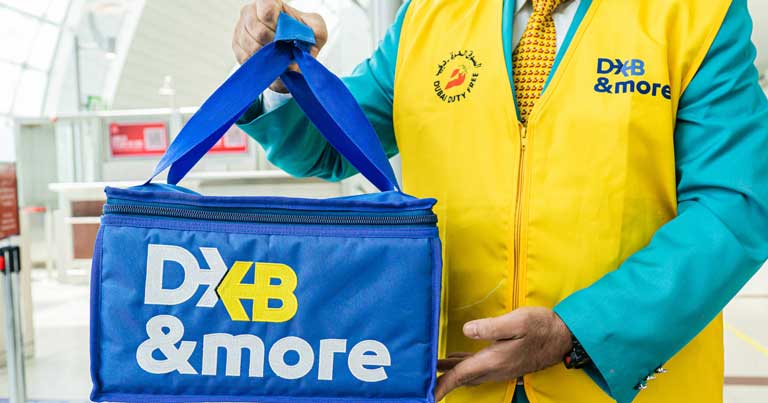
Dubai International Airport has introduced DXB Greet & Go in Terminal 3, revolutionising the way arrivals are greeted. Licensed hotels, tour operators and transport providers can now tap QR codes—replacing traditional placards—to meet guests efficiently in a dedicated arrivals area.

The initiative, officially live since early July, provides an authorised meeting zone designed to improve passenger flow and elevate hospitality standards. Dubai Airports has established this as part of its strategy to ease congestion and reduce stress at peak arrival times.

This digital-first service streamlines the reception experience: instead of waiting among crowds, drivers and host staff now scan pre-shared QR codes, guiding travellers directly to designated areas where they are met by clear signage. The system aligns with security protocols while offering better clarity and comfort.

Industry observers describe DXB Greet & Go as another milestone in Dubai’s automation and smart-performance ambitions. It complements prior enhancements—like biometric Smart Tunnels and QR-code navigation tools—designed to process high passenger volumes more swiftly while preserving a premium touchpoint.

Key regional operators have already registered. A senior operations manager at one of Dubai’s leading hospitality chains noted guest satisfaction has improved, citing fewer missed connections and faster handovers. Dubai Airports spokesperson emphasised that launch partners are primarily “licensed entities” committed to seamless, branded guest engagement.

Compliance and coordination with security teams were paramount in crafting the scheme. The dedicated meeting point follows stringent screening criteria and maintains oversight from airport operations, ensuring guest meets do not impinge on wider terminal safety. It also alleviates footfall in busy corridors, especially during peak periods.

Analysts see branding and service quality benefits. Sharply reducing wait times at arrivals enhances early impressions for high‑value guests, business travellers and VIPs—key revenues for both hotels and airport retail operators. And as QR-based systems gain traction worldwide, DXB’s approach may offer a replicable benchmark for other global gateways.

Passengers have already reported smoother arrivals. A recent poll by a GCC‑based travel blog found that 87 percent of users appreciated the clarity of designated zones and reduced crowding. Several said using the service felt more “personalised and modern”, aligning with expectations for a luxury travel experience.

Onboarding requires minimal effort: partners register via Dubai Airports’ platform, receive official QR codes linked to flight details, and station meeting personnel accordingly. QR scanning synchronises with flight schedules, activating the service only once the flight has landed and passengers have disembarked.

Dubai Airports reports the system has quickly gained traction among boutique hotels and VIP ground handlers, with expansion plans underway. Terminal 3—the main hub for Emirates—is expected to expand the service across other terminals if demand continues.

The move also integrates with existing smart journeys like DXB Express Maps, enabling visitors to navigate lounges, shops and gates by QR scanning digital kiosks. The combined effect is a frictionless experience from landing to departure, supporting ambitions to top 100 million annual passengers.

XI’s BICKS NO-SHOW: STRATEGIC SHIFT OR SILENT WARNING? CHINESE SYMBOLISM ON CONFIDENCE IN FULL PLAY M A Hossain In the realm of global politics, symbolism matters almost as much as substance. President Xi Jinping of China has decided not to attend this year’s BRICS summit which will be held in Rio de Janeiro. This is the first time President Xi will not be at the summit since […]

U. S. President Donald Trump has announced a sweeping 50 % tariff on copper imports, jolting commodity markets and triggering sharp moves across financial sectors. Copper futures in the United States surged to record highs, while international benchmarks in London and Shanghai retreated under mounting uncertainty surrounding shipment logistics and timing. At a Cabinet meeting, Trump confirmed the unprecedented levy, citing national security and a desire to bolster […]

U. S. former President Donald Trump has warned that any nations aligning with the BRICS bloc’s efforts to challenge the U. S. dollar will face a 10 % tariff, set to take effect by 1 August unless a deal is struck. Speaking at a Cabinet meeting and in a post on his Truth Social platform, Trump characterised BRICS’ currency ambitions as tantamount to “destroying the dollar,” likening such […]

European luxury houses are experiencing a marked shift, with faltering Chinese demand prompting a strategic pivot toward alternative markets and refined brand positioning. According to Bain & Co, global personal luxury goods sales are projected to contract by 2–5 per cent in 2025, following a €364 billion market in 2024, suggesting prolonged headwinds in China and weakened consumer confidence across key economies. Concurrently, LVMH reported a 5 per cent decline in fashion and leather goods, while Kering’s Gucci saw a 24 per cent slump in Q3 2024—underscoring the drag from Chinese spending.

Amid this slowdown, brands are accelerating efforts to broaden geographic reach. McKinsey projects that the US luxury market will grow by 4–6 per cent annually through 2027—outpacing China and Europe—and emerging regions such as the Middle East, Latin America and Southeast Asia are gaining traction as bright spots. Evidence of reorientation is visible: LVMH is expanding its US production capacity, and Kering, Hermès and Prada are intensifying investment in North America.

Not all brands are equally affected. Brunello Cucinelli, less exposed to Chinese consumption, disclosed robust sales forecasts—upgrading its annual growth outlook to 11–12 per cent based on strong European demand and continued traction among ultra-high-net-worth clients. Hermès, too, has weathered the storm, maintaining sales growth while peers grapple with revenue declines.

The luxury slowdown in China is rooted in multiple structural challenges. Economic growth has softened below 5 per cent, real estate woes persist, and shifting demographic trends have eroded consumer sentiment. Simon‑Kucher reports that many Chinese consumers are becoming cost-conscious, displaying a polarization between aspirational and high-end luxury buyers, and embracing domestic brands as alternatives. Particularly, cultural shifts—such as “luxury shame”—have fuelled a move toward discretion and frugality in visible consumption.

Although major international houses such as Chanel and Dior continue to engage Chinese consumers through culturally attuned storytelling—launching region‑specific collections and targeted local campaigns—some smaller brands have shuttered stores in mainland China, acknowledging a recalibration of in‑market commitment.

Domestic luxury players are also benefitting from this transition. Laopu Gold, a jewellery brand rooted in traditional Chinese symbolism, has doubled same‑store sales and quadrupled online revenue this year, with a market valuation exceeding HK$170 billion, thereby challenging European incumbents—though its international footprint remains limited.

Global brands recalibrating their China approach are employing a range of strategic pivots: tighter inventory control to avoid discounting and preserve brand equity; stimulant-focused aspirational campaigns; and product diversification into understated luxury or second-hand luxury to resonate with new consumer segments. The second‑hand luxury market in China alone has grown at an annual rate exceeding 30 per cent since 2020.

Europe itself remains central to the luxury ecosystem, as evidenced by European markets holding nearly half of Armani’s revenues in 2024—an increase relative to Asia Pacific’s diminished share—while the group strategically channels investment into flagship stores and digital-commerce. Cost control, brand consistency, and quality-focused messaging have become priorities as demand becomes more selective.

Globally, brand strategies are evolving with renewed emphasis on sustainability, resilience and storytelling. Price hikes once driven by so‑called “greedflation” are now tempered, with average increases forecast at 3.5 per cent in 2025—lower than peak levels—and justified by genuine craftsmanship and material innovation. Product lines are being refined: leather goods, jewellery and beauty segments are poised for stronger performance, while deeper integration of sustainability and consumer‑centric narratives is prioritised.

Brands are also investing in localisation in other markets and exploring omnichannel retail strategies. Digital-owned channels, experiential stores, and culturally sensitive campaigns are being deployed to engage consumers in tier‑2 and tier‑3 urban centres, particularly in Asia outside China.

European luxury houses are at a strategic inflection point: with the decline in Chinese demand now measurable, success hinges on geographic rebalancing, product portfolio refinement, inventory discipline and culturally resonant marketing. The winners will be those able to preserve brand prestige while adapting to economic reality and evolving consumer psychology across diverse global markets.

VISHNU RAJA
RYO YAMADA
HITORI GOTOH
IKUYO KITA
Just in:
Rahul addresses League’s INDIA bloc grievances
// Sabarimala booking discrepancies prompt sabotage angle probe // Balagopal challenges CM over tax revenue // Diabetes Malaysia And Alpro Pharmacy Set National Record With 11,007 Most Blood Glucose Screenings Conducted Across Malaysia In Just 48 Hours // Padmini follows Padmaja for ‘ghar vapsi’ // Yeebo Announces Interim Results for FY26/27 Revenue Increases by 45.5% to HK$806.7 Million Profit Attributable to Owners Surges 87.6% to HK$2,284.7 Million // Energy Markets Find Little Substance In Shenzhen Summit Promises // Saudi Arabia schedules multinational top-up tax for 2027 // Workday targets Honeydew purchase to unify AI metrics // Egypt’s African Union trade climbs to $8.2 billion // Russia permits retail cryptocurrency purchases under regulated framework // Saudi defences destroy three Houthi missiles targeting Riyadh // Singapore regulator cautions against AI access to bank logins // Technology at Work, Heritage for All: The “Chinese Approach” to Safeguarding the Leshan Giant Buddha //
Centre grants aircraft cabin access for Sabarimala pilgrims’ irumudi
// PayerMax and ShopeePay Strengthen Strategic Partnership to Advance Digital Payment Collaboration in Southeast Asia // Ex-minister named accused in Messi visit fraud case // Crypto market loses $150 billion amid broad sell-off // Toward a Shared Future for Humanity: Rethinking Civilizational Exchange // Fungal toxins detected across 212 UK plant-based products //