Amazon has outlined plans to channel up to $200 billion into artificial intelligence-focused data centres, networking and custom silicon through 2026, a scale of spending that would rank among the largest infrastructure pushes ever undertaken by a technology company. The investment, disclosed across earnings briefings and regulatory filings, is aimed at expanding Amazon Web Services capacity as customers accelerate the deployment of generative AI models and data-intensive […]
A growing chorus from France’s political, financial and academic establishment is warning that the country is approaching a decisive moment as the far right edges closer to power, unsettling markets and raising questions about the durability of the republic’s economic model and European commitments. The unease sharpened after confirmation that François Villeroy de Galhau, the long-serving governor of the Banque de France and a central figure in […]
Donald Trump has warned he could block the opening of the Gordie Howe International Bridge, a major new road link between Windsor, Ontario, and Detroit, framing the threat as leverage in broader trade and border negotiations with Canada. The statement has injected uncertainty into one of North America’s most significant infrastructure projects, designed to ease congestion at the busiest commercial crossing on the US–Canada frontier. Speaking to […]
Artificial intelligence capable of interpreting brain MRI scans within seconds is reshaping how hospitals triage neurological emergencies, following the development of a new model by researchers at the University of Michigan. The system analyses complex brain images almost instantly, flags cases requiring urgent intervention and identifies a broad spectrum of neurological conditions with accuracy levels reported to reach 97.5%, according to researchers involved in the project. The […]
Arabian Post Staff -Dubai Dubai has posted its strongest tourism performance yet, welcoming 19.59 million international overnight visitors in 2025, a rise of 5 per cent from 18.72 million the year before, according to official data released by the Dubai Department of Economy and Tourism. The outcome marks a third consecutive year of record-breaking inflows, underscoring the emirate’s position as one of the world’s most resilient and […]
Traffic on one of Dubai’s fastest-growing corridors eased on Saturday after the Roads and Transport Authority opened a new 600-metre bridge carrying four lanes at the intersection of Al Qudra Road and the link road serving Arabian Ranches and neighbouring developments. The structure, brought into service on February 8, removes a major bottleneck on a route that funnels commuter, logistics and leisure traffic between residential districts, leisure […]
AI. com has changed hands in a transaction valued at about $70 million, placing the domain among the most expensive digital real estate deals on record and setting the stage for a high-profile consumer launch tied to Super Bowl LX. People familiar with the plans say the new owners intend to unveil the brand during the championship game with a national advertising campaign, betting that mass-market visibility […]
South Africa’s central bank is open to drawing on new repurchase agreement facilities from the European Central Bank should they become available, Governor Lesetja Kganyago said, signalling a pragmatic approach to shoring up foreign-currency liquidity as global financial conditions remain uneven. Speaking on the margins of international central-bank meetings, Kganyago indicated that access to euro liquidity via ECB repo lines would add a useful layer to South […]
Sovereign credit prospects across the Middle East are set to remain stable through 2026, underpinned by resilient economic fundamentals, disciplined fiscal management and sizeable financial buffers, even as the region navigates elevated geopolitical tensions and softer oil prices, according to an assessment by S&P Global Ratings. The ratings agency points to strong government balance sheets and a steady expansion of policy flexibility as key factors insulating most […]
Quantum computing is emerging as a strategic lever for India’s ambition to secure a leading role in the global technology order, with Andhra Pradesh Chief Minister N. Chandrababu Naidu arguing that early investments and coordinated policy could reshape the country’s IT and industrial landscape. Speaking in Amaravati, Naidu said quantum technologies had the potential to redefine computing power, cybersecurity, materials science and drug discovery, placing India at a critical juncture as global competition accelerates.
Naidu’s remarks came as Andhra Pradesh positions itself as a focal point for quantum research and commercialisation through its Quantum Valley initiative, which aims to bring together academic institutions, global technology firms and startups on a single platform. The programme is designed to move beyond theoretical research and translate quantum science into deployable applications, an area where many countries are racing to gain first-mover advantage.
Quantum computing differs fundamentally from classical computing by using quantum bits, or qubits, that can exist in multiple states simultaneously. This allows certain calculations to be performed exponentially faster, opening pathways in optimisation problems, climate modelling, financial risk analysis and cryptography that are currently beyond reach. Governments in the United States, China and the European Union have committed billions of dollars to quantum research, viewing it as both an economic and national security priority.
Naidu said India’s strength lay in its deep pool of engineering talent and its established position in information technology services, but warned that relying solely on legacy software models would leave the country vulnerable as the technology cycle shifts. He argued that quantum computing, when combined with artificial intelligence and advanced semiconductors, could create a new technology stack in which India could compete at the highest level rather than remain a downstream adopter.
The Andhra Pradesh government has pitched Quantum Valley as a long-term ecosystem rather than a single project. Plans include dedicated research facilities, incentives for private investment, and partnerships with universities and multinational technology companies working on quantum hardware, algorithms and error correction. Officials involved in the programme say the aim is to create an environment similar to established innovation clusters, where research, talent and capital reinforce one another.
India’s broader policy environment has also begun to align with these ambitions. The national quantum mission, approved by the Union government, outlines funding for quantum computing, communications and sensing over the coming years, with a focus on building indigenous capabilities. Research groups at institutions such as the Indian Institute of Science and several Indian Institutes of Technology are already active in quantum algorithms and materials research, while startups are exploring niche applications in logistics, finance and healthcare.
Industry analysts note that quantum computing remains at an early stage globally, with practical, large-scale systems still years away. Current machines are limited by qubit stability and error rates, and most commercial use cases are experimental. However, the pace of progress has intensified, with steady advances in hardware architectures and hybrid models that combine classical and quantum computing. Countries that invest early in skills and research infrastructure are expected to gain disproportionate benefits once the technology matures.
Naidu acknowledged these challenges, stressing that quantum computing should be approached as a marathon rather than a sprint. He said sustained investment, patient capital and close collaboration between government, academia and industry would be essential to avoid fragmented efforts. He also emphasised the importance of education and workforce development, arguing that quantum science should be integrated into advanced engineering curricula to build a pipeline of specialised talent.
Low-lying mist during early hours and spells of rain after dark are shaping daily life across the UAE, prompting safety advisories from the national forecaster as authorities and businesses adjust to more variable conditions. Motorists are being urged to slow down on highways vulnerable to sudden visibility drops, while marine operators are cautioned about shifting winds and choppy seas that can accompany unsettled weather. Data from National […]
Global growth in the mobile games market slowed markedly through 2025, with spending increases tapering and downloads flattening across major regions, according to fresh analysis by data firm AppMagic, reinforcing a shift from the hyper-growth years of the pandemic to a more mature and competitive phase for the industry. The research indicates that while mobile gaming remains the largest segment of the global games business by user […]
Bitcoin is being watched closely by traders after comments from market strategist Tom Lee pointed to continuing strain across digital assets, even as the world’s largest cryptocurrency shows signs of stabilising above key technical levels. The benchmark token has hovered well below earlier peaks, reflecting a broader unease among investors grappling with tighter financial conditions, regulatory scrutiny and uneven demand for risk assets. Lee, a co-founder of […]
Arabian Post Staff -Dubai Sharjah Airport Authority has announced the launch of a new scheduled service by SpiceJet linking Ahmedabad Airport with Sharjah International Airport, expanding the airport’s international network and underscoring the growing demand for direct connectivity between the United Arab Emirates and India. The service adds capacity on a corridor that serves business travellers, tourists and families with close ties across the two regions. The […]
By Dr. Gyan Pathak The Supreme Court’s refusal to entertain a petition challenging the direct cash transfer to voters while Model Code of Conduct (MCC) for election was in operation, the Election Commission of India’s turning blind eye to the violation of MCC in this way, and deploying beneficiaries on election duty on the polling […]
A $3tn pipeline of real estate and infrastructure projects across the Middle East and Africa between 2026 and 2030 is sharpening investor focus on the region’s capacity to sustain high growth into 2026, with the UAE expected to account for a substantial share of capital deployment, according to new industry assessments. Market projections point to project cash flows of about $795bn in the UAE over the same […]
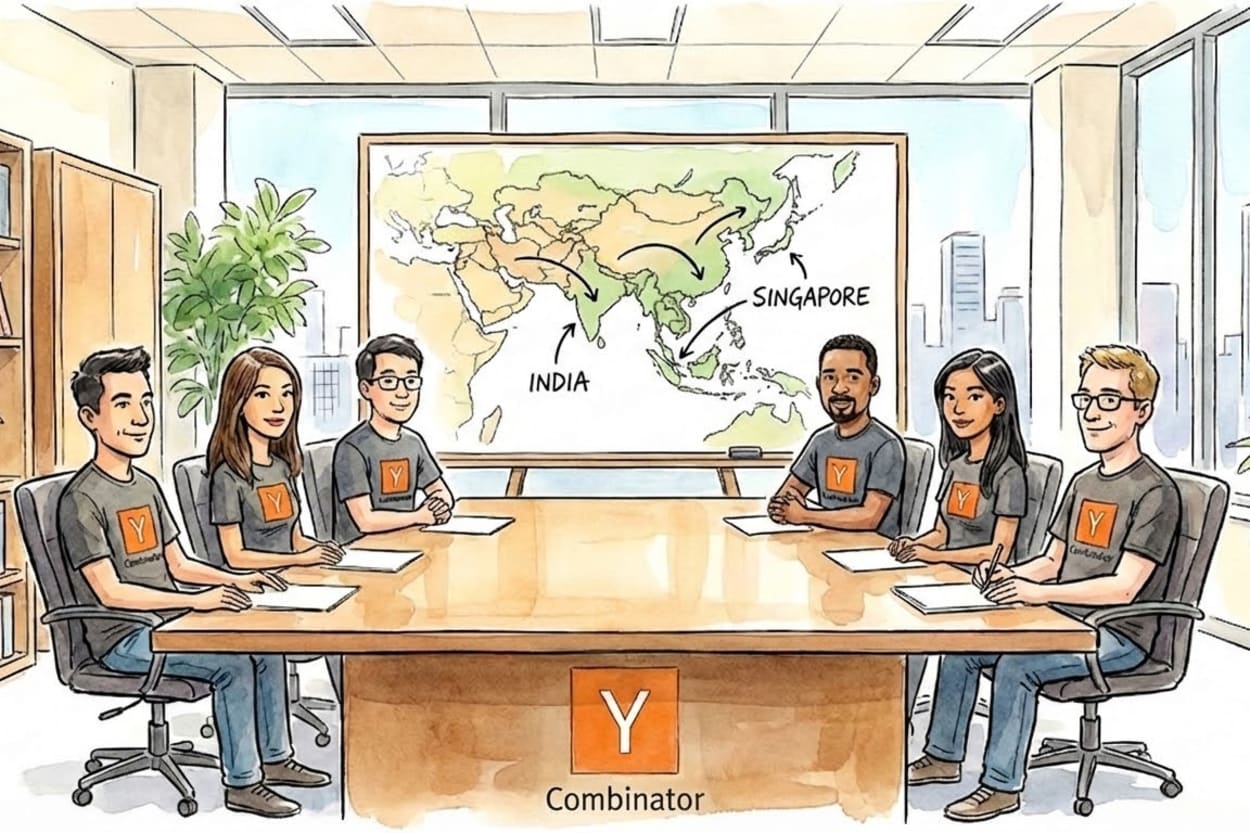
Y Combinator continues to generate outsized returns from companies with roots in India even as its broader influence across Asia shows signs of long-term retreat, reflecting a strategic shift by the world’s best-known startup accelerator amid changing regional dynamics. While founders from Bengaluru, Chennai and Delhi remain visible in its demo days and alumni rosters, the programme no longer shapes Asia’s startup narrative in the way it once did.
Founded in 2005 in Silicon Valley, Y Combinator built its reputation by backing early-stage companies that later became global giants, including Airbnb, Stripe and Dropbox. Its appeal in Asia peaked during the previous decade, when limited access to global capital and mentorship made association with a US-based accelerator especially valuable. India emerged as one of the biggest beneficiaries, with dozens of YC-backed startups securing follow-on funding, overseas market access and high-profile exits.
Companies such as Razorpay, Meesho and Groww, all of which passed through the YC ecosystem in earlier years, became reference points for founders seeking validation from global investors. India’s expanding pool of engineers, rising digital adoption and a large domestic market aligned well with YC’s software-first investment philosophy. These successes continue to deliver financial returns for the accelerator through equity stakes that have appreciated sharply as several firms reached unicorn valuations or prepared for public listings.
Yet the accelerator’s footprint across Asia has narrowed. YC formally closed its China-focused efforts earlier in the decade, citing regulatory complexity and difficulties operating within a tightening policy environment. Activity in Southeast Asia also slowed, with fewer batches featuring startups from Indonesia, Vietnam or Thailand compared with earlier years. The shift reflects not only YC’s internal priorities but also the maturation of Asia’s startup ecosystems, which now offer more local alternatives.
Across Asia, domestic accelerators, corporate venture arms and sovereign-backed funds have stepped in to fill gaps once dominated by Silicon Valley programmes. In India, initiatives backed by large conglomerates, universities and state governments provide capital, mentorship and market access without requiring relocation or deep integration into the US ecosystem. Southeast Asia has followed a similar path, with regional venture firms increasingly willing to lead early rounds.
YC itself has changed. The accelerator has leaned further into its core strengths, focusing on fewer geographies while doubling down on artificial intelligence, developer tools and enterprise software. Its decision to emphasise remote participation during and after the pandemic reduced the symbolic value of spending months in Silicon Valley, a factor that once set YC apart for Asian founders. While remote access broadened participation, it also diluted the sense of exclusivity that helped the programme stand out.
For Indian startups, the relationship with YC has become more transactional. Participation is still seen as a strong signal of quality, especially for companies targeting global markets or US-based customers. However, founders increasingly view YC as one of several possible launchpads rather than a defining milestone. Follow-on funding now depends less on accelerator pedigree and more on unit economics, regulatory clarity and the ability to scale within complex local markets.
Investors tracking Asia’s venture landscape note that YC’s reduced presence does not imply a loss of relevance everywhere. India remains an exception because of its scale, talent depth and ongoing pipeline of software-led startups with global ambitions. YC partners continue to engage with Indian founders, and each batch includes a steady, if smaller, number of companies from the country. Returns from earlier bets ensure that India remains financially meaningful to the accelerator.
At the same time, YC no longer sets the pace for Asia-wide innovation trends. Local accelerators and venture funds are shaping sectors such as fintech, climate technology and logistics, areas where regulatory nuance and on-the-ground execution matter as much as global networks. Governments across the region have also become more involved in startup promotion, offering grants, sandboxes and procurement opportunities that reduce reliance on foreign programmes.
Arabian Post Staff -Dubai Jordan-based education technology company Alefredo has acquired United Kingdom tutoring firm Tutor House, marking its formal entry into the UK market and accelerating its push to build a hybrid learning platform spanning Europe, the Middle East and Africa. The deal brings Alefredo a network of more than 30,000 vetted tutors across multiple subjects and age groups, significantly expanding its reach beyond its home […]
Bitcoin could move towards the $50,000 mark even as confidence in the crypto market remains fragile, according to comments by Tom Lee, who has described price action across digital assets as a major disappointment against a backdrop of conditions that have historically favoured rallies. Trading has been subdued across large cryptocurrencies, with bitcoin struggling to convert long-standing bullish narratives into sustained momentum. Lee, a prominent market strategist […]
HEIDELBERG, GERMANY – News Aktuell – 5 February 2026 – After nine months of financial year 2025/26 (April 1 to December 31, 2025), developments at Heidelberger Druckmaschinen AG (HEIDELBERG) are in line with expectations. The company has achieved a considerable improvement in its profitability and is also resolutely pressing ahead with its strategic transformation, moving into new areas of business that are enjoying strong growth. Notwithstanding the challenging environment, sales after three quarters climbed to € 1,602 million – some 6.1 percent higher than the previous year’s figure of € 1,509 million – despite negative exchange rate effects amounting to around € 44 million compared with the equivalent period of the previous year. Business in Europe and with packaging and label printing presses saw particularly positive development during this period. At € 617 million, the sales figure for the third quarter was around 4 percent higher than in the equivalent quarter of the previous year and continued the quarter-on-quarter sales growth so far in the current financial year.
The HEIDELBERG Customer Portal is already the digital control center for over 3,000 print shops worldwide – a figure that is set to keep on growing.
The adjusted operating result (EBITDA) after nine months increased significantly to € 114 million (adjusted figure for equivalent period of previous year: € 86 million) and the adjusted EBITDA margin improved considerably to 7.1 percent (equivalent period of previous year: 5.7 percent). Implementation of the personnel and efficiency measures envisaged in the plan for the future is having a clear impact. For example, production costs and total working costs improved compared with the corresponding period of the previous year. The personnel cost ratio was lower than in the first nine months of the previous year, falling to 36 percent (equivalent period of previous year, adjusted for special items: 39 percent). The company is expecting personnel costs as a whole to remain below the previous year’s figure for the rest of financial year 2025/26.
Incoming orders after nine months totaled € 1,628 million (previous year: € 1,823 million). Allowing for the fact that drupa resulted in the previous year being very strong, they were therefore in line with expectations. During the reporting period, the company saw a significant impact from negative exchange rate effects amounting to some € 46 million. Incoming orders in the third quarter stood at € 517 million (corresponding quarter of previous year: € 550 million). The development of incoming orders in the third quarter was particularly positive in the Americas Region, where they were up 17 percent on the equivalent quarter of the previous year.
HEIDELBERG pressing ahead with strategic transformation and tapping into new growth markets
Despite a market environment that remains challenging, HEIDELBERG is consistently pursuing its strategic transformation. Based on its strong industry and systems expertise, the company is systematically tapping into additional markets in the areas of defense, security, energy, charging infrastructure, and industrial system solutions. One key aspect of this process is combining all relevant activities under HD Advanced Technologies GmbH. This strategic further development is building HEIDELBERG a stronger future and opening up long-term growth opportunities.
In the HEIDELBERG Technology segment, sales after nine months totaled € 42 million – slightly higher than the previous year’s figure of € 41 million. Even though the development of sales is moderate at present, the strategic measures that have been initiated provide a basis for HEIDELBERG Technology to potentially make a much bigger contribution to business as a whole. In particular, the continuing strategy of tapping into new industries and the creation of new business models are raising expectations of a positive sales trend in the coming years.
“The measures we have initiated are confirmation of our growth plan,” says Jürgen Otto, CEO of Heidelberger Druckmaschinen AG. “Both strategically and operationally speaking, HEIDELBERG is extremely well positioned to actively hone this plan and leverage additional opportunities in dynamic future markets,” he adds.
Core business lays foundations for transformation
At the same time as new areas of business are being unlocked, the company’s core business is also developing robustly. In the Print & Packaging Equipment segment, HEIDELBERG is benefiting from its strong market position in packaging and label printing. In the reporting period, this segment’s sales increased to € 804 million (previous year’s figure: € 705 million). In the Digital Solutions & Lifecycle segment, the company is further expanding its role as a systems integrator – with hybrid printing, software, and service solutions as part of a digital ecosystem. In this segment, HEIDELBERG achieved nine-month sales of € 755 million (previous year’s figure: € 763 million).
“Our strength lies in the intelligent way we combine presses, software, and service operations,” says Dr. David Schmedding, Chief Technology & Sales Officer. “By specifically expanding our digital printing portfolio and launching new high-performance systems such as the Jetfire 75, we are creating additional growth potential – both in our core business and beyond,” he emphasizes.
The free cash flow of HEIDELBERG after three quarters was € -81 million, an improvement on the previous year (equivalent period of previous year: € -97 million). As expected, however, it was still negative. This is due to the Polar acquisition and restructuring costs in the high single-digit million-euro range. The net result after taxes of € 17 million after nine months represented a significant increase (corresponding period of previous year: € -42 million).
The company is confirming its forecast for financial year 2025/26. A healthy order backlog, the current efficiency measures, and systematic implementation of the strategy are laying the foundations for achieving its targets. In view of macroeconomic developments, taking into account the various opportunities and risks, and assuming the global economy does not see weaker growth than predicted by the relevant institutions, the company is expecting sales of around € 2,350 million in financial year 2025/26 (2024/25: € 2,280 million). In view of the significant exchange rate effects, the continuing weak macroeconomic situation, and the uncertain trade situation, the company is assuming the increase in the adjusted EBITDA margin will be toward the lower end of the predicted range of up to 8 percent (previous year: 7.1 percent).
Image 1: A team from the Hoifu Group, gathered around Chairman Ou Shun Chou (front row, sixth from the left), with HEIDELBERG representatives including Steven Hou, General Manager South China, and Michael Nilges, Managing Director of the Shanghai site (front row, seventh and eighth from the left), during acceptance testing for the 1,000th Speedmaster CX 104 at the HEIDELBERG site in Shanghai.
Image 2: The digital printing line at rubmedia includes a Jetfire 50 and a Versafire LV from HEIDELBERG, as well as the corresponding postpress equipment. The media house can use this line for the complete, industrialized in-house production of personalized and high-quality short runs.
Image 3: The HEIDELBERG Customer Portal is already the digital control center for over 3,000 print shops worldwide – a figure that is set to keep on growing.
This release contains forward-looking statements based on assumptions and estimates by the management of Heidelberger Druckmaschinen Aktiengesellschaft. Even though the management is of the opinion that these assumptions and estimates are accurate, the actual future development and results may deviate substantially from these forward-looking statements due to various factors, such as changes in the overall economic situation, in exchange and interest rates, and within the print media industry. Heidelberger Druckmaschinen Aktiengesellschaft provides no guarantee and assumes no liability for future developments and results deviating from the assumptions and estimates made in this press release. Hashtag: #HEIDELBERGDruckmaschinenAG
The issuer is solely responsible for the content of this announcement.
About HEIDELBERG
Heidelberger Druckmaschinen AG (HEIDELBERG) is a leading technology company that has been standing for innovation, quality, and reliability in mechanical engineering worldwide for 175 years. With a clear focus on growth and as a total solution provider, HEIDELBERG is driving further development in the core areas of packaging and digital printing, software solutions, and lifecycle business with service and consumables so that customers can achieve maximum productivity and efficiency. The company is also focusing on expanding into new business areas such as high-precision plant engineering with integrated control systems, automation technology, robotics, and the growing green technologies sector. With its strong international presence in approximately 170 countries, the creative power and expertise of its roughly 9,500 employees, its own production facilities in Europe, China, and the USA, and one of the largest global sales and service networks, the company is ideally positioned for future growth.
Arabian Post Staff -Dubai Abu Dhabi has launched a comprehensive study to guide the long-term redevelopment of Mussafah, signalling a renewed push to strengthen the district’s standing as a major industrial and investment hub while improving liveability for workers and surrounding communities. The Department of Municipalities and Transport said the first phase of the project will examine ways to revitalise Mussafah’s waterfront, with proposals centred on creating […]
Greenlogue/AP Saudi Arabia has committed $2 billion to build two large-scale solar power plants in Turkey with a combined capacity of 2,000 megawatts, marking one of the biggest cross-border renewable energy investments announced between the two countries. The plan was confirmed by Turkey’s energy minister following high-level talks in Riyadh, underlining Ankara’s push to accelerate clean power deployment while drawing in long-term foreign capital. The agreement was […]
Kyocera Corp. has outlined plans to repurchase up to ¥500 billion of its own shares over fiscal 2027 and fiscal 2028, signalling a deeper commitment to capital efficiency as Japanese corporates face mounting pressure to lift returns and sharpen balance sheets. The programme, one of the largest contemplated by the Kyoto-based manufacturer, places the group among a widening cohort of listed companies using buybacks to address investor concerns over cash utilisation and valuation gaps.
The company said the planned repurchase ceiling reflects a multi-year approach rather than a one-off market intervention, with execution paced according to market conditions, cash flows and strategic priorities. Kyocera has historically favoured conservative capital management, retaining substantial cash buffers to support long investment cycles across components, electronics, materials and energy-related businesses. The proposed scale marks a notable recalibration, suggesting management is prepared to return excess capital while maintaining flexibility for growth spending.
Market participants view the move against a backdrop of sustained corporate governance reform in Japan, where stock exchange guidance and investor activism have encouraged companies to justify capital allocation choices more explicitly. Share buybacks have become a visible response, particularly among firms trading below book value or carrying large cash balances. Kyocera’s announcement fits that pattern, though the delayed start in fiscal 2027 underlines a preference for orderly execution tied to medium-term planning.
The group has spent the past year reviewing portfolio efficiency and profitability across segments, including fine ceramics, semiconductor components, electronic devices and document solutions. Management commentary has emphasised stable cash generation and disciplined investment, with returns assessed against cost of capital. By signalling a sizeable buyback window in advance, Kyocera appears to be seeking to anchor investor expectations around capital returns while avoiding short-term distortions to operating strategy.
Analysts note that Japanese companies have increasingly used multi-year buyback frameworks to balance shareholder returns with industrial policy considerations and long-term employment commitments. Unlike ad-hoc repurchases, extended programmes can be scaled up or down without signalling distress, and they reduce the risk of buying shares at cyclical peaks. For Kyocera, whose earnings are exposed to swings in global electronics demand, that flexibility is likely to be central.
The announcement also highlights intensifying competition for capital among Japanese industrial groups. With domestic interest rates edging higher after years of ultra-loose monetary policy, holding large idle cash positions has become more visibly costly. At the same time, foreign investors have pressed boards to articulate clearer return targets, often favouring buybacks over dividends for their tax efficiency and balance-sheet impact. Kyocera’s plan reflects these cross-currents, even as it preserves room for dividends and strategic investments.
Industry specialists point out that Kyocera’s diversified structure complicates capital allocation decisions. The company spans mature businesses with steady cash flows and growth areas requiring sustained investment, including advanced materials and energy-related technologies. A pre-announced repurchase cap allows management to adjust deployment as segment performance evolves, rather than locking in rigid payout ratios.
From a governance perspective, the move reinforces a broader shift in boardroom priorities. Japanese regulators and exchanges have encouraged companies to engage more directly with shareholders, explain valuation discounts and set measurable improvement goals. Buybacks have emerged as a tangible mechanism to demonstrate responsiveness, particularly when accompanied by operational reforms. Kyocera has indicated that capital efficiency measures will run alongside cost controls, portfolio reviews and selective expansion.
Investor reaction has focused on the signal rather than immediate financial impact, given the programme’s future timeframe. Portfolio managers tracking Japan’s equity market say such announcements contribute to a narrative of structural change, even if execution remains years away. For long-term holders, the clarity around potential capital returns can support valuation, especially when paired with stable operating performance.
A plan by the Transportation Security Administration to charge passengers a $45 fee for travelling without acceptable identification has triggered a legal challenge in the United States, reopening a long-running debate over the limits of regulatory authority and the rights of air travellers at security checkpoints. The fee, announced as part of updated screening procedures, applies to passengers who arrive at airports without government-issued photo identification and […]