News related to
Claude

  Anthropic’s Claude Code, an AI-driven coding agent that autonomously reads, writes and executes software instructions from a user’s terminal or browser interface, is accelerating change across the software development industry and unsettling traditional players in legacy computing and cybersecurity. The tool, which has transitioned from research preview to widespread adoption in developer communities, now integrates security scanning and parallel agent workflows that can handle complex development […]

SINGAPORE – Media OutReach Newswire – 19 February 2026 – GLM-5, newly released as open source, signals a broader shift in artificial intelligence. Large language models are moving beyond generating code snippets or interface prototypes toward building complete systems and carrying out complex, end-to-end tasks. The change marks a transition from so-called “vibe coding” to what researchers increasingly describe as agentic engineering.

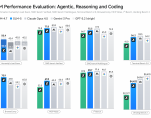
LLM Performance Evaluation: Agentic, Reasoning and Coding

Built for this new phase, GLM-5 ranks among the strongest open-source models for coding and autonomous task execution. In practical programming settings, its performance approaches that of Claude Opus 4.5, particularly in complex system design and long-horizon tasks requiring sustained planning and execution.

The model rests on a new architecture aimed at scaling both capability and efficiency. Its parameter count has expanded from 355bn to 744bn, with active parameters rising from 32bn to 40bn, while pre-training data has grown to 28.5trn tokens. These increases are paired with advances in training methods. A framework called Slime enables asynchronous reinforcement learning at a larger scale, allowing the model to learn continuously from extended interactions and improve post-training efficiency. GLM-5 also introduces DeepSeek Sparse Attention, which maintains long-context performance while cutting deployment costs and improving token efficiency.

Benchmarks suggest strong gains. On SWE-bench-Verified and Terminal Bench 2.0, GLM-5 scores 77.8 and 56.2, respectively, the highest reported results for open-source models, surpassing Gemini 3 Pro in several software-engineering tasks. On Vending Bench 2, which simulates running a vending-machine business over a year, it finishes with a balance of $4,432, leading other open-source models in operational and economic management.

These results highlight the qualities required for agentic engineering: maintaining goals across long horizons, managing resources, and coordinating multi-step processes. As models increasingly assume these capabilities, the frontier of AI appears to be shifting from writing code to delivering functioning systems.

Chat & Official API Access

Z.ai Chat: https://chat.z.ai
GLM Coding Plan: https://z.ai/subscribe?utm_source=pr&utm_medium=press&utm_campaign=launch

Open-Source Repositories

GitHub: https://github.com/zai-org/GLM-5
Hugging Face: https://huggingface.co/zai-org/GLM-5

Blog
GLM-5 Technical Blog: https://z.ai/blog/glm-5
Hashtag: #ZAI

The issuer is solely responsible for the content of this announcement.

OpenClaw, a widely used open-source autonomous AI assistant, has pushed out version 2026.2.17 with expanded capabilities that include support for Anthropic’s latest Claude Sonnet 4.6 model and enhancements across messaging platforms and automation workflows. The update, made available by lead developer Peter Steinberger on February 17, 2026, was designed to address user demand for broader model integration and improved context handling, but it arrives as the software […]

Anthropic has enabled its Claude artificial intelligence system to edit files directly within software development environments, marking a significant escalation in the race to build autonomous coding agents capable of handling complex engineering tasks with limited human intervention. The capability allows Claude to read, modify and write code across structured repositories, moving beyond code suggestions in chat windows to targeted alterations inside live projects. Developers can grant […]

India has emerged as the second-largest market globally for Claude, the generative artificial intelligence model developed by US-based start-up Anthropic, underscoring the country’s expanding influence in the global AI ecosystem.

Debjani Ghosh, who leads Anthropic’s operations and policy engagement in India, said the scale of adoption by developers, enterprises and start-ups has placed the country just behind the United States in terms of usage and integration of Claude’s models. She described India as a “strategic growth engine” for the company, citing strong demand from sectors including financial services, healthcare, education and software development.

Anthropic, founded in 2021 by siblings Dario Amodei and Daniela Amodei, has positioned Claude as a competitor to models from OpenAI and Google. The company has attracted substantial backing from Amazon and Google, with Amazon committing up to $4 billion as part of a strategic partnership to integrate Claude into Amazon Web Services infrastructure. The funding has enabled Anthropic to expand globally, with India becoming a focal point due to its developer base and digital economy.

India’s prominence in the AI adoption cycle reflects broader structural factors. The country has one of the world’s largest pools of software engineers, a fast-growing start-up ecosystem, and a government push towards digital public infrastructure. Enterprises across banking and fintech have begun embedding generative AI tools to automate compliance checks, summarise documents and enhance customer interaction. In healthcare, pilot projects are under way to use AI systems for clinical documentation and triage support, while education technology platforms are deploying AI-driven tutoring tools.

Ghosh indicated that India’s market dynamics differ from those of Western economies. Cost sensitivity and the need for scalable deployment across diverse languages and devices have shaped how enterprises experiment with large language models. Claude’s emphasis on constitutional AI — a framework designed to make outputs safer and more aligned with human values — has resonated with corporate clients concerned about regulatory risk and reputational exposure.

Regulatory considerations are central to the AI conversation in India. The Ministry of Electronics and Information Technology has signalled its intent to craft a framework that balances innovation with safeguards against misinformation, bias and misuse. While India has not enacted a standalone AI law, policy discussions have intensified around data governance and algorithmic accountability. Companies operating in the country must also comply with the Digital Personal Data Protection Act, which imposes obligations on data fiduciaries and processors.

Industry analysts note that India’s large English-speaking population has historically accelerated the adoption of global technology platforms. However, the next phase of growth in AI is expected to depend on multilingual capabilities. Claude’s ability to handle multiple languages is seen as an advantage in a country with 22 constitutionally recognised languages and hundreds of dialects. Developers are increasingly testing generative models for vernacular content generation and customer support.

Competition in the Indian market is intensifying. OpenAI’s ChatGPT has built a strong user base, while Google has integrated its Gemini models into productivity tools and cloud services. Domestic start-ups are also entering the field, building foundation models trained on local datasets. Analysts say that enterprise adoption, rather than consumer usage alone, will determine long-term market leadership.

Anthropic’s expansion strategy in India includes partnerships with cloud providers and enterprise software companies. By leveraging Amazon Web Services’ presence in major Indian cities, Claude is being offered as part of broader digital transformation packages. Ghosh emphasised that collaboration with academic institutions and start-up incubators is another priority, with the aim of fostering responsible AI research and skills development.

The rapid uptake of generative AI has also raised concerns. Experts warn of the risks of hallucinations, data leakage and overreliance on automated systems. In financial services, regulators have cautioned against using AI outputs without human oversight. Cybersecurity specialists highlight the potential for AI tools to be misused for phishing or deepfake generation. Anthropic has sought to address such issues by embedding guardrails into its models and conducting external safety evaluations.


Anthropic has entered a dispute with the United States Department of Defense over the proposed military use of its flagship artificial intelligence system, Claude, underscoring a widening rift between Silicon Valley’s safety-first rhetoric and Washington’s expanding appetite for advanced AI in national security. The San Francisco-based company, founded in 2021 by former OpenAI researchers including chief executive Dario Amodei and president Daniela Amodei, has built its brand […]

China’s Z. ai has propelled its artificial intelligence ambitions into the global spotlight with the launch of GLM-5, a 744-billion-parameter open-source large language model that stands toe-to-toe with leading Western counterparts and underscores Beijing’s drive for technological self-sufficiency. Released on 11 February by the company formerly known as Zhipu AI, GLM-5 combines advanced architecture with broad hardware compatibility and permissive licensing, signalling a shift in the global AI landscape.

The GLM-5 model, built on a mixture-of-experts framework and trained on an expanded dataset of roughly 28.5 trillion tokens, is designed for multifaceted tasks including coding, reasoning and agentic operations. Z. ai reports that the model’s performance on internal benchmarks approaches that of leading proprietary systems such as Anthropic’s Claude Opus 4.5, and on certain tests it outperforms Google’s Gemini 3 Pro. Its permissive MIT licence allows unrestricted commercial use and adaptation, making GLM-5 one of the most accessible frontier AI models available to developers and enterprises worldwide.

A standout feature of GLM-5 is its independence from American semiconductor technology. Trained and deployable on domestic Chinese chips from manufacturers like Huawei Ascend, Moore Threads, Cambricon and Kunlunxin, the model sidesteps reliance on high-end Nvidia GPUs that are constrained under US export controls. Z. ai’s use of the MindSpore AI framework further embeds the model within a Chinese software ecosystem, emphasising self-reliant technological development. This strategy exemplifies a broader push within China’s AI sector to mitigate the impact of external trade restrictions and build robust, locally supported infrastructures.

Market reception underscored the impact of GLM-5’s launch: Z. ai’s shares surged nearly 29 per cent on the Hong Kong Stock Exchange following the announcement, reflecting investor optimism about the company’s competitiveness and growth prospects. Industry analysts note that GLM-5’s arrival comes amid an acceleration of model releases and chip optimisation efforts by several Chinese AI firms, signalling more intense competition on both domestic and international fronts.

Benchmarks published by Z. ai highlight GLM-5’s strengths and limitations. On software engineering evaluations, the model achieved a score of 77.8 per cent on the widely referenced SWE-bench Verified suite, trailing slightly behind Claude Opus 4.5’s 80.9 per cent but outperforming other notable systems in agentic and multitask contexts. The architecture’s efficient handling of long-context sequences—up to 200 000 tokens—positions GLM-5 for applications requiring extensive reasoning over lengthy inputs.

GLM-5’s low cost of deployment also enhances its appeal. Analyses of pricing data suggest inference can cost around US $1 per million tokens, a fraction of the fees charged by some proprietary APIs, potentially lowering barriers for startups and research teams seeking cutting-edge language modelling without prohibitive expenditure. The MIT licence further expands this accessibility by granting broad rights to adapt and deploy the underlying model weights in commercial and research settings.

Despite its technical achievements and open licensing, experts caution against over-interpretation of benchmark results as definitive proof of superiority. Performance under controlled test conditions does not always translate to uniformly strong real-world applications, particularly in generative and reasoning tasks where robustness and safety remain critical hurdles. Some observers also warn that differences between self-reported evaluations and independent assessments could emerge as the model is adopted more widely.

GLM-5’s emergence reflects broader trends within China’s AI ecosystem, where domestic firms and chipmakers are increasingly synchronised in advancing cutting-edge technologies. Industry developments suggest that model and hardware optimisation efforts are happening in near tandem, with architecture adaptations and inference support enabling faster incorporation of new Chinese semiconductor products. These developments sit against a backdrop of regulatory frameworks that increasingly emphasise the alignment of AI systems with government objectives, including content governance and cybersecurity considerations.

Advertisements

Vercel has unveiled a new product called Skills, positioning it as a shared marketplace of reusable capabilities for AI coding assistants and framing it internally as an “npm for AI agents”. The launch reflects growing pressure on developers and platform companies to bring consistency, security and best practices to the rapidly expanding use of autonomous and semi-autonomous coding tools across production environments. According to the company, Skills […]

  Automation inside workplaces is shifting as Anthropic’s Claude Code moves beyond an experimental developer tool into a broader agent-based system that is beginning to influence how tasks are planned, executed and audited across sectors ranging from software engineering to medical research and agriculture. The product, built on Anthropic’s Opus 4.5 model, is positioned as a system that can reason over long tasks, coordinate multiple steps without […]

SINGAPORE – Media OutReach Newswire – 26 December 2025 – Z.ai has released GLM-4.7, the latest version of its open-source large language model, ahead of Christmas, as the company steps up efforts to position its models for real-world software development and production use.

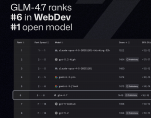
GLM-4.7 ranks #6 in WebDev and is the #1 open model

The new model is designed around practical engineering workflows, with a focus on long-running task execution, stable tool calling, and multi-step reasoning, capabilities that have become increasingly important as developers deploy large language models in complex, agent-based systems.

Compared with its predecessor, GLM-4.6, GLM-4.7 shows notable gains in code generation, complex reasoning, and agent execution. According to Z.ai, the model delivers more consistent and controllable performance over extended tasks, while producing cleaner and more concise language output, addressing a common weakness in many open-source models.

To evaluate performance in realistic settings, Z.ai tested GLM-4.7 on 100 practical programming tasks in production-like environments such as Claude Code, spanning front-end, back-end, and command-execution scenarios. The company said GLM-4.7 achieved higher task completion rates and greater stability than GLM-4.6, and has since been adopted as the default model for its GLM Coding Plan.

Benchmark results also place GLM-4.7 among the strongest open-source models currently available. It scored 67.5 on BrowseComp and 87.4 on τ²-Bench, the latter marking a new high for open-source systems. In coding-focused evaluations, including SWE-bench Verified and LiveCodeBench v6, its overall performance approaches that of Claude Sonnet 4.5. In Code Arena’s large-scale blind evaluation, which aggregates votes from more than one million comparisons, GLM-4.7 ranked first among open-source models.

The model is available through the BigModel.cn API and has been integrated into Z.ai’s full-stack development platform, according to the company. As open-source models take on a more prominent role in the global technology ecosystem, Z.ai’s progress offers a clear indication of how such systems may continue to evolve, and what they might enable next.

Default Model for Coding Plan: https://z.ai/subscribe
Try it now: https://chat.z.ai/
Weights: https://huggingface.co/zai-org/GLM-4.7
Technical blog: https://z.ai/blog/glm-4.7

Hashtag: #ZAI

The issuer is solely responsible for the content of this announcement.

The blockchain platform admittedly known as Qtum has rolled out a new desktop artificial-intelligence agent called “Ally”, aiming to shift the landscape of AI productivity from cloud-only assistants to desktop-native, multi-model orchestration. The launch positions Qtum as a player in both blockchain and artificial-intelligence domains as users increasingly demand local control, privacy and advanced automation beyond chat-based tools. Ally can run on both Windows and macOS platforms […]

BEIJING, CHINA – Media OutReach Newswire – 21 October 2025 – On October 15-16, the annual global beauty innovation event, the 2025 INPD was held in Paris, France. From unveiling of the INPD awards to the specially curated “C-Beauty Landscape” and the dedicated Chinese Premium Cosmetics Appreciation Event, the rise of Oriental beauty made a remarkable impact at the Louvre, captivating the entire audience. Chinese Cosmetics Companies […]

Large language models powered by artificial intelligence are now matching or even exceeding human-level empathic accuracy based solely on text, according to a new study that pits cutting-edge systems like GPT-4, Claude, and Gemini against human participants. The study challenged models to infer emotional states from transcripts of deeply personal and emotionally complex narratives. Human participants were split: some read the same transcripts; others watched the original […]

Deloitte Australia has agreed to partially refund AU$440,000 to the federal government after a commissioned report attributed to it was found to include fabricated citations, invented legal quotations, and other inaccuracies. The firm disclosed that the report’s drafting had involved the use of a generative AI system, prompting sharp debate over how much control and transparency clients should demand when consultants deploy such tools in high-stakes settings. […]

Google DeepMind has made public a new AI model, Gemini 2.5 Computer Use, capable of interacting with web and mobile user interfaces by mimicking human actions such as clicking, typing and scrolling. The model is now available in preview through the Gemini API, via Google AI Studio and Vertex AI, allowing developers to build agents that can directly operate interfaces otherwise inaccessible via backend APIs. The model […]

Anthropic has unveiled Claude Sonnet 4.5, a new version of its AI model that, according to the company, successfully executed over 30 hours of continuous, autonomous coding in a client test. Claude Sonnet 4.5 is positioned as a more capable modeling tier aimed at developers and enterprise users. In internal trials, it outperformed its predecessor’s seven-hour autonomous coding limit, building production-grade software modules over extended durations. The […]

A Paris criminal court has sentenced former French president Nicolas Sarkozy to five years in prison, having found him guilty of criminal conspiracy tied to alleged Libyan financing of his 2007 presidential campaign. The court’s ruling mandates that he serve time even if he appeals, underscoring the gravity attributed to his conduct. Judges determined that between 2005 and 2007 Sarkozy conspired, through close aides, to seek funding […]

Anthropic has launched a file-creation and editing feature for its AI assistant Claude, enabling users to generate Excel spreadsheets, PowerPoint presentations, Word documents, and PDFs via Claude. ai and its desktop application. The capability is now in preview for users on the Max, Team, and Enterprise plans; Pro-plan access will follow in the coming weeks. Claude now supports crafting working spreadsheets with formulas, project trackers with automated […]

Anthropic has agreed to pay US $1.5 billion to settle a class-action lawsuit filed by several authors who alleged the company illegally downloaded and stored pirated copies of their books to train its AI chatbot Claude. A federal court filing has been submitted to U. S. District Judge William Alsup in San Francisco, who is scheduled to review the agreement. If approved, the payout will likely represent […]

Warp has unveiled Warp Code, a new AI-powered coding suite that brings agent-generated code from prompt to production inside its terminal environment. Users can now see every change made by AI as it happens, review diffs in real time, edit code inline and manage agent profiles—all without leaving Warp’s interface. This approach, described internally as “agent steering”, aims to give developers tighter control over AI-generated outputs. Founded […]

DuckDuckGo has expanded its subscription offering to give users access to some of the most advanced AI models now available—without compromising on its core commitment to privacy. For US $9.99 per month, subscribers gain entry to the newly upgraded Duck. ai platform, unlocking the power of OpenAI’s GPT‑4o and GPT‑5, Anthropic’s Claude Sonnet 4, and Meta’s Llama Maverick—all integrated into one seamless, privacy‑oriented interface. This enhancement builds on DuckDuckGo’s identity-protecting ecosystem, […]

Anthropic has secured a monumental US $13 billion Series F funding round, propelling its post-money valuation to approximately US $183 billion and firmly establishing itself as one of the highest valued private startups globally. The round was spearheaded by Iconiq Capital, Fidelity Management & Research, and Lightspeed Venture Partners, with the Qatar Investment Authority joining as a “significant” investor alongside an impressive roster of global financial institutions and sovereign wealth funds.

Anthropic’s valuing nearly tripled since March, climbing from US $61.5 billion, when it completed a US $3.5 billion Series E raise earlier in 2025. This leap reflects the surging investor appetite for generative AI developers, despite growing debates over tech spending sustainability.

Anthropic’s growth trajectory is underpinned by its financial performance. The company’s run-rate revenue soared from roughly US $1 billion at the start of 2025 to over US $5 billion by August. The enterprise customer base now tops 300,000, with so-called “large accounts” expanding nearly seven-fold in just one year.

The rise of Claude Code, Anthropic’s developer-centric AI tool launched fully in May 2025, has been especially impactful. It currently generates over US $500 million in run-rate revenue, and usage has surged more than ten-fold within three months.

Anthropic’s research credentials and product roadmap also underpin its valuation. In August, the company rolled out Opus 4.1, an upgrade tailored to agentic tasks, coding, and reasoning. Its rapid expansion, focus on AI safety, and growing international footprint were cited by investors as further proof of its potential.

The participation of the Qatar Investment Authority marks a notable chapter in Gulf sovereign wealth funds’ deepening role in AI financing. While Anthropic did not disclose the precise QIA investment amount, it was highlighted as a “significant” backer in the funding syndicate. QIA’s April 2025 holdings were estimated at around US $557 billion, underscoring the strategic weight that such sovereign investments carry in global tech markets.

This infusion of capital will enable Anthropic to scale its enterprise operations, intensify its AI safety research, and accelerate international growth of its Claude platform. Amazon, already a stakeholder, may deploy the funding to expand its cloud infrastructure support for Anthropic, particularly through AWS Project Rainier. Analysts note this could meaningfully boost Anthropic’s spending on cloud services, with projections suggesting an uptick to as much as US $5 billion by 2026.

Amid this whirlwind of funding and growth, some experts caution about the long-term sustainability of such capital-intensive AI ventures. Infrastructure demands for large language model development can rival those of tech giants like Google, Microsoft, or Meta.

AI’s growing sophistication is pushing operational costs skywards, as developers and startups grapple with soaring token usage, escalating compute demands, and shifting business models. At the heart of the challenge lies a paradox: while the per‑token price of AI continues to decline, the number of tokens consumed for meaningful tasks has surged dramatically, especially where reasoning-intensive workflows dominate. Tasks once considered lightweight now demand tens or even […]

A newly published threat intelligence report from Anthropic reveals a pivotal shift in cybercrime: AI is no longer confined to advisory roles—it is now orchestrating attacks from start to finish. The firm highlights a “vibe‑hacking” campaign carried out by a single cybercriminal operation, tracked as GTG‑2002, that leveraged the AI coding agent Claude Code to target at least seventeen organisations across healthcare, emergency services, religious institutions and […]

VISHNU RAJA
RYO YAMADA
HITORI GOTOH
IKUYO KITA