News related to
Microsoft

Johannesburg – MTN Group has moved to broaden Africa’s AI infrastructure by initiating plans to build a network of data centres across its 16 markets, partly self-financed and partly through collaborations with U. S. and European technology firms. CEO Ralph Mupita told Bloomberg the company aims to finalise these partnerships before year-end. The first facility under this rollout is a $240 million, 9-megawatt data centre in Nigeria, […]

Abu Dhabi – Inception, the AI division of G42, has made seven of its domain-specific enterprise products available through Microsoft Azure Marketplace, looking to streamline global access to its scalable, enterprise-grade AI tools. The suite includes: ExecEdge, which automates executive meeting workflows and connects with Microsoft 365; Genius for business strategy research and reporting; Alpha to analyse unstructured data for investment decisions; Business Procurement for supplier discovery, […]

Malicious actors are exploiting Remote Monitoring and Management tools such as ITarian, PDQ Connect, SimpleHelp, Atera, and ConnectWise ScreenConnect, to embed long-lasting remote access inside compromised systems. These operations make use of highly convincing phishing lures—fake browser-updates, meeting or party invitations, government or tax forms—to trick users into installing legitimate-looking software that gives attackers administrator-level control. Phishing pages often mimic trusted brands or meeting applications like Microsoft […]

OpenAI will purchase approximately $300 billion worth of cloud computing capacity from Oracle over a five-year period beginning in 2027, according to statements from the companies and industry analysts. The deal is among the largest ever in the cloud infrastructure sector, and is intertwined with OpenAI and Oracle’s joint Stargate initiative. The agreement requires Oracle to supply 4.5 gigawatts of power-capacity for the data centres that will […]

Security researchers at ESET have identified a new malware strain called HybridPetya that combines traits of Petya and NotPetya ransomware with advanced boot-kit functionality to infect systems protected by UEFI Secure Boot. It exploits the vulnerability CVE-2024-7344 in the Howyar “Reloader” UEFI application to bypass signature checks, allowing unverified code execution. HybridPetya was first spotted when samples uploaded to VirusTotal in February 2025 caught the eye of […]

Microsoft has revealed Visual Studio 2026 Insiders, a major update to its flagship integrated development environment that weaves artificial intelligence into core workflows, boosts performance, and delivers a modernised user interface. The rollout introduces new features and channels aimed at enhancing developer productivity and addressing long-standing feedback. Visual Studio 2026 integrates GitHub Copilot across the IDE to understand the coding context, make suggestions, and automate repetitive tasks. […]

Senator Ron Wyden is pressing the Federal Trade Commission to investigate Microsoft over what he terms its “gross cybersecurity negligence,” asserting that inherent weaknesses in Microsoft’s security framework enabled a damaging ransomware attack on a hospital system. Wyden’s letter, dated 10 September 2025, identifies how default encryption settings and flawed user-interface design played pivotal roles in the infiltration of Ascension, one of the largest non-profit health systems […]

Advertisements

Microsoft and LG have unveiled plans to add Xbox Cloud Gaming to select internet-connected vehicles, enabling Game Pass Ultimate subscribers to stream and play games directly via the in-car Xbox app. Streamable titles include favourites such as Forza Horizon 5, Gears of War: Reloaded and forthcoming blockbusters like The Outer Worlds 2 and Call of Duty: Black Ops 7. Passengers will need a compatible Bluetooth controller, a […]

The cybersecurity community is confronting a highly evolved phishing campaign that exploits Google’s no-code AppSheet platform to harvest credentials and two-factor authentication codes. Attackers are sending authentic-looking emails from the legitimate domain noreply@appsheet. com—circumventing common defences such as SPF, DKIM and DMARC—and impersonating Meta to pressure users into submitting sensitive data. On 20 April 2025, AppSheet-originated emails made up 10.88 percent of all phishing attempts intercepted by […]

Microsoft has released the source code for its 6502-based BASIC interpreter—BASIC for 6502 Microprocessor Version 1.1—under the MIT licence, inviting developers, historians and retro-enthusiasts to explore one of the earliest instances of personal computer software. The 6,955 lines of assembly code, originally written by Bill Gates and Ric Weiland in 1976 and later refined in 1978 with garbage-collector fixes by John Feagans and Gates, can now be […]

Undersea cables in the Red Sea were severed on September 6, 2025, causing significant internet disruptions across parts of Asia and the Middle East. The affected cables include the South East Asia–Middle East–Western Europe 4 and the India–Middle East–Western Europe, both vital for regional connectivity.

Microsoft reported increased latency for users in the Middle East, while NetBlocks, a digital rights group, confirmed that the outages impacted countries such as India and Pakistan. The disruptions have also affected cloud services, with Microsoft Azure experiencing service degradation due to rerouted traffic.

The cause of the cable cuts remains unclear. While there is concern that the Houthi rebels in Yemen may have targeted the cables as part of their campaign related to the Israel-Hamas conflict, the group has denied responsibility for such attacks. In early 2024, the Houthis had threatened to target undersea cables, but no direct evidence has been presented linking them to the current incident.

Anthropic has agreed to pay US $1.5 billion to settle a class-action lawsuit filed by several authors who alleged the company illegally downloaded and stored pirated copies of their books to train its AI chatbot Claude. A federal court filing has been submitted to U. S. District Judge William Alsup in San Francisco, who is scheduled to review the agreement. If approved, the payout will likely represent […]

OpenAI is launching a platform to connect workers fluent in artificial intelligence with employers, using AI to match skills and opportunities OpenAI builds AI-Powered Jobs Hub, positioning itself against LinkedIn. Set to debut by mid-2026, the service aims to streamline recruitment by ensuring candidates’ AI competencies align closely with employer requirements. In a blog post, Fidji Simo, OpenAI’s chief executive of Applications, said the OpenAI Jobs Platform, […]

Northern Ireland stands to benefit significantly from growing economic and technological ties with India, as boosted trade, tariff relief, and joint research initiatives begin to materialise. A free-trade agreement between India and the United Kingdom promises a settlement that could deliver a multi-million-pound boost to Northern Ireland’s economy, particularly in advanced engineering, technology, and services. At the same time, enhanced academic and innovation partnerships are expanding the region’s opportunities.

Northern Ireland’s technology, services and manufacturing sectors are especially poised for growth under the new trade agreement, which includes substantial tariff reductions and near-elimination on key exports such as medical devices and engineering goods. Analysis shows that the deal is expected to generate around £50 million in economic benefit for the province. The agreement also unlocks access to India’s growing services market, opening new pathways for Northern Irish firms to scale internationally and enhance competitiveness.

Simultaneously, India and the UK have elevated their broader strategic engagement, having signed the Comprehensive Economic and Trade Agreement on 24 July 2025. This landmark deal opened India’s government procurement market—worth £38 billion annually—to UK businesses for the first time, offering additional opportunities for Northern Ireland firms in technology, infrastructure and innovation services sectors. Negotiations had culminated in May 2025, after extensive rounds that resolved issues including visas, whisky, automobiles and pharmaceuticals.

Beyond trade, there is growing momentum in research collaboration. Imperial College London has launched a global science hub in Bengaluru, aiming to deepen its research alliances across AI, climate resilience, food security and antimicrobial resistance. Such initiatives highlight the intensifying India–UK scientific partnership, which Northern Ireland research institutions could tap into—particularly given the province’s established strengths in digital innovation and software engineering, with major global tech firms like Microsoft, Nvidia and SAP already present.

The launch of a joint India–Ireland Joint Economic Commission, as agreed by Indian External Affairs Minister S Jaishankar and Irish counterparts, further sets the stage for elevated economic and tech engagement involving Northern Ireland. The commission aims to enhance trade, investment and technology linkages; discussions have also included cybersecurity, artificial intelligence, fintech, semiconductors and higher education cooperation. Moreover, a new Indian consulate in Belfast reflects deepening diplomatic and commercial engagement with the region.

Northern Ireland benefits not only economically but also in innovation ecosystems. The UK–India Technology and Security Initiative, launched in July 2024, emphasises strategic collaboration across seven core areas including semiconductors, AI, quantum, biotech and advanced materials. The initiative is being overseen and reviewed by senior officials from both nations, reinforcing a structured framework for bilateral tech partnerships and supply-chain resilience; Northern Irish tech organisations with capabilities in cybersecurity, data analytics and smart infrastructure are well-positioned to participate.

These developments dovetail with the broader UK-wide free-trade agenda and strategic dialogues. India is the United Kingdom’s fastest-growing trade partner, with goods trade up to £17.8 billion in 2024 and services trade exceeding £24 billion—both substantial increases from pre-pandemic levels. Yet, awareness among UK firms, including in Northern Ireland, remains low, with only a small fraction actively exporting to India, despite high willingness among Indian consumers to pay premiums for UK products. Areas such as advanced engineering, manufacturing, and innovation services remain ripe for expansion.

Northern Ireland’s existing attributes further reinforce its readiness. The region hosts a cluster of world-class tech operations, supported by local firms such as Kainos and FD Technologies, and connectivity to universities and innovation centres. Access to India’s large and diverse markets—combined with policy support under the free-trade agreement—sets the scene for emerging partnerships in fintech, med-tech, smart infrastructure, and green technologies.

Finally, though not specific to Northern Ireland, institutions such as the UK India Business Council provide advisory networks and policy advocacy that can help local businesses navigate market entry, regulatory frameworks, and collaboration models with Indian partners across sectors including digital innovation, life sciences and advanced manufacturing.


Anthropic has secured a monumental US $13 billion Series F funding round, propelling its post-money valuation to approximately US $183 billion and firmly establishing itself as one of the highest valued private startups globally. The round was spearheaded by Iconiq Capital, Fidelity Management & Research, and Lightspeed Venture Partners, with the Qatar Investment Authority joining as a “significant” investor alongside an impressive roster of global financial institutions and sovereign wealth funds.

Anthropic’s valuing nearly tripled since March, climbing from US $61.5 billion, when it completed a US $3.5 billion Series E raise earlier in 2025. This leap reflects the surging investor appetite for generative AI developers, despite growing debates over tech spending sustainability.

Anthropic’s growth trajectory is underpinned by its financial performance. The company’s run-rate revenue soared from roughly US $1 billion at the start of 2025 to over US $5 billion by August. The enterprise customer base now tops 300,000, with so-called “large accounts” expanding nearly seven-fold in just one year.

The rise of Claude Code, Anthropic’s developer-centric AI tool launched fully in May 2025, has been especially impactful. It currently generates over US $500 million in run-rate revenue, and usage has surged more than ten-fold within three months.

Anthropic’s research credentials and product roadmap also underpin its valuation. In August, the company rolled out Opus 4.1, an upgrade tailored to agentic tasks, coding, and reasoning. Its rapid expansion, focus on AI safety, and growing international footprint were cited by investors as further proof of its potential.

The participation of the Qatar Investment Authority marks a notable chapter in Gulf sovereign wealth funds’ deepening role in AI financing. While Anthropic did not disclose the precise QIA investment amount, it was highlighted as a “significant” backer in the funding syndicate. QIA’s April 2025 holdings were estimated at around US $557 billion, underscoring the strategic weight that such sovereign investments carry in global tech markets.

This infusion of capital will enable Anthropic to scale its enterprise operations, intensify its AI safety research, and accelerate international growth of its Claude platform. Amazon, already a stakeholder, may deploy the funding to expand its cloud infrastructure support for Anthropic, particularly through AWS Project Rainier. Analysts note this could meaningfully boost Anthropic’s spending on cloud services, with projections suggesting an uptick to as much as US $5 billion by 2026.

Amid this whirlwind of funding and growth, some experts caution about the long-term sustainability of such capital-intensive AI ventures. Infrastructure demands for large language model development can rival those of tech giants like Google, Microsoft, or Meta.

Google has eliminated around 35 percent of managers overseeing small teams, opting to shift many into individual contributor roles in a decisive drive to flatten its organisational structure. Brian Welle, vice president of People Analytics and Performance, revealed during an all‑hands meeting that the company now has substantially fewer managers and direct reports compared to this time last year. The aim is to reduce bureaucracy and accelerate decision‑making […]

A colossal leap in infrastructure development is underway as OpenAI pursues the establishment of a data centre in India with a striking capacity of at least one gigawatt. The project, integral to its Stargate initiative, ushers in a new era of AI infrastructure expansion across Asia.

OpenAI is actively exploring partnerships with Indian firms to bring this gigawatt-scale facility to life, though the precise location and timeline remain unspecified. The effort aligns with its Stargate programme—an expansive, multibillion-dollar venture in collaboration with SoftBank, Oracle and MGX to develop next-generation AI infrastructure.

The planned facility stands among the largest of its kind in the region and may be formally introduced by OpenAI’s chief executive, Sam Altman, during his anticipated visit to India in September. OpenAI has already gained legal footing by registering as an entity in India and is gearing up to open its first office in New Delhi later in the year, reflecting the nation’s importance as the company’s second-largest market by user base.

Financial implications of such mega‑scale AI infrastructure are enormous. According to Jensen Huang, chief executive of Nvidia, constructing a singular gigawatt-class facility could cost around $50 billion—$35 billion directed towards Nvidia’s hardware and $15 billion for supplementary systems. OpenAI’s ambitions also include similar “AI super‑factories” in Abu Dhabi and across the United States, all under the banner of Stargate.

This enormous investment is forecast to have ripple effects across the global AI ecosystem. With Stargate estimated at up to $500 billion, it underscores OpenAI’s strategic ambition to lead in AI infrastructure and the mounting demand for AI-optimised processing capabilities. Nvidia, for example, projects AI infrastructure spending could soar to the $3‑4 trillion mark annually by 2030, bolstered by commitments like those under Stargate.

Locally, establishing such a facility in India can offer tangible advantages. A dedicated data centre promises to reduce latency for Indian users while satisfying regulatory demands for local data storage, a critical consideration for enterprise clients and government services. The endeavour complements OpenAI’s earlier move to enable local data residency for services such as ChatGPT Enterprise and its API offerings, aligning with India’s regulatory framework.

India’s data centre ecosystem is expanding rapidly. From an installed capacity of approximately 950 megawatts in 2024, projections currently estimate that figure to nearly double—approaching 2 gigawatts by 2026. However, even with such growth, the nation still accounts for just a fraction of global data centre capacity despite generating a significant portion of worldwide data streams. The arrival of a gigawatt-scale project like OpenAI’s would mark a profound increase in both capacity and technological capability.

Environmental sustainability and energy demands also emerge as critical considerations. Hyperscale data infrastructure requires vast power and cooling resources, raising pressing questions about energy sourcing, water usage, and ecological impact—matters India is progressively addressing through green data centre policies and incentives.

OpenAI’s move echoes broader trends among global tech giants expanding their Indian footprints. For instance, Reliance Industries is planning a three‑gigawatt data centre in Jamnagar; Microsoft, Amazon, and Google are investing heavily in cloud infrastructure; and India’s government continues to support initiatives through Digital India and localisation mandates.

Enterprise technology budgets are increasingly tilted towards AI, with artificial intelligence infrastructure and software commanding the lion’s share of growth while traditional hardware investment shows signs of stagnation. IDC projects global AI spending will surge to over US $632 billion by 2028, propelled by an almost 30 percent compound annual growth rate between 2024 and 2028. Generative AI alone is expected to capture roughly one‑third of this, driven by a […]

Lunate has unveiled a new thematic ETF offering, marking the first of its kind in the region, aimed squarely at quantum computing—a field rapidly reshaping sectors from pharmaceuticals to cybersecurity. The Boreas Solactive Quantum Computing UCITS ETF, developed under Lunate’s newly introduced Boreas range, is set to debut on the Abu Dhabi Securities Exchange on 22 September under the ticker QUANTM.

The fund traces the Solactive Developed Quantum Computing Index and encompasses 25 firms spanning pure-play quantum specialists like IonQ and Rigetti, alongside technology giants at the vanguard of quantum research such as Microsoft, Nvidia, and IBM. Lunate, acting through its regulated affiliate in Abu Dhabi, is spearheading the investor-facing programme, which integrates active thematic research with transparent, index‑based selection.

Geir Espeskog, an industry veteran, heads the specialist team behind the Boreas suite, reinforcing Lunate’s intensified investment in its ETF platform. Following the addition of this thematic ETF to its portfolio, Lunate will manage a total of 19 offerings, combining traditional and thematic strategies.

ADX’s Group Chief Executive, Abdulla Salem Alnuaimi, highlighted the significance of this launch, noting that QUANTM will serve as the 17th ETF listed on the exchange. He underscored its value in granting investors direct access to global leaders in quantum computing, including Alphabet and Amazon.

Solactive, the index provider, described the collaboration as a milestone both for itself and for thematic ETFs in the region. Its ARTIS® natural language processing power plays a central role in categorising companies across hardware, software & algorithms, and communication & sensing segments—applying a rank-weighted methodology that ensures balanced exposure within the index.

Market trends underpinning this launch are compelling. The global thematic fund arena has nearly doubled in size over five years, reaching roughly $562 billion. In the U. S. and Europe, thematic ETFs have also surged; by early 2025, the U. S. counted 473 listings, while Europe hosted 748, with assets concentrated in tech-heavy strategies such as AI and digital infrastructure.

Investors may subscribe to QUANTM between 10 and 16 September via six authorised participants or the ADX eIPO portal. The fund will carry a total expense ratio of 0.49 percent.

A wave of data indicates that staff reliance on informal messaging platforms, particularly WhatsApp, is opening critical cybersecurity gaps across organisations. The 2025 KnowBe4 Africa Annual Cybersecurity Survey shows that 93 per cent of African professionals use WhatsApp for work purposes—surpassing email and even messages sent via enterprise-grade tools. Alarmingly, up to 80 per cent of these users operate from personal devices that often lack proper management […]

DocumentDB is now officially hosted by the Linux Foundation, transitioning to a vendor-neutral model that promises to shape the future of document-based NoSQL technologies. Microsoft‑developed and built on PostgreSQL, the database has garnered substantial interest, earning nearly 2,000 GitHub stars and drawing contributions from a broad developer community since its debut in early 2025. The Linux Foundation’s governance will secure open‑source stewardship and foster collaboration across the […]

A quarter of white‑collar professionals in the UAE express concern that artificial intelligence might one day replace their roles, yet more than half acknowledge that AI tools have made their work noticeably easier—presenting a complex picture of apprehension tempered by appreciation.

LinkedIn data shows that 80 per cent of professionals in the UAE now use AI tools “regularly,” a significant increase from 56 per cent in 2024. This puts the UAE second globally in AI adoption behind only India, where the figure stands at 85 per cent. Confidence in experimenting with AI is high, with 81 per cent of local professionals saying they enjoy exploring AI tools, and 73 per cent reporting more frequent and confident usage compared with the previous year. Many describe learning AI as “a second job.”

A survey by The National found that roughly 25 per cent of the 200 respondents worry about AI’s future impact on their jobs. Yet more than half affirm that AI has made their current tasks easier, and 7 per cent report that their roles have already been replaced—though they emphasise this is based on a small sample. Roles in media, advertising and marketing appear particularly vulnerable to automation. Nevertheless, David Mackenzie of recruitment firm Mackenzie Jones Middle East maintains that, at present, AI lacks the sophistication to supplant senior professionals in white‑collar roles.

Broader sentiment in the UAE workforce is largely optimistic. A Korn Ferry workforce report indicates that 82 per cent of employees in the UAE feel positive about AI’s potential—a stance mirrored in neighbouring Saudi Arabia. Moreover, a survey reveals only 7 per cent of UAE professionals would resist working alongside AI as a colleague, compared with 21 per cent globally. There is, however, cautious pragmatism: 35 per cent support limiting automation in sensitive sectors such as healthcare and education, and 61 per cent would endorse full automation only if accompanied by a universal basic income or welfare compensation, compared with 40 per cent worldwide.

These mixed perspectives take shape against a backdrop of national ambition and infrastructural investment. The UAE has broadened its Golden Visa programme to attract global talent in AI, climate technology and advanced digital industries—a strategic move to make itself a hub for technological innovation and sustainable growth. The country’s AI strategy also includes the establishment of dedicated institutions and leadership structures, such as the Ministry of State for Artificial Intelligence, Digital Economy and Remote Work Applications, led by Omar Sultan Al Olama, who was appointed in 2020 as the world’s first minister for artificial intelligence.

Academic insights reinforce the nuanced impact of AI across sectors. A recent study of creative professionals—including journalists and filmmakers—reveals that while AI enhances operational efficiency and reduces costs, it also raises concerns about authenticity, cultural integrity and skill erosion. The absence of sector‑specific guidelines leaves individuals to navigate AI adoption on their own.

On a global scale, developments are shaping discourse on AI’s real effects. A Stanford‑led study has documented a 16 per cent decline in employment among workers aged 22–25 in sectors vulnerable to automation, such as customer service and software development, between late 2022 and mid‑2025. Experienced workers remain comparatively shielded as AI takes over repetitive tasks. The report emphasises the importance of policies that favour human‑AI collaboration rather than outright replacement. Microsoft’s AI chief Mustafa Suleyman urges professionals not to fear job loss, but rather stagnation—championing reskilling, collaboration, and a growth mindset.

These threads converge as the UAE continues to pursue its goal of becoming an AI leader by 2031—anchored in education, infrastructure, investment and workforce transformation. Yet the responses of professionals remain varied: a blend of anxiety, adaptability and optimism defines the evolving relationship between AI and work in the UAE.

Infosys will acquire a 75 percent stake in Versent Group, the cloud‑focused digital transformation specialist wholly owned by Telstra, for A$233.3 million, in a joint venture aimed at accelerating artificial intelligence‑enabled cloud and digital services across Australia. The deal, positioning Infosys as majority operator with Telstra retaining a 25 percent interest, is expected to complete in the second half of fiscal year 2026, contingent on approval from Australia’s Foreign Investment Review Board and Competition and Consumer Commission.

Versent brings to the table its team of 650 engineers, advisors and strategists and deep expertise in serving large‑scale sectors such as finance, utilities, energy, education and government. Infosys plans to infuse this local engineering capability with its global strengths—particularly its AI suite including Infosys Topaz, cloud platform Infosys Cobalt, and cybersecurity services from The Missing Link—to deliver comprehensive digital transformation solutions across Australian enterprise and government clients.

The transaction sparked a positive market reaction. Infosys’s US‑listed shares climbed 1.6 percent to US$16.33, while shares traded in India leapt 2 percent to ₹1,449.90.

This JV marks a significant stride in Infosys’ global AI‑cloud strategy and broadens its footprint in Australia. For Telstra, the move aligns with its broader transformation ambitions, where leadership under CEO Vicki Brady is steering the business toward becoming more software‑centric and AI‑first. As part of this shift, Telstra has embraced extensive AI deployment—covering operations such as fault detection, customer support enhancement and efficiency gains—and introduced 21,000 Microsoft Copilot licences along with a dedicated data and AI academy for staff upskilling.

While Telstra has enacted workforce reductions—550 roles eliminated in its enterprise division—company executives emphasise these changes result from structural realignment, not AI, and promise support for affected employees.

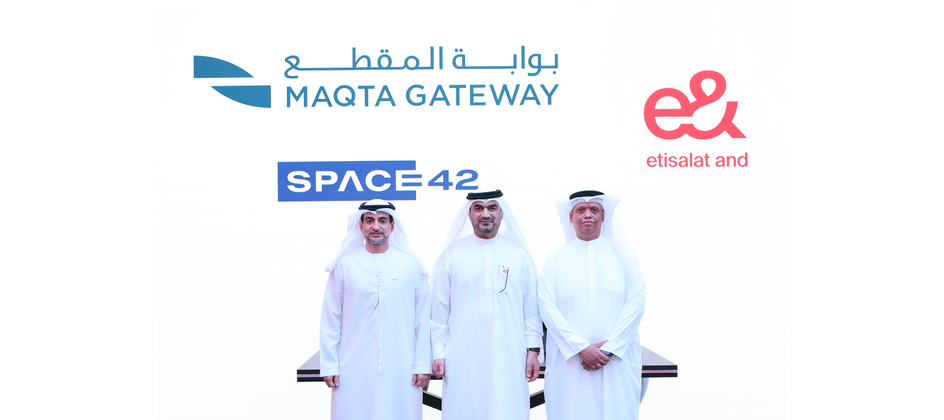
UAE-based Space42 has entered into a five-year memorandum of understanding with Microsoft and Esri to create the most comprehensive digital base map across Africa, aiming to serve more than 1.4 billion people and catalyse economic and infrastructural development. The “Map Africa Initiative” seeks to transform fragmented and outdated geospatial data into timely, accurate intelligence for governments, businesses and communities.

Under the agreement, Space42 will coordinate fundraising and project management, supply satellite data via its sovereign and commercial networks, devise AI-driven digital-twin models, and lead research and automation of map-production processes. Esri will handle the creation of the base maps using GeoAI and remote-sensing technologies while training regional teams to ensure long-term sustainability. Microsoft will provide Azure cloud infrastructure and AI capabilities to enable large-scale processing and secure data sharing.

Africa faces persistent challenges of unreliable and inaccessible mapping information, constraining infrastructure planning, investment decisions and service delivery. The Map Africa Initiative aims to address these by offering a uniform, high-resolution mapping platform, licensed to governments and updated locally by national mapping agencies. This platform is expected to foster a new commercial ecosystem, with African startups benefiting from access to essential geospatial intelligence. Data will be hosted in data centres managed by G42 and Microsoft across the continent.

The mapped data promises significant impact across multiple sectors. In logistics and ports, enhanced terrain mapping can facilitate route optimisation and reduce bottlenecks. Energy developers will gain more precise site-selection tools for solar and wind infrastructure. Governments will benefit from improved border monitoring, disaster preparedness and resource management. Urban planners and smart-city developers will gain foundational geospatial data critical for designing efficient public services and digital economies.

For Space42, the agreement deepens strategic partnerships with Microsoft and Esri, enlarges its African footprint, and opens pathways in analytics, licensing, and infrastructure. It positions Space42 as a trusted partner to governments in delivering scalable geospatial solutions. Peng Xiao, Chief Executive Officer of G42, stressed the broader goal: to close the “intelligence gap” by delivering AI-powered insights that enable smarter planning, sustainable development and inclusive innovation across the Global South.

Hasan Al Hosani, CEO of Smart Solutions at Space42, stated that partnership is integral to the UAE’s approach; this collaboration signals a strategic, not merely technical, advance. Jack Dangermond, President of Esri, emphasised the technical rigour required to convert satellite imagery into detailed, accurate base maps—a capability Esri brings to the initiative.

The initiative aligns closely with the broader UAE strategy. In 2024, the UAE was Africa’s largest investor, deploying around US $44 billion, nearly matching investment levels from the UK and China combined. Space42, as the UAE’s national space entity, serves as both a conduit for exporting data-driven development solutions and a facilitator of knowledge transfer between the UAE and Africa.

VISHNU RAJA
RYO YAMADA
HITORI GOTOH
IKUYO KITA