Digital assets now form the foundation of almost every business operation. Michael Jordan, the CEO of Gem Soft, promotes data sovereignty as a necessary element for organizational strength and strategic freedom. He brings over thirty years of experience in investment banking and six years of leadership at Gem Soft, first as Chief Investment Officer and now as CEO. Jordan emphasizes that real control over data involves privacy, […]
Advancing R&D, talent development and the region’s energy transition
SINGAPORE – Media OutReach Newswire – 26 January 2026 – ST Telemedia Global Data Centres (STT GDC), one of the world’s fastest growing data centre colocation providers headquartered in Singapore, today announced two significant initiatives that strengthen Singapore’s position in the global digital and energy transition: the launch of the FutureGrid Accelerator, Southeast Asia’s first live High Voltage Direct Current (HVDC)-powered AI infrastructure testbed; and a suite of strategic Memoranda of Understanding (MOUs) with four Institutes of Higher Learning (IHLs) to advance skills development and expand internship and early career pathways for Singaporeans entering the workforce. These initiatives align with national efforts to support talent graduating into a challenging job market, while building the specialised capabilities required for next generation power and digital infrastructure.
Celebrating the official launch of the FutureGrid Accelerator; a new benchmark for HVDC-powered AI infrastructure in the region.
[Pictured from left to right] Lim Kian Tiong, Chief Financial Officer, LITEON; Bruno Lopez, President & Group Chief Executive Officer, ST Telemedia Global Data Centres; Minister Gan Siow Huang, Minister of State, Ministry of Foreign Affairs & Ministry of Trade and Industry; Professor Lam Khin Yong, Vice President (Industry), Nanyang Technology University Singapore; Brian Dow, Chief Executive Officer, Amperesand.
Officiated by Ms Gan Siow Huang, Minister of State for Foreign Affairs and Trade & Industry, the announcement underscores a national push to build capabilities not only for AI-ready data centres, but also for the wider energy ecosystem, as Singapore and the region pursue net-zero ambitions.
FutureGrid Accelerator: HVDC innovation for AI and the wider energy transition Located at the Nanyang Technological University, Singapore (NTU Singapore) Electrification and Power Grids Centre (EPGC) on Jurong Island, the FutureGrid Accelerator is a pioneering initiative jointly developed by STT GDC and LITEON, supported by the Energy Research Institute @ NTU (ERI@N) and NTU deep-tech spinoff Amperesand. It is the region’s first live testbed demonstrating HVDC integration with real AI workloads, addressing the high-density and high-resiliency requirements of next-generation AI computing.
While central to the future of AI data centre architecture, HVDC represents a broader opportunity: it is a foundational technology that supports more efficient, resilient and integrated power systems. This is critical for Singapore’s long-term energy strategy, its transition to low-carbon energy grids and the region’s increasing need for sustainable power delivery.
Why HVDC Matters: A scalable platform beyond the data centre As AI and high-performance computing workloads scale, traditional alternating current (AC) power systems face inherent limitations. HVDC overcomes these constraints and delivers several transformative benefits:
Up to 30% overall energy savings compared to conventional AC systems
A reduction of up to 400 tonnes of CO2 equivalent (CO2e) per megawatt per year
45% lower copper consumption and a 30–40% smaller power-infrastructure footprint
The ability to support ultra-high-density racks exceeding 1,000kW, with higher reliability and lower cost
Native compatibility with renewable power sources able to feed directly to the direct-current system, avoiding inefficient power conversions
“The FutureGrid Accelerator is a strategic investment in Singapore’s long-term digital leadership,” said Bruno Lopez, President and Group Chief Executive Officer, ST Telemedia Global Data Centres. “By bringing together global industry leaders like LITEON with local deep-tech talent such as Amperesand, we are building infrastructure that is ready for future AI workloads while pioneering sustainable practices and setting new benchmarks for energy efficiency and carbon-conscious innovation. This initiative reflects our commitment to future-ready technologies and reinforces Singapore’s position as a global Centre of Excellence for advanced sustainable digital infrastructure. It is a bold step forward in shaping the future of data centres and accelerating energy transition across the region.”
Ms Gan Siow Huang, Minister of State for Foreign Affairs & Trade and Industry, said: “The FutureGrid Accelerator demonstrates how industry and academia can work together to drive innovation and strengthen Singapore’s global leadership in cutting-edge technologies. I also welcome STT GDC’s partnerships with ITE and SP, which will add to the suite of training options for the rapidly growing areas of AI and energy-efficient systems.”
The FutureGrid Accelerator will validate HVDC system performance at power loads of at least 325kW, incorporating the latest AI servers. The environment incorporates LITEON’s data centre reference architecture with Amperesand’s Solid State Transformer (SST) technology—an enabling innovation for next-generation HVDC deployment. STT GDC plans to deploy this technology in future data centres in Singapore and progressively scale adoption across its global operations.
“LITEON is committed to advancing the frontier of power management efficiency, and our collaboration with STT GDC and Amperesand is key to establishing the next standard for sustainable AI infrastructure in Asia,” said Jason Tsao, Head of Direct Current Microgrid at LITEON. “By deploying an end-to-end data centre reference architecture and integrated power management system in a live environment with STT GDC and partners, we are validating a high-density, energy-saving solution ready to meet the extreme demands of global technology leaders.”
“The FutureGrid Accelerator underscores NTU’s role as a strategic partner in shaping the future of sustainable AI infrastructure”, said Prof Lam Khin Yong, NTU’s Vice President (Industry). “By integrating cutting-edge HVDC technologies with our research capabilities and the entrepreneurial drive of NTU spin-offs like Amperesand, we are advancing impactful solutions that can significantly enhance energy efficiency and grid resilience. This collaboration showcases how universities can drive transformative innovations at the intersection of energy, digitalisation and sustainability.”
“Amperesand is obsessed with revolutionising Medium Voltage to critical load power delivery for next-generation AI data centres, defence, and other essential electrified assets. We focus on first principles to achieve market leading power density, efficiency, and reliability,” said Brian Dow, CEO and Co-Founder of Amperesand. “In this era of AI data centre and other critical power systems becoming economic and national security interests for many countries, Amperesand’s MV SST Platform enables in-country cyber-secure controls and data, regionally available supply chains, and low CAPEX intensity local manufacturing. Our solution is an intelligent, universal Medium Voltage power source that works on-and-off grid to improve critical infrastructure resilience as new large electrical loads come online.”
Developing Energy-Ready Skills: Partnerships with ITE, SP, NTU and NUS STT GDC signed MOUs with the Institute of Technical Education (ITE), Singapore Polytechnic (SP), NTU Singapore and National University of Singapore (NUS). These partnerships will benefit more than 8,000 Singaporeans over five years through industry-aligned training in AI infrastructure and sustainable energy systems. This ensures the scaling of HVDC—and the broader energy transition—is matched by the transformation and availability of skills, jobs and talent development pathways.
Mr Lopez added, “Talent is the decisive enabler as we advance AI and sustainability infrastructure. These partnerships build a skilled workforce needed to strengthen Singapore as a global hub for advanced digital and energy systems.”
Key initiatives and impact:
Building a talent pipeline: STT GDC will provide internship placements across ITE, SP, NTU and NUS over the next five years, with support from Enterprise Singapore. The programme offers immersive, hands-on experience in data centre operations and corporate functions such as IT, sustainability, finance and marketing, supported by mentoring from industry professionals. In addition, STT GDC will offer 100 sponsorships for Data Centre Foundation Certificate (DCFC®) offered by EPI, a global certification body for data centre facilities, data centre operations and industry professionals, accelerating entry into the sector.
Developing industry-ready talent with ITE: The collaboration with ITE will benefit approximately 800 students annually — totalling 2,400 students over three years — from ITE’s engineering and information and communications technology (ICT)-related Higher Nitec and Work-Study Diploma courses. Key initiatives include co-developing industry-relevant curricula for full-time and Continuing Education & Training (CET) courses in data centre operations and sustainability; deploying a data centre virtual reality system at the ITE Extended Reality Centre for immersive training; supporting lecturer attachments and student internships; and enabling students to pursue the sponsored DCFC® course.
Sustainability leadership with SP: The partnership with SP develops expertise in environmental sustainability and green data centre solutions. Initiatives include joint exploration of green technologies and practices; industry seminars and events to promote sustainable solutions; and targeted programmes for training, mentorship, applied projects and internships.
Innovation and research leadership with NTU: The partnership with NTU combines cutting-edge joint R&D of solutions for AI data centres powered by direct current sources; training, curriculum and talent development for the AI data centre sector; industry and career talks; and internship opportunities across STT GDC’s group of companies.
Graduate pathways with NUS: STT GDC’s collaboration with NUS supports accessible entry points for graduates through internships, training opportunities and ongoing career and industry engagement to raise awareness of digital infrastructure pathways.
The issuer is solely responsible for the content of this announcement.
About ST Telemedia Global Data Centres
ST Telemedia Global Data Centres (STT GDC) is one of the fastest-growing data centre providers with a global platform serving as a cornerstone of the digital ecosystem that helps the world to connect. Powering a sustainable digital future, STT GDC operates across Singapore, the UK, Germany, Italy, India, Thailand, South Korea, Indonesia, Japan, the Philippines, Malaysia and Vietnam, providing businesses an exceptional foundation that is built for their growth anywhere. For more information, visit https://www.sttelemediagdc.com/
Appendix: Partner Quotes
Mr Peter Lam, Chief Executive Officer, Institute of Technical Education (ITE): “At ITE, our focus is on equipping our students with future-ready skills for Singapore’s evolving economy. Through the partnership with STT GDC, our students gain valuable real-world training and exposure to advanced tools in data centre operations. This strengthens our efforts to prepare career-ready students and develop talent for Singapore’s growing digital infrastructure sector.”
Mr Soh Wai Wah, Principal and CEO of SP: “Singapore Polytechnic is committed to developing a future-ready workforce that can support Singapore’s growing demand for sustainable and resilient data centre operations. This partnership with STT GDC brings together our strengths in training, applied learning and industry collaboration to nurture talent in environmental sustainability and green solutions for data centres. Through co-developed programmes, mentorship, student projects and internships, we will build deeper capabilities and broaden pathways for learners to contribute to this important sector. SP looks forward to advancing this effort with STT GDC to support Singapore’s long-term industry and sustainability goals.”
Professor Lam Khin Yong, Vice President (Industry), Nanyang Technological University: “STT GDC is a partner that shares our commitment to advancing impactful research and developing future-ready talent. Leveraging NTU’s strengths in artificial intelligence, energy-efficient systems and translational innovation, this partnership will accelerate the co-development of next-generation AI data centre technologies while providing our students and researchers with valuable real-world experience. Together, we are helping to build a robust pipeline of skilled professionals who will support Singapore’s ambitions in sustainable and AI-driven digital infrastructure.”
Ms Joan Tay, Senior Director, NUS Centre for Future-ready Graduates: “NUS’ partnership with STT GDC is timely, as demand grows for skilled professionals to manage complex, high-density AI infrastructure. Through internships, training, industry engagement and access to recognised certification, we bridge education and industry to equip students with the skills and experience needed to thrive in today’s fast-evolving digital infrastructure space.”
Alibaba Cloud and NVIDIA as Key Technology Partners. Usher in a New Era of Industrial AI.
HONG KONG SAR – Media OutReach Newswire – 26 January 2026 – AsiaInfo Technologies Limited (“AsiaInfo Technologies” or the “Company”; HKEX stock code: 01675), a leading provider of software products, solutions, and services, and ABB Robotics jointly established the “Embodied Intelligence Laboratory” and held its inauguration ceremony at AsiaInfo Plaza in Beijing on 25 January.
Tian Suning, Chairman of AsiaInfo Technologies, and Dr. Ouyang Ye, Chief Executive Office and Chief Technology Officer of AsiaInfo Technologies, together with Han Chen, Vice President of ABB Group and President of ABB Robotics China, jointly held an unveiling ceremony for the laboratory. Li Li, Vice President of the Government-Enterprise Business Unit at Alibaba Cloud Intelligence Group, attended the ceremony as key technology partners, witnessing this milestone that ushers in a new phase of integration between Physical AI technologies and the real economy.
ABB Robotics is one of the world’s leading robotics suppliers, offering a comprehensive and integrated portfolio that includes industrial and collaborative robots, autonomous mobile robots (AMRs), controllers, application solutions, services, and equipment. Powered by its intelligent software, its technologies help businesses across industries from automotive to electronics and logistics to become more resilient, flexible, and efficient.
As AI rapidly moves from the digital realm into the physical world, Physical AI, as the key bridge linking AI capabilities with real‑world industries, is becoming a core engine driving the intelligent upgrade of manufacturing sector. Against this backdrop, AsiaInfo Technologies has established a strategic partnership with ABB Robotics to jointly set up the Embodied Intelligence Laboratory, integrating both parties’ core strengths in foundation AI large models, industrial automation, communications technologies and robot control. The laboratory will focus on cutting‑edge areas such as industrial simulation and Physical AI, aiming to break through bottlenecks in the perception, decision‑making and execution capabilities of intelligent agents in complex real‑world scenarios. It will build an end‑to‑end innovation system spanning technology research and development (“R&D”), technology commercialization and large‑scale industrial deployment, thereby injecting strong AI‑driven momentum into high‑quality development.
As a leader in full‑stack digital‑intelligence capabilities, AsiaInfo Technologies will take AI large model application as the core lever, deeply integrating its strengths in 5G‑A telecommunications technology and network security to drive technology integration and large‑scale deployment at the laboratory. By developing replicable, scalable scenario‑based solutions, the Company will accelerate the rollout and value realisation of innovation in the intelligent manufacturing sector. Leveraging its global expertise in industrial automation and flexible control, ABB Robotics will provide the laboratory with real‑world, production‑line use cases and strong engineering support capabilities, enabling efficient validation, optimisation and iteration of technical solutions, and achieving deep coupling and mutual empowerment between technology and application scenarios.
The laboratory will leverage external technology partners to reinforce its R&D capabilities. By utilising Alibaba Cloud’s massive data processing power and cutting‑edge algorithmic frameworks such as Vision‑Language‑Action (VLA), and NVIDIA accelerated computing technology for training optimisation, it will significantly speeding up the industrialisation of Physical AI technologies.
The Embodied Intelligence Laboratory jointly established by AsiaInfo Technologies and ABB Robotics has been officially launched, marking the shift of their strategic partnership into a practical stage of implementation based on previous research. This collaboration represents not only a forward-looking initiative by both parties to deploy cutting-edge technologies and fulfill their industrial responsibilities, but also a pivotal step in advancing Physical AI from the laboratory into real-world applications on the factory floor. Looking forward, AsiaInfo Technologies together with partners including ABB Robotics and Alibaba Cloud, will use the laboratory as a core platform to deepen technical collaboration and scenario co‑creation, drive large‑scale deployment of Physical AI in industry, build a globally impactful benchmark for industrial intelligence, and help shape an open and collaborative Physical AI ecosystem. Hashtag: #AsiaInfo
The issuer is solely responsible for the content of this announcement.
Rescue teams continued combing rough waters off the southern Philippines after a passenger ferry capsized and sank, leaving at least 15 people dead and more than 300 pulled to safety, according to officials coordinating the response. Several passengers remained unaccounted for as the operation entered a critical phase, with authorities warning that changing weather and strong currents were hampering search efforts. The wooden-hulled ferry went down during […]
Arabian Post Staff -Dubai GivTrade has rolled out a major regional brand campaign in collaboration with Spain’s top professional league, LaLiga, designed to amplify its visibility across the Middle East and North Africa during key league fixtures featuring marquee clubs such as Real Madrid, FC Barcelona and Atlético Madrid. The marketing drive places GivTrade prominently on broadcast screens and digital channels during match coverage, giving the trading […]
DXC Technology has entered a strategic partnership with blockchain payments firm Ripple to integrate institutional-grade digital asset custody and payments into DXC’s Hogan core banking platform, a move aimed at accelerating banks’ adoption of tokenised assets and real-time settlement across borders. The collaboration brings Ripple’s blockchain infrastructure into a core system used by large financial institutions worldwide, positioning DXC to offer regulated banks a turnkey path to […]
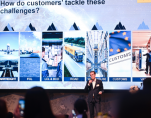
HONG KONG SAR – Media OutReach Newswire – 26 January 2026 – Dachser, a global logistics provider with over 90 years of experience, recently hosted a customer event in Bangkok, Thailand, bringing together customers and industry stakeholders to discuss the 2026 air and sea freight market outlook and the role of Supply Chain Optimization in navigating a challenging global trade environment.
Philipp Ramsbacher, Team Leader Supply Chain Optimization at Dachser, says today’s supply chains are too complex to rely on assumptions or past patterns. Data-driven simulation, rather than guesswork, helps create transparency, align expectations, and design logistics networks.
The event highlighted key developments shaping international trade flows, including geopolitical tensions, evolving sourcing strategies, capacity dynamics, and cost developments across air and sea freight markets. The discussions also underscored the growing importance of structured Supply Chain Optimization as companies adapt their logistics networks to changing market conditions.
“After several years of volatility, the air freight market is gradually moving toward a more balanced environment,” said Daniel Chua, Head of Air Freight, Air & Sea Logistics Asia Pacific at Dachser. “While demand fundamentals remain positive, careful capacity planning and realistic forecasting will be increasingly important as the market continues to normalize.”
In air freight, Dachser expects demand in 2026 to grow at a single-digit rate, supported by moderate capacity expansion and a normalization of rate patterns. While stable yields are anticipated, growth will continue to be driven by e-commerce, electronics – particularly AI-related components – and pharmaceuticals, alongside a structural shift of trade lanes toward Southeast Asia.
In sea freight, Dachser forecasts global demand growth to slow below three percent in 2026, despite continued strength in intra-Asia trade and Asia-Europe volumes. While fleet growth remains significant, supply and demand are relatively balanced, supported by blank sailings and vessel scrapping. Freight rates are expected to stabilize into early 2026, although uncertainty remains due to high operating costs and ongoing geopolitical developments.
“Even as rates soften, the market remains far from predictable,” said Eunice Yu, Head of Ocean Freight, Air & Sea Logistics Asia Pacific at Dachser. “Flexibility, diversified routing options, and realistic lead-time planning are essential for building resilient supply chains in the year ahead.”
Beyond outlooks: enabling resilience through Supply Chain Optimization
Beyond market analysis, Dachser sees that supply chains increasingly depend on structured, data-driven planning by taking a Supply Chain Optimization approach, which supports customers in analyzing, modeling, and redesigning logistics networks based on real operational data.
Philipp Ramsbacher, Team Leader of Supply Chain Optimization at Dachser says, “By applying Supply Chain Optimization with data-driven simulation, Dachser enables customers to evaluate scenarios, align stakeholders, and develop optimized and implementable supply chain solutions. These solutions help design logistics networks that are robust, efficient, and sustainable.”
Projects showcased during the event demonstrated measurable improvements, including cost savings, reduced CO₂ emissions, and enhanced delivery performance, underscoring the value of a structured Supply Chain Optimization approach.
With integrated air, sea, and contract logistics solutions and its strong presence across Asia Pacific as well as a well-established European road logistics backbone, Dachser continues to support customers navigate changing market conditions while strengthening long-term supply chain performance.
Hashtag: #Dachser
The issuer is solely responsible for the content of this announcement.
About Dachser
Dachser, a family-owned company headquartered in Kempten, Germany, provides transport logistics, warehousing, and customized services in two business fields: Dachser Air & Sea Logistics and Dachser Road Logistics. The latter consists of two business lines: Dachser European Logistics and Dachser Food Logistics. Comprehensive contract logistics services and industry-specific solutions round out the company’s range. A seamless shipping network—both in Europe and overseas—and fully integrated IT systems ensure intelligent logistics solutions worldwide.
Thanks to some 37,300 employees at 433 locations all over the globe, Dachser generated consolidated net revenue of approximately EUR 8 billion in 2024. The same year, the logistics provider handled a total of 83.2 million shipments with a tonnage of 44.1 million metric tons. Country organizations represent Dachser in 43 countries. For more information about Dachser, please visit dachser.com
In the DACHSER magazine, you will regularly find up-to-date reports, articles, and interviews on topics that concern us today and tomorrow: magazine.dachser.com
Matein Khalid Zohran Mamdani’s election as Mayor of New York City is the worst nightmare for the Big Apple’s commercial landlords, the reason why the shares of SL Green and Vornado have been sandbagged on the NYSE. The last thing a soft Manhattan office market with a plunge in inbound foreign tourism and spike in the 10-year US Treasury yield needed was a 35 year old self […]
Saudi Arabia’s Real Estate General Authority has brought into force a sweeping set of legal changes that widen access to property ownership for foreign companies and expatriate residents, marking a significant shift in how the Kingdom regulates and opens its real estate market. The new framework, effective from January 22, integrates these provisions into the national real estate legislative system, making all rules immediately enforceable under a […]
Arabian Post Staff -Dubai Ras Abu Fontas Power, the company behind one of Qatar’s key power and water infrastructure projects, has secured a financing agreement worth about $990 million with the Japan Bank for International Cooperation, strengthening the long-term funding base for the Facility E power and desalination project south of Doha. The JBIC funding represents part of a larger co-financing package totalling approximately $2.97 billion, assembled […]
Abu Dhabi National Oil Company has become the first Emirati brand to secure a spot among the world’s 100 most valuable brands, highlighting its expanding global footprint and brand strength. The Brand Finance annual league table shows ADNOC’s brand value climbed 11 per cent year-on-year to US$21.13 billion for 2026, marking growth of more than 350 per cent since 2017 and placing it ahead of a number […]
US President Donald Trump has launched a high-stakes $5 billion legal challenge against JPMorgan Chase & Co. and its chief executive, Jamie Dimon, claiming that the country’s largest bank cut off banking services to him and his businesses for political reasons. The lawsuit, filed in Miami-Dade County, Florida, alleges the bank closed multiple accounts in 2021 and placed the president and his companies on an informal “blacklist” […]
UNESCO has approved an emergency assistance package worth about US$740,000 to help safeguard cultural heritage sites in Vietnam threatened by climate stress, environmental degradation and development pressures, according to officials briefed on the decision. The funding is designed to support urgent conservation work, technical assessments and community-led protection measures at vulnerable locations across the country.
The package, cleared under UNESCO’s emergency assistance mechanisms, will prioritise sites exposed to flooding, erosion and extreme weather, challenges that have intensified along Vietnam’s long coastline and river systems. Heritage specialists involved in the programme said the initiative aims to stabilise damaged structures, document at-risk artefacts and strengthen local capacity to respond to future threats, rather than focus solely on restoration.
Vietnam is home to eight UNESCO-recognised World Heritage properties, including Ha Long Bay, the Complex of Hué Monuments, Hoi An Ancient Town and My Son Sanctuary. Many of these sites combine natural and built heritage, making them particularly sensitive to environmental change and tourism pressures. Officials familiar with the emergency package said the funding will be channelled to areas where immediate intervention can prevent irreversible loss.
UNESCO representatives said the programme reflects a broader shift towards preventative heritage protection, integrating scientific monitoring with traditional conservation practices. Technical teams are expected to work alongside Vietnamese authorities to conduct rapid risk assessments, improve drainage and structural support where needed, and deploy digital documentation tools to create detailed records of vulnerable assets.
Climate-related risks have become a growing concern for heritage managers in Southeast Asia. Rising sea levels threaten coastal archaeological remains, while heavier rainfall has increased the frequency of landslides and subsidence in historic towns. In Vietnam’s central regions, typhoons have repeatedly damaged ancient structures, prompting calls for faster international support mechanisms.
Cultural officials in Hanoi have welcomed the assistance, noting that emergency funding complements longer-term conservation programmes already under way. Vietnam has invested heavily in heritage tourism over the past decade, positioning historic sites as key economic drivers for local communities. However, the pace of visitor growth has also strained infrastructure and conservation budgets, particularly at smaller or less prominent locations.
Experts involved in the UNESCO initiative said community engagement would be central to the programme’s success. Local residents, custodians and artisans are expected to take part in risk-mitigation planning and training, ensuring that emergency measures align with traditional knowledge and livelihoods. This approach is intended to reduce dependence on external interventions while strengthening stewardship at the grassroots level.
The emergency package also includes provisions for knowledge-sharing with other countries facing similar challenges. UNESCO officials said lessons from Vietnam’s experience will inform future responses in the region, where heritage sites increasingly sit at the intersection of climate vulnerability and rapid economic development.
International heritage bodies have emphasised that emergency assistance is not a substitute for sustained conservation funding. While the US$740,000 allocation is modest compared with the scale of risks, specialists said it can play a critical role in stabilising sites and buying time for more comprehensive interventions. The funds are expected to be disbursed in phases, with progress reviews guiding subsequent activities.
Arabian Post Staff -Dubai The United Arab Emirates’ hospitality sector has posted a substantial rise in hotel revenues in 2025, with total takings reaching around AED 44.4 billion for the period from January to November, marking an 8.8 per cent uplift compared with the same span a year earlier, driven by stronger average daily rates and robust demand across key markets. This performance underscores the UAE’s ongoing […]
Google DeepMind chief executive Demis Hassabis has challenged the way artificial general intelligence is being discussed and marketed, pointing to what he described as a “big irony” in OpenAI’s plans to introduce advertising into ChatGPT while simultaneously framing the system as a step towards human-level intelligence. His remarks underline widening philosophical and commercial differences between leading AI labs as competition intensifies and public scrutiny grows. Speaking in […]
McLaren Racing has entered a partnership with distributed ledger platform Hedera to roll out free digital collectibles for fans across its Formula One and IndyCar operations, marking a further step by elite motorsport teams into blockchain-backed fan engagement without paywalls. The agreement makes Hedera an official partner of the McLaren Formula 1 Team and Arrow McLaren IndyCar Team, with the collaboration centred on issuing no-cost digital items […]
Revolut has shelved plans to buy a United States bank and is instead pursuing a fresh regulatory pathway as it recalibrates its long-delayed push into the world’s largest retail finance market. The London-based digital banking group has begun laying the groundwork for an application to the Office of the Comptroller of the Currency for a national banking licence, according to people familiar with the company’s strategy, marking […]
Microsoft and the Mercedes-AMG PETRONAS Formula One Team have entered a multi-year partnership that places cloud computing and enterprise artificial intelligence at the centre of one of the sport’s most analytics-intensive operations, extending from race-weekend decision-making to long-term car development and factory workflows. The agreement positions Microsoft as the team’s official cloud and AI partner, with Azure, Microsoft Fabric and Copilot technologies set to be woven into […]
Curl, one of the world’s most widely used data transfer tools, has shut down its bug bounty programme after an overwhelming influx of low-quality vulnerability reports generated with the help of artificial intelligence began to swamp its small security team. Daniel Stenberg, the creator and lead maintainer of curl, said the volume of submissions claiming security flaws had grown to a level that could no longer be […]
Coinbase chief executive Brian Armstrong has argued that the growing divide in global wealth stems from structural barriers in capital formation and ownership, positioning blockchain-based tokenisation as a way to broaden access to assets traditionally controlled by a narrow segment of society. Tokenised finance framed as a path to wider ownership has become a recurring theme in Armstrong’s public remarks, investor communications and policy-facing discussions, where he […]
By Nantoo Banerjee India’s transport sector, combining road, rail, air and water, is ready for a significant job boom, with the logistics industry alone projected to grow at a 10.7 percent compound annual growth rate (CAGR) through the current year. The national budget for 2026-27, which is scheduled to be placed in Parliament on February […]
Strong international validation for India’s ambitions in semiconductors and artificial intelligence has emerged during Union minister Ashwini Vaishnaw’s visit to Veldhoven, the Netherlands, where he held discussions centred on advanced manufacturing technologies and long-term collaboration. Vaishnaw described the engagement as a major opportunity to understand cutting-edge systems and align partnerships that could accelerate India’s high-technology ecosystem.
The visit to Veldhoven, home to the world’s most sophisticated chipmaking equipment capabilities, comes at a time when New Delhi is pushing to anchor itself more firmly in global semiconductor supply chains while building domestic capacity. Vaishnaw indicated that interlocutors acknowledged India’s policy direction and scale as compelling factors for deeper cooperation across semiconductors and artificial intelligence, two areas that are increasingly intertwined in next-generation computing and industrial automation.
Discussions during the trip focused on lithography technologies, supply-chain resilience and skills development, according to people familiar with the engagements. India’s pitch rests on a combination of policy incentives, a large engineering workforce and expanding demand from electronics, automotive and data-driven sectors. Officials accompanying the minister underlined that partners in Europe see India as a credible long-term manufacturing and innovation base rather than merely a consumption market.
The Netherlands occupies a critical position in the global chip industry because of its dominance in extreme ultraviolet lithography, a technology essential for producing advanced semiconductors. India’s engagement with Dutch stakeholders is therefore viewed as strategically important, particularly as countries and companies diversify supply chains amid geopolitical and commercial pressures. Vaishnaw’s meetings sought to map pathways for collaboration spanning equipment ecosystems, materials, precision engineering and research linkages.
Artificial intelligence featured prominently in the conversations, reflecting the convergence between advanced chips and AI workloads. Executives and policymakers discussed how specialised processors, high-performance computing and data infrastructure underpin AI deployment across sectors such as healthcare, mobility, energy management and public services. Indian officials emphasised the country’s growing base of AI startups, public digital platforms and applied research, arguing that closer alignment with global technology leaders would strengthen both sides.
The endorsement referenced by Vaishnaw also reflects broader international assessments of India’s semiconductor strategy, which combines fiscal incentives with infrastructure support and regulatory facilitation. Several fabrication and assembly projects have been announced across different states, while partnerships with global firms aim to address gaps in design, packaging and testing. Industry analysts note that execution risks remain, including timelines, talent depth in specialised manufacturing and integration into mature supply networks, yet acknowledge that momentum has improved.
From the Dutch perspective, collaboration with India offers access to a fast-growing market and diversification beyond traditional hubs. European technology firms have been recalibrating their engagement with Asia, balancing commercial interests with strategic considerations. India’s emphasis on trusted partnerships and standards-based cooperation resonates in this context, particularly in areas linked to critical technologies.
Vaishnaw’s visit also included interactions with research institutions and industry representatives to understand best practices in precision manufacturing and workforce training. Officials highlighted the importance of skilling programmes that align academic curricula with industry needs, a factor seen as decisive for sustaining semiconductor operations. India has been expanding such initiatives, including specialised training for chip design and manufacturing processes.
The talks in Veldhoven are part of a broader diplomatic and industrial outreach aimed at positioning India within high-value segments of global technology chains. Previous engagements with partners in East Asia and North America have similarly stressed co-development, supply assurance and innovation partnerships rather than transactional sourcing. The Netherlands visit adds a European dimension to that strategy.
Momentum is building across the digital design world as designers and product teams rethink long-held workflows, with a noticeable shift away from screen-first tools towards building functional products from the outset. Figma, long regarded as the industry’s default collaborative design platform, remains widely used, but its centrality is being questioned as artificial intelligence reshapes how ideas move from concept to code. For more than a decade, Figma’s […]
Jewellery manufacturers, designers and traders from across three continents are set to converge in Sharjah as the Jewels of Emirates Show 2026 opens on 28 January at the Expo Centre Sharjah, positioning the emirate as a key meeting point for the regional and global jewellery trade at the start of the year. Organisers say the four-day exhibition will feature about 180 exhibitors representing the Middle East, Asia […]




 https://www.sttelemediagdc.com/